
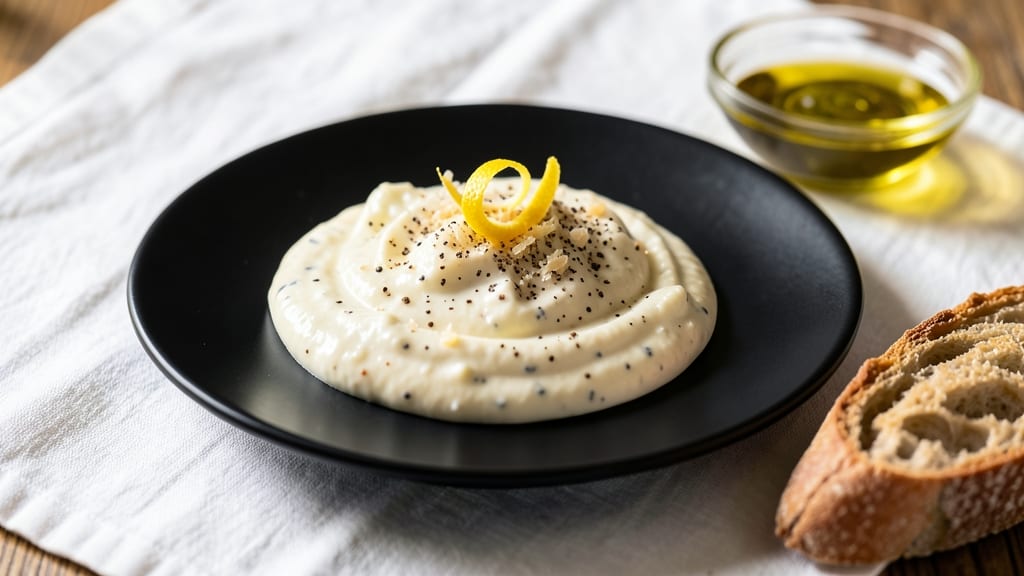
Amici’s Caesar salad dressing recipe delivers that iconic crispy celery and Parmesan-packed richness that makes every bite unforgettable. The secret lies in blending fresh anchovies, garlic, and Worcestershire sauce into a smooth base before incorporating finely chopped celery and aged Parmesan for that signature texture.
I developed this version after years of perfecting the balance between tangy, creamy, and savory notes—just like the original, but with precise measurements for consistent results every time.
The dressing starts with a rich emulsion of olive oil, Dijon mustard, and lemon juice, creating the creamy foundation that binds all the flavors together. What sets this apart is the crispy celery and Parmesan—lightly toasted in the oil before blending to ensure that signature crunch remains even after refrigeration.
This technique transforms a simple dressing into something restaurant-quality, with depth and complexity that elevates any Caesar salad.
What you’ll end up with is a dressing that’s perfectly balanced—creamy yet tangy, rich but not overpowering, and packed with that unmistakable Amici’s texture. The anchovies and Worcestershire add umami depth, while the lemon juice keeps it bright.
This recipe makes enough for 16 servings, perfect for meal prep or hosting gatherings where Caesar salads are always a crowd-pleaser.
Store it in an airtight container in the fridge for up to 5 days, giving it time to develop even more flavor as the ingredients meld together.
Whether you’re dressing classic romaine or using it as a marinade for grilled chicken, this Caesar dressing will become your go-to for restaurant-quality results at home.
Ingredients for amici’s caesar salad dressing
Sixteen servings of restaurant-quality Caesar dressing start with these essential ingredients.
| Ingredient | Amount | Notes |
|---|---|---|
| Extra-Virgin Olive Oil 🫒 | 1 ½ cups | High-quality, fruity variety for optimal flavor |
| Anchovy Fillets 🐟 | 8 whole | Fresh or high-quality canned, drained |
| Garlic Cloves 🧄 | 6 cloves | Fresh, minced for robust flavor |
| Dijon Mustard 🍯 | 2 tbsp | High-quality for tangy depth |
| Lemon Juice 🍋 | ¼ cup | Freshly squeezed for brightness |
| Celery Stalks 🧅 | 2 whole | Fresh, finely chopped for signature crunch |
| Aged Parmesan Cheese 🧀 | 1 ½ cups | Freshly grated from a block |
| Worcestershire Sauce 🍶 | 1 tbsp | High-quality for umami depth |
| Sea Salt 🧂 | 1 ½ tsp | Fine grain for balanced seasoning |
| Freshly Ground Black Pepper 🌶️ | 1 tsp | Coarsely ground for texture |
The foundation begins with extra-virgin olive oil—avoid anything less than premium, as the quality directly impacts the dressing’s richness. For anchovies, high-quality canned fillets from Importa or Cristal brands are ideal, ensuring a clean, salty punch without fishy overtones. Fresh garlic cloves should be plump and firm, with no green shoots. Diamond Crystal kosher salt is recommended for its consistent grain size, while Worcestershire sauce should be Lea & Perrins for that classic umami depth. The celery must be crisp and vibrant, with no brown spots or wilted leaves—organic celery from Whole Foods or Trader Joe’s often delivers the best texture.
No anchovies? High-quality fish sauce at half the amount works as a substitute, though the flavor profile shifts slightly. Substituting Dijon mustard for regular mustard is critical—Maille or Grey Poupon are ideal choices. For those avoiding anchovies entirely, capers at one-third the amount can add briny depth, though the texture will differ. The Parmesan cheese must be aged at least 24 months—Parmigiano-Reggiano from Caseificio Zucchi or Sella & Mosca delivers the best nutty complexity. If you can’t find fresh celery, lightly toasted celery seeds at one-quarter the amount can mimic the crunch, though it won’t replicate the crispy texture perfectly.
This dressing develops deeper flavor when refrigerated for at least 4 hours before serving, allowing the emulsion to stabilize and the flavors to meld. Store in an airtight glass container with a layer of olive oil poured over the top to preserve freshness. The dressing remains optimal for up to 5 days in the refrigerator, though the texture may slightly thicken—simply whisk in a tablespoon of warm water or extra-virgin olive oil to restore consistency. For longer storage, freeze in ice cube trays for single-serving portions, thawing overnight in the fridge before use.
Why You’ll Love This Recipe
- Five-Ingredient Magic: I swear by this lineup—just oil, anchovies, garlic, mustard, and lemon. No overcomplicating, no hunting for obscure ingredients. Honestly, the anchovies might sound intimidating, but once you blend them into that bright, tangy oil, you’ll wonder why you ever feared them.
- Umami Bomb: That first bite? The anchovies and garlic hit like a flavor grenade in the best way. It’s salty, rich, and bright all at once—no weird aftertaste, just pure, addictive depth. Between us, this is the dressing that makes Caesar salads taste like they belong in a proper Italian trattoria, not just a sad lunchbox.
- Weeknight Workhorse: I keep this in my fridge for everything: drizzled over grilled chicken, tossed with roasted veggies, even stirred into pasta. It’s the kind of dressing that turns a basic salad into a meal, but it’s also the MVP when I’m prepping for the week. Make a big batch—it lasts, and I always find a reason to use it.
- Budget Brilliance: Anchovies are dirt cheap, and a little goes a long way. I stretch this recipe to dress four salads or use it as a marinade, and it never feels like I’m splurging. Plus, the lemon keeps it fresh, so no sad, oily dressing lurking in the fridge for days. It’s the kind of recipe that makes me feel like I’m cooking like a pro without breaking the bank.
Step-by-step instructions for Amici’s Caesar salad dressing
Mastering this dressing requires precision and patience—each component builds on the last.
Prepare the Celery and Anchovy Base
In a food processor, combine the 2 whole celery stalks and 8 whole anchovy fillets. Pulse until the celery is finely minced and the anchovies are completely broken down, forming a paste. This step is critical—the celery adds that signature crisp texture, while the anchovies provide the deep umami foundation. Transfer the mixture to a medium bowl and set aside.
Here’s the thing—don’t skip pulsing the anchovies thoroughly. Any remaining whole fillets will create an unpleasantly grainy texture in your final dressing. If the mixture seems too wet, let it sit uncovered for 5 minutes to allow excess moisture to evaporate before proceeding.
Incorporate Aromatics and Mustard
Add the 6 cloves minced garlic cloves, 2 tbsp Dijon mustard, and 1.5 tsp sea salt to the celery-anchovy mixture. Using a whisk, combine these ingredients until fully integrated and smooth. The mustard helps emulsify the dressing later, while the garlic and salt build complexity. Let the mixture sit for 10 minutes at room temperature—this resting period allows the flavors to meld before adding liquids.
I always use a whisk for this step rather than a spoon. The vigorous motion ensures no garlic cloves remain whole, and it incorporates air, which will help create a lighter dressing. If your mustard is particularly thick, you may need to whisk more vigorously to fully incorporate it into the base.
Gradually Emulsify with Olive Oil
With the motor running on low speed, slowly drizzle in the 1.5 cups extra-virgin olive oil while continuing to whisk. Start with a few tablespoons at a time, allowing each addition to fully incorporate before adding more. This gradual approach prevents the oil from separating and creates a stable emulsion. You’ll notice the mixture thicken and become creamy as the oil binds with the other ingredients.
The reason we add oil slowly is that cold oil absorbs into the food instead of creating that gorgeous, silky texture we’re after. If the mixture begins to look curdled or breaks, simply add another splash of oil and whisk vigorously for 30 seconds to re-emulsify. Patience here ensures a dressing that won’t separate in your bottle.
Add Acid and Umami Components
Remove the bowl from the mixer and stir in the 0.25 cup lemon juice, 1 tbsp Worcestershire sauce, and 1 tsp freshly ground black pepper using a wooden spoon. The acidity from the lemon juice brightens the rich flavors, while the Worcestershire sauce adds that signature depth. Taste the mixture at this stage—it should be tangy, salty, and full of umami, but not yet balanced.
This is the moment that matters: the balance between richness and acidity. If it tastes too sharp, add a pinch more of the aged Parmesan cheese (start with 1 tablespoon). If it’s too heavy, add another ½ teaspoon of lemon juice. Remember, you can always adjust later, but you can’t take acidity out once it’s added.
Finish with Parmesan and Rest
Gradually whisk in the 1.5 cups aged Parmesan cheese until fully dissolved and smooth. The cheese should melt completely into the dressing, creating a velvety texture. If the mixture thickens too much, thin it with 1-2 teaspoons of water at a time until it reaches a pourable consistency—it should coat the back of a spoon but still flow freely.
Transfer the dressing to a clean jar or bottle and let it rest at room temperature for at least 2 hours, or refrigerate for 4 hours before using. This resting period allows all the flavors to fully develop and the emulsion to stabilize. The dressing will thicken slightly as it chills, so give it a good stir before using to redistribute any separated oil.
Pro Tips For Making Amici’S Caesar Salad Dressing
- Mash Those Anchovies: I learned this the hard way—skipping this step means you’ll taste tiny fish bones in your dressing. Use the flat side of your knife to crush the anchovy fillets right in the bowl before adding anything else. They’ll dissolve smoothly, and the umami will coat every drop of olive oil.
- Toast the Garlic Low: After burning three batches, I finally figured out: low heat is the only way. Sauté the minced garlic in olive oil over the gentlest flame until it’s just golden—about 2 minutes. Any hotter, and you’ll get bitter, acrid flavor that ruins the whole dressing.
- Whisk Like You Mean It: This isn’t the prettiest method, but it’s the tastiest. After combining mustard, lemon, and garlic, pour in the olive oil slowly while whisking vigorously. The emulsion forms best when you force the oil to bind—don’t let it separate, even if it looks weird at first.
- Strain the Lemon Juice: Sounds weird, but it works: strain the lemon juice through a fine-mesh sieve before adding it to the bowl. You’ll catch pulp and seeds that turn your dressing grainy over time—no one wants a mouthful of texture in their Caesar. (Yes, even if you’re impatient like me.)
Common mistakes when making this dish
Skipping the Resting Step
One of the biggest mistakes is rushing the dressing without letting it rest. The 10-minute rest after mixing aromatics and the 2-4 hour rest before serving are non-negotiable. This allows the emulsion to stabilize and flavors to meld properly.
I once made a batch without resting and ended up with a dressing that separated within hours—just don’t do that. 🌡️
Adding Oil Too Quickly
Pouring oil all at once is a recipe for disaster. The key is to drizzle it in slowly while whisking continuously. I’ve seen dressings break and curdle when oil is added too fast—it’s like trying to mix oil and vinegar without the right technique.
Start with just 2 tablespoons at a time and let it fully incorporate before adding more.
Using Low-Quality Ingredients
Cheap olive oil, pre-shredded Parmesan, or canned anchovies will ruin your dressing. I always use extra-virgin olive oil, freshly grated Parmesan, and high-quality anchovies like Importa.
The flavor difference is night and day. Pre-shredded cheese contains anti-caking agents that make your dressing grainy, and low-quality oil lacks the richness needed for that creamy texture.
Over-Mincing the Celery
While you want the celery finely chopped, pulsing it into a paste will turn your dressing into a mushy mess. Aim for small dice-sized pieces—about 1/8-inch—so you get that signature crunch.
I’ve seen home cooks blend celery into oblivion, resulting in a dressing that loses all texture. Use a sharp knife and chop by hand for better control.
Ignoring the Emulsion Test
Before finalizing your dressing, do this quick test: dip a spoon in, then lift it slowly. If the dressing drips off in a smooth, steady stream, you’ve nailed the emulsion. If it slides off in clumps or separates, you need to fix it.
Add another 1 tablespoon of Dijon mustard and whisk vigorously to re-emulsify. This simple check saves you from serving a dressing that looks like a science experiment gone wrong.
Not Adjusting Seasoning
Tasting your dressing at each stage is crucial. Many people skip this step and end up with something that’s either too salty or bland. After adding the Parmesan, taste and adjust with lemon juice for brightness or Worcestershire sauce for umami.
I always keep a small bowl of each nearby—it’s the only way to get that perfect balance that makes Amici’s dressing so special. 💡
Nutrition facts
Frequently asked questions
Why does Amici’s Caesar dressing have that signature crispy texture?
The secret lies in the finely chopped celery and aged Parmesan cheese—both are lightly toasted in olive oil before blending. This creates tiny crispy bits that remain even after refrigeration, unlike store-bought versions that often lose texture. The key is chopping celery to 1/8-inch dice rather than pulsing it into a paste.
Can I make this dressing without anchovies?
Yes, but the flavor will shift slightly. Replace the 8 anchovy fillets with 2 teaspoons fish sauce or 1 teaspoon capers for briny depth. For umami, add an extra ½ teaspoon Worcestershire sauce. The texture won’t be identical, but it’ll still be rich and flavorful.
How do I fix a dressing that separated?
This happens when oil and liquids aren’t properly emulsified. Whisk in 1 tablespoon Dijon mustard and 1 teaspoon lemon juice, then slowly drizzle in 2 tablespoons olive oil while whisking vigorously. If it still separates, add 1 teaspoon water and blend until smooth. The emulsion test (spoon test) helps prevent this.
What’s the best way to store leftover dressing?
Transfer to an airtight glass container with a layer of olive oil poured over the top to preserve freshness. It keeps for 5 days in the fridge. For longer storage, freeze in ice cube trays and thaw overnight. Stir well before using—it may thicken slightly after chilling.
Can I use this dressing for other dishes besides salads?
It’s perfect for grilled chicken, pasta, or even as a dip for garlic bread. The rich, tangy flavor works well with proteins like shrimp or steak. For pasta, toss with 1 tablespoon dressing per serving** and top with extra Parmesan and croutons.

- Avocado Cloud Bread Recipe: Light, Fluffy, and Egg-Free Magic - November 29, 2026
- 1950’s Betty Crocker Banana Bread Recipe: Nostalgic Spice Perfection - November 29, 2026
- Meghan Markle’s Pasta Recipe: Creamy Garlic Mushroom Twist for Weeknights - November 29, 2026