
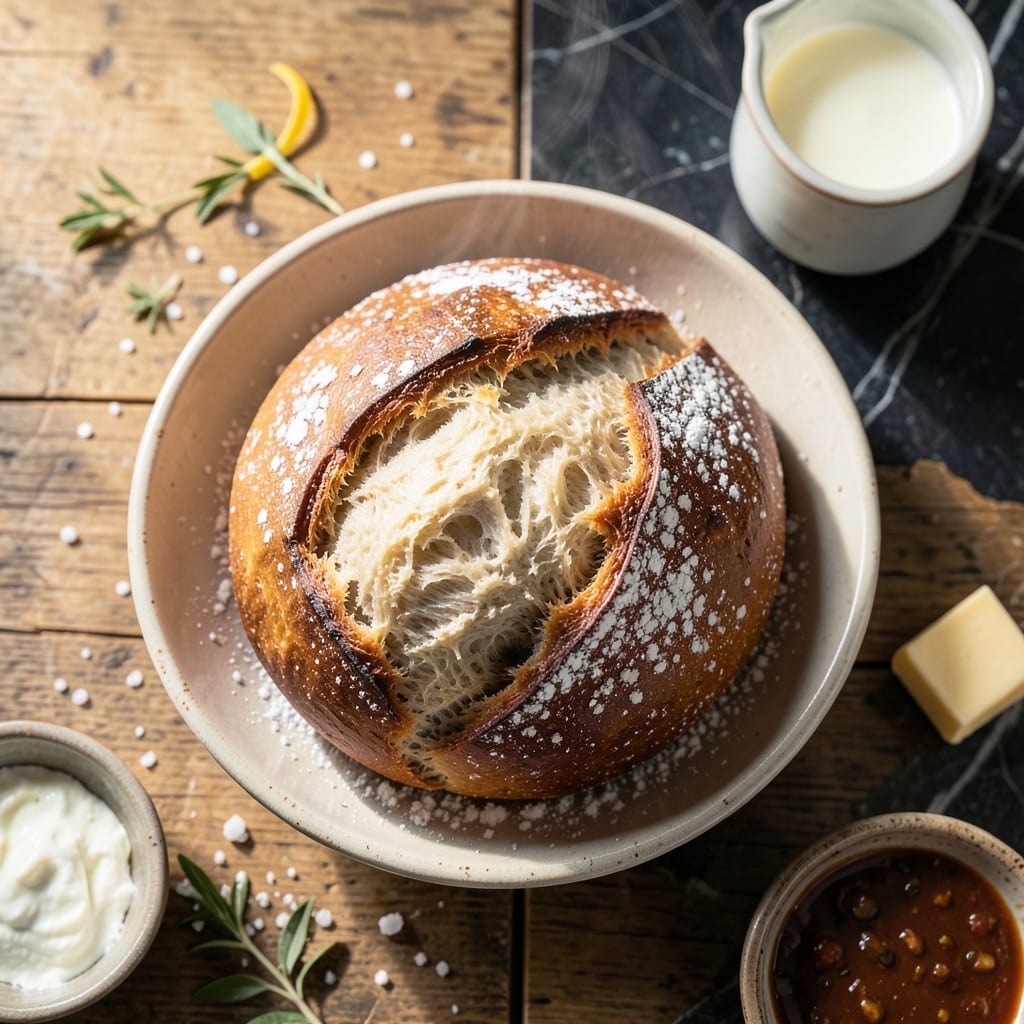
There’s something deeply satisfying about baking bread the old-fashioned way, where patience and simple ingredients create something extraordinary. This traditional method begins with a starter that develops rich, tangy flavors over time.
The process is straightforward yet rewarding, with each step building on the last to produce a loaf with a tender crumb and golden crust. The starter, passed down through generations, gives the bread its signature depth of flavor and slightly sweet undertones.
What emerges from your oven is a beautiful, fragrant loaf that fills your kitchen with warmth and comfort. The texture is soft yet substantial, with a subtle sweetness that makes it perfect for any meal.
Serve it warm with butter or use it for sandwiches that taste like home. The tradition continues with every slice.
Ingredients for Amish Bread Recipe with Starter
Traditional starter and everyday pantry staples create this timeless, sweet loaf with ease.
| Ingredient | Amount | Notes |
|---|---|---|
| Amish Friendship Starter 🍞 | 1 cup | Active and bubbly, at room temperature |
| All-Purpose Flour 🌾 | 3 cups | Divided, plus extra for dusting |
| Granulated Sugar 🍚 | 1 cup | For sweetness and starter activation |
| Warm Milk 🥛 | 1 cup | Heated to 110°F, whole or 2% |
| Unsalted Butter 🧈 | ½ cup | Melted and cooled slightly |
| Large Eggs 🥚 | 2 whole | Room temperature, lightly beaten |
| Active Dry Yeast 🍞 | 2 ¼ tsp | One standard packet, proofed |
| Baking Soda 🧂 | 1 tsp | For additional rise and tenderness |
| Salt 🧂 | 1 tsp | Fine sea salt or table salt |
| Ground Cinnamon 🌿 | 1 tsp | For warm, spiced flavor |
| Vanilla Extract 🌿 | 1 tsp | Pure extract for best flavor |
| Raisins 🍇 | ½ cup | Optional, for texture and sweetness |
| Chopped Walnuts 🌰 | ½ cup | Optional, lightly toasted |
The starter is the soul of this bread. Use an active Amish Friendship Starter—it should smell yeasty and bubbly, not sour or off. King Arthur Flour is ideal for the all-purpose flour, but any reputable brand works. Warm the milk gently to 110°F—too hot kills the yeast, too cold slows activation. For the butter, Plugrá or Kerrygold offer consistent quality, but any unsalted variety prevents over-salting.
Short on time? Swap the starter for 1 cup of active sourdough discard. No raisins? Dried cranberries or chopped dates add a similar chew. Walnuts can be replaced with pecans or almonds—toast them for depth. For a richer loaf, use half-and-half instead of milk. The cinnamon can be increased to 1.5 teaspoons if you prefer a bolder spice profile.
The starter can be refrigerated for up to 5 days between feedings. Baked loaves keep at room temperature for 2 days or frozen for 3 months. Slice before freezing for easy portioning. Always bring refrigerated starter to room temperature before using.
Why You’ll Love This Recipe
- One Bowl Wonder: I just dump the starter, flour, sugar, and warm milk in a bowl—no fancy steps, no mess.
- Warm, Buttery Heaven: The butter and sugar in this loaf create that golden crust with a melt-in-your-mouth softness inside.
- Gift or Keep: I’ve given loaves to neighbors and frozen extras for busy mornings—it’s that adaptable.
- Pennywise Perfection: Honestly, the starter does half the work, so I spend less on yeast and still get a rich, homemade taste.
Step-by-Step Instructions for Amish Bread With Starter
Master this traditional technique for a moist, sweet loaf with perfect texture every time.
Step 1: Activate the Yeast and Starter Mixture
In a large mixing bowl, combine the 1 cup Amish Friendship Starter, 1 cup Granulated Sugar, and 1 cup Warm Milk heated to 110°F. The milk should feel warm to the touch but not hot—this temperature activates the yeast without killing it.
Whisk in the 2.25 tsp Active Dry Yeast and let the mixture sit for 5-7 minutes until it becomes frothy. This visual confirmation means the yeast is alive and working. The starter should already be bubbly and active at room temperature, which ensures proper fermentation.
Step 2: Incorporate Wet and Dry Ingredients
Add the 0.5 cup Unsalted Butter (melted and cooled slightly), 2 whole Large Eggs (lightly beaten), and 1 tsp Vanilla Extract to the starter mixture. Stir until fully combined—you should see a smooth, slightly thick liquid with no streaks of egg or butter.
In a separate bowl, whisk together 2 cups of the 3 cups All-Purpose Flour with the 1 tsp Baking Soda, 1 tsp Salt, and 1 tsp Ground Cinnamon. Gradually add this dry mixture to the wet ingredients, stirring just until no dry spots remain. The dough will be sticky—this is normal.
Step 3: Fold in Add-Ins and Complete the Dough
Gently fold in the 0.5 cup Raisins and 0.5 cup Chopped Walnuts (if using) with a spatula. These add texture and bursts of sweetness, but don’t overmix or the raisins will bleed color into the dough.
Add the remaining 1 cup All-Purpose Flour and stir until just incorporated. The dough should be thick but still slightly tacky. If it’s too sticky to handle, add an extra 1-2 tablespoons of flour, but avoid over-flouring, which can make the bread dense.
Step 4: Proof and Bake to Golden Perfection
Grease two 9×5-inch loaf pans and divide the dough evenly between them. Cover loosely with a clean kitchen towel and let rise in a warm place for 1-2 hours, or until the dough has doubled in size and springs back slowly when pressed.
Preheat your oven to 350°F. Bake for 45-50 minutes, or until the loaves are deep golden brown and a toothpick inserted in the center comes out clean. If the tops brown too quickly, tent the pans with foil during the last 15 minutes of baking.
Cool the loaves in the pans for 10 minutes, then transfer to a wire rack. Slice only after the bread has cooled completely to maintain its structure and moisture.
Pro Tips For Making Amish Bread Recipe With Starter
- Feed Starter Daily: I learned this the hard way—your Amish Friendship Starter needs stirring and feeding every 24 hours for 5-10 days before baking. Skipping even one day weakens the fermentation and leaves your bread dense.
- Warm the Milk Right: Use milk heated to about 110°F—hot enough to melt the butter but not scald it. Too hot kills the starter’s yeast, and too cool won’t activate it properly.
- Skip Cold Butter: Let the unsalted butter soften at room temperature for 30 minutes before mixing. Cold butter doesn’t incorporate evenly, and you’ll end up with pockets of grease in your loaf.
- Bake Until Golden: Don’t pull the bread at the first clean toothpick test—wait for a deep golden crust. I used to underbake mine, and the center stayed gummy despite passing the toothpick check.
Regional Styles of These Flavors
Pennsylvania Dutch
In Lancaster County, this bread is a staple at community gatherings and church suppers. The Pennsylvania Dutch version often includes molasses instead of sugar for a deeper, richer sweetness. I love how the molasses adds a hint of caramelized complexity to the loaf.
Midwestern Variations
In Ohio and Indiana, you’ll find this bread with a touch of maple syrup added to the dough. The syrup enhances the natural sweetness and gives the crust a beautiful, glossy sheen. I’ve also seen versions with diced apples folded in for extra moisture.
Southern Twist
Down South, bakers often add brown sugar and a pinch of nutmeg to the batter. The brown sugar keeps the bread moist, while the nutmeg adds a warm, cozy depth. It’s a small change that makes a big difference in flavor. 💪
New England Style
In New England, this bread is sometimes made with whole wheat flour for a nuttier, heartier texture. The addition of honey instead of granulated sugar gives it a subtle floral note that pairs beautifully with the cinnamon.
Amish Country Classic
The original Amish version sticks to the basics: starter, sugar, and simple spices. The focus is on the fermentation process, which develops a slightly tangy flavor that balances the sweetness. I find this version the most comforting and nostalgic.
Modern Adaptations
For a contemporary take, try adding chocolate chips or dried cherries to the dough. These additions bring a fun, modern twist while keeping the bread’s signature softness and warmth. ✨
Nutrition Facts
Frequently Asked Questions
How do I know my starter is ready to use?
Your starter should be bubbly, smell yeasty, and have doubled in size. If it’s inactive or smells sour, feed it with 1 cup flour, 1 cup sugar, and 1 cup milk and wait 4-6 hours.
Can I make this without raisins or nuts?
Skip them or swap in chocolate chips or dried cranberries. The bread will still be delicious and moist.
Why did my bread turn out dense?
Overmixing or over-flouring the dough can cause this. Stir just until combined and add flour sparingly. Also, ensure your yeast is fresh and active.
How long can I keep the starter between uses?
Feed it every 5 days and store it in the fridge. Bring to room temperature before using in a recipe.

- Peanut Brittle Recipe With Dry Roasted Peanuts: Crunchy Caramelized Sweetness - October 7, 2026
- Peanut Butter and Banana Bread Recipe UK: Moist Crumb With Nutty Swirls - October 7, 2026
- Frittata Recipe Oven: Fluffy Eggs with Crisp Golden Top - October 7, 2026