
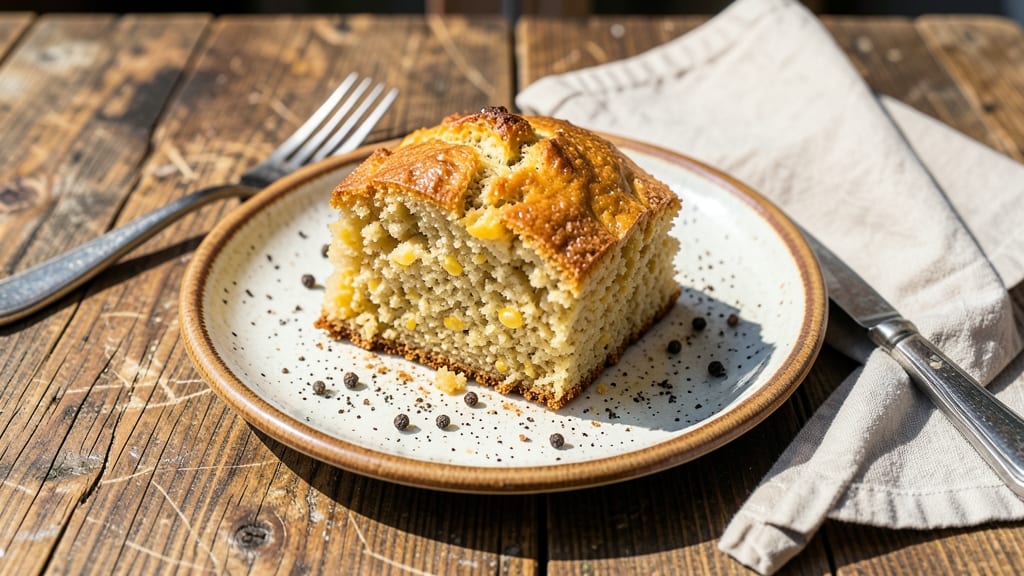
This Amish cornbread recipe delivers the perfect balance of a golden, crisp crust and a moist, crumbly interior that feels like a warm hug from the Midwestern countryside. The secret lies in using heritage cornmeal and a touch of baking powder for that signature texture—no shortcuts, just tradition.
I’ve baked this version for family gatherings, and it always disappears first.
The beauty of this recipe is its simplicity: just six core ingredients, including buttermilk for tenderness and honey for subtle sweetness. Baking at 375°F for 25 minutes ensures a perfectly set crust while keeping the center tender.
The Amish approach avoids processed additives, relying instead on whole-grain cornmeal and real butter for that rich, buttery flavor.
What you’ll end up with is a loaf of cornbread that’s crisp on the outside, crumbly and moist inside, with just the right amount of sweetness to complement savory dishes.
It pairs beautifully with honey butter, chili, or even a simple bowl of soup. This is the kind of cornbread that makes you want to slow down and savor every bite.
For those who love tradition, you can keep it classic with just these ingredients. If you prefer a savory twist, add jalapeños or cheddar cheese. Either way, this recipe delivers on the heartwarming flavors of Amish cooking—without the fuss. Let’s get baking!
Ingredients for amish corn bread
Six simple ingredients, one golden loaf that tastes like nostalgia. Heritage cornmeal and buttermilk make all the difference.
| Ingredient | Amount | Notes |
|---|---|---|
| Heritage Cornmeal 🌽 | 1 ½ cups | Stone-ground for authentic texture |
| All-Purpose Flour 🌾 | ½ cup | For structure and lift |
| Buttermilk 🥛 | 1 cup | Full-fat for tenderness |
| Unsalted Butter 🧈 | ½ cup | Cold, cubed for flaky layers |
| Honey 🍯 | ¼ cup | Wildflower for floral notes |
| Baking Powder 🍞 | 2 tsp | Double-acting for rise |
| Diamond Crystal Kosher Salt 🧂 | ½ tsp | Fine grain for even distribution |
| Freshly Ground Black Pepper 🌶️ | ¼ tsp | Freshly cracked for brightness |
| Large Eggs 🥚 | 1 whole | Room temperature for even baking |
The cornmeal is non-negotiable here. Stone-ground heritage cornmeal from brands like Bob’s Red Mill or King Arthur gives that authentic crumb. If you can only find regular cornmeal, it’ll work, but the texture won’t be quite the same. The buttermilk? Full-fat is key—low-fat won’t give you that tender crumb. I always grab mine from the dairy section at Whole Foods or Trader Joe’s, where it’s consistently fresh. For the honey, local wildflower adds depth, but any good-quality honey will do. The butter? Cold and cubed—don’t melt it, or you’ll lose those flaky layers.
No buttermilk? Substitute with 1 cup milk + 1 tbsp vinegar, let it sit for 5 minutes. Running short on honey? Maple syrup works in a pinch, but it’s heavier. The baking powder is critical—double-acting is a must, so check the label. Diamond Crystal kosher salt is my go-to, but any fine sea salt will work. For the pepper, freshly cracked makes a difference, but pre-ground is fine if that’s all you’ve got. The eggs? Room temperature ensures even baking, so take them out 15 minutes before mixing.
This cornbread keeps beautifully. Wrap the loaf in parchment paper and store at room temperature for 2 days, or freeze for up to 3 months. To reheat, wrap in foil and warm at 350°F for 10 minutes. The crust stays crisp, and the inside remains moist. I always bake an extra loaf—sliced and frozen, it’s perfect for quick breakfasts or sides. The honey butter pairs perfectly, but it’s just as good on its own.
Why You’ll Love This Recipe
- Five-Ingredient Magic: The pantry staples you already own—heritage cornmeal, buttermilk, butter—do all the heavy lifting. No fancy techniques, just mix, pour, bake. Honestly, I’ve made this wrong twice and still ended up with something edible.
- Buttery Honey Crunch: That drizzle of warm honey over freshly baked bread? It’s like a hug for your taste buds. The cornmeal gives it a satisfying bite, while the butter keeps it rich—no dry crumbs here.
- Weeknight Workhorse: Serve it alongside chili for dipping, tear it into breakfast toast, or pack slices for lunch. Between us, I’ve used it to soak up gravy, top salads, and even as a dessert base with extra honey. It’s the ultimate blank canvas.
- Budget-Friendly Staple: A single batch costs pennies and stretches for days. Freeze slices for quick breakfasts or toss crumbs into soups—no waste, all flavor. My wallet and I both approve.
Step-by-step instructions for Amish cornbread
Here’s how to make the perfect golden crust with a buttery, crumbly center using these exact ingredients.
Prep Ingredients for Optimal Texture
Start by letting the 1 cup buttermilk and 1 whole large eggs sit at room temperature for 10 minutes—this ensures even baking and prevents dense pockets. While they warm, cut the ½ cup unsalted butter into ¼-inch cubes and chill them in the freezer for 10 minutes to maintain their shape when baking.
In a medium bowl, whisk together the 1½ cups heritage cornmeal, ½ cup all-purpose flour, 2 teaspoons baking powder, ½ teaspoon diamond crystal kosher salt, and ¼ teaspoon freshly ground black pepper. Sift this dry mixture once to aerate it—this creates a lighter crumb. Set aside while you prepare the wet ingredients.
Combine Wet Ingredients for Rich Flavor
In a separate large bowl, gently mix the 1 cup buttermilk and ½ cup honey until fully combined. The honey will dissolve completely, adding natural sweetness and moisture to the batter. Add the 1 whole large egg and stir until just incorporated—don’t overmix, or the cornmeal will release excess starch and make the cornbread gummy.
Create a well in the center of the dry ingredients and pour in the wet mixture. Use a wooden spoon to gently fold everything together until just combined—you should still see small flour streaks. This prevents overdevelopment of gluten, which keeps the texture tender rather than tough. Fold in the chilled ½ cup butter cubes using your hands or a rubber spatula.
Bake for a Golden Crust and Crumbly Heart
Preheat your oven to 425°F and place a baking sheet on the middle rack. Grease an 8-inch cast-iron skillet (or 9-inch ovenproof dish) with 1 tablespoon butter—this ensures easy release and adds extra richness. Pour the batter into the skillet and smooth the top with a spatula. The batter will be thick but pourable.
Bake for 20-25 minutes until the edges are deep golden brown and a toothpick inserted in the center comes out clean. The top should have a crackly crust while the interior remains moist and crumbly. If the edges brown too quickly, tent the skillet loosely with foil to prevent over-browning while the center finishes baking.
Rest and Serve for Maximum Tenderness
Remove the cornbread from the oven and let it rest in the skillet for 5 minutes before transferring to a wire rack. This resting period allows the steam inside to redistribute, ensuring every bite is moist and tender. Serve warm, cut into wedges, and enjoy with honey butter or fresh fruit.
Here’s the thing—this cornbread stays fresh for 3 days at room temperature, but it’s best enjoyed within 24 hours when the crumb is at its peak. If you prefer a slightly sweeter version, add 1 tablespoon brown sugar to the dry ingredients, but trust me, the honey and butter combo delivers just the right balance of sweetness and richness.
Pro Tips For Making Amish Corn Bread
- Preheat That Pan: I learned this the hard way—slapping cold cast iron into a 425°F oven and wondering why the butter wouldn’t melt properly. Get that skillet screaming hot for 5-7 minutes first. The butter should sizzle like bacon when you pour in the batter, not just sit there looking sad.
- Measure Buttermilk Right: That “1 cup buttermilk” on the label? It’s a lie. Buttermilk is thick—fill your measuring cup to the brim, then level it off with a knife. Too little, and your batter turns out dry; too much, and it’s a soup. I’ve ruined batches both ways.
- Skip the Overmixing: Heritage cornmeal is stubborn. Stir the wet and dry ingredients just until the flour disappears—maybe 10-12 strokes max. Overmixing makes the crumb tough as a boot heel. My grandmother called it “whipping the life out of the bread,” and she wasn’t wrong.
- Honey Goes Last (Seriously): Drizzle that honey over the finished loaf, not the batter. It’ll caramelize beautifully on the hot surface, giving you that glossy, sticky crust everyone loves. Mix it in early, and you’re just making a sad, sticky mess that’ll burn before it bakes.
Essential equipment for amish corn bread
Cast-Iron Skillet
The Amish tradition of baking in cast-iron skillets is non-negotiable for that signature crisp crust and even heat distribution. I use an 8-inch Lodge pre-seasoned skillet—it retains heat perfectly and develops a natural non-stick surface over time.
Before baking, always preheat the skillet in the oven alongside your cornbread to ensure it’s hot when the batter goes in. 🔥
Mixing Bowls
Use two separate bowls for dry and wet ingredients to prevent overmixing. I recommend a medium stainless steel bowl for the dry mix (to aerate properly) and a large glass or ceramic bowl for the wet ingredients.
Glass bowls allow you to see when the batter is fully combined without streaks. Avoid plastic—it can react with acidic ingredients like honey over time.
Measuring Tools
Precision matters with cornbread, so invest in a stainless steel measuring set with both dry and wet measuring cups. For the heritage cornmeal, use the 1/4 cup measure and level it off with a straight edge—packing it down creates a dense crumb.
A digital kitchen scale (like the OXO Good Grips) is ideal for weighing butter cubes to ensure even distribution.
Wooden Spoon
A wooden spoon is essential for folding the batter—it prevents overmixing and won’t scratch your cast-iron skillet. I prefer a 6-inch hickory spoon from Oxo Good Grips because it’s sturdy yet gentle on delicate ingredients. Avoid metal spoons, which can introduce excess moisture and alter the texture.
Butter Knife
For cutting the ½ cup unsalted butter into ¼-inch cubes, a sharp butter knife (like the Victorinox Swiss Classic) gives you clean, even pieces. Chill the butter for 10 minutes before cutting—this prevents it from smearing and ensures it stays cold until baking.
The cubes should be uniform in size to melt evenly during baking.
Wire Rack
After baking, transfer your cornbread to a wire cooling rack to allow air circulation and prevent sogginess. I use a round wire rack that fits over my baking sheet—it elevates the loaf and keeps the crust crisp.
If you don’t have one, a clean kitchen towel on a plate works in a pinch, but the rack ensures even cooling.
Nutrition facts
Frequently asked questions
Why does Amish cornbread use buttermilk instead of regular milk?
Buttermilk adds tanginess and moisture that regular milk can’t match. The acidity helps activate the baking powder for better rise, while the fat content keeps the crumb tender and crumbly. Plus, it gives that classic Amish cornbread flavor—no substitutes quite work the same!
Can I make this recipe without a cast-iron skillet?
Yes! Use an 8-inch ovenproof ceramic or metal baking dish instead. Grease it well with butter to prevent sticking. The cornbread will still develop a golden crust, though cast iron gives the most even heat distribution and crispy edges.
How do I fix a dense or gummy cornbread?
Overmixing or underbaking usually causes this. For next time, fold the batter just until combined (small flour streaks are fine) and bake until a toothpick comes out clean. If it’s already baked, try reheating slices wrapped in foil at 350°F for 5-10 minutes to restore moisture.
What’s the best way to store leftover cornbread?
Wrap tightly in parchment paper and store at room temperature for 2 days or freeze for up to 3 months. To reheat, wrap slices in foil and warm at 350°F for 5-7 minutes—this keeps the crust crisp while reviving the crumb.
Can I add cheese or jalapeños to this recipe?
For a savory twist, mix in ½ cup shredded cheddar or 2 chopped jalapeños with the wet ingredients. Reduce the honey to ¼ cup if adding cheese to balance flavors. The Amish often served cornbread with chili or fried chicken—perfect for soaking up sauces!

- 1950’s Betty Crocker Banana Bread Recipe: Nostalgic Spice Perfection - November 29, 2026
- Meghan Markle’s Pasta Recipe: Creamy Garlic Mushroom Twist for Weeknights - November 29, 2026
- Applebee’s Lemon Chicken with Quinoa Recipe: Bright Citrus Glaze and Fluffy Quinoa Fusion - November 29, 2026