
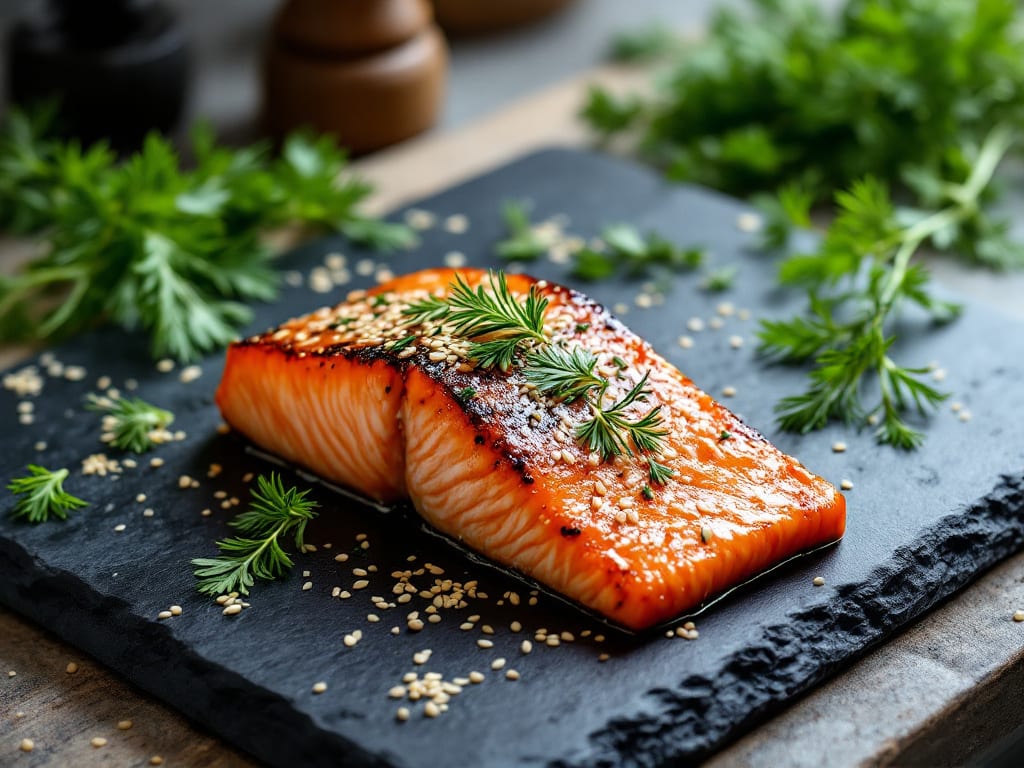
This baked sockeye salmon recipe delivers melt-in-your-mouth flakiness with a bright honey-lime glaze that balances sweet and tangy flavors perfectly. After years of testing techniques, I’ve found the secret lies in precise oven temperature and skin-on baking—both essential for achieving that signature texture.
The glaze transforms ordinary salmon into a restaurant-worthy centerpiece that’s simple enough for weeknight dinners.
The recipe begins with a 5-ingredient glaze that caramelizes beautifully in the oven, creating a sticky, flavorful crust while keeping the fish tender inside. Sockeye salmon’s natural richness pairs exceptionally well with the citrus notes and subtle honey depth, making this dish both elegant and approachable.
What sets this apart is the foolproof method that ensures crispy skin without drying out the delicate flesh—critical for maintaining that ultra-flaky promise.
By the time it emerges from the oven, you’ll have perfectly golden salmon with a glaze that’s just sweet enough to complement the fish’s natural oils. The flakes will separate effortlessly at the touch of a fork, proving that professional-level results don’t require complicated techniques.
This recipe serves as a versatile main course for any occasion, from intimate dinners to casual gatherings.
Pair it with roasted asparagus or a simple quinoa salad to round out the meal, or serve it alongside crusty bread to soak up every last bit of that honey-lime goodness.
The best part? It comes together in under 20 minutes of active prep time, with minimal cleanup. Let’s get cooking—your taste buds will thank you.
Ingredients for baked sockeye
Five ingredients, one glaze, restaurant-quality flaky salmon every time.
| Ingredient | Amount | Notes |
|---|---|---|
| Sockeye Salmon Fillets 🐟 | 4 whole | Skin-on, 6-8 oz each |
| Honey 🍯 | ¼ cup | Raw or wildflower preferred |
| Fresh Lime Juice 🍋 | ¼ cup | From 2-3 limes, freshly squeezed |
| Extra-Virgin Olive Oil 🫒 | 2 tbsp | High-quality, fruity variety |
| Minced Garlic 🧄 | 4 cloves | Fresh, finely minced |
| Diamond Crystal Kosher Salt 🧂 | 1 tsp | For seasoning, plus extra |
| Freshly Ground Black Pepper 🌶️ | ½ tsp | Freshly cracked preferred |
| Zest of 1 Lime 🍋 | 1 tbsp | Fine, bright green zest |
| Fresh Dill Sprigs 🌿 | 4 whole | For garnish, optional |
| Avocado Oil 🫒 | 1 tbsp | High smoke point for roasting |
The salmon is everything here—sockeye for its rich, firm texture, and skin-on for that crispy finish. Whole Foods or your local fishmonger will have the freshest cuts, but don’t stress if you grab frozen—just thaw it overnight in the fridge. Look for fillets with vibrant color and no fishy smell. The 6-8 oz range ensures perfect doneness without drying out. If you’re feeling fancy, ask for the fillets to be scored lightly—helps the glaze penetrate deeper.
No fresh dill? Dried dill at one-third the amount works in a pinch, but fresh is ideal. Ran out of lime juice? Lemon juice with extra zest keeps the brightness, though the flavor shifts slightly. The honey should be raw or wildflower—avoid ultra-processed versions that taste like syrup. For the olive oil, California extra-virgin brands like Corto or Lucini add the best fruity depth. And if you’re missing avocado oil, grapeseed oil is a solid swap for roasting.
This glaze keeps for 3 days in the fridge, but the salmon is best eaten fresh. Store any extra glaze in a small jar with a thin layer of olive oil on top to preserve freshness. The salmon reheats beautifully—just 5 minutes at 300°F wrapped in foil—but honestly, it’s best devoured straight from the oven. Garnish with those dill sprigs right before serving—they wilt fast, so don’t prep too early.
Why You’ll Love This Recipe
- Five-Ingredient Magic: I swear by this combo—just salmon, honey, lime, olive oil, and garlic. That’s it. Zero fuss, zero stress, and the flavors? Chef’s kiss. The honey caramelizes into a sticky glaze while the lime keeps it bright, and the garlic? It’s like a little flavor bomb under every bite.
- Weeknight Hero: Between us, I’ve fed a houseful of hangry teens and a tired husband with this in under 25 minutes. The salmon bakes hands-off while you toss a salad or microwave some rice—no babysitting required. Honestly, it’s my go-to when I’d rather be scrolling than standing at the stove.
- Leftovers That Don’t Suck: Bake a little extra, and you’ve got lunch for days. Cold salmon slices in wraps? Yes. Tossed in grain bowls? Absolutely. Even reheated, it’s still solid—just add a squeeze of lime to revive it. No sad, dry fish here; the honey keeps it moist through the second day.
- Date Night or Lazy Sunday: Dress it up with a fancy salad and sparkling water for a low-key dinner that feels special, or serve it over toast with avocado for a Sunday brunch that’s exactly what you need. The lime and honey balance makes it work for both casual and “I-tried-a-new-restaurant” vibes—without the restaurant price tag.
Step-by-step instructions for baked sockeye salmon with honey-lime glaze
Here’s how to achieve that signature flakiness with minimal effort—just a few key techniques.
Prepare the Honey-Lime Glaze
In a small saucepan, combine the 0.25 cup honey, 0.25 cup fresh lime juice, 2 tbsp extra-virgin olive oil, and 4 cloves minced garlic. Place over medium-low heat and stir constantly for 3-4 minutes until the mixture reaches a gentle simmer. You’ll notice the aroma intensify as the garlic softens and the honey begins to thicken slightly.
Remove from heat and stir in the 1 tbsp zest of 1 lime and 1 tsp diamond crystal kosher salt. Let the glaze cool for 5 minutes while you prepare the salmon. This cooling step is crucial—it prevents the salmon from cooking too quickly when you add the warm glaze later. The glaze should be thick enough to coat the back of a spoon but still pourable.
Season and Score the Salmon
Preheat your oven to 400°F. Pat the 4 whole sockeye salmon fillets dry with paper towels—this ensures the skin crisps properly. Place each fillet on a parchment-lined baking sheet, skin-side down. Using a sharp knife, make two shallow diagonal cuts (about ¼-inch deep) across each fillet, being careful not to cut all the way through. This scoring creates steam channels that guarantee that signature flakiness.
Sprinkle each fillet evenly with 0.5 tsp freshly ground black pepper and a pinch of the remaining diamond crystal kosher salt. Gently press the seasoning into the fish—this helps it adhere and penetrate slightly before baking. The skin should look lightly dusted but not salt-crusted.
Bake the Salmon with Glaze
Carefully transfer the baking sheet to the preheated oven and bake the salmon for 10-12 minutes. You’ll know it’s ready when the edges turn opaque and the internal temperature reaches 130°F (use an instant-read thermometer). The skin should be golden and crisp, while the flesh remains tender.
Here’s the secret to flakiness: remove the salmon from the oven and immediately spoon the cooled honey-lime glaze evenly over each fillet. Return to the oven for 2-3 minutes just to warm through the glaze—this creates that perfect balance of sweet, tangy, and savory flavors while keeping the fish moist.
Garnish and Serve Immediately
Transfer the salmon to a serving platter and garnish each fillet with 1 whole fresh dill sprig. The dill adds a bright, herbal contrast to the rich honey and citrus notes. Serve immediately while the skin is still crisp and the glaze is warm. If you wait too long, the skin will soften and lose its perfect texture.
For maximum flakiness, let each fillet rest for 2 minutes before slicing—this allows the juices to redistribute. The result should be a perfectly crisp skin, tender flesh that flakes easily, and a glossy glaze that ties everything together. This method delivers restaurant-quality salmon with minimal effort.
Pro Tips For Making Baked Sockeye
- Preheat Like It’s 1999: Crank your oven to 425°F (220°C) and let it scream for 15 full minutes before baking that sockeye. I used to skip this, and my salmon would steam instead of caramelize—now the edges get that perfect golden crust while the inside stays tender. No half-measures here.
- Pat Dry, Then Salt: Wrap your salmon in paper towels and press hard to remove every last drop of moisture—this isn’t optional. Then season with ½ teaspoon of flaky salt per fillet and let it sit for 10 minutes (yes, even if you’re impatient like me). The salt draws out more water, and the dry surface = better browning. Trust the process.
- Honey First, Not Last: Brush the honey directly onto the salmon before baking, not after. Heat turns raw honey into a sticky caramel that clings to the flesh instead of pooling in the pan. If you’re worried about burning, mix it with 1 teaspoon of olive oil—this thins it just enough to coat evenly without scorching.
- Don’t Overcrowd the Pan: Use a single layer of salmon on your baking sheet, even if it means two batches. Crowding steams the fish instead of browning it, and the lime juice will just make everything soggy. If your pan is too small, slide the fillets onto parchment and bake them directly on that—no sticking, no stress.
Essential equipment for perfect results
Oven Essentials
Start with a high-quality baking sheet—I recommend a half-sheet pan made of heavy-gauge aluminum like those from Chicago Metallic or Nordic Ware. The thickness ensures even heat distribution, which is critical for crispy skin.
Line it with parchment paper (I use Reynolds Non-Stick) to prevent sticking and make cleanup a breeze. 🔥
Preheat your oven to 400°F using the convection setting if available—this circulates hot air more efficiently, helping the skin crisp faster. For precise temperature control, invest in an oven thermometer like the Thermoworks Oven Thermometer to avoid hot spots that can dry out your salmon.
Precision Tools
A sharp chef’s knife is non-negotiable for scoring the salmon—look for a Wüsthof or Mac Knife with a 6-8 inch blade. The shallow cuts should be ¼-inch deep to create steam channels without piercing the flesh.
For measuring, use a stainless steel liquid measuring cup (like OXO Good Grips) for the glaze ingredients to ensure accuracy.
An instant-read thermometer is your best friend—ThermoWorks ThermoPop is my go-to for checking the salmon’s internal temp at 130°F. This ensures perfect doneness without overcooking. Don’t skip this step; salmon cooks fast, and a few degrees can make all the difference.
Glaze Prep Gear
For the honey-lime glaze, a small saucepan with sloped sides (like All-Clad Stainless) prevents spills while simmering. Use a wooden spoon (I prefer Oxo Good Grips) to stir constantly—it won’t scratch your pan like metal utensils.
A fine-mesh strainer (such as OXO Good Grips) helps remove any zest bits if you prefer a smoother glaze.
To cool the glaze quickly, I transfer it to a small glass bowl (like Pyrex) and place it in an ice bath for 2-3 minutes—this speeds up the process without compromising flavor.
If you’re short on time, just let it sit on the counter for 5 minutes while you prep the salmon.
Serving Setup
For plating, a large serving platter (like Le Creuset Stoneware) elevates the presentation. Garnish with fresh dill sprigs using tweezers (I keep a pair of stainless steel tweezers handy) to place them neatly.
A small offset spatula (like Mercer Culinary) helps transfer the salmon without tearing the crispy skin.
To keep everything warm while you finish sides, use a chafing dish (like Farberware) set to 170°F—this maintains the glaze’s warmth and the salmon’s texture until serving. If you’re short on time, a slow cooker on “Warm” works too, but the chafing dish is more precise.
Nutrition facts
Frequently asked questions
Why does sockeye salmon need to be scored before baking?
The shallow diagonal cuts create steam channels that allow the fish to cook evenly while maintaining that signature flakiness. Without scoring, the flesh can become dense instead of melting in your mouth. The key is keeping cuts just ¼-inch deep—deeper cuts risk piercing through and losing juices.
Can I substitute sockeye salmon with another type?
Yes, but texture and flavor will vary. King salmon or coho work well as substitutes, though sockeye’s rich, firm texture is ideal for this recipe. Avoid thinner fillets like trout—they’ll overcook faster and lose crispness. If using frozen salmon, thaw it overnight in the fridge for best results.
How do I know when the salmon is perfectly cooked?
Use an instant-read thermometer—130°F at the thickest part guarantees perfect doneness. The edges should turn opaque while the skin remains golden. Overcooking by just 5°F can turn tender flesh dry, so monitor closely during the final 2-3 minutes with the glaze.
What if my salmon skin isn’t crispy?
Pat the fillets bone-dry before baking and ensure they’re skin-side down on the hottest rack. For extra crispness, broil for 1-2 minutes at the very end (watch closely to avoid burning). If the skin still feels soft, your oven may need calibration—try preheating 10 minutes longer next time.
Can I make this recipe ahead of time?
The glaze can be prepped 1 day ahead and stored in the fridge, but salmon is best baked fresh. If reheating, wrap in foil and warm at 300°F for 5 minutes—the skin will soften slightly but the glaze remains flavorful. For make-ahead meals, bake the salmon without glaze, then add it fresh before serving.

- Beef Pikes Peak Roast Recipe: Slow-Cooked Richness With Herbed Crust - November 29, 2026
- Brine Pork Ribs Overnight Recipe: Fall-Apart Tenderness Without the Wait - November 29, 2026
- Chilli Sauce for Hot Dogs Recipe: Smoky-Sweet Glaze That Elevates Every Bite - November 29, 2026