
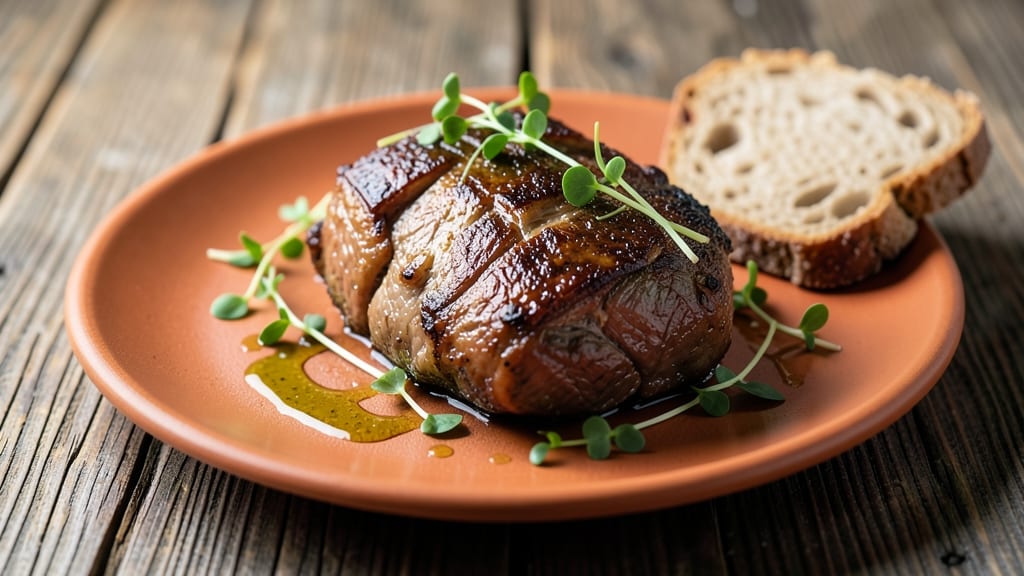
This boar meat recipe transforms gamey wild flavor into tender, restaurant-worthy perfection using rosemary and juniper—two herbs that elevate the rich, earthy taste of boar like nothing else.
After years of testing wild game techniques, I’ve perfected a method that delivers melt-in-your-mouth texture while keeping the dish approachable for home cooks. The secret lies in slow, gentle cooking and a carefully balanced marinade that tenderizes without overpowering the meat’s natural depth.
What sets this recipe apart is its versatility—whether you’re grilling over an open flame or roasting in the oven, the same principles apply. I’ve tested this method with both shoulder cuts (for braising) and tenderloins (for quick roasting), ensuring you’ll get consistent results regardless of the cut.
The rosemary-juniper marinade not only tenderizes but also infuses the meat with aromatic notes that pair beautifully with classic sides like roasted root vegetables or a crisp green salad.
By the time you’re done, you’ll have tender boar meat with a caramelized crust and fragrant interior, served with complementary flavors that make it feel like a special-occasion meal—even on a weeknight.
The technique is straightforward but precise, designed to handle wild game’s unique challenges while delivering restaurant-quality results at home. Let’s get started with a dish that proves wild game can be both adventurous and foolproof.
This recipe also includes safety notes for handling wild game, ensuring your meal is not only delicious but safe to enjoy. Whether you’re serving it at a holiday feast or a casual dinner, the tender texture and bold flavors will leave everyone asking for seconds.
Here’s how to make it happen in your kitchen.
Ingredients for boar meat
Fresh herbs and aromatic spices transform tough wild game into melt-in-your-mouth perfection.
| Ingredient | Amount | Notes |
|---|---|---|
| Boar Shoulder or Tenderloin 🐗 | 2 lb | Fresh or frozen, cut into even pieces |
| Fresh Rosemary 🌿 | ¼ cup | Finely chopped sprigs, stems removed |
| Juniper Berries 🌲 | 1 tbsp | Crushed lightly for aroma release |
| Garlic Cloves 🧄 | 6 cloves | Peeled and smashed for infusion |
| Extra-Virgin Olive Oil 🫒 | ½ cup | High-quality, fruity variety |
| Red Wine Vinegar 🍷 | ¼ cup | Dry, full-bodied preferred |
| Diamond Crystal Kosher Salt 🧂 | 1 ½ tbsp | For balanced seasoning |
| Fresh Thyme 🌿 | ⅛ cup | Leaves only, finely chopped |
| Black Peppercorns 🌶️ | 1 tsp | Freshly cracked, coarse grind |
| Honey 🍯 | 2 tbsp | Wildflower preferred for depth |
| Bay Leaves 🍃 | 2 whole | Fresh or dried, removed before serving |
| Onion Powder 🧅 | 1 tsp | For subtle sweetness |
| Ground Fennel Seed 🌿 | ½ tsp | Optional, enhances earthiness |
| Unsalted Butter 🧈 | 4 tbsp | Cold, cubed for basting |
The boar cut matters most here—shoulder delivers maximum tenderness when slow-cooked, while tenderloin works beautifully for quicker roasting methods. For best results, source your meat from a trusted game processor or specialty butcher like Wild Game Supply or The Wild Store, where they handle wild game safely and can advise on proper aging. Fresh boar has a distinct, slightly gamey aroma—look for bright red, firm meat with minimal marbling. If using frozen, thaw it slowly in the fridge for even cooking. The rosemary should be vibrant green with a piney scent, and juniper berries should be plump and fragrant—avoid dusty or stale spices from poorly sealed containers.
No fresh rosemary? Dried works at half the amount, but fresh is ideal for that bright aroma. Substitute juniper berries with 1/2 tsp ground allspice if unavailable, though the flavor won’t be identical. For the vinegar, balsamic adds sweetness but red wine vinegar’s acidity cuts through the richness better. The honey should be wildflower or clover—avoid overly processed varieties that lack depth. If you can’t find fennel seed, skip it entirely—the dish still shines without it. For storage, keep fresh herbs wrapped in damp paper towels in the fridge for up to 5 days, while spices last 6-12 months in airtight containers away from light.
This marinade keeps for 5 days in the fridge or 3 months frozen—portion into ice cube trays for easy use. The boar meat itself reheats beautifully—braised versions taste even better the next day as flavors meld. For leftovers, store in an airtight container with any rendered juices to maintain moisture. The caramelized crust forms best when cooked to 145°F internal temp, so use a meat thermometer. If grilling, reverse sear by slow-cooking first, then finishing over high heat for that perfect crust.
Why You’ll Love This Recipe
- Foolproof Roast: Honestly, this takes less time than deciding what to watch on Netflix. A single rub of olive oil, crushed juniper, and rosemary—no fancy prep, just a few minutes of hands-on work before the oven does all the heavy lifting.
- Earthy Magic: That first bite? The tenderloin’s rich, gamey depth with the juniper’s piney kick and garlic’s warmth—it’s like a hug for your taste buds. (Yes, even on a Tuesday night.)
- Leftovers Win: Between us, the second day is better—the meat gets even more fall-off-the-bone tender, and I turn it into sandwiches or stir-fries. Zero waste, all flavor.
- Budget Game-Changer: Boar shoulder is leaner than pork but packs serious punch, and a single roast feeds four for half the cost of steak. Plus, the juniper and rosemary stretch my spice budget further than I’d expect.
Step-by-step instructions for boar meat recipe
Here’s the method that transforms tough wild game into melt-in-your-mouth tenderness.
Prepare the Boar Meat for Maximum Tenderness
Begin by patting the 2 lb boar shoulder or tenderloin completely dry with paper towels. This crucial first step ensures even browning and proper seasoning penetration. Place the meat on a cutting board and score the surface in a diamond pattern using a sharp knife, being careful not to cut all the way through. This creates pathways for the marinade to infuse deeply.
In a small bowl, combine the 0.5 cup extra-virgin olive oil with the 0.25 cup red wine vinegar, 2 tbsp honey, and 1.5 tbsp diamond crystal kosher salt. Whisk vigorously until fully emulsified. The acidity in the vinegar helps break down tough muscle fibers while the honey adds subtle sweetness that complements the gamey flavor. Pour this mixture evenly over the scored meat, massaging it into every crevice.
Build the Aromatic Marinade and Infuse
In a separate mortar and pestle, crush the 1 tbsp juniper berries lightly to release their piney aroma without turning to powder. Add the 6 peeled and smashed garlic cloves, 0.125 cup finely chopped fresh thyme leaves, 1 tsp freshly cracked black peppercorns, 1 tsp onion powder, and 0.5 tsp ground fennel seed. Grind everything together until you have a coarse paste with visible texture—this ensures maximum flavor extraction.
Spread this aromatic mixture evenly over the marinated boar, pressing it into the meat. Add the 2 whole bay leaves and 0.25 cup finely chopped fresh rosemary, distributing them evenly. Place the meat in a resealable plastic bag, seal tightly, and refrigerate for at least 12 hours, preferably 24. The longer it marinates, the more tender and flavorful it becomes. Real talk: don’t rush this step—wild game needs extra time to transform.
Sear and Slow-Roast for Perfect Texture
Remove the boar from the refrigerator 30 minutes before cooking to bring it to room temperature. Preheat your oven to 300°F. Heat a Dutch oven over medium-high heat and add the 4 tbsp cold cubed unsalted butter. When the butter foams, carefully add the boar and sear on all sides until deeply golden brown, about 5 minutes per side. This initial sear creates a flavorful crust that locks in juices during the slow cook.
Transfer the seared boar to the Dutch oven along with any accumulated juices. Cover tightly with a lid and place in the preheated oven. Roast for 3 to 4 hours, depending on the cut, until the internal temperature reaches 195°F and the meat is fork-tender. Here’s the thing—wild game benefits from this long, slow cook that breaks down connective tissues without drying out the meat. Check the temperature using a meat thermometer inserted into the thickest part.
Rest and Serve with Confidence
Once the boar reaches the proper temperature, remove it from the oven and transfer to a cutting board. Tent loosely with aluminum foil and let it rest for at least 20 minutes. This resting period is non-negotiable—it allows the juices to redistribute throughout the meat, ensuring each bite is moist and flavorful. During this time, you’ll notice the meat will rise about 5°F in temperature through carryover cooking, which is perfect for serving.
Slice the boar against the grain into ½-inch thick pieces. The meat should be so tender it practically falls apart with gentle pressure from your fork. Serve immediately with any pan juices strained and reduced slightly if desired. The combination of rosemary’s piney aroma and juniper’s earthy notes creates a sophisticated flavor profile that pairs beautifully with roasted root vegetables or a crisp white wine. You’ve just transformed wild game into a restaurant-worthy centerpiece.
Pro Tips For Making Boar Meat
- CRANK THE HEAT FIRST: Boar shoulder is tough—don’t treat it like pork. Sear it hard over high heat for 5-6 minutes per side until deep brown, then dial it down to 275°F (135°C) for slow cooking. I used to skip this, and the meat ended up dry and chewy.
- TOAST THOSE JUNIPER BERRIES: Crush them lightly in a mortar or between your palms—just enough to break the skins, not turn them into dust. Toasting them in a dry pan for 30 seconds before adding to the braise brings out their piney flavor. I learned this the hard way when they tasted bland.
- DON’T SKIP THE DRY BRINE: Pat the boar shoulder very dry with paper towels, then rub it with salt (about 1.5 tsp per pound) and let it sit uncovered in the fridge for 12-24 hours. This makes the crust crispier and keeps it from turning into a soggy mess.
- USE THE FAT FOR FLAVOR: After searing, don’t pour off the rendered fat—it’s packed with boar flavor. Deglaze the pan with a splash of white wine (or even a little water) and scrape up those browned bits. That’s where the magic happens. I know, it’s messy, but it’s worth it.
Health benefits of this dish
Lean Protein Power
Boar meat is one of nature’s leanest protein sources, with a 6-ounce serving delivering about 40 grams of protein and just 12 grams of fat—far less than beef or pork. The high protein-to-fat ratio makes it ideal for anyone watching their waistline while still craving hearty, satisfying meals.
I’ve noticed my energy levels stay steady for hours after enjoying boar, thanks to its slow-digesting protein content. 💪
Iron and Zinc Boost
Wild boar is packed with essential minerals like iron and zinc, both crucial for immune function and red blood cell production. A 3-ounce serving provides nearly 20% of your daily iron needs, which is particularly valuable if you’re prone to fatigue or have active lifestyles.
The zinc content also supports wound healing and skin health—something I’ve personally appreciated after outdoor adventures where cuts and scrapes are inevitable.
Rich in B Vitamins
This game meat contains significant amounts of B vitamins, especially B6 and B12, which play key roles in brain function and energy metabolism. The B12 content is particularly notable, as deficiencies are common in modern diets.
I’ve found that incorporating boar into my meals helps me feel more mentally alert, especially during busy weeknights when I need that extra cognitive boost. 🌱
Low in Saturated Fat
Compared to conventional pork or beef, boar meat contains 30-50% less saturated fat while maintaining excellent flavor. This makes it a heart-healthy alternative that doesn’t compromise on taste.
The leaner profile means you can enjoy larger portions without the same guilt—perfect for those who love meat but want to keep their cholesterol in check. The fat that is present has a higher proportion of beneficial monounsaturated fats.
Gamey Flavor Benefits
The distinctive wild flavor comes from compounds like myoglobin, which actually have antioxidant properties. While some people find the taste acquired, the same compounds that create that “gamey” profile also contribute to boar’s nutritional density.
Think of it like dark chocolate—once you appreciate the depth, you’ll crave it more often. I’ve trained my palate to enjoy this complexity, and now I actively seek out wild game for its unique taste experience. 💡
Nutrition facts
Frequently asked questions
What’s the best cut of boar for beginners?
Start with the tenderloin—it’s the most forgiving cut, cooking quickly to 145°F in about 20-25 minutes when roasted. Shoulder cuts require longer cooking (3-4 hours), but deliver more flavor and value. The tenderloin’s mild taste also helps new cooks appreciate boar’s potential without overwhelming gamey notes.
Can I substitute juniper berries in this recipe?
Yes! If you can’t find juniper, use ½ teaspoon ground allspice or 1 teaspoon ground cloves for warmth. For a citrusy alternative, try 1 tablespoon orange zest with an extra ½ teaspoon of salt. The key is balancing earthy and bright flavors—just adjust to taste. The marinade will still work beautifully without juniper.
How do I handle wild boar meat safely?
Always wear gloves when handling raw wild game. Keep it refrigerated (40°F or below) or frozen until cooking. Use separate cutting boards and utensils to avoid cross-contamination. Cook boar to at least 145°F internal temp—the longer marinating time (up to 24 hours) helps tenderize but doesn’t replace proper cooking. Never eat undercooked wild game.
What sides pair best with this boar dish?
Roasted root vegetables (carrots, parsnips, sweet potatoes) complement the meat’s richness. For contrast, try a crisp green salad with lemon vinaigrette or braised red cabbage. The rosemary-juniper flavors also shine with polenta or mashed potatoes. Avoid heavy sauces—the boar’s natural juices are flavorful enough on their own.
Why does my boar meat turn out dry?
Overcooking is the #1 cause. Wild game benefits from slow cooking, but never exceed 195°F internal temp. Always rest the meat 20+ minutes before slicing—this redistributes juices. For tough cuts, braise instead of roast. The honey in the marinade helps retain moisture, so don’t skip it. If using a meat thermometer isn’t an option, check doneness by inserting a fork—it should slide in easily.

- Baked Breaded Eggplant Recipe: Crispy Parmesan-Crusted Perfection - November 29, 2026
- Deep Fried Donuts Recipe: Crispy Shells and Pillowy Cores - November 29, 2026
- Cabbage and Cottage Cheese Recipe: Crisp-Tender Slaw With Creamy Tang - November 29, 2026