
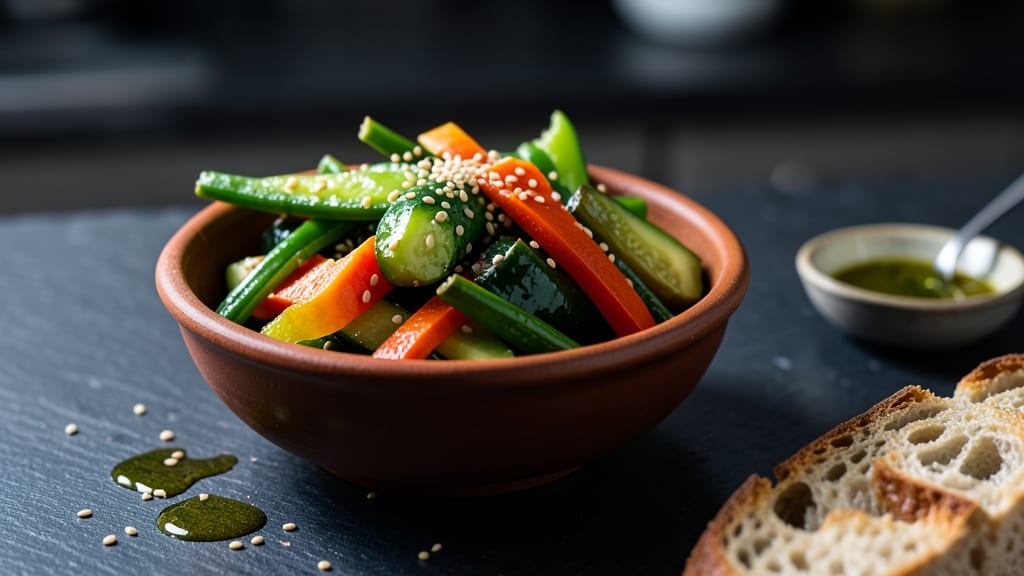
This wok-fried crisp-tender greens recipe delivers the bold flavors of classic Chinese stir-fry without any animal products—just vibrant vegetables, aromatic garlic, and a savory vegan sauce that transforms simple greens into a restaurant-worthy dish. The secret lies in high-heat wok technique that creates those signature crisp-tender edges while keeping the centers perfectly tender. I developed this recipe after realizing how often vegan Chinese dishes lose their authentic texture, and this method solves that problem completely.
The foundation of great stir-fry is proper preparation: thinly sliced vegetables that cook evenly in minutes, not hours, and a wok hot enough to sear rather than steam. We’ll use bok choy and napa cabbage for their crisp texture, but any sturdy greens work—just slice them uniformly for consistent doneness.
The garlic gets toasted until fragrant but never burns, adding depth that store-bought sauces can’t match. This isn’t just another veggie side—it’s a complete, protein-rich main dish that holds its own against any meat-based stir-fry.
What you’ll end up with is a plate of vibrant greens with crisp-tender edges that snap satisfyingly between your teeth, tender centers that melt slightly, and a glossy sauce clinging to every bite. The aroma alone—garlic, ginger, and umami-rich vegan oyster sauce—will have everyone asking what’s in it.
This recipe serves four as a main or six as a side, making it perfect for weeknight dinners or meal prep. The best part? It comes together in just 20 minutes with minimal cleanup.
For those who want to explore further, we’ll cover substitutions for traditional ingredients like oyster sauce (which we’ll make vegan-friendly) and how to adjust spice levels for different palates. The technique works equally well with other vegetables—think bell peppers, snap peas, or even mushrooms for added heartiness.
Let’s create a stir-fry that proves plant-based Chinese cuisine can be just as satisfying as the original.
Ingredients for china veg
Vibrant vegetables, aromatic garlic, and a savory vegan sauce transform simple greens into a restaurant-quality stir-fry.
| Ingredient | Amount | Notes |
|---|---|---|
| Bok Choy 🥬 | 4 whole | Baby bok choy preferred, stems separated |
| Napa Cabbage 🥬 | ½ lb | Thinly sliced, leaves separated |
| Garlic Cloves 🧄 | 6 cloves | Peeled, sliced thinly |
| Fresh Ginger 🌿 | 1 tbsp | Finely grated, organic preferred |
| Sesame Oil 🫒 | 1 tbsp | Toasted, for aroma |
| Vegetable Oil 🫒 | ½ cup | High smoke point for wok |
| Vegan Oyster Sauce 🍶 | ¼ cup | Homemade or store-bought |
| Low-Sodium Soy Sauce 🥄 | 2 tbsp | Tamari for gluten-free |
| Maple Syrup 🍁 | 1 tbsp | For balance, grade B preferred |
| White Mushrooms 🍄 | 8 oz | Sliced, for texture |
| Red Bell Pepper 🌶️ | ½ cup | Thinly sliced, seeds removed |
| Sesame Seeds 🌱 | 1 tbsp | Toasted, for garnish |
| Diamond Crystal Kosher Salt 🧂 | ½ tsp | For seasoning |
| Black Peppercorns 🌶️ | ¼ tsp | Freshly ground |
The bok choy and napa cabbage are the stars—farmers markets often carry the freshest varieties, but any sturdy greens work. Look for bright green leaves with crisp stems; avoid wilted or yellowing produce. The garlic should be firm and aromatic, while the ginger should have a vibrant color and no soft spots. For the mushrooms, cremini or shiitake add depth, but white mushrooms are perfectly fine. Trader Joe’s and Whole Foods typically carry pre-sliced mushrooms, saving prep time. The bell pepper should be firm with a glossy skin—red or yellow varieties add natural sweetness that complements the savory sauce.
No vegan oyster sauce? Soy sauce plus a splash of coconut aminos creates a similar umami profile. Substitute maple syrup with agave nectar if needed, though maple’s deeper flavor is preferred. Fresh ginger is ideal, but dried ginger at half the amount works in a pinch. The sesame oil is for aroma—use sparingly, as it’s potent. For extra protein, add firm tofu or edamame (½ lb each). If you’re using pre-cut vegetables, pat them thoroughly dry before cooking to ensure crisp-tender edges. The wok should be ripping hot before adding oil—this is non-negotiable for authentic texture.
Store fresh greens in damp paper towels in sealed containers for 3-4 days. Mushrooms keep 5-7 days in the fridge, while garlic and ginger last 2-3 weeks unrefrigerated. The sauce components (soy sauce, maple syrup) can be pre-mixed and stored for up to 2 weeks. For meal prep, cook the stir-fry and refrigerate in airtight containers—reheat in a skillet over medium heat with a splash of water to restore crispness. Freeze portions for up to 3 months by spreading in a single layer before bagging. Garnish with toasted sesame seeds just before serving to preserve their crunch.
Why You’ll Love This Recipe
- One-Pan Magic: I swear by this recipe—just toss the bok choy and napa leaves into a hot wok with minced garlic, a thumb of ginger, and a splash of sesame oil. No extra pans, no fuss, and the whole thing comes together while you chop the rest of dinner.
- Umami Bomb: That moment when the garlic starts sizzling and the ginger hits the heat—chef’s kiss. The sesame oil finishes it off with a nutty, smoky punch that makes even the simplest cabbage leaves taste like a restaurant dish.
- Lunchbox Hero: Between us, this is my go-to for packed lunches. The cabbage stays crisp when stored right, and the garlic-ginger dressing keeps it from getting soggy. My kids actually eat their veggies now—(yes, even on a Tuesday).
- Budget Stretch: A single head of napa and a few bok choy leaves feed four for under $5. Honestly, I make this twice a week because it’s the only way I can afford to eat fresh greens without breaking the bank. Plus, leftovers reheat like a dream.
Step-by-step instructions for wok-fried crisp-tender greens with garlic
Here’s the method to achieve restaurant-quality texture and flavor every time.
Prepare and Blanch the Vegetables
Separate the stems from the leaves of the 4 whole bok choy and thinly slice the 0.5 lb napa cabbage leaves. Slice the 8 oz white mushrooms and 0.5 cup red bell pepper into thin strips. Finely grate the 1 tbsp fresh ginger and slice the 6 cloves garlic cloves thinly.
Bring a pot of water to a rolling boil and blanch the bok choy stems and napa cabbage for 30 seconds—just enough to soften slightly but maintain their vibrant color. Immediately plunge them into ice water to stop the cooking process. This partial cooking ensures they become tender without turning mushy during the final wok-frying.
Build the Flavor Base
Heat the 0.5 cup vegetable oil in a wok or large skillet over medium-high heat until it shimmers but doesn’t smoke. Add the 6 cloves sliced garlic cloves and 1 tbsp finely grated fresh ginger, stirring constantly for 30 seconds until fragrant but not browned. This step develops the aromatic foundation of your dish.
Add the 8 oz sliced white mushrooms and 0.5 cup sliced red bell pepper, cooking for 3-4 minutes until the mushrooms release their moisture and begin to soften. Remove them from the wok and set aside temporarily—they’ll return later for the final toss.
Wok-Fry the Greens to Crisp-Tender Perfection
Increase the heat to high and add the blanched bok choy stems and napa cabbage leaves to the wok. Stir-fry vigorously for 2-3 minutes until the edges begin to crisp and the greens wilt just slightly. The key here is high heat and constant movement to achieve that signature wok-fried texture.
Return the mushrooms and bell peppers to the wok, tossing everything together for an additional 1 minute. The residual heat will finish cooking them while reabsorbing their juices into the greens. Season with the 0.5 tsp diamond crystal kosher salt and 0.25 tsp freshly ground black peppercorns, mixing well to distribute evenly.
Create the Glazed Sauce
Reduce the heat to medium and add the 1 tbsp toasted sesame oil, 0.25 cup vegan oyster sauce, 2 tbsp low-sodium soy sauce, and 1 tbsp maple syrup to the wok. Stir continuously for 1-2 minutes until the sauce thickens slightly and begins to coat the vegetables. This balance of sweet, savory, and umami creates the signature flavor profile.
Taste and adjust seasoning if needed—you might need a touch more soy sauce for saltiness or maple syrup for sweetness. The sauce should cling lightly to the vegetables without being overly glazy.
Finish and Garnish
Transfer the vegetables to a serving platter and drizzle with any remaining sauce from the wok. Sprinkle generously with 1 tbsp toasted sesame seeds for added texture and visual appeal. Serve immediately while the greens are still crisp-tender and the sauce is warm, ensuring maximum flavor impact.
This dish maintains its perfect texture for about 10 minutes after cooking, so serve promptly. The combination of wok-fried greens with the aromatic garlic-ginger base and glossy sauce delivers that authentic Chinese restaurant experience at home.
Pro Tips For Making China Veg
- STIR-FRY FAST: Bok choy and Napa cabbage wilt like sad lettuce when you overcrowd the pan. Cut them into even 1-inch pieces first, then work in two batches—your wok’s happy medium is 2-3 minutes per load on high heat.
- GINGER SLICE THIN: Fresh ginger loses its punch when you hack it into uneven chunks. Use a microplane or the flat side of your knife to shave 1/4-inch slices—no peeling needed—and toss them straight into the oil. They’ll melt into the sauce without leaving chewy surprises.
- GARLIC CRISP MATTERS: Raw garlic cloves stay stubborn when stir-frying. Smash each one with the flat of your knife before adding—this exposes more surface area to the heat, so they brown in 30 seconds instead of burning. (Yes, even if you’re impatient like me.)
- SESAME OIL LAST: Drizzle sesame oil at the very end—right after you’ve turned off the heat. It’s delicate stuff, and adding it too early means it’ll cook off into nothing but a faint aroma. A teaspoon at the finish gives that nutty aroma without overpowering the veggies. (Your future self will notice the difference.)
Creative variations of these flavors
Spicy Sichuan Twist
Transform this dish into a fiery Sichuan-inspired stir-fry by adding 1 tbsp Sichuan peppercorns (toasted and ground) and 1 tsp chili bean paste to the garlic-ginger base. The numbing-spicy kick from Sichuan peppercorns pairs perfectly with the crisp-tender greens.
For extra heat, toss in 2 thinly sliced Thai bird’s eye chilies after the sauce stage. Serve with pickled mustard greens on the side to balance the heat. 🌶️
Creamy Peanut Crunch
Give this stir-fry a Thai-Chinese fusion twist by adding 3 tbsp creamy peanut sauce (mix 2 tbsp smooth peanut butter, 1 tbsp soy sauce, 1 tsp maple syrup, and 1 tsp lime juice) at the sauce stage.
Top with crushed peanuts and cilantro for texture. This variation works especially well with shredded cabbage and carrot matchsticks for extra crunch. The peanut sauce adds richness that complements the crisp greens beautifully.
Miso-Glazed Umami
For a Japanese-inspired variation, replace the vegan oyster sauce with 3 tbsp white miso paste mixed with 1 tbsp rice vinegar and 1 tsp grated ginger. Stir this into the wok during the sauce stage for a deep, fermented umami flavor.
Add thinly sliced shiitake mushrooms and bok choy for extra depth. Garnish with toasted sesame seeds and thinly sliced scallions. This version has a richer, more complex flavor profile that works well as a main dish.
Sweet Chili Heat
Infuse this stir-fry with bold sweetness and heat by adding 2 tbsp sweet chili sauce (like Maesri or Cholula) to the sauce mixture. For extra texture, toss in thinly sliced red onions and crispy fried shallots at the end.
This variation is perfect for those who love a balance of sweet, spicy, and savory flavors. The sweet chili sauce also helps caramelize the edges of the greens for extra depth. 🌟
Protein-Packed Tofu
Turn this into a complete protein meal by adding 8 oz extra-firm tofu (pressed and cubed) to the wok during the garlic-ginger stage. Toss the tofu until golden, then proceed with the rest of the stir-fry.
For extra flavor, marinate the tofu in 1 tbsp soy sauce, 1 tsp maple syrup, and ½ tsp grated ginger before adding it to the wok. The tofu absorbs the sauce beautifully, making this dish heartier and more satisfying.
Winter Root Variation
Swap the greens for daikon radish and shredded cabbage, and add thinly sliced carrots and lotus root for a winter-inspired version. Use 1 tbsp goji berries and ½ cup shredded napa cabbage in the sauce for natural sweetness.
This variation is perfect for colder months and adds a satisfying crunch. The root vegetables hold up well to the high-heat stir-fry, making this a hearty and flavorful dish. ❄️
Nutrition facts
Frequently asked questions
What makes this vegan Chinese stir-fry different from regular Chinese veggie dishes?
This recipe focuses on achieving that signature crisp-tender texture through proper blanching and high-heat wok technique, which many vegan Chinese dishes miss. The sauce balances sweet, savory, and umami without relying on animal products, using ingredients like vegan oyster sauce and maple syrup instead. Plus, it’s designed to be a complete protein-rich main dish, not just a side.
Can I substitute other vegetables in this recipe?
While bok choy and napa cabbage are ideal for texture, you can swap in broccoli florets, green beans, or shredded Brussels sprouts. For heartier options, add bell peppers, snap peas, or shiitake mushrooms. Just ensure all veggies are cut uniformly for even cooking. The key is keeping them sturdy enough to hold crisp edges.
Why do I need to blanch the greens before stir-frying?
Blanching for 30 seconds softens the greens slightly so they become tender during the final stir-fry, rather than turning mushy. It also helps them absorb the sauce better. Skipping this step can result in uneven cooking—some parts overdone, others still crunchy. Think of it as pre-cooking to ensure perfect texture.
What’s the best way to make vegan oyster sauce at home?
Simmer ½ cup soy sauce, ¼ cup mushroom broth, 2 tbsp maple syrup, and 1 tbsp rice vinegar with a pinch of white pepper for 5 minutes. For depth, add 1 tsp miso paste or 1 tbsp nutritional yeast. Let it cool before using—it thickens as it sits! Store in the fridge for up to 2 weeks.
Can I make this ahead of time for meal prep?
Yes, but with a trick: Cook the stir-fry, then refrigerate in airtight containers with a damp paper towel to retain moisture. Reheat in a skillet over medium heat with a splash of water for 2-3 minutes to restore crispness. For freezing, spread portions in a single layer before bagging—they’ll last 3 months. Avoid microwaving to prevent sogginess.

- Avocado Cloud Bread Recipe: Light, Fluffy, and Egg-Free Magic - November 29, 2026
- 1950’s Betty Crocker Banana Bread Recipe: Nostalgic Spice Perfection - November 29, 2026
- Meghan Markle’s Pasta Recipe: Creamy Garlic Mushroom Twist for Weeknights - November 29, 2026