
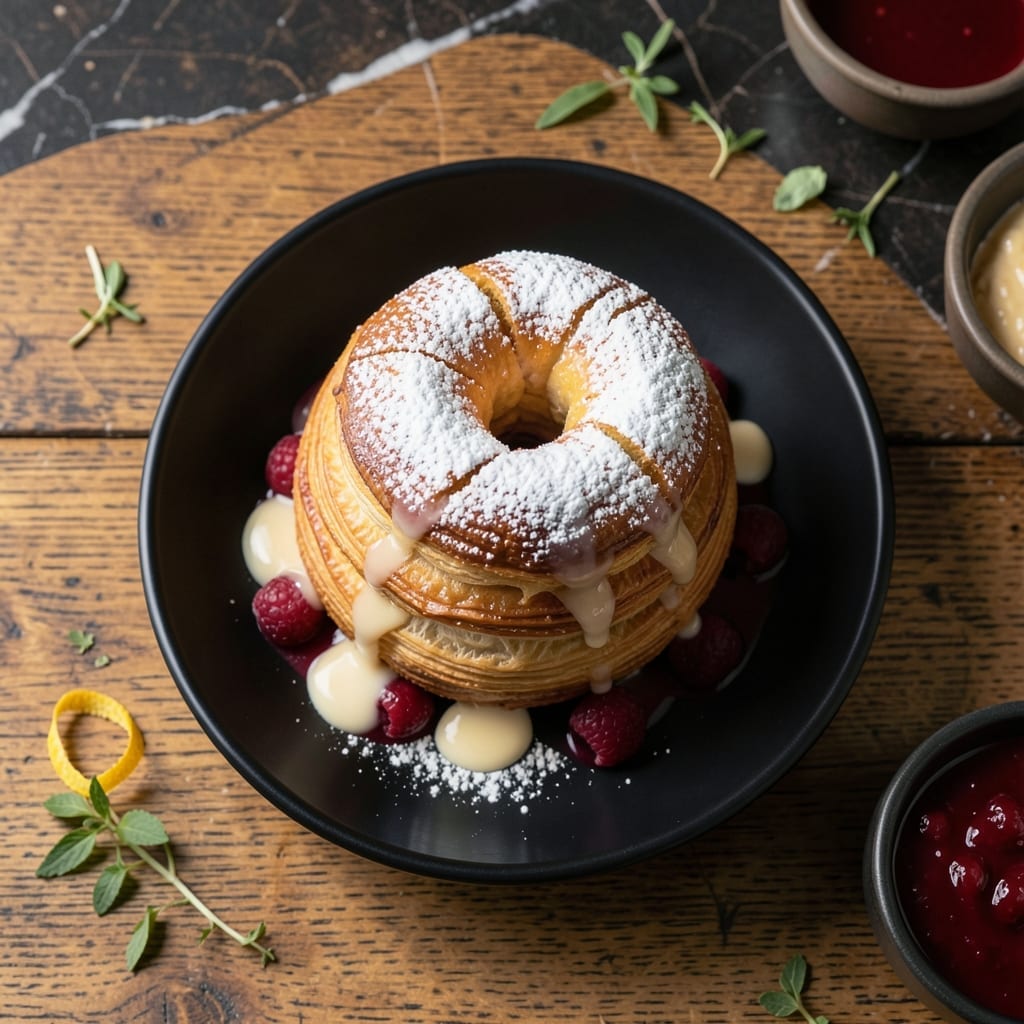
There’s a reason Dominique Ansel’s creation took the pastry world by storm—this dish delivers flaky, golden layers that shatter at the touch. I’ve spent years perfecting the technique to bring that signature croissant-donut magic to home kitchens.
The process combines croissant dough lamination with precise frying, creating a texture that’s crisp outside and impossibly light inside. Each bite reveals distinct layers that separate beautifully, just like the original.
What sets this apart is the balance of buttery pastry and fried dough, finished with a simple glaze that lets the layers shine. The result is a treat that’s both elegant and indulgent.
This method requires patience but rewards with professional-quality results that will impress even the most discerning pastry lovers.
Ingredients for Cronut Recipe Dominique Ansel
Professional-grade ingredients create those signature flaky layers everyone craves in this indulgent treat.
| Ingredient | Amount | Notes |
|---|---|---|
| All-Purpose Flour 🌾 | 3 ½ cups | Plus extra for dusting work surface |
| Granulated Sugar 🍚 | ¼ cup | Divided for dough and glaze |
| Active Dry Yeast 🍞 | 1 package | 2 1/4 tsp per package |
| Whole Milk 🥛 | ¾ cup | Warm to 110°F for yeast activation |
| Unsalted Butter 🧈 | 1 ¼ cups | Very cold, cut into 1/2-inch cubes |
| Salt 🧂 | 1 tsp | Fine sea salt preferred |
| Large Egg 🥚 | 1 whole | Room temperature for lamination |
| Vanilla Extract 🌿 | 1 tsp | Pure extract for best flavor |
| Vegetable Oil 🫒 | 4 cups | For frying, neutral high-smoke point |
| Powdered Sugar 🍬 | 1 ½ cups | For glaze, sifted for smoothness |
| Heavy Cream 🥛 | 3 tbsp | For glaze consistency adjustment |
| Rose Water 🌹 | ½ tsp | Optional for Dominique Ansel signature flavor |
The butter is non-negotiable here—European-style with 82% fat content from Plugrá or Kerrygold delivers the flakiest lamination. Your flour should be unbleached all-purpose with 10-12% protein; King Arthur is the gold standard. Yeast freshness is critical—check the expiration date and proof it first. The milk adds richness, but ensure it’s whole fat for proper dough development.
No rose water? Skip it entirely rather than substituting—it’s a signature element but not essential. For the glaze, confectioners’ sugar must be ultra-fine; C&H or Domino work well. The vegetable oil can be peanut or canola as alternatives, but avoid olive oil due to its low smoke point. If you can’t find European butter, Land O’Lakes in a pinch (though the layers won’t be as pronounced).
The dough requires 24-48 hours of chilling between folds—don’t rush this. Completed cronuts are best consumed the same day but will keep at room temperature for 12 hours. Store any leftover glaze in the fridge for up to 5 days, though it may need re-whisking before use.
Why You’ll Love This Recipe
- One Bowl Magic: I love that I can mix the dough—flour, sugar, yeast, warm milk—all in one bowl. No fancy equipment, just my hands and a little patience.
- Buttery Heaven: That first bite with the crispy layers and the rich butter melting in your mouth? Worth every minute of proofing time.
- Brunch Showstopper: Honestly, these cronuts steal the show at brunch. My friends always ask for seconds before the first batch is even gone.
- Budget Bakery: Between us, making these at home costs a fraction of the bakery price. And I get a dozen for the effort of one fancy pastry run.
Step-by-Step Instructions for Cronuts
Master the lamination and frying process to create bakery-quality pastries with perfect layers.
Step 1: Activate Yeast and Prepare Dough Base
Warm the 0.75 cup Whole Milk to 110°F—it should feel warm but not hot. In a stand mixer bowl, combine this with the 0.25 cup Granulated Sugar and 1 package Active Dry Yeast. Let sit for 5-7 minutes until foamy.
Add 3.5 cups All-Purpose Flour, 1 tsp Salt, 1 whole Large Egg, and 1 tsp Vanilla Extract to the yeast mixture. Using the dough hook, mix on low for 2 minutes until combined, then increase to medium for 5 minutes until smooth and elastic. The dough should pull away from bowl sides cleanly.
Step 2: Incorporate Cold Butter Through Laminating Folds
Turn the dough onto a lightly floured surface and shape into a 1-inch thick rectangle. Wrap in plastic and chill for 30 minutes. While waiting, arrange the 1.25 cups Unsalted Butter into a 8×8-inch square between parchment sheets and pound to ½-inch thickness.
Roll the chilled dough into a 12×16-inch rectangle. Place the butter square in the center and fold the dough edges over to encase it completely. Seal the seams by pressing with your fingers. This butter layer creates the signature flakiness.
Step 3: Execute Precision Laminating Folds
Roll the dough into a 10×20-inch rectangle. Fold the top third down and the bottom third up (like a letter) to create 3 layers. This is one turn. Rotate 90 degrees and repeat the rolling and folding process for a total of 4 turns.
Between each turn, chill the dough for 20 minutes to prevent the butter from softening. After the final turn, chill for 1 hour or overnight. The dough should feel firm and the butter layers should remain distinct when you slice it.
Step 4: Shape, Proof and Fry to Golden Perfection
Roll the chilled dough to ¼-inch thickness and cut into 3-inch rings using a round cutter. Place on a parchment-lined tray, cover, and proof at room temperature for 1.5-2 hours until nearly doubled in size. They should spring back slowly when pressed gently.
Heat 4 cups Vegetable Oil to 350°F in a deep pot. Fry the cronuts 2 at a time for 2-3 minutes per side until deep golden brown. The layers should be visibly puffed and separated. Drain on a wire rack.
Step 5: Prepare Signature Glaze
Whisk together 1.5 cups Powdered Sugar, 3 tbsp Heavy Cream, and 0.5 tsp Rose Water until smooth. The glaze should coat the back of a spoon but still be pourable. If too thick, add cream 1 teaspoon at a time.
Dip the warm cronuts into the glaze immediately after frying, allowing excess to drip off. Place on a wire rack to set for 10 minutes. The glaze should form a glossy, slightly crackly surface as it dries. Serve warm for optimal flakiness and texture.
Pro Tips For Making Cronut Recipe Dominique Ansel
- Chill the Dough: After laminating, let the dough rest in the fridge for at least 2 hours—I learned this the hard way when my first batch turned into flat, buttery pancakes.
- Use Cold Butter: Keep your unsalted butter ice-cold when folding it into the dough; warm butter melts too fast and ruins the flaky layers.
- Proof at Room Temp: Don’t rush the first rise—let the yeast work its magic at room temperature for 1-2 hours, or until the dough doubles in size.
- Fry at 350°F: Maintain a steady oil temperature of 350°F; any hotter and the outside burns before the inside cooks, any cooler and you’ll get greasy cronuts.
Troubleshooting This Recipe
Butter Melting Through
If your butter starts peeking through the dough during lamination, it means it’s too warm. Chill immediately for 20-30 minutes before continuing. I keep my kitchen at 68°F during this process to prevent this issue. Work quickly but don’t rush—patience is key. 💡
Dense Cronuts
Underproofed dough creates dense pastries. Let your rings proof until they’ve nearly doubled and spring back slowly when pressed. If your kitchen is cool, place them near a warm oven (100°F) for 30-45 minutes to encourage rising.
Greasy Texture
If your cronuts feel greasy after frying, your oil temperature was likely too low. Use a thermometer to maintain 350°F consistently. I use a Taylor digital thermometer for precision. Fry in small batches to avoid temperature drops.
Uneven Layers
Inconsistent rolling causes uneven layers. Always roll to exact dimensions: 10×20-inch for turns, ¼-inch for final cut. Use a ruler for accuracy—I measure every time. Chill between folds to maintain distinct butter layers.
Glaze Too Thick
If your glaze won’t drizzle, add 1 tsp Heavy Cream at a time until it reaches ribbon consistency. The ideal glaze should coat the back of a spoon but still pour easily. Whisk vigorously to remove lumps.
Burnt Exteriors
Dark spots mean your oil was too hot or the cronuts fried too long. Reduce heat slightly if you notice browning before 2 minutes per side. Use peanut oil for its high smoke point if you’re struggling with temperature control. 🔥
Nutrition Facts
Frequently Asked Questions
How long does the lamination process take?
Plan for 24-48 hours total, including chilling time between folds. Each of the 4 turns requires 20 minutes of resting, plus overnight chilling after the final fold. Rushing this step risks melting the butter layers.
Can I use a different oil for frying?
Yes, peanut or canola oil work well as alternatives to vegetable oil. Avoid olive oil due to its low smoke point. Maintain 350°F consistently for even cooking and perfect layers.
What if my cronuts don’t puff up?
Underproofed dough or low oil temperature usually causes this. Proof until nearly doubled and use a thermometer to confirm 350°F oil. Fry in small batches to maintain temperature.
Is the rose water essential?
No, it’s optional but adds the signature floral note. Skip it entirely if unavailable—substitutes won’t replicate the original flavor. The glaze will still be delicious without it.

- Pea Shoots Recipe Salad: Fresh Greens With Asian-Inspired Dressing - October 9, 2026
- Peanut Butter Bark Recipe With Pretzels: Sweet and Salty Holiday Treat - October 9, 2026
- Peach Crisp Recipe With Fresh Peaches: Buttery Oat Topping Over Juicy Summer Fruit - October 9, 2026