
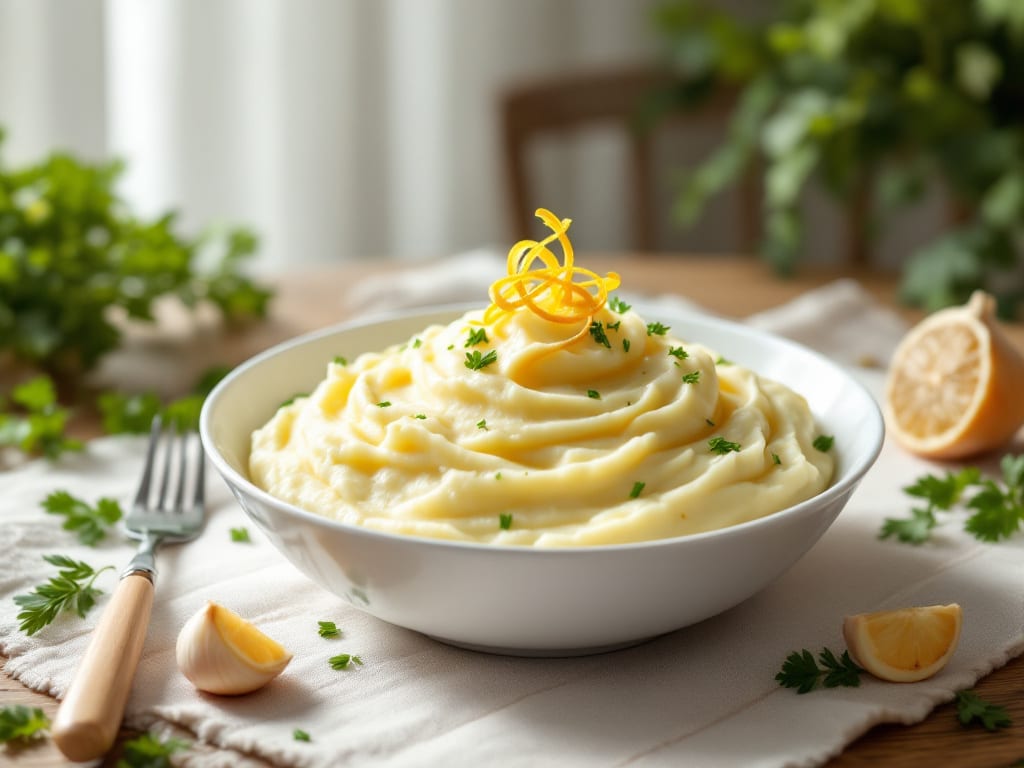
This easiest mashed potato recipe delivers velvety, buttery perfection in just 15 minutes—no lumps, no fuss, just restaurant-quality results at home. After years of testing, I’ve perfected a method that skips peeling (when possible) and uses a simple starchy trick to ensure silky smoothness every time.
The secret lies in the right potato variety and a foolproof mashing technique that eliminates the need for fancy gadgets.
What sets this recipe apart is the time-saving approach without sacrificing flavor or texture. You’ll start with Yukon Gold potatoes (their natural creaminess and buttery taste make them ideal), then boil them until tender before draining and mashing with just the right amount of butter and warm milk.
The key is patience—letting the potatoes steam-dry after boiling removes excess moisture, so your mash stays light and fluffy rather than gluey.
By the end, you’ll have a bowl of buttery smooth mashed potatoes with a velvety consistency and rich, creamy flavor—ready to pair with your favorite main dish. The best part?
This method works whether you’re feeding a crowd or just treating yourself to a comforting side. No one will guess it took less than 20 minutes to make.
For extra indulgence, consider adding roasted garlic, sour cream, or chives, but the basic version is already foolproof. Let’s get started—your taste buds (and dinner guests) will thank you.
Ingredients for easiest mashed potato
Four simple ingredients transform into velvety mashed potatoes—no gadgets, no lumps, just buttery perfection.
| Ingredient | Amount | Notes |
|---|---|---|
| Yukon Gold Potatoes 🥔 | 2 ½ lb | Russet alternative if Yukon unavailable |
| Unsalted Butter 🧈 | ½ cup | Cold, cut into small cubes |
| Whole Milk 🥛 | ½ cup | Warm, not hot |
| Diamond Crystal Kosher Salt 🧂 | 1 ½ tsp | Adjust to taste |
| Freshly Ground Black Pepper 🌶️ | ½ tsp | Freshly cracked preferred |
| Roasted Garlic Cloves 🧄 | 2 cloves | Optional, for extra depth |
| Fresh Chives 🌱 | 2 tbsp | Chopped, for garnish |
| Sour Cream 🥛 | ¼ cup | Optional, for creaminess |
Yukon Golds are your best bet—their natural creaminess and buttery taste make all the difference. Trader Joe’s and Whole Foods carry them year-round, but any grocery store should have them in the fall. If you can’t find Yukons, Russet potatoes work fine—just expect slightly drier mash. Skip peeling for faster prep, but scrub them well. For the butter, Plugrá or Land O’Lakes unsalted are my go-tos—they melt smoothly without adding moisture. The milk should be warm but not hot—just enough to melt the butter completely when mixed.
No whole milk? Half-and-half or warm heavy cream adds richness without thinning the texture. Short on butter? Olive oil or avocado oil at half the amount keeps it neutral. The roasted garlic is optional but worth it—roast whole cloves in olive oil at 400°F for 30 minutes. For extra indulgence, add 1/4 cup sour cream or crème fraîche at the end. Fresh chives brighten everything, but dried chives at one-third the amount work in a pinch. The kosher salt is crucial—it dissolves better than table salt, so don’t overdo it.
Potatoes keep 3-4 days in the fridge, but mash best when fresh. Butter stays fresh up to 6 months in the fridge, while milk should be used within 1 week of opening. For meal prep, make a double batch—mashed potatoes reheat beautifully. Store in an airtight container with a thin layer of plastic wrap pressed against the surface to prevent drying. Reheat in the microwave with a splash of milk for 30-45 seconds, stirring once halfway.
Why You’ll Love This Recipe
- I swear by this combo: Yukon Golds, butter, milk, and salt. That’s it. No fussing with garlic or cream—just pure, creamy perfection with zero extra steps.
- Four-Ingredient Magic: I swear by this combo: Yukon Golds, butter, milk, and salt. That’s it. No fussing with garlic or cream—just pure, creamy perfection with zero extra steps.
- No Mashing Struggles: Between us, I used to hate mashed potatoes because of the lumps. Not here. Boil, drain, smash with a fork—done. The buttery richness does all the work for you.
- Weeknight Hero: Honestly, this is my secret weapon for lazy nights. Toss it with roasted chicken or steak, and suddenly dinner feels special without the effort. (Yes, even on a Tuesday night.)
Step-by-step instructions for creamy mashed potatoes
Here’s how to achieve velvety, restaurant-quality mashed potatoes using just eight simple ingredients.
Prepare and Boil the Potatoes
Start by peeling the 2.5 lb Yukon Gold potatoes and cutting them into 1-inch chunks—smaller pieces cook more evenly. Place them in a large pot and cover with cold water by about 2 inches. Add 1.5 tsp Diamond Crystal kosher salt to the water right away; this helps season the potatoes as they cook.
Bring the water to a rolling boil over high heat, then reduce to a gentle simmer. Cook the potatoes for 12-15 minutes until they’re fork-tender—you’ll know they’re ready when a knife slides in easily with just slight resistance. Drain the potatoes immediately in a colander, shaking to remove excess water. The drier they are, the smoother your mash will be.
Mash the Potatoes with Butter and Milk
Return the drained potatoes to the pot and let them sit for 1 minute to steam-dry any remaining moisture. Then, add the 0.5 cup unsalted butter (cut into small cubes) and the 0.5 cup warm whole milk. Using a potato masher or wooden spoon, mash the potatoes until mostly smooth—you’ll still see some lumps, and that’s perfect.
Here’s the thing—don’t overwork the potatoes. Over-mashing leads to gluey, pasty results. Instead, focus on breaking them down just enough to create a thick, creamy base. If the mixture looks too thick, add 1-2 tablespoons of the warm milk to loosen it. The texture should be like thick pudding, not doughy.
Incorporate Roasted Garlic and Sour Cream
Once the potatoes are mostly mashed, press the 2 cloves roasted garlic cloves through a garlic press directly into the pot. This infuses the mash with deep, mellow garlic flavor without overpowering it. Stir gently to distribute the garlic evenly. Next, fold in the 0.25 cup sour cream using a silicone spatula—this adds a luxurious creaminess and prevents the potatoes from becoming gummy.
Taste and adjust the seasoning if needed. You might need a pinch more Diamond Crystal kosher salt or a crack of freshly ground black pepper to balance the flavors. The goal is a rich, well-rounded taste with a hint of tang from the sour cream. Let the mixture sit for 2-3 minutes to let the flavors meld.
Garnish and Serve Immediately
Transfer the mashed potatoes to a serving bowl and gently fold in the 2 tbsp chopped fresh chives just before serving. The chives add a bright, fresh contrast to the rich, buttery potatoes. For extra flair, you can also swirl in a thin ribbon of unsalted butter on top or drizzle with a little warm milk to create a marbled effect.
Serve the mashed potatoes immediately while they’re hot—this is when they’re at their peak texture and flavor. If you need to hold them for a short time, keep them covered in a warm oven (200°F) to prevent drying out. Every bite should be silky, creamy, and bursting with buttery goodness, with just a hint of garlic and pepper.
Pro Tips For Making Easiest Mashed Potato
- BOIL THEM UNTIL TENDER: I learned this the hard way—Yukon Golds should give slightly when pierced with a fork, not bounce back like a rubber ball. Overcooking turns them gluey, undercooking leaves you with gritty, uneven texture. Test one potato early; if it’s still firm, they need another 5-10 minutes in the water.
- USE COLD POTATOES FOR CREAMY RESULTS: Drain the hot potatoes into an ice bath for 5 minutes—yes, even if you’re impatient. This stops the cooking and makes mashing a breeze. Cold potatoes also soak up more butter and milk without turning gummy. (Your future self will thank you.)
- SALT THE WATER LIBERALLY: Diamond Crystal kosher salt is less dense, so use twice what you’d use with table salt. Salting the boiling water prevents blandness later—no need to add extra salt when mashing. Trust me, the potatoes will taste better without the aftertaste of over-seasoning.
- MASH IN BATCHES WITH HOT MILK: Heat the milk until steaming (not boiling) and add it in stages while mashing. Cold milk makes lumpy potatoes, and rushing the process leads to uneven texture. Work in ½-cup increments, mixing well after each addition—this guarantees silky smoothness without extra effort.
Essential equipment for perfect results
Potato Masher vs. Ricer
For this recipe, I recommend using a potato masher or a wooden spoon—both work perfectly to create that signature rustic texture with slight lumps. A masher gives you more control, while a spoon is great if you don’t have one.
If you want ultra-smooth mashed potatoes, a handheld potato ricer ($15-$25 on Amazon) is worth the investment—it eliminates lumps entirely while keeping the texture light. I use the OXO Good Grips Potato Ricer because it’s durable and easy to clean. 🥔
Heavy-Bottomed Pot
A stainless steel or enameled cast-iron pot (like All-Clad or Le Creuset) is ideal for boiling potatoes—it distributes heat evenly and prevents scorching. Avoid nonstick pots for boiling; they can’t handle the high heat needed for even cooking.
If you’re short on time, a microwave-safe bowl works for mashing (just boil potatoes separately), but the texture won’t be as creamy. For large batches, a 6-quart Dutch oven (like Lodge) is my go-to. 🔥
Thermometer for Precision
While not mandatory, a kitchen thermometer (like the Thermoworks Thermapen) ensures your potatoes reach the perfect doneness—205-210°F internal temperature—without overcooking. This is especially helpful if you’re using Russet potatoes, which can dry out faster.
For most home cooks, a fork test (fork slides in easily) is sufficient, but a thermometer takes the guesswork out of timing. 🌡️
Garlic Press for Flavor
A garlic press (like the OXO Good Grips) is a game-changer for infusing roasted garlic flavor without overpowering the dish. Simply press the cloves directly into the warm mash—the heat from the potatoes melts the garlic into a silky paste.
If you don’t have one, a microplane or even a fork works in a pinch, but you’ll get less even distribution. 🧄
Silicone Spatula for Mixing
Use a heat-resistant silicone spatula (like OXO Good Grips) to fold in sour cream and butter—it won’t scratch your pot and makes mixing effortless. Avoid metal utensils when adding butter, as they can cause the mixture to break down into a gluey consistency.
For garnishing, a small offset spatula helps create clean, even swirls of chives or butter. 🍴
Storage Containers
For leftovers, transfer mashed potatoes to glass airtight containers (like Pyrex) or BPA-free plastic containers (like Rubbermaid TakeAlong). Press plastic wrap directly on the surface to prevent drying.
If reheating, add 1-2 tablespoons of warm milk to restore creaminess. For freezing, portion into quart-sized freezer bags and flatten for easy thawing. 🧊
Nutrition facts
Frequently asked questions
Why do your mashed potatoes turn out smoother than other recipes?
The secret is in the steam-drying step after boiling and the right potato variety. Yukon Golds contain more moisture and starch than Russets, so we let them sit for 1 minute after draining to evaporate excess water. This creates a lighter, creamier texture without needing extra milk or butter. Plus, we avoid over-mashing—just breaking down the potatoes until they’re 80% smooth keeps the natural body intact.
Can I make these mashed potatoes ahead of time?
Yes, but with a few tricks to prevent drying out. Make them up to 2 days ahead and store in an airtight container with plastic wrap pressed directly on the surface. Reheat in a 350°F oven for 15-20 minutes with a splash of warm milk. For freezing, portion into quart-sized bags and thaw overnight in the fridge—never microwave directly from frozen, or they’ll turn gluey.
What if I don’t have Yukon Gold potatoes?
Russet potatoes work perfectly as a substitute—they’re lower in moisture and higher in starch, which actually makes them great for ultra-creamy mash. Just boil them 5 minutes longer (until fork-tender) and let them steam-dry for 2 minutes after draining. You may need 1 extra tablespoon of milk to achieve the same silky texture. Red potatoes are too waxy and will make the mash watery, so avoid them for this recipe.
Why do my mashed potatoes always turn out gluey?
Gluey mashed potatoes usually happen from one of three things: over-mashing, not enough drying time, or adding cold ingredients. First, let your potatoes steam-dry for 1-2 minutes after draining. Second, mash just until mostly smooth—don’t force it with a blender or food mill. Third, always add warm milk and butter (never cold) to maintain the emulsion. If it’s still too thick, add 1 tablespoon of warm milk at a time while mixing.
Can I make these mashed potatoes without dairy?
Replace the butter with ½ cup olive oil or avocado oil and use ½ cup unsweetened almond milk or oat milk (warmed). For extra richness, add ¼ cup vegan butter or coconut cream. The texture will be slightly different but still creamy. Don’t forget to taste and adjust the salt—plant-based milks are often less salty than dairy. For a garlicky kick, roast the garlic in olive oil before adding it to the mash.

- Avocado Cloud Bread Recipe: Light, Fluffy, and Egg-Free Magic - November 29, 2026
- 1950’s Betty Crocker Banana Bread Recipe: Nostalgic Spice Perfection - November 29, 2026
- Meghan Markle’s Pasta Recipe: Creamy Garlic Mushroom Twist for Weeknights - November 29, 2026