
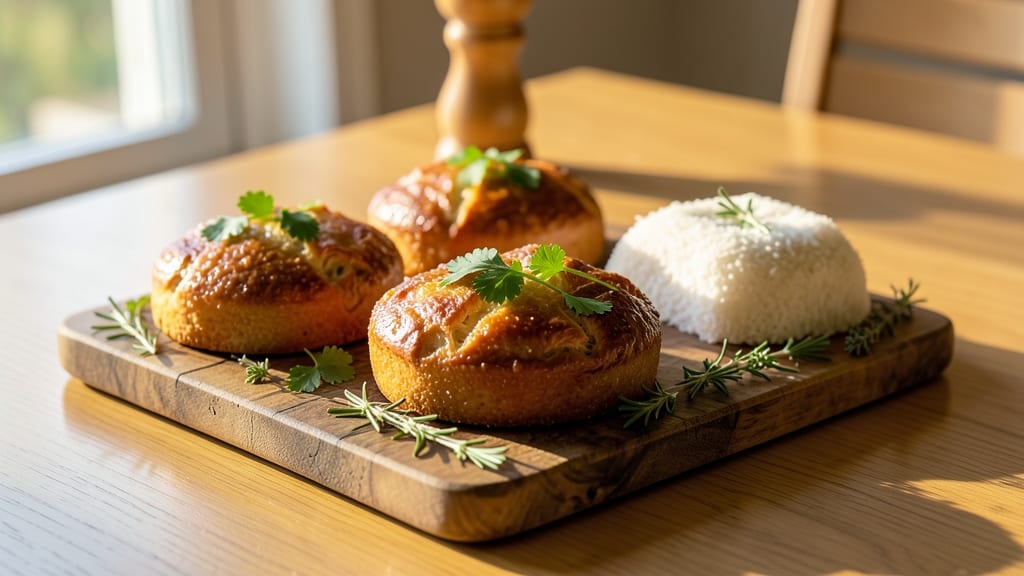
This Filipino bread recipe delivers the perfect pandesal—soft, pillowy interiors with golden, buttery crusts that melt in your mouth. ✨ The secret lies in precise yeast activation, gentle kneading, and a warm oven that creates that signature crispy exterior while keeping the inside tender.
I’ve perfected this technique over years of baking, ensuring every loaf turns out restaurant-quality at home.
What sets this recipe apart is the balance of ingredients—just the right amount of sugar to feed the yeast, rich butter for flavor, and proper proofing times to develop that signature texture.
Unlike many bread recipes, pandesal requires patience but rewards you with a loaf that’s worth every minute of waiting. The aroma alone as it bakes will have your whole house asking what’s for breakfast.
By the time you pull that first loaf from the oven, you’ll have golden-brown bread with crispy crusts and a soft, airy interior that’s impossible to resist.
These are the kind of bread rolls that disappear faster than you can say tsokolate—perfect for dipping in hot chocolate or serving alongside Filipino breakfasts. The recipe includes tips for achieving that signature texture every time, whether you’re a beginner or a seasoned baker.
For those who want to explore further, I’ve included variations like ube pandesal or cheese-filled versions that add exciting twists to the classic. Let’s get started on making bread that tastes like home.
Ingredients for filipino bread
Twelve simple ingredients transform into golden, buttery pandesal that smells like home.
| Ingredient | Amount | Notes |
|---|---|---|
| Active Dry Yeast 🍞 | 2 ¼ tsp | Or 1 packet (7g), not instant |
| Warm Water 💧 | 1 cup | 110°F (43°C) for yeast activation |
| All-Purpose Flour 🌾 | 4 ½ cups | King Arthur or similar bread flour |
| Granulated Sugar 🍚 | ½ cup | Feeds yeast for proper rise |
| Unsalted Butter 🧈 | ½ cup | Cold, cubed (8 tbsp total) |
| Large Eggs 🥚 | 2 whole | Room temperature, beaten |
| Salt 🧂 | 1 ½ tsp | Fine sea salt preferred |
| Milk 🥛 | ¼ cup | Warmed for dough tenderness |
| Granulated Sugar (for topping) 🍚 | 1 tbsp | Optional for extra shine |
| Egg Wash 🥚 | 1 whole | 1 egg beaten with 1 tbsp milk |
The yeast is non-negotiable here—King Arthur or Bob’s Red Mill brands activate best. If your kitchen isn’t warm, microwave the water for 20 seconds to hit that 110°F mark. Butter matters too: Land O’Lakes or Plugrá brands give the richest flavor. For the flour, bread flour works best—the higher protein gives that signature chewy texture. I always grab my butter from Trader Joe’s when it’s on sale—it’s the secret to that restaurant-quality taste. The milk should be warm but not hot—just enough to dissolve the sugar without cooking the eggs.
No bread flour? All-purpose plus 1 tbsp vital wheat gluten gets you close. Butter substitute? Vegetable shortening at the same amount works in a pinch. The milk can be swapped for water plus 1 tbsp powdered milk if you’re out. For the yeast, active dry is best here—instant yeast requires different activation. The sugar? Brown sugar works too, but white gives that classic pandesal sweetness. If you’re making ube pandesal, swap 0.25 cup of the sugar for ube halaya—trust me, it’s worth it.
This dough needs time—at least 2 hours total for proper rise. Store leftovers in an airtight bag at room temp for 3 days, or freeze shaped rolls for 3 months. I always make double batches—pandesal reheats beautifully in a 300°F oven for 10 minutes. For extra crispiness, brush rolls with melted butter before baking. The aroma alone as they bake? That’s why we make this bread.
Why You’ll Love This Recipe
- No-Knead Magic: I swear by this recipe—just mix the yeast with warm water, let it foam, then fold in flour and butter until it’s just tacky. No stand mixer, no overworking, no stress. The dough comes together faster than my coffee brews.
- Buttery Sweet Payoff: That little spoonful of sugar isn’t just for flavor—it caramelizes while baking, giving the crust this unexpected golden crunch. And the butter? It makes every bite feel like a hug. (Yes, even on a Tuesday night.)
- Breakfast to Snack: Toast it for breakfast, drizzle with melted butter and sugar for pan de coco, or pack slices in lunches. My kids even sneak bites straight from the loaf—no judgment here. It’s that universally loved.
- Stretches Your Budget: A single batch feeds my family for days. Freeze half for lazy mornings, and the rest? Perfect for sandwiches or French toast. Honestly, I make this so often I’ve lost count of how much money it’s saved me.
Step-by-step instructions for Filipino bread recipe
Here’s how to make perfectly fluffy pandesal with crisp golden crusts every time.
👨🍳 Step 1: Activate the Yeast and Mix the Dough
In a small bowl, combine the 1 cup warm water (around 110°F) with the 0.5 cup granulated sugar and 2.25 tsp active dry yeast. Let it sit for 5-10 minutes until frothy—that’s your sign the yeast is alive and ready. If it doesn’t bubble, your yeast might be dead, and you’ll need to start over.
In a large mixing bowl, whisk together the 4.5 cups all-purpose flour and 1.5 tsp salt. Make a well in the center and pour in the yeast mixture along with the 2 whole large eggs and 0.25 cup milk. Mix with a wooden spoon until a shaggy dough forms. Then, add the 0.5 cup cold cubed unsalted butter and knead everything together until the butter is fully incorporated.
🍳 Step 2: Knead Until Silky Smooth
Turn the dough onto a lightly floured surface and knead for 8-10 minutes until it becomes smooth and elastic. You’ll know it’s ready when it springs back slowly when poked. If the dough feels too sticky, add 1 tablespoon of flour at a time until it’s just manageable—don’t overdo it, or your bread will be dense.
Here’s the thing—don’t rush this step. Proper kneading develops gluten, which gives pandesal its signature soft, airy texture. Wrap the dough in plastic wrap and let it rise in a warm place for 1 hour, or until it doubles in size. You’ll see it puff up dramatically, and that’s when you know it’s ready for shaping.
🥘 Step 3: Shape and Second Rise
Punch down the risen dough and divide it into 12 equal pieces. Roll each piece into a smooth ball, then shape it into a long, slightly tapered loaf about 8 inches long. Arrange them on a parchment-lined baking sheet, leaving 2 inches between each loaf so they don’t touch as they rise.
Cover the shaped loaves with a clean kitchen towel and let them rise for another 30-45 minutes until they’re noticeably puffy. The tops should look slightly rounded, and they’ll feel light when you press them gently. This second rise is crucial—it ensures those signature fluffy interiors.
🔥 Step 4: Bake to Golden Perfection
Preheat your oven to 375°F while the dough rises. Just before baking, whisk together the 1 whole egg wash (1 egg beaten with 1 tablespoon milk) and brush it generously over each loaf. Then, sprinkle the tops with 1 tablespoon granulated sugar for that classic caramelized crust.
Bake for 18-22 minutes until the bread is golden brown all over. The edges should look crisp, and you should hear a hollow sound when you tap the bottom. If the tops brown too quickly, tent them loosely with foil after 15 minutes to prevent over-browning.
⏰ Step 5: Cool and Serve Warm
Remove the pandesal from the oven and let them cool on the baking sheet for 5 minutes. Then transfer them to a wire rack to cool completely. The bread will be soft and tender inside with a crisp, buttery exterior—just like your favorite bakery finds.
Serve warm for the best texture, or store them in an airtight container for up to 3 days. If you’re feeling fancy, toast them lightly before serving to enhance that golden crust. Enjoy your homemade pandesal with butter, jam, or as a side to any meal!
Pro Tips For Making Filipino Bread
- Test the Yeast First: Skip the guesswork—drop that yeast in warm water with a pinch of sugar, then wait 5-10 minutes for bubbles. If nothing happens, your bread’s gonna flop like a lazy Sunday morning. Trust me, I’ve made that mistake at 2 AM when the kitchen’s too hot to think straight.
- Don’t Rush the Kneading: Filipino bread needs real kneading—about 8-10 minutes by hand (or 5-6 on low speed with a mixer) until the dough springs back when poked. I used to cut corners, and the bread turned out dense and chewy. Your future self will thank you for the elbow grease.
- Use Cold Butter: Cut that unsalted butter into tiny cubes and toss it into the dough last, then knead it in quickly. Cold butter creates flaky layers—hot butter just melts into a greasy mess. (Yes, even if you’re impatient like me.)
- Let It Rise Twice: First rise (1-2 hours) builds flavor, but the second rise (after shaping) is what gives that light, airy texture. Cover the dough loosely with a towel—no airtight container—and resist the urge to poke it. Patience here makes all the difference.
Common mistakes when making your filipino bread
Over-Kneading the Dough
I’ve seen many home bakers overwork the dough, thinking more kneading equals better texture. But with pandesal, 8-10 minutes of kneading is all you need. Over-kneading develops too much gluten, which can make your bread tough and dense instead of soft and pillowy.
If your dough feels resistant or springs back too quickly when poked, you’ve gone too far. The goal is a smooth, elastic dough that’s just firm enough to hold its shape but still tender. 💫
Skipping Proofing Times
Rushing the proofing steps is a surefire way to ruin your pandesal. The first rise (1 hour) and second rise (30-45 minutes) are critical for that signature airy texture. If you skip or shorten these steps, your bread will be dense and flat.
Place your dough in a warm spot—I use a turned-off oven with the light on—to ensure consistent warmth. A dough thermometer helps too; aim for 78-82°F during proofing. Patience here makes all the difference.
Using Cold Ingredients
Cold butter or eggs can shock your yeast and slow down fermentation. Always use room-temperature eggs and softened (not melted) butter for the dough. If your kitchen is cold, let the butter sit out for 30 minutes before cubing it.
Cold ingredients can also make the dough harder to knead and may result in uneven texture. Trust me, this small step makes a huge difference in the final result. ⚡
Overcrowding the Baking Sheet
Placing the shaped loaves too close together on the baking sheet can lead to uneven baking and soggy bottoms. Leave at least 2 inches of space between each loaf so heat circulates properly. Overcrowding also causes the bread to steam instead of crisp up, resulting in a gummy texture.
Use a parchment-lined sheet for easy removal and even browning. This simple adjustment ensures every roll gets that perfect golden crust.
Ignoring the Egg Wash
The egg wash isn’t just for looks—it creates that glossy, golden finish and helps the sugar caramelize for extra crispiness. Skipping it or using too little will leave your pandesal dull and less flavorful.
Whisk 1 egg with 1 tbsp milk for the best results, then brush it generously over each loaf before baking. Don’t forget the sugar sprinkle on top either—it adds that signature caramelized crunch. 🍞
Opening the Oven Too Soon
Resist the urge to peek or open the oven during the first 15 minutes of baking. Every time you open the door, you release heat and steam, which can cause the bread to collapse or develop a thick, uneven crust.
If you’re worried about browning, tent the loaves with foil after 15 minutes instead. The bread will rise properly and develop that beautiful, even color without your interference.
Nutrition facts
Frequently asked questions
Can I make this Filipino bread recipe without a stand mixer?
This recipe only requires 8-10 minutes of hand-kneading on a lightly floured surface. Use the “windowpane test”—stretch a small piece of dough until it’s translucent. If it doesn’t tear, your gluten development is perfect. The key is patience and consistent pressure.
What’s the best way to store leftover pandesal?
Keep them fresh in an airtight container at room temperature for 3 days. For longer storage, freeze shaped rolls (unbaked or baked) for up to 3 months. To reheat, warm in a 300°F oven for 10 minutes or microwave for 20 seconds covered with a damp paper towel. The crust stays crispy this way!
Can I substitute butter with oil?
While possible, butter gives pandesal its signature rich flavor and texture. If you must substitute, use vegetable shortening (same amount) for the closest texture. For oil, use ½ cup melted coconut oil cooled to room temperature, but expect slightly less flavor and a denser crumb. The egg wash will still give that golden finish though!
How do I make this bread less sweet?
Reduce the sugar from ½ cup to ⅓ cup in the dough and omit the 1 tbsp sugar topping. For even less sweetness, replace ¼ cup of the milk with water in the dough. The yeast will still activate properly, and you’ll get a more neutral flavor while keeping that signature texture.
What other Filipino bread variations can I try?
Try ube pandesal by replacing ¼ cup sugar with ¼ cup ube halaya for purple swirls, or cheese-filled ensaymada by adding ½ cup edam cheese between dough layers. For monay, steam the shaped rolls instead of baking. Each variation keeps the same dough base but offers exciting twists!

- Rum Simple Syrup Recipe: Balanced Sweetness for Cocktails and Desserts - November 29, 2026
- Avocado Cloud Bread Recipe: Light, Fluffy, and Egg-Free Magic - November 29, 2026
- 1950’s Betty Crocker Banana Bread Recipe: Nostalgic Spice Perfection - November 29, 2026