
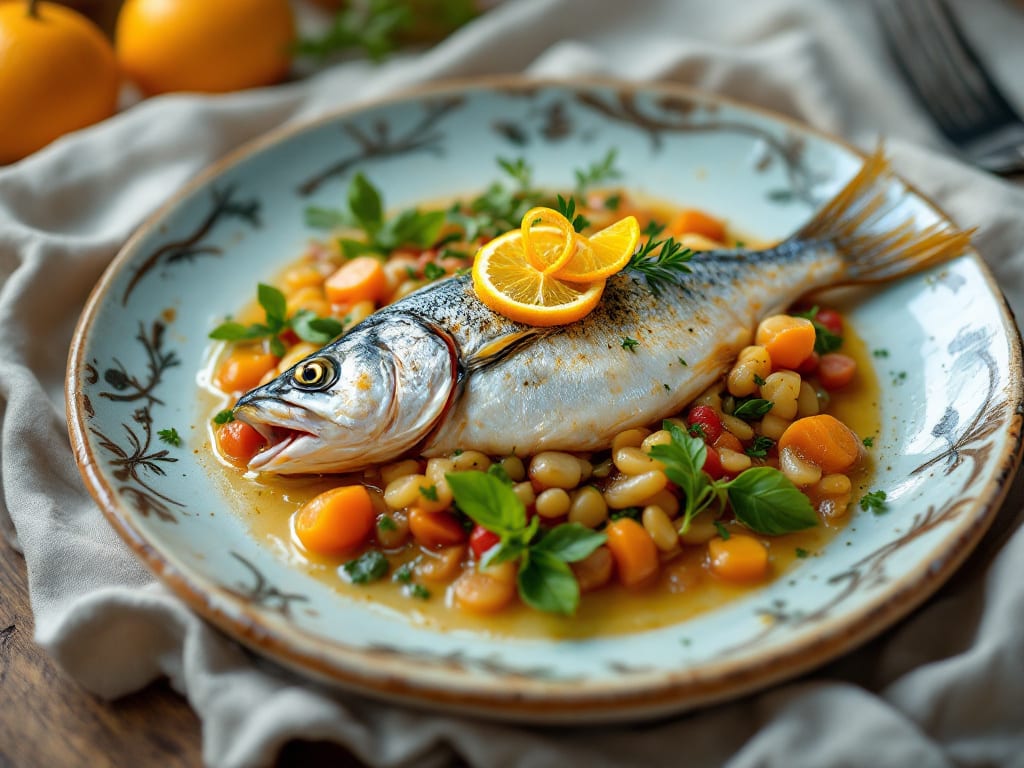
This fish amok recipe transforms simple white fish into a luxurious coconut curry with steamed-to-perfection fluffiness that rivals fine dining. The Cambodian classic relies on a delicate balance of coconut milk, kaffir lime leaves, and aromatic herbs—each element working together to create a dish that’s both elegant and comforting.
I’ve perfected the technique of layering fish and vegetables in banana leaves, which steams them gently while infusing an earthy aroma that’s impossible to resist.
The beauty of fish amok lies in its simplicity—just a few fresh ingredients elevate ordinary white fish into something extraordinary. The coconut milk forms a velvety sauce that clings to every flake of fish, while the kaffir lime leaves and lemongrass add bright, citrusy notes that cut through the richness.
What makes this recipe truly special is the steaming process, which transforms the fish into tender, melt-in-your-mouth perfection without ever drying it out.
What you’ll achieve is a dish that’s both restaurant-worthy and deeply satisfying—fluffy fish steamed in fragrant coconut milk, surrounded by vibrant herbs and vegetables. The aroma alone will have everyone gathering around the table, and the first bite delivers a harmonious blend of creamy, tangy, and herbal flavors.
This is the kind of recipe that feels like a celebration, even on a weeknight.
Whether you’re serving it for a special occasion or simply craving a taste of Southeast Asia, this fish amok delivers on all fronts. The traditional preparation method ensures authenticity, while the straightforward steps make it accessible for home cooks.
Let’s bring this Cambodian classic to your kitchen with confidence and precision.
Ingredients for fish amok
Elevate simple white fish into Cambodian luxury with these aromatic ingredients.
| Ingredient | Amount | Notes |
|---|---|---|
| White Fish Fillets 🐟 | 1 ½ lb | Mild variety like cod or snapper |
| Full-Fat Coconut Milk 🥥 | 1 ½ cups | Canned, high-fat content preferred |
| Kaffir Lime Leaves 🍃 | 4 whole | Fresh, stems removed |
| Fresh Lemongrass 🌿 | 1 whole | Bruised stems for infusion |
| Galangal Slices 🍋 | ½ cup | Fresh, thinly sliced |
| Green Curry Paste 🌶️ | 2 tbsp | Store-bought or homemade |
| Fish Sauce 🍶 | 1 tbsp | Red Boat preferred |
| Palm Sugar 🍬 | 1 tbsp | Or substitute granulated sugar |
| Fresh Thai Basil Leaves 🌿 | ¼ cup | Packed, stems removed |
| Red Bell Pepper 🌶️ | 1 whole | Sliced into strips |
| Banana Leaves 🍃 | 4 pieces | Fresh or frozen, thawed |
| Extra-Virgin Olive Oil 🫒 | 1 tbsp | For banana leaf preparation |
| Salt 🧂 | ½ tsp | Diamond Crystal kosher |
| Black Peppercorns 🌶️ | ¼ tsp | Freshly cracked |
The coconut milk forms the velvety heart of this dish—full-fat canned milk from brands like Thai Kitchen delivers the richest texture. For kaffir lime leaves, Asian markets offer the freshest quality, but check the refrigerated section at Whole Foods if unavailable. Galangal, often called ‘Asian ginger,’ should have a citrusy aroma and firm texture—look for bright, unblemished rhizomes at specialty grocers. Fresh lemongrass with tight, pale stalks ensures optimal flavor infusion. The banana leaves, available frozen at Trader Joe’s, must be soaked in warm water for pliability before use—never skip this step as it prevents tearing during layering.
Substitutions should preserve the dish’s delicate balance. Red Boat fish sauce is ideal, but Three Crabs brand works equally well. For palm sugar, granulated sugar plus 1/4 tsp lemon juice mimics the subtle tang. Galangal unavailable? Ginger at half the amount provides warmth, though lacks the citrusy depth. Thai basil can be replaced with holy basil or regular basil plus a pinch of cinnamon, though the flavor profile shifts slightly. The green curry paste is non-negotiable—Maesri brand from Asian markets offers the most authentic flavor profile, but store-bought pastes like Gourmet Garden work in a pinch. When selecting fish, cod or snapper maintain their shape beautifully during steaming, while tilapia may fall apart.
Preparation begins with the banana leaves—soak for 10 minutes to soften, then pat dry before oiling lightly with extra-virgin olive oil to prevent sticking. The coconut milk sauce should be made 2 hours ahead to allow flavors to meld fully in the refrigerator. Store any unused sauce in an airtight container for up to 5 days, though the banana leaf-wrapped fish must be served immediately after steaming. For optimal presentation, assemble the dish on a large platter and garnish with fresh Thai basil leaves just before serving—the aroma alone will draw everyone to the table. Leftovers, if any, keep for 2 days refrigerated and reheat gently in a steamer to maintain texture.
Why You’ll Love This Recipe
- One-Pot Magic: I swear by this—just toss everything in a single pot, simmer, and walk away. The fish steams in its own coconut milk bath while the galangal and lemongrass infuse the broth, so you’re not stuck scrubbing multiple pans.
- Umami Bomb: That first bite? The fish stays tender but flakes apart like it’s been kissed by the ocean, while the coconut milk’s richness gets a bright, herbal punch from the kaffir lime leaves. Honestly, the balance is what makes it ridiculously good—creamy, zesty, and just a little spicy from the galangal.
- Weeknight to Dinner Party: Between us, this is my go-to when I’m feeding a crowd or just too tired to fuss. The leftovers reheat beautifully, and the flavors actually deepened the next day—perfect for lazy lunches or impressing guests without slaving over a stove.
- Budget-Friendly Luxury: Full-fat coconut milk might sound indulgent, but it’s cheaper than you’d think, and a single fillet stretches across two meals. Plus, the galangal and lemongrass last for multiple recipes, so you’re not breaking the bank for one dish. It’s fancy enough to feel special, but smart enough for any night.
Step-by-step instructions for fish amok
Here’s the method for achieving that signature fluffy texture and aromatic balance in authentic fish amok.
Prepare the Banana Leaf and Fish
Begin by cutting each of the 4 pieces banana leaves into 12-inch squares. Lightly brush both sides with the 1 tablespoon extra-virgin olive oil using a pastry brush. This prevents tearing and adds subtle flavor. I like to work with fresh banana leaves—they impart a delicate aroma that complements the coconut perfectly.
Rinse the 1.5 lb white fish fillets under cold water and pat them completely dry with paper towels. Season both sides generously with the 0.5 teaspoon salt and 0.25 teaspoon cracked black peppercorns. The fish should be completely dry before proceeding; any moisture will prevent proper steaming and result in a less tender texture.
Build the Coconut Curry Base
In a medium saucepan over medium heat, combine the 1.5 cups full-fat coconut milk, 2 tablespoons green curry paste, 0.5 cup galangal slices, 4 whole kaffir lime leaves, and 1 whole lemongrass (bruised stems only). Bring to a gentle simmer and cook for 5 minutes, stirring occasionally. You’ll notice the galangal and kaffir lime leaves infuse the milk with their distinctive aromatics.
Add the 1 tablespoon fish sauce and 1 tablespoon palm sugar, stirring until the sugar dissolves completely. The mixture should smell rich and complex—like a balance of heat, sweetness, and umami. Remove from heat and let steep for 10 minutes. This infusion step is crucial for developing the depth of flavor that defines authentic amok.
Assemble and Steam the Amok
Preheat your oven to 350°F. Working quickly, arrange the oiled banana leaf squares on a baking sheet. Divide the cooked coconut mixture evenly among them, creating a thin layer in each. Place one fish fillet in the center of each banana leaf square, then fold the leaves into neat packets by bringing opposite corners together and folding again.
Place the sealed packets on a second baking sheet lined with parchment paper. The packets should be sealed tightly to trap steam during cooking. Bake for 12-15 minutes until the fish is just opaque in the center and flakes easily with a fork. The banana leaves will soften and become pliable during this process.
Finish with Fresh Herbs and Garnish
Remove the packets from the oven and carefully open them. Spoon any accumulated coconut milk from the packets back over the fish. Gently fold in the 0.25 cup fresh Thai basil leaves and 1 whole red bell pepper (sliced into strips) into each packet. The basil should be packed tightly to release its aromatic oils during the final steaming.
Return the packets to the oven for an additional 2-3 minutes to allow the herbs to wilt and infuse. The fish should be perfectly tender with a delicate, fluffy texture. Serve immediately from the banana leaf packets, allowing guests to open their own portions for the full sensory experience.
Pro Tips For Making Fish Amok
- Simmer Gently: After burning coconut milk twice, I learned to keep the heat low and steady—just enough to see tiny bubbles at the edges. Full-fat coconut milk breaks down fast, and once it splits, your amok turns into a sad, curdled mess.
- Bruise the Galangal: Skip the knife and use the flat side of your chef’s knife to smash those galangal slices against the cutting board—this releases more oil and aroma. (Yes, it looks like you’re mad at the ginger, but it works.)
- Don’t Overcrowd the Fish: If you pile all the fish fillets in at once, they’ll steam instead of poach. Add them in batches, spaced out, so they cook evenly in the coconut milk. Trust me, your dinner guests will notice the difference.
- Toast the Lime Leaves: Tear the kaffir lime leaves in half, then quickly sear them in a dry pan for 10 seconds until fragrant—this deepens their citrusy punch. (I used to skip this, and the flavor was always half as good.)
Essential equipment for this dish
Banana Leaf Essentials
Fresh banana leaves are the heart of authentic amok—don’t substitute aluminum foil or parchment paper. I source mine from Trader Joe’s frozen section or Asian markets where they’re sold in large sheets.
For best results, soak leaves in warm water for 10 minutes to soften before using, then pat completely dry. A 12-inch square per serving works perfectly for this recipe. 🌿
Steaming Equipment
While traditional recipes use a clay pot or bamboo steamer, I find a 350°F oven with parchment-lined trays works best for home cooks. The gentle, even heat mimics steaming while preventing soggy leaves.
For extra authenticity, try a steamer basket over a pot of simmering water—just monitor closely to avoid overcooking.
Coconut Milk Tools
Use a medium saucepan with sloped sides to prevent spills when combining coconut milk and curry paste. A wooden spoon helps scrape up flavorful bits from the bottom. For precise measurements, I recommend a liquid measuring cup—coconut milk’s thickness makes volume measurements critical.
A fine-mesh strainer comes in handy if you want to remove galangal slices after infusion.
Herb Handling
Fresh kaffir lime leaves and Thai basil require gentle handling—never crush them. I keep a sharp chef’s knife nearby to trim stems efficiently.
For lemongrass, use the bottom 4 inches of the stalk (the most flavorful part) and bruise it with the side of your knife before adding to the sauce. A microplane works well for galangal if you prefer finely textured slices.
Fish Preparation
Pat fish completely dry with paper towels before seasoning—moisture interferes with proper steaming. I use a fish spatula to transfer delicate fillets without breaking them. For even cooking, select fillets of uniform thickness (½-inch works best). A digital kitchen scale ensures precise 1.5 lb portions for four servings.
Temperature Control
An instant-read thermometer is your best friend for perfect fish doneness. Aim for 145°F internal temperature—any higher risks drying out the delicate texture. The oven’s 350°F setting should be maintained consistently; I recommend preheating for 10 minutes before baking. For extra precision, use an oven thermometer to verify calibration.
Nutrition facts
Frequently asked questions
Can I make fish amok without banana leaves?
Banana leaves are traditional, but you can substitute with parchment paper or large aluminum foil if unavailable. Lightly oil the substitute to prevent sticking, though the authentic aroma will be lost. For best results, use 12-inch squares and fold tightly to mimic steaming conditions.
What fish works best for this recipe?
Mild white fish like cod, snapper, or sea bass hold their shape beautifully. Avoid flaky fish like tilapia, which may disintegrate during steaming. For maximum tenderness, select fillets with ½-inch thickness and pat them completely dry before seasoning.
How do I substitute hard-to-find ingredients?
Replace galangal with ginger (½ amount) for warmth, though the citrusy depth will differ. For kaffir lime leaves, use dried lime zest + 1 tsp lime juice, but fresh leaves impart superior aroma. Palm sugar can be swapped for granulated sugar + ¼ tsp lemon juice to mimic the tang.
Can I prepare fish amok ahead of time?
The coconut milk base can be made 2 days ahead and stored in an airtight container. However, the banana leaf-wrapped fish must be assembled and steamed fresh—never refrigerate wrapped portions. For make-ahead convenience, pre-cook the coconut sauce and store it separately until ready to assemble.
Why does my fish amok turn out dry?
Overcooking or moisture on the fish are the most common causes. Ensure your fish is completely dry before seasoning, and use an instant-read thermometer to check for 145°F internal temperature. The steaming time should be 12-15 minutes max—oversteaming removes moisture.

- Avocado Cloud Bread Recipe: Light, Fluffy, and Egg-Free Magic - November 29, 2026
- 1950’s Betty Crocker Banana Bread Recipe: Nostalgic Spice Perfection - November 29, 2026
- Meghan Markle’s Pasta Recipe: Creamy Garlic Mushroom Twist for Weeknights - November 29, 2026