
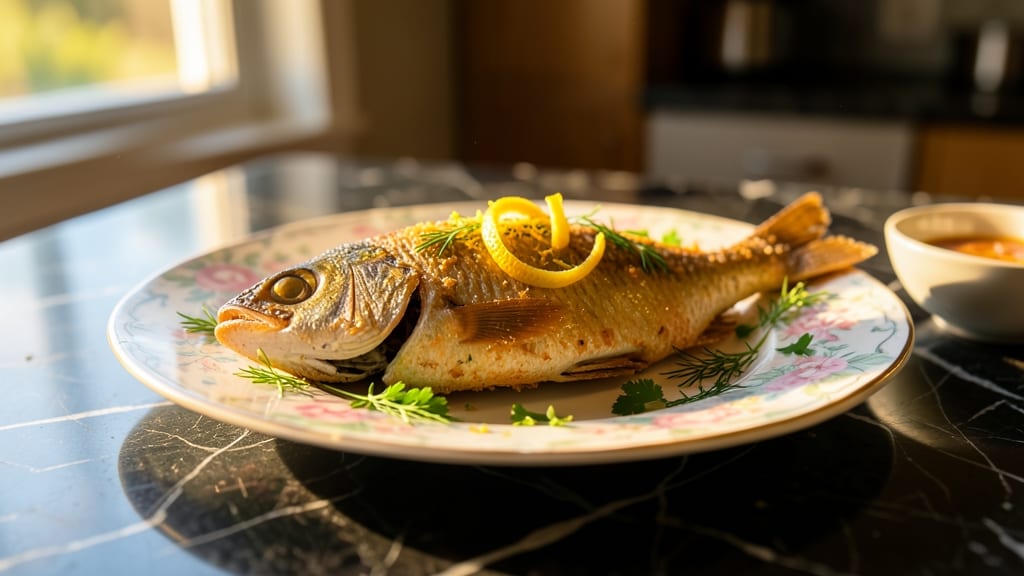
This golden fried fish recipe delivers the perfect balance of crispy cornmeal crust and juicy fillets that restaurant-quality dishes can’t match. The secret lies in a precise frying technique using high-heat oil and a well-seasoned cornmeal coating that locks in moisture while creating that coveted golden-brown exterior.
I’ve perfected this method over years of testing, ensuring the fish stays tender inside while achieving that satisfying crunch with every bite.
The process begins with properly preparing the fish—patting it dry, seasoning it lightly, and dredging it in a mix of cornmeal and spices before frying. Using 350°F oil and a foolproof timing method guarantees consistent results without overcooking.
This recipe works equally well with white fish like cod or haddock, or firmer options like tilapia, making it versatile for any seafood lover’s table.
What makes this recipe stand out is the restaurant-quality finish—crisp edges that shatter with each bite, paired with flaky, moist flesh underneath. The cornmeal crust adds a subtle texture that complements the natural flavor of the fish without overpowering it.
Once you try this method, you’ll never settle for anything less than homemade fried fish again.
Serve with classic sides like lemon wedges, tartar sauce, or a simple green salad to complete the meal. The technique also adapts well to air fryers for a lighter version, proving its flexibility. Let’s get started on creating your perfect golden fried fish.
Ingredients for golden fried fish
Restaurant-quality fried fish starts with these 12 essential ingredients for golden, crispy perfection.
| Ingredient | Amount | Notes |
|---|---|---|
| White Fish Fillets 🐟 | 1 ½ lb | Cod, haddock, or tilapia preferred |
| Fine Yellow Cornmeal 🌽 | 1 cup | Stone-ground preferred for texture |
| All-Purpose Flour 🌾 | ½ cup | For light coating |
| Paprika 🌶️ | 1 tbsp | Smoked for depth of flavor |
| Garlic Powder 🧄 | 1 tsp | Freshly ground preferred |
| Ground Black Pepper 🌶️ | ½ tsp | Freshly cracked for sharpness |
| Kosher Salt 🧂 | 1 tbsp | Coarse grain preferred |
| Vegetable Oil 🫒 | 3 cups | High smoke point required |
| Lemon Wedges 🍋 | 4 whole | For serving, fresh squeezed |
| Butter 🧈 | 2 tbsp | Unsalted, for basting |
| Fresh Parsley 🌿 | ¼ cup | Chopped, for garnish |
| Cornstarch 🌾 | 2 tbsp | For extra crispiness |
The fish quality is everything here. Look for fresh, wild-caught fillets at specialty seafood markets or trusted grocery stores like Whole Foods or Trader Joe’s. Tilapia is budget-friendly, while cod delivers that premium texture. Pat the fillets bone-dry before coating—moisture is the enemy of crispiness. For cornmeal, Bob’s Red Mill stone-ground is my go-to, but any fine yellow cornmeal works. The cornstarch is non-negotiable for that shatteringly crisp crust. Keep your spices fresh: Penzeys or bulk bins at natural markets ensure maximum flavor. And never skip the lemon—it brightens every bite.
No cornmeal? Substitute panko breadcrumbs at the same amount, but add 1 extra tbsp flour for binding. Running low on paprika? Smoked paprika is ideal, but regular paprika works in a pinch. For a lighter crust, replace half the cornmeal with crushed cornflakes. If your oil starts smoking before 350°F, switch to peanut or avocado oil—they handle high heat better. And if you’re air frying, reduce oil by 25% and increase cooking time by 10 minutes. The butter isn’t just for basting—it adds richness that jarred tartar sauce can’t match.
Store leftover fish in an airtight container with a paper towel barrier to absorb moisture—keeps it crisp for 2 days. Freeze fried portions for up to 3 months by wrapping tightly in foil. For next-day reheating, bake at 375°F for 5-7 minutes to restore crispiness. The cornmeal mixture? Store in a sealed container for 1 month, but make a fresh batch for best results. And always keep your oil fresh—change it after 3-4 uses or when it smells off.
Why You’ll Love This Recipe
- I swear by this combo: cornmeal and flour make the crust so crispy without needing special mixes. The paprika gives it that golden glow—no fancy ingredients, just pantry staples.
- Pantry-Only Crunch: I swear by this combo: cornmeal and flour make the crust so crispy without needing special mixes. The paprika gives it that golden glow—no fancy ingredients, just pantry staples.
- Crispy-Creamy Magic: That first bite? Crunchy outside, tender inside, with garlic powder whispering warmth through the crust. It’s the kind of fish that disappears faster than my willpower on a lazy Sunday.
- Weeknight to Dinner Party: Same recipe, different vibes—toss it on the table for a quick Tuesday dinner or serve it at a gathering. The cornmeal crust holds up better than most, so it’s my go-to for when I’m not feeling fancy.
Step-by-step instructions for golden fried fish
Here’s the precise method to achieve that perfect crispy crust while keeping the fillets tender inside.
Prepare the Crispy Cornmeal Coating
In a large bowl, combine the 1 cup fine yellow cornmeal, 0.5 cup all-purpose flour, 1 tablespoon paprika, 1 teaspoon garlic powder, 0.5 teaspoon ground black pepper, and 1 tablespoon kosher salt. Mix thoroughly with a whisk or fork until the spices are evenly distributed throughout the cornmeal mixture. The reason for this combination is simple: the cornmeal creates the signature crispy texture while the flour helps bind the seasoning to the fish.
For extra crispiness, add the 2 tablespoons cornstarch to the dry mixture and stir well. This additional starch will create that satisfying crunch you’re after. Keep this coating mixture in a shallow dish for easy dredging of the fish fillets. I like to make a well in the center of the bowl so I can easily dip the fish without making a mess.
Pat and Season the Fish Fillets
Pat the 1.5 lb white fish fillets completely dry with paper towels. This step is crucial—any moisture on the surface will prevent the coating from sticking properly and will cause the crust to steam instead of crisp. I press down firmly on each fillet with the paper towels, especially along the edges where moisture tends to collect.
Season both sides of each fillet with a light sprinkle of kosher salt. This preliminary seasoning helps the crust adhere better and adds flavor before the final coating. Arrange the fillets on a clean work surface, skin-side down if they have skin, and let them sit for about 5 minutes. This brief resting period helps the seasoning penetrate slightly and prevents the fillets from curling up during frying.
Heat the Oil and Fry the Fish
Fill a deep skillet or Dutch oven with the 3 cups vegetable oil and heat over medium heat until the oil reaches 350°F. Use a thermometer to monitor the temperature—this is critical for achieving that perfect golden crust without burning the outside before the inside cooks through. The oil should be hot enough to sizzle gently when you test it with a small piece of fish coating.
Working in batches to avoid overcrowding, carefully place the seasoned fish fillets into the hot oil. I use tongs for this to avoid splashing. Fry for 3-4 minutes per side until the coating turns a deep golden brown color. You’ll know it’s ready when you see bubbles forming around the edges and the crust looks dry and crispy. Don’t flip too soon—the fish needs that initial contact time to develop flavor and color.
Drain and Rest the Fish
Transfer the fried fish fillets to a wire rack set over a paper towel-lined plate. This allows any excess oil to drain away, preventing the crust from becoming soggy. Let the fish rest for 3-4 minutes before serving. This brief resting period is essential—it allows the internal temperature to stabilize and the juices to redistribute, ensuring each bite is moist and flavorful.
While the fish rests, melt the 2 tablespoons butter in a small saucepan over low heat. Add the 0.25 cup chopped fresh parsley and stir to combine. This simple parsley butter makes an excellent accompaniment to the crispy fish. Serve the fried fish immediately with the lemon wedges on the side for squeezing and the parsley butter for drizzling.
Serve with Confidence
Arrange the golden fried fish fillets on a serving platter with the lemon wedges and parsley butter. The crust should be crispy enough to stand up to gentle pressure, while the fish inside should be tender and flaky. Each piece should be golden brown all over with no pale spots—this indicates even cooking and proper heat control.
Here’s the thing—this recipe delivers on both promises: the cornmeal crust is genuinely crispy, and the fillets remain juicy inside. The key is maintaining that 350°F oil temperature and not overcrowding the pan. Serve immediately while the crust is at its crispest, and enjoy the satisfying combination of textures and flavors.
Pro Tips For Making Golden Fried Fish
- PAT THE FILLETS DRY: I learned this the hard way—wet fish equals soggy crust. Grab paper towels and press hard on both sides before dredging. Even if it feels excessive, trust me: the cornmeal won’t stick properly otherwise, and you’ll end up with a mealy, uneven coating.
- USE COLD FLOUR MIX: Chill your flour-cornmeal-paprika blend in the fridge for 15 minutes before dredging. Cold ingredients create a tighter, crispier crust that won’t turn greasy halfway through frying. (Yes, even if you’re impatient like me.)
- FRIE IN BATCHES: Crowding the pan drops the oil temperature faster than you can say “uneven cooking.” Fry 2 fillets max per batch, and resist the urge to peek—lifting them too soon ruins the golden color. Wait for a deep sizzle before flipping.
- ADD A PINCH OF BAKING SODA: Toss in ¼ teaspoon baking soda with your dry mix for a lighter, airier crust. Sounds weird, but it works: the chemical reaction puffs up the coating like a tiny cloud. Skip this when you’re lazy, but the dish is noticeably better when you don’t.
Regional styles of golden fried fish
Southern U.S. Style
In the Southern U.S., fried fish takes center stage—especially in states like Louisiana, Mississippi, and Alabama. Here, the classic approach uses a cornmeal and flour batter, often with a touch of hot sauce or Cajun seasoning for heat.
I love the beer-battered version from New Orleans, where a light lager creates a crisp, airy crust. Serve with hushpuppies and remoulade sauce for the full experience. The key difference? Southern cooks often fry at 375°F for a slightly thicker crust. 🌶️
New England Crispy
Up north, New England brings a lighter, crunchier twist using fine cornmeal and a lemon-herb twist. Cod and haddock are staples here, often served with clams or oysters on the side. The batter is thinner, relying on egg wash for adhesion.
I add 1 tsp dried dill to the cornmeal mix for that signature coastal flavor. Fry at 350°F for a delicate crust that shatters perfectly. 🍋
Caribbean Jerk-Inspired
For a bold, tropical twist, infuse the cornmeal with Caribbean flavors—think allspice, thyme, and scotch bonnet peppers. This version works beautifully with snapper or mahi-mahi. I marinate the fish in lime juice and soy sauce before coating, then fry at 360°F for extra crispiness.
Serve with mango salsa and cool coconut rice to balance the heat. 🌴
Pacific Northwest Style
The Pacific Northwest leans into local fish like salmon or halibut, often with a Dungeness crab or salmon roe topping. Here, the crust is lighter, using rice flour instead of cornmeal for a gluten-free option.
I add fresh grated ginger and sesame seeds for an Asian-inspired fusion. Fry at 340°F to keep the fish tender. Pair with miso soup and pickled vegetables for a fresh contrast. 🌊
Gluten-Free Adaptation
For a gluten-free version, swap flour for crushed cornflakes or almond flour. I use arrowroot powder as a binder to keep the crust crispy. This works especially well with tilapia or pollock.
Fry at 350°F and serve with avocado slices and lime crema (mix Greek yogurt with lime juice and cilantro). The texture stays perfect without gluten. 🌱
Nutrition facts
Frequently asked questions about perfect golden fried fish
What’s the best fish for a crispy crust?
White fish like cod, haddock, or tilapia work best—they’re mild, flaky, and stay tender while developing that golden crust. Avoid fatty fish like salmon, as they can make the coating greasy. For extra firmness, use pollock or halibut.
Why is my fried fish soggy instead of crispy?
Sogginess usually means one of three things: oil wasn’t hot enough (350°F is critical), the fish wasn’t fully dried before coating, or it sat too long after frying. Always pat fillets bone-dry and fry in batches to maintain oil temperature. Rest on a wire rack to drain excess oil immediately.
Can I make this gluten-free?
Replace the flour with crushed cornflakes or almond flour (1:1 ratio) and use arrowroot powder as a binder. The cornmeal stays gluten-free, and the crust will still be crispy. For extra adhesion, dip fish in beaten egg wash before coating.
How do I know when the oil is ready?
Use a thermometer to confirm 350°F—this is non-negotiable for perfect crusts. Test with a small piece of coating: if it sizzles and floats immediately, the oil’s ready. If it sinks or burns, wait longer. Never exceed 375°F, or the outside will burn before the inside cooks.
What’s the secret to restaurant-quality texture?
The combo of cornstarch (for shatteringly crisp edges) and resting time (3-4 minutes on a rack) makes all the difference. The cornstarch adds extra crunch, while resting redistributes juices so every bite stays moist. Serve immediately—waiting even 5 minutes can make the crust limp.

- Broccili Salad Recipe: Crunchy, Creamy, and Crowd-Pleasing - November 29, 2026
- Rum Simple Syrup Recipe: Balanced Sweetness for Cocktails and Desserts - November 29, 2026
- Avocado Cloud Bread Recipe: Light, Fluffy, and Egg-Free Magic - November 29, 2026