
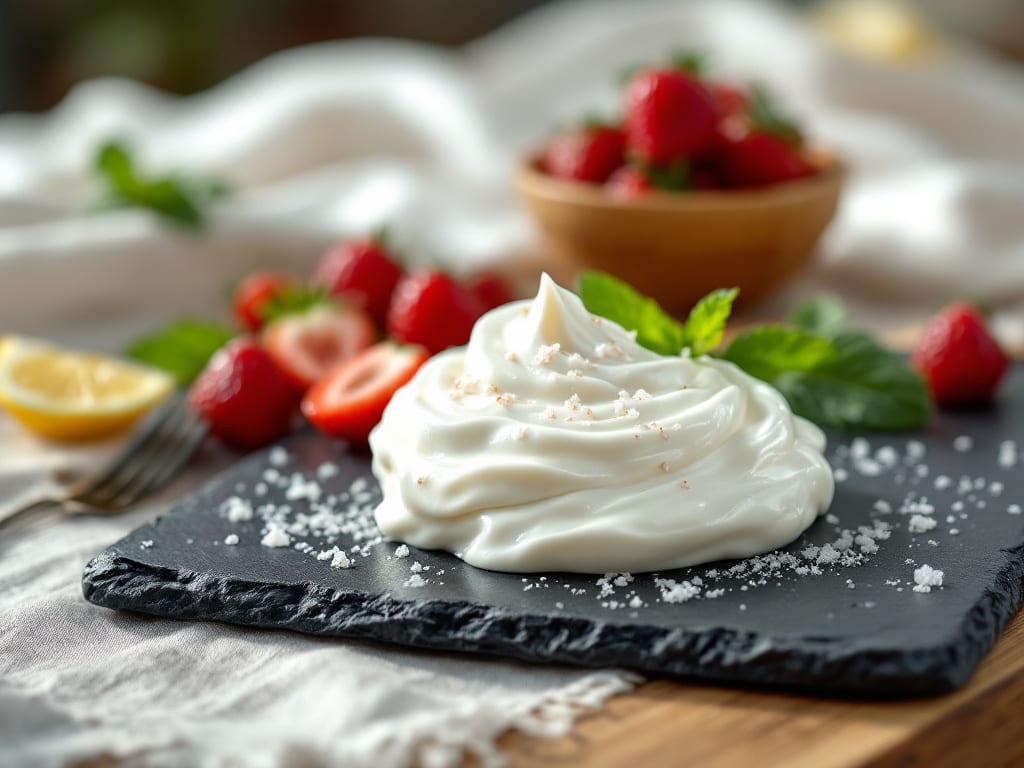
When Greek yogurt tastes like sour cream, it’s usually due to over-thickening, stale ingredients, or excessive fat content creating a heavy, tangy profile. Fix it by refreshing the yogurt with bright lemon juice, balancing fat with lower-fat dairy, or thinning it with milk to lighten the texture.
This happens when fermentation goes too far, making the yogurt overly acidic and dense. 💫 The high protein content in Greek yogurt naturally thickens it, but if stored too long or made with heavy cream, it can develop that rich, almost buttery sour cream flavor.
I’ve found that adding a splash of fresh lemon juice or a pinch of salt helps cut through the heaviness while keeping the creamy texture intact.
For baking or cooking, try mixing in a little milk or water to adjust consistency—this prevents the final dish from tasting overly rich. Lower-fat Greek yogurt also works better in recipes where you want a lighter, tangier base without the creaminess.
The key is balance: freshness, proper fat levels, and a touch of acidity to brighten the flavor.
💡 In This Article
- Why Greek Yogurt Develops a Sour Cream Flavor
- How to Adjust Greek Yogurt for a Creamier, Less Heavy Taste
Why Greek yogurt develops a sour cream flavor
The transformation begins with fermentation. Greek yogurt starts as regular yogurt, where lactic acid bacteria convert lactose into lactic acid, creating that signature tang. But when straining removes whey to thicken it, the remaining protein matrix concentrates—this is what gives Greek yogurt its dense, creamy texture.
The problem arises when fermentation continues too long, producing excess lactic acid (pH dropping below 4.0), which intensifies the sourness while also breaking down proteins into smaller, more soluble fragments. This molecular breakdown creates a texture closer to sour cream’s velvety smoothness rather than yogurt’s traditional graininess.
Fat content plays a critical role too. Whole-milk Greek yogurt typically contains 3-5% fat, while non-fat versions have 0.5% or less. The higher the fat, the more the flavor mimics sour cream—its natural fat content sits around 18-20%.
This fat coats your taste buds, muting acidity and creating that rich, almost buttery mouthfeel. What’s fascinating is how temperature affects this: when stored cold (below 40°F), fats solidify slightly, making the yogurt feel even denser and more “cream-like” when eaten straight from the fridge.
Storage conditions accelerate this effect. Oxygen exposure causes oxidation of fats, producing off-flavors that compound with the existing acidity. A sealed container slows this, but once opened, yogurt’s surface dries out, concentrating flavors and textures.
The protein matrix also begins to separate, with moisture migrating to the surface—this creates that characteristic “skin” on top, which traps even more moisture and intensifies the sour cream-like richness.
What most people don’t realize is that even refrigeration isn’t perfect: temperature fluctuations cause proteins to denature differently, further altering texture over time.
Let’s compare it to traditional yogurt. Regular yogurt retains more moisture (about 85-90% water content) and has a looser protein structure, which prevents that dense, creamy mouthfeel. Greek yogurt’s straining process reduces water content to 60-70%, concentrating both proteins and fats.
This concentration is what gives it that thicker consistency, but when fermentation overdevelops, the acidity interacts with these concentrated components to create a flavor profile eerily similar to sour cream—rich, tangy, and slightly heavy.
Here’s what’s actually happening chemically: the prolonged fermentation increases lactic acid production beyond the typical 1.5-2.0% range found in fresh yogurt. At higher concentrations (above 2.5%), this acid begins to denature whey proteins differently, creating smaller, more soluble protein fragments that behave like emulsifiers—just like those in sour cream.
The result? A product that’s not just tangy, but also unctuous and almost buttery in texture.
The visual clues are telling too. Sour cream-like Greek yogurt often develops a shinier surface due to fat migration, while fresh Greek yogurt has a matte finish. The color also shifts slightly—over-fermented versions take on a deeper, almost golden hue as proteins break down further.
This isn’t just about taste; it’s a complete sensory transformation driven by molecular changes in the yogurt’s structure.

- Meghan Markle’s Pasta Recipe: Creamy Garlic Mushroom Twist for Weeknights - November 29, 2026
- Applebee’s Lemon Chicken with Quinoa Recipe: Bright Citrus Glaze and Fluffy Quinoa Fusion - November 29, 2026
- Oven-Dried Bananas Recipe: Caramelized Sweetness for Dessert or Breakfast - November 29, 2026