
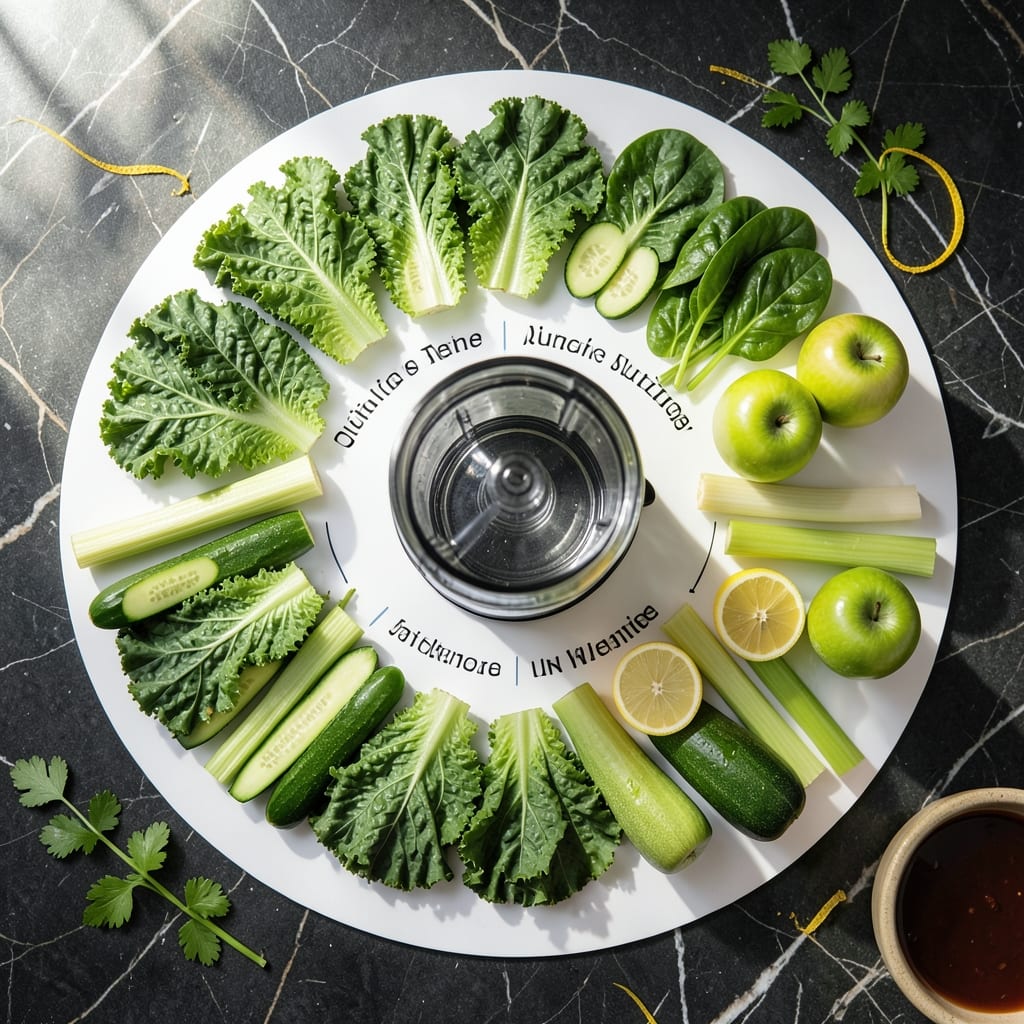
This juicing chart simplifies creating nutrient-packed combinations tailored to your health goals. Each recipe combines fresh, plant-based ingredients to deliver maximum flavor and nutrition without complicated steps.
I’ve organized these blends by purpose—whether you need an energy boost, immune support, or detox. The process is straightforward: wash, chop, and juice. No cooking, no fuss, just pure liquid nourishment.
You’ll find options for every preference, from sweet and fruity to earthy and green. The key is using ripe, high-quality produce to ensure the best taste and nutritional value.
Ready to transform your wellness routine? Start with these proven combinations.
Ingredients for Juicing Recipe Chart
Fresh, vibrant produce comes together for maximum nutrition and flavor without any fuss.
| Ingredient | Amount | Notes |
|---|---|---|
| Kale Leaves 🥬 | 4 cups | Stems removed, packed |
| Spinach Leaves 🍃 | 2 cups | Fresh, baby variety preferred |
| Cucumbers 🥒 | 2 whole | Medium size, peeled if non-organic |
| Celery Stalks 🌿 | 4 whole | With leaves, organic recommended |
| Green Apples 🍏 | 3 whole | Granny Smith preferred for tartness |
| Lemons 🍋 | 2 whole | Peeled, seeds removed |
| Fresh Ginger Root 🌱 | 1 piece | About 2 inches, peeled |
| Carrots 🥕 | 4 whole | Medium size, scrubbed well |
| Beets 🟣 | 2 whole | Medium size, peeled |
| Oranges 🍊 | 4 whole | Peeled, seeds removed |
| Fresh Mint Leaves 🌿 | ½ cup | Loosely packed |
| Pineapple Chunks 🍍 | 2 cups | Fresh, ripe |
The produce matters most here. Whole Foods or farmers markets have the best selection for organic greens and ripe fruits. Look for bright, unblemished leaves on kale and spinach—wilted greens juice poorly. For ginger and beets, smaller roots tend to be sweeter and more tender. I always grab extra lemons (they keep forever in the fridge) and buy carrots with the tops still on—that’s a sign they’re fresh.
No kale? Swiss chard or romaine lettuce work well in green juices. Out of Granny Smith apples? Any tart apple variety will do. Fresh ginger not available? Ground ginger at one-eighth the amount in a pinch (but fresh is so much better). For pineapple, frozen works if thawed first, though fresh gives the brightest flavor. The mint can be swapped for parsley or cilantro if you prefer.
Prep produce as you buy it—wash, dry, and store in airtight containers. Greens last 5-7 days in the fridge, citrus stays fresh for 2 weeks. Most juices are best consumed immediately, but they’ll keep in the fridge for 24-48 hours in a sealed jar (the flavors start to separate after that).
Why You’ll Love This Recipe
- No Chopping Needed: Honestly, just rinse and feed everything straight into the juicer—kale, spinach, cucumber, the works.
- Crisp and Refreshing: The green apple adds just the right sweetness to balance the earthy kale and celery.
- Meal Prep Magic: I make a big batch Sunday night and grab a glass all week for my morning energy boost.
- Budget Friendly: Between us, a single bunch of kale and a bag of apples stretches into multiple servings.
Step-by-Step Instructions for Juicing Combinations
Here’s the method I use to extract maximum flavor and nutrients from these vibrant ingredients.
Step 1: Prepare and Wash All Produce
Begin by thoroughly washing all the vegetables and fruits under cold running water. For the kale leaves and spinach leaves, I recommend soaking them in a large bowl of water for 2-3 minutes to remove any grit or sand, then rinsing again. Gently pat dry with clean kitchen towels.
Peel the 2 whole Cucumbers if they’re not organic, and scrub the 4 whole Carrots well under running water to remove any dirt. The 2 whole Beets must be peeled before juicing—raw beet skins can be tough on most juicers. Remove the stems from the 3 whole Green Apples and cut them into quarters.
Step 2: Process Leafy Greens and Herbs First
Start with the most delicate ingredients to prevent them from getting stuck in your juicer. Feed the 4 cups Kale Leaves through your juicer first, followed by the 2 cups Spinach Leaves. These leafy greens can be tricky, so I alternate them with firmer produce to help push them through.
Next, add the 0.5 cup Fresh Mint Leaves. The mint’s strong aroma will infuse the juice beautifully. I always add herbs last among the greens because their oils can be overpowering if processed too early. You should see a vibrant green liquid beginning to collect in your juice container.
Step 3: Juice the Firmer Vegetables and Roots
Now it’s time for the heartier ingredients. Process the 4 whole Celery Stalks first—their high water content will help flush through any remaining greens. Follow with the 2 whole Cucumbers, which will add refreshing hydration to your juice blend.
Next, add the 4 whole Carrots and 2 whole Beets. These root vegetables are dense and will produce a sweeter, earthier base for your juice. Finally, process the 1 piece Fresh Ginger Root—its spicy kick will balance the sweetness beautifully. You’ll notice the juice color deepening to a rich, earthy hue.
Step 4: Add Fruits for Sweetness and Balance
Begin with the 3 whole Green Apples, which will add natural sweetness and a bit of tang to your juice. I prefer Granny Smith apples for their tartness, which cuts through the earthiness of the beets and carrots perfectly. Feed them through slowly to extract all the juice.
Next, add the 2 whole Lemons (peeled) and 4 whole Oranges (peeled). The citrus will brighten the entire blend and add a refreshing zing. Finish with the 2 cups Pineapple Chunks, which will contribute tropical sweetness and a smooth texture. The final juice should have a balanced, complex flavor profile with layers of sweet, earthy, and citrus notes.
Step 5: Mix and Serve Immediately
Once all ingredients are juiced, give the mixture a good stir to combine all the flavors. I always taste my juice at this point—if it needs a bit more sweetness, a splash of fresh orange juice can help balance it. The juice is best consumed immediately while the nutrients are at their peak.
Pour into glasses and serve over ice if desired. You should have about 4 servings of vibrant, nutrient-packed juice. The color will be a beautiful deep red from the beets, with a hint of green from the leafy vegetables, and it should taste refreshingly balanced with no single flavor overpowering the others.
Pro Tips For Making Juicing Recipe Chart
- Chill Your Greens: Pop your kale, spinach, and celery in the fridge for 30 minutes before juicing—I learned this the hard way after ending up with lukewarm, bitter juice.
- Core the Apples: Always remove the seeds and core from green apples; they’re tough on juicers and can leave a harsh aftertaste.
- Alternate Hard and Soft: Feed cucumbers and apples first, then leafy greens to push them through—this prevents clogging and maximizes yield.
- Use a Fine Mesh: Strain the juice through a fine-mesh sieve if you dislike pulp; it’s an extra step but makes a real difference in texture.
Flavor Customization for juicing recipe chart
Sweet Tropical Twist
Add 1 cup extra pineapple chunks and ½ peeled mango to your base recipe for a vacation-worthy flavor. The natural sugars in pineapple and mango create a sweeter profile that kids especially love. I use ataulfo mangoes for their creamy texture. 🍍
Earthy Green Boost
Double the greens by adding 2 cups romaine lettuce and 1 cup parsley to the kale and spinach. This creates a deeper green juice with more chlorophyll. The parsley adds a fresh herbal note that balances the earthiness. I find this blend particularly refreshing after a workout.
Citrus Zing Variation
Increase the citrus by adding 1 grapefruit (peeled) and 3 limes to the lemons and oranges. This creates a tangy, vitamin C-packed juice that’s perfect for winter cold season. The grapefruit’s bitterness is mellowed by the sweeter oranges and pineapple. 🍊
Spicy Ginger Kick
For those who love a warming sensation, add 1 extra inch of ginger root and ½ tsp ground turmeric to your juice. The turmeric adds anti-inflammatory benefits while the extra ginger provides a satisfying spicy finish. I recommend starting with small amounts of turmeric as its flavor is strong.
Creamy Coconut Blend
For a richer texture, blend your finished juice with ½ cup coconut water and 2 tbsp coconut cream. This creates a creamy, almost smoothie-like consistency while maintaining the fresh juice benefits. The coconut water adds electrolytes, making this perfect post-exercise.
Low-Sugar Option
Reduce the fruit content by half and add 2 cups cucumber and 1 cup celery instead. This creates a lighter, lower-sugar juice that’s hydrating and refreshing. I often make this version for my afternoon pick-me-up when I want something crisp without the sugar rush.
Nutrition Facts
Frequently Asked Questions
How long can I store fresh juice?
Fresh juice is best consumed within 24-48 hours. Store in an airtight container in the fridge to preserve nutrients and flavor. Shake before drinking as ingredients may separate.
Do I need to peel all fruits and vegetables?
Peel non-organic produce like cucumbers and carrots. Always peel beets, citrus, and ginger. Organic items with edible skins (apples, pears) can be left unpeeled for extra fiber.
Why does my juice separate after sitting?
Separation is natural as the pulp settles. Simply stir or shake before drinking. This doesn’t affect flavor or nutrition, just the texture.
Can I use a blender instead of a juicer?
Yes, but strain through a fine mesh sieve or nut milk bag afterward. This removes pulp for a smoother texture, though some nutrients may be lost in the fiber.

- Beef Kidney Recipe Keto: Bold Flavors with Low-Carb Simplicity - October 8, 2026
- Pea Salad Recipe With Egg and Mayonnaise: Classic Creamy Potluck Favorite - October 8, 2026
- Peach Salsa Canning Recipe No Tomatoes: Sweet and Spicy Preservation - October 8, 2026