
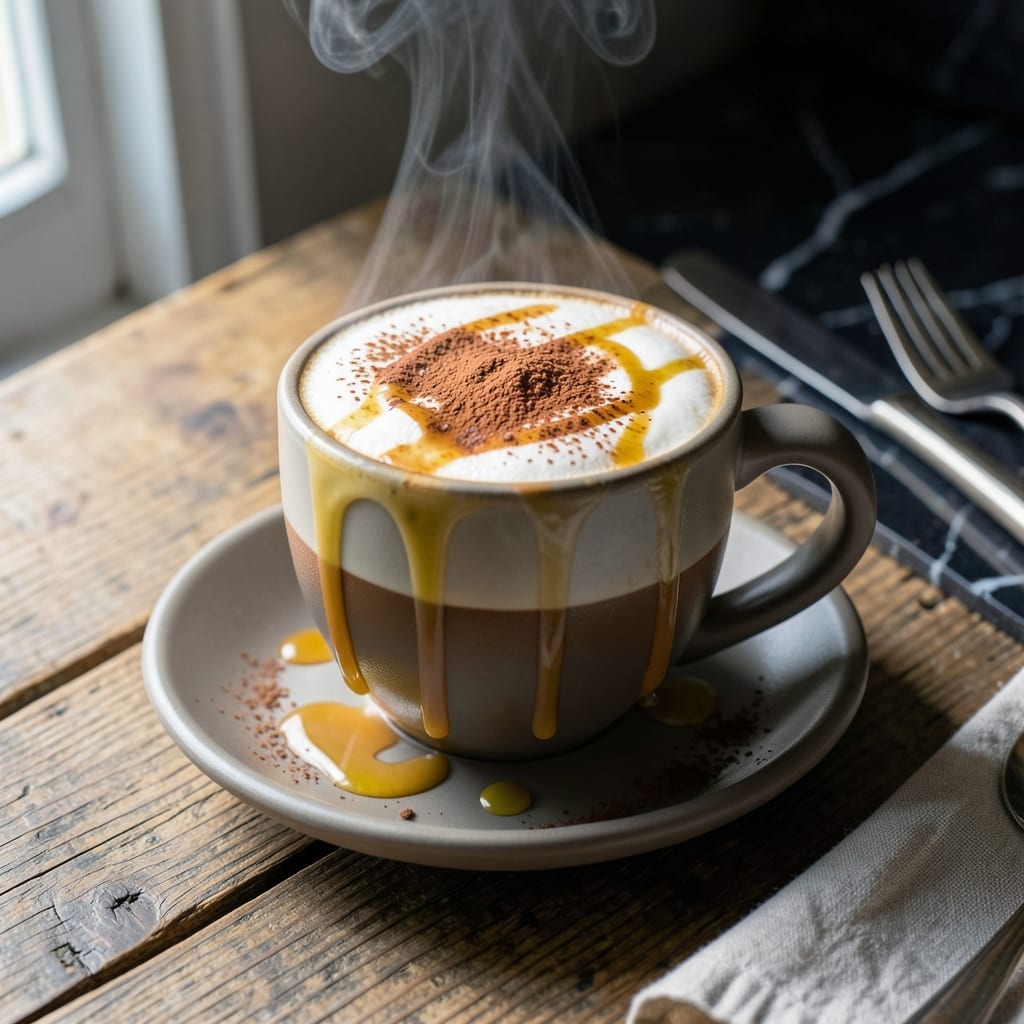
Achieving café-quality lattes at home starts with perfecting two fundamental elements: rich espresso and velvety steamed milk. This method transforms your kitchen into a coffee bar with professional results.
The foundation is a 1:3 ratio of espresso to steamed milk, with a thin layer of foam on top. The key technique involves heating milk to 150-160°F while creating microfoam that blends seamlessly with the espresso.
What sets this apart is the attention to texture and temperature. Properly steamed milk should have a paint-like consistency, creating that signature creamy mouthfeel with each sip.
These techniques work with any milk variety and can be adapted for flavored syrups or spiced variations. The process takes less than 5 minutes once mastered.
Ingredients for Latte Recipe Ideas
Café-quality lattes at home require espresso, steamed milk, and a touch of creativity.
| Ingredient | Amount | Notes |
|---|---|---|
| Espresso Shots ☕ | 2 oz | Freshly brewed, 1-2 shots |
| Whole Milk 🥛 | 8 oz | Steamed to 150-160°F |
| Vanilla Syrup 🍯 | 1 tbsp | Optional for flavoring |
| Caramel Sauce 🍫 | 1 tbsp | Optional for drizzling |
| Ground Cinnamon 🌿 | ¼ tsp | Freshly ground preferred |
| Unsweetened Cocoa Powder 🍫 | ½ tsp | For dusting optional |
| Oat Milk 🌾 | 8 oz | Alternative milk option |
| Almond Milk 🌰 | 8 oz | Alternative milk option |
| Hazelnut Syrup 🌰 | 1 tbsp | Optional flavoring alternative |
| Whipped Cream 🥣 | ¼ cup | Optional topping, vegetarian |
| Chocolate Shavings 🍫 | 1 tbsp | For garnish optional |
| Ice Cubes ❄️ | 4 pieces | For iced variation |
The espresso is non-negotiable for authentic flavor. Use freshly ground beans within two weeks of roasting for optimal results. Whole milk produces the creamiest microfoam, though oat milk offers a plant-based alternative with similar texture. For equipment, a quality espresso machine like Breville Barista Express delivers consistent shots, but a Moka pot works in a pinch for strong coffee.
No espresso machine? Strong brewed coffee at double concentration mimics espresso reasonably well. Swap vanilla syrup for hazelnut or caramel to change the flavor profile. For dairy-free options, barista-style oat or almond milk froths best. The 1:3 espresso-to-milk ratio is flexible—adjust to taste preference. Cinnamon and cocoa powder can be combined for a mocha-cinnamon twist.
Prepared lattes are best enjoyed immediately, though the espresso base can be refrigerated for 24 hours. Milk alternatives separate when stored—shake well before use. Syrups and sauces keep for 1-2 months in the pantry once opened. Always preheat your cup for better temperature retention.
Why You’ll Love This Recipe
- I’ll be real: whether it’s a lazy Sunday or my book club meets here, everyone ends up asking for the recipe.
- Barista in Minutes: Between us, it takes me less time than waiting in line at a coffee shop—just steam, pour, and a drizzle of caramel does the trick.
- Sweet Harmony: The vanilla syrup and cinnamon hit this perfect balance with the espresso—rich but not too sweet, like a hug in a mug.
- Crowd Pleaser: I’ll be real: whether it’s a lazy Sunday or my book club meets here, everyone ends up asking for the recipe.
Step-by-Step Instructions for Latte Creations
Master these fundamental techniques to craft café-quality beverages with precision and finesse.
Step 1: Extract and Prepare the Espresso Base
Begin by pulling 2 oz of espresso shots using freshly ground beans for optimal crema and flavor depth. The extraction should take approximately 25-30 seconds—you’ll see a steady, honey-colored stream that gradually darkens into a rich, syrupy consistency.
For iced variations, immediately pour the hot espresso shots over 4 pieces ice cubes in your serving glass to rapidly chill the base without dilution. This preserves the espresso’s bold character while preparing it for milk integration. For hot lattes, transfer the espresso to your serving cup and proceed directly to milk preparation.
Step 2: Steam and Texture the Milk
Pour 8 oz whole milk, 8 oz oat milk, or 8 oz almond milk into a stainless steel pitcher, filling no more than one-third full to allow expansion. Purge the steam wand for 2-3 seconds to clear any residual water or milk before submerging the tip just below the milk’s surface.
Stretch the milk by opening the steam wand fully for 5-8 seconds until you hear a gentle paper-tearing sound and the volume increases by about 50%. Then submerge the tip deeper and create a whirlpool for 20-30 seconds to achieve a velvety microfoam with a glossy, paint-like texture—this is critical for latte art potential.
Step 3: Combine Espresso and Milk with Precision
For hot lattes, pour the textured milk into the espresso shots by starting with the pitcher close to the cup and gradually raising it as the cup fills. Aim the stream toward the center to integrate the espresso and milk smoothly, then finish with a gentle pour through the crema to create a heart or rosetta pattern.
For flavored variations, add 1 tbsp vanilla syrup, 1 tbsp hazelnut syrup, or 1 tbsp caramel sauce to the espresso before adding milk. Stir briefly to incorporate the syrup, ensuring even distribution without breaking the crema. The syrup should dissolve completely into the hot espresso within 10-15 seconds.
Step 4: Apply Finishing Touches and Garnishes
For a classic touch, dust the surface with 0.25 tsp ground cinnamon or 0.5 tsp unsweetened cocoa powder using a fine-mesh sieve. Hold the sieve 6-8 inches above the drink and tap gently to create an even, delicate layer that enhances aroma and visual appeal.
For indulgent presentations, top with 0.25 cup whipped cream and drizzle with 1 tbsp caramel sauce. Finish with a sprinkle of 1 tbsp chocolate shavings for texture contrast. These garnishes should be added immediately before serving to maintain their integrity and temperature contrast against the warm latte.
Pro Tips For Making Latte Recipe Ideas
- Preheat Your Milk: Warm your whole milk to 150-160°F before frothing—any hotter and it’ll scald, any cooler and it won’t blend smoothly with the espresso.
- Freshly Grind Cinnamon: I learned this the hard way—pre-ground cinnamon loses its punch fast. Grind a cinnamon stick just before dusting for a stronger, fresher aroma.
- Purge the Steam Wand: After burning three pitchers of milk, I finally figured out: always purge the steam wand for 2-3 seconds before submerging to clear old milk residue.
- Swirl the Syrup: Add vanilla syrup to your cup first, then pour the espresso over it and stir—this keeps the flavors balanced instead of sinking to the bottom.
Make-Ahead Tips for latte recipe ideas
Prep Espresso Base
Pull and store your 2 oz espresso shots in an airtight container in the fridge for up to 24 hours. This preserves the rich flavor without compromise. I always use freshly ground beans for the best results.
Cold Milk Storage
Keep your 8 oz whole milk, oat milk, or almond milk chilled at 35-40°F until ready to steam. Colder milk stretches better, creating that perfect microfoam texture. Shake cartons well before use. ❄️
Syrup Prep
Pre-measure 1 tbsp vanilla syrup, hazelnut syrup, or caramel sauce into small ramekins. This streamlines the process, ensuring quick and even distribution into your espresso.
Preheat Equipment
Warm your serving cups with hot water for 30 seconds, then dry thoroughly. A preheated cup maintains the latte’s temperature longer. I recommend using ceramic for better heat retention.
Iced Latte Prep
For iced versions, freeze 4 pieces ice cubes in advance using filtered water for a cleaner taste. Store in an airtight bag to prevent absorbing freezer odors. This ensures your drink stays cold without dilution. 💡
Garnish Prep
Pre-grind 0.25 tsp ground cinnamon or measure 0.5 tsp unsweetened cocoa powder into small containers. Have 0.25 cup whipped cream and 1 tbsp chocolate shavings ready to go for quick finishing touches.
Nutrition Facts
Frequently Asked Questions
What’s the ideal milk temperature for steaming?
Heat milk to 150-160°F for the perfect balance of sweetness and texture. Avoid boiling, as it can scald the milk and ruin the flavor. A thermometer ensures precision.
Can I make a latte without an espresso machine?
Yes! Use strongly brewed coffee at double concentration as a substitute. A Moka pot or AeroPress also works well for a rich, espresso-like base.
How do I prevent my latte art from dissolving?
Pour milk slowly and steadily into the center of the cup. Use fresh, well-textured milk with a glossy microfoam. Practice consistency in your pour speed.
Why is my latte too bitter?
Bitterness often comes from over-extracted espresso or overheated milk. Stick to 25-30 seconds for espresso extraction and keep milk under 160°F. Adjust your grind size if needed.

- Beef Kidney Recipe Keto: Bold Flavors with Low-Carb Simplicity - October 8, 2026
- Pea Salad Recipe With Egg and Mayonnaise: Classic Creamy Potluck Favorite - October 8, 2026
- Peach Salsa Canning Recipe No Tomatoes: Sweet and Spicy Preservation - October 8, 2026