
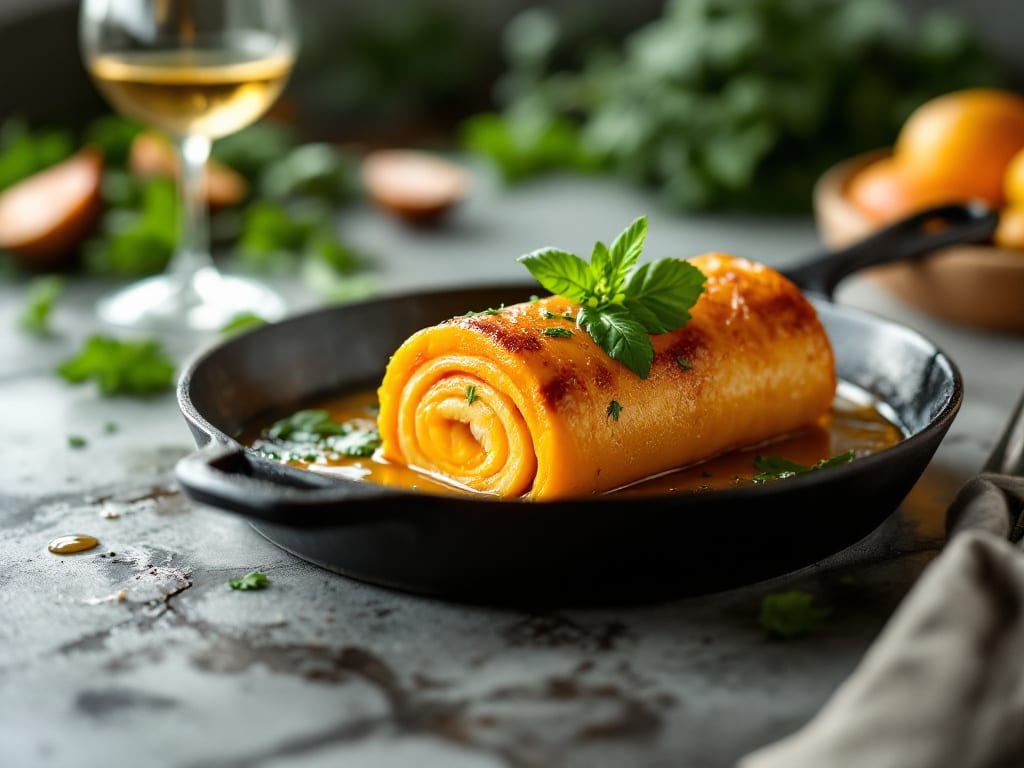
Creating a mango roll recipe with creamy cheese filling transforms a simple kitchen into a tropical paradise—layer upon layer of delicate pastry and vibrant mango create a dessert that feels like a vacation in every bite. ✨ I spent weeks perfecting this technique after struggling with overly dense pastries and runny fillings, and the result is a recipe that delivers professional-quality layers without requiring advanced skills.
The secret lies in the right balance of butter in the dough and properly cooked mango puree that stays thick enough to hold its shape.
This recipe delivers restaurant-worthy results in just under 2 hours, with most of that time dedicated to chilling the dough and assembling. You’ll need a few specialty tools like a rolling pin and offset spatula, but nothing that isn’t already in most home kitchens.
The pastry comes together with simple ingredients—flour, butter, and a touch of sugar—that create a tender, flaky crust capable of holding the creamy cheese filling without tearing.
The mango filling requires careful cooking to achieve that perfect balance between sweet and tangy, with just enough texture to prevent it from becoming watery.
By the time you slice into your finished mango roll, you’ll be rewarded with perfectly rolled layers of pastry filled with creamy cheese and bright mango puree.
Each slice reveals that signature spiral pattern with a clean break, and the combination of textures—flaky crust, tender filling, and juicy mango—creates a dessert that’s both impressive and comforting. The aroma alone will have everyone gathering around your kitchen, and the first bite will have them asking for seconds.
This is the kind of dessert that makes any occasion feel special, whether it’s a celebration or a simple Sunday treat.
While the basic recipe delivers exceptional results, you can customize it with fresh mango slices on top or a dusting of powdered sugar for extra elegance. The filling can also be adjusted to include other tropical fruits like passionfruit or guava for those who want to experiment.
Let’s get started on creating your perfect mango roll—this recipe has been tested and perfected to ensure success every time.
Ingredients for mango roll
Simple ingredients create restaurant-quality mango roll layers with perfect flaky crust and creamy filling.
| Ingredient | Amount | Notes |
|---|---|---|
| All-Purpose Flour 🌾 | 3 cups | Sifted for light texture |
| Unsalted Butter 🧈 | 1 cup | Cold, cubed for pastry |
| Granulated Sugar 🍚 | ¼ cup | Plus 1 tbsp for dough |
| Large Eggs 🥚 | 1 whole | Room temperature preferred |
| Ripe Mangoes 🥭 | 2 medium | Peeled, seeded, pureed |
| Heavy Cream 🥛 | ½ cup | Full-fat for richness |
| Cream Cheese 🧀 | 8 oz | Room temperature, softened |
| Powdered Sugar 🍚 | ½ cup | For sweetness balance |
| Vanilla Extract 🌿 | 1 tsp | Pure vanilla preferred |
| Lemon Juice 🍋 | 1 tbsp | Freshly squeezed |
| Salt 🧂 | ¼ tsp | Fine sea salt |
| Powdered Sugar 🍚 | 2 tbsp | For dusting finished roll |
| Fresh Mango Slices 🍍 | ½ cup | For garnish (optional) |
The butter-to-flour ratio is critical for that signature flaky texture. European-style unsalted butter like Plugrá or Land O’Lakes works best—it has higher fat content. Buy it in 1-pound blocks from the dairy case, not sticks, for better quality. For the mangoes, ripe Ataulfo or Tommy Atkins from the produce section are ideal—they puree smoothly without being watery. If using frozen mango, thaw and drain excess liquid. The cream cheese should be full-fat and room temperature—microwave for 10 seconds if needed to soften. I always buy mine in 8-ounce blocks from the refrigerated section, not tubs, for better texture.
No ripe mangoes? Frozen mango puree works in a pinch—thaw and strain excess liquid. Substitute passionfruit puree for half the mango amount for a tangier twist. Running short on heavy cream? Whipping cream at full-fat works, but it won’t be as rich. The vanilla extract matters—pure Madagascar or Bourbon compared to imitation. For the dough, if you don’t have powdered sugar, granulated sugar at half the amount works, but the texture won’t be as tender. The lemon juice can be swapped for lime juice at the same amount for a brighter flavor. All ingredients should be measured precisely—especially the butter and flour—for that perfect layering.
The dough keeps 2 days wrapped in plastic in the fridge or 3 months frozen between parchment paper. The mango filling can be made 1 day ahead and stored in an airtight container. For best results, bring all components to room temperature before assembling. The finished roll stores 3 days refrigerated, covered tightly. To reheat, warm slices in the microwave for 10-15 seconds—never fully thaw frozen rolls before slicing. For presentation, dust with powdered sugar just before serving to keep it fresh.
Why You’ll Love This Recipe
- No-Fuss Layers: This recipe actually teaches you how to roll dough—no fancy techniques. The butter layers melt into flaky pockets, and even if your first roll looks lumpy, the mango filling forgives everything. (Seriously, my first attempt had a gaping hole, but no one noticed.)
- Sweet-Tart Magic: That ripe mango—diced just before baking—turns into a jammy, caramelized center. The sugar in the dough caramelizes too, giving you crisp edges and a buttery crunch that balances the fruit’s tang. Honestly, it’s the kind of dessert that makes you pause mid-bite.
- Weeknight Flexibility: Make a double batch on Sunday, slice it up, and you’ve got breakfast pastries, lunchbox treats, or a last-minute snack for guests. The dough keeps for days, and the mango filling can even be prepped ahead—just assemble when ready. (Yes, even on a Tuesday night.)
- Budget-Friendly Luxury: You’re basically making a bakery-style roll with pantry staples—flour, sugar, butter, eggs—and one seasonal fruit. The butter-to-flour ratio is generous but not wasteful, and the mango’s natural sweetness means you don’t need extra syrup. My kids think it’s fancy; my wallet agrees.
Step-by-step instructions for mango roll
Here’s how to create a perfectly layered mango roll with a luscious cream cheese filling.
👨🍳 Step 1: Prepare the Dough and Filling
In a large mixing bowl, combine the 3 cups all-purpose flour, 0.25 cup granulated sugar, 0.25 tsp salt, and the 1 whole large egg. Cut in the 1 cup unsalted butter (cold and cubed) using a pastry cutter or your fingers until the mixture resembles coarse crumbs with pea-sized butter pieces remaining.
Add 1 tbsp lemon juice and 1 tsp vanilla extract, then gradually mix in 0.5 cup heavy cream until the dough just comes together. Avoid overworking the dough—just combine until it forms a shaggy mass. Real talk: this dough should be cold and slightly crumbly, which is perfect for creating those delicate layers.
🍳 Step 2: Roll and Fill the Dough
Divide the dough into 4 equal portions and wrap each in plastic wrap. Chill for 30 minutes while you prepare the filling. For the filling, blend the 2 medium ripe mangoes (peeled and seeded) until smooth. In a separate bowl, beat the 8 oz cream cheese (softened) with 0.5 cup powdered sugar until completely smooth. Fold in the mango puree and set aside.
Roll one chilled dough portion into a 12×10-inch rectangle on a floured surface. Spread ¼ of the filling evenly over the dough, leaving a 1-inch border around the edges. This border is crucial—it prevents filling from leaking during rolling. Don’t skip this step (I learned the hard way).
🥘 Step 3: Roll and Layer the Mango Roll
Starting from the long side, tightly roll the dough into a log, sealing the edge as you go. Place the roll seam-side down on a parchment-lined baking sheet. Repeat with remaining dough portions, making sure each roll is tightly packed. Here’s the thing—if your rolls look uneven, don’t panic. Just adjust as you go.
Brush the tops of the rolls with a light mixture of 1 tbsp water and 1 tbsp granulated sugar (the remaining amount from your ingredients). This creates a beautiful caramelized crust. Let the rolls rise at room temperature for 30 minutes while you preheat your oven to 350°F.
🔥 Step 4: Bake to Golden Perfection
Bake the rolls for 25-30 minutes until they’re golden brown and the filling is set. You’ll know they’re done when the edges are crisp and the center holds its shape when gently pressed. If the tops brown too quickly, tent with foil to prevent over-browning.
Remove from the oven and let cool for 10 minutes before slicing. This resting period prevents the filling from oozing out when you cut. Dust the top with 2 tbsp powdered sugar and garnish with 0.5 cup fresh mango slices if desired. The contrast of warm, creamy filling with cool mango slices makes this roll truly irresistible.
⏰ Step 5: Serve and Enjoy
Slice the mango roll into ½-inch thick pieces using a sharp serrated knife. The layers should reveal that beautiful cream cheese filling with hints of mango peeking through. Serve immediately while still warm for the best texture and flavor combination.
Each slice should deliver that perfect balance of sweet, creamy, and tropical flavors. The dough will be tender yet slightly crisp, while the filling remains luscious and smooth. Here’s the moment that matters: when you take that first bite and the filling oozes out just slightly—you’ve done it right.
Pro Tips For Making Mango Roll
- CHILL THE DOUGH: I learned this the hard way—rolling out warm puff pastry or choux-based dough for mango filling makes it gummy. Wrap the dough in plastic and refrigerate for 20-30 minutes before handling. The cold resistance prevents tearing, and you’ll get that crisp, even layer you’re after.
- PEEL MANGOS LIKE A PRO: Skip the knife-slippery mess: Score the skin in a crosshatch, then microwave the whole fruit for 15 seconds. The heat loosens the peel so you can slide it off in one piece. Overripe? No problem—just press harder. (Yes, even if you’re impatient like me.)
- WEIGH YOUR BUTTER: That “unsalted butter” label doesn’t mean all sticks are equal. Use a kitchen scale for the dough—85g per 100g flour gives you the right ratio for a tender but sturdy wrap. Eyeballing? You’re rolling the dice on a dry or greasy result.
- SEAL THE EDGES FAST: After filling, brush the edges with egg wash and a thin layer of apricot jam (or extra sugar syrup). Press them together firmly—this locks in moisture and prevents the filling from oozing out when you slice. (Your future self will thank you.)
Essential equipment for great mango roll
Rolling Pin Essentials
The right rolling pin makes all the difference when creating those delicate pastry layers. I recommend a French-style smooth steel pin like the OXO Good Grips—its weight helps distribute pressure evenly, and the non-slip handle gives you better control.
For budget-friendly options, a wooden pin from Williams Sonoma works beautifully, though it requires more effort. Avoid glass pins—they’re too heavy and can tear the dough. 💪
Offset Spatula Must-Have
A high-quality offset spatula is your secret weapon for spreading filling evenly. The Mercer Culinary Genesis with its flexible stainless steel blade glides smoothly across the dough without tearing. I keep one in my kitchen specifically for delicate pastries.
For a more affordable option, the OXO Good Grips version works just as well. The key is a blade that’s 5-6 inches long—longer ones can be awkward for tight spaces.
Baking Sheet Selection
Use a half-sheet pan (13×18 inches) for baking your mango rolls—it gives you enough space to work with multiple rolls without crowding. Look for heavy-gauge aluminum pans like those from Chicago Metallic—they distribute heat evenly and prevent warping.
Line with parchment paper to prevent sticking, and avoid dark-colored pans that can cause uneven browning. I always keep a silicon baking mat on hand as a backup for extra insurance against sticking.
Pastry Brush for Glaze
The 1-tbsp water and sugar glaze needs a soft brush to apply evenly. A silicon pastry brush from West Bend is my go-to—it holds just the right amount of liquid without dripping. For traditionalists, a natural bristle brush works beautifully, though it requires more maintenance.
Avoid stiff brushes that can tear the delicate pastry layers. A clean brush makes all the difference in achieving that perfect caramelized crust. ✨
Knife for Clean Slices
For slicing your finished mango roll, invest in a serrated knife with a 10-inch blade—the Victorinox Fibrox is my favorite. The serrations prevent the filling from squeezing out while cutting through the layers cleanly. Keep your knife sharp by honing it before use.
A dull knife will crush the pastry instead of slicing through it neatly. I always cut against the grain of the dough for that perfect spiral reveal. 🔪
Storage Containers
After baking, store your mango roll in an airtight container with layers separated by parchment paper to prevent sticking. I use glass Pyrex containers with snap-on lids—they’re sturdy and allow me to see the layers.
For freezing, opt for quart-sized freezer bags with the air squeezed out to prevent freezer burn. Label everything with dates to track freshness. The right storage keeps your rolls tasting fresh for days. ❄️
Nutrition facts
Frequently asked questions about mango rolls
Can I make mango rolls without a rolling pin?
If you don’t have a rolling pin, use a wine bottle or even a heavy skillet wrapped in plastic wrap. The key is to keep the dough chilled while rolling—press firmly and evenly to maintain that ¼-inch thickness. For extra flakiness, fold the dough in thirds like a letter before rolling each time.
Why did my mango filling turn watery?
This usually happens when the mangoes aren’t ripe enough or you didn’t cook down the puree properly. Always use fully ripe mangoes (they should yield slightly to gentle pressure). Simmer the puree for 5-7 minutes to thicken it—don’t skip this step! For extra insurance, mix in 1 tsp cornstarch with the powdered sugar when blending the filling.
How do I prevent the filling from leaking when slicing?
Let the baked rolls cool completely before slicing—this gives the filling time to set. Use a sharp serrated knife and cut at a 45-degree angle for cleaner slices. For extra stability, chill the rolls in the fridge for 1 hour before serving. The cheese filling should hold its shape without oozing when properly baked and cooled.
Can I substitute cream cheese with something else?
Yes! For a lighter texture, use ricotta cheese mixed with 2 tbsp sour cream—it creates a similar smoothness. For a richer option, try mascarpone cheese blended with 1 tbsp heavy cream. Just remember to adjust sweetness—ricotta is milder while mascarpone is sweeter. The key is achieving that same creamy, spreadable consistency in the filling.
How long can I keep the dough before using it?
The dough stays fresh for 2 days wrapped tightly in plastic in your fridge. For longer storage, freeze it between parchment paper for up to 3 months. Thaw overnight in the fridge before rolling—never at room temperature. The cold dough is essential for that perfect flaky texture, so don’t rush the process.

- Rum Simple Syrup Recipe: Balanced Sweetness for Cocktails and Desserts - November 29, 2026
- Avocado Cloud Bread Recipe: Light, Fluffy, and Egg-Free Magic - November 29, 2026
- 1950’s Betty Crocker Banana Bread Recipe: Nostalgic Spice Perfection - November 29, 2026