
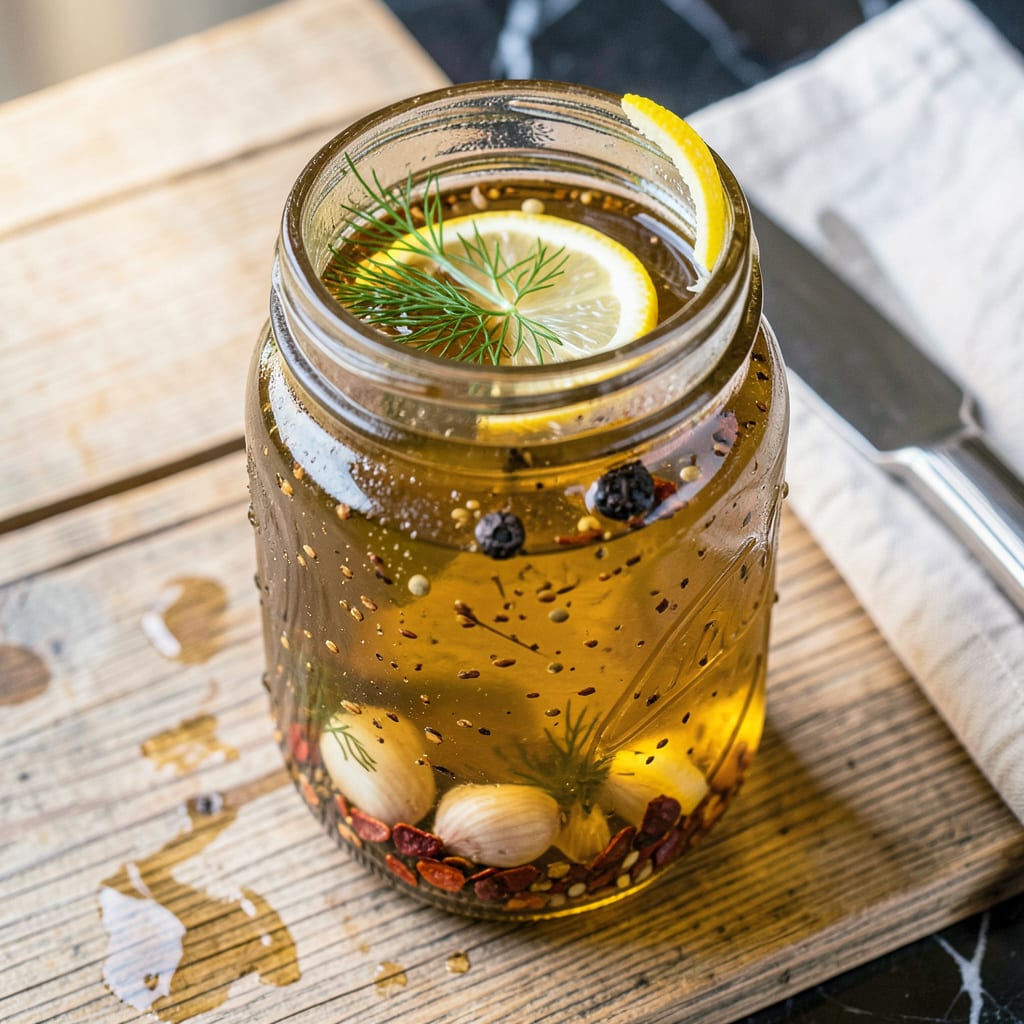
To make Mt Olive-style pickle juice, combine 2 cups water, 1 cup vinegar, 1 tbsp salt, 1 tbsp sugar, and 1 tsp each of garlic powder, dill seed, and mustard seed. Boil, cool, and pour over cucumbers in a jar. Refrigerate for 24 hours before using.
This brine captures the signature balance of tangy vinegar and subtle sweetness that makes Mt Olive pickles so recognizable. The combination of dill seed and mustard seed creates depth, while the 24-hour refrigeration allows flavors to fully infuse. I’ve found this ratio works perfectly for crisp, flavorful pickles or even as a base for marinades. ✨
What sets this apart is its versatility—adjust the salt-to-sugar ratio to suit your taste, or use it as a refreshing post-workout drink. The fermentation process develops a complexity you won’t find in store-bought versions. 💫
💡 In This Article
- Why Mt Olive Pickle Juice Stands Out from Other Brines
- Creative Uses for Homemade Mt Olive Pickle Juice
Why Mt Olive Pickle Juice Stands Out from Other Brines
The magic of Mt Olive’s signature flavor starts with its precise balance of acidity and sweetness. The 1:2 vinegar-to-water ratio creates a tangy foundation that’s sharper than most commercial brines (which often use 1:3 ratios). This higher acidity preserves crispness while delivering that signature “pucker” Mt Olive fans crave.
The 1 tablespoon of sugar might seem minimal, but it’s calculated to counterbalance the vinegar’s bite without crossing into sweet pickle territory.
What most people don’t realize is how the spice combination works at a molecular level. Dill seeds contain carvone (the same compound in spearmint), which interacts with the vinegar’s acetic acid to create a cooling sensation on the palate. Meanwhile, mustard seeds release allyl isothiocyanate when hydrated—this is the compound that gives horseradish its kick.
Together they create a flavor profile that’s simultaneously fresh, pungent, and slightly warming. The garlic powder adds alliin, which converts to allicin over time, developing deeper umami notes during the 24-hour fermentation.
Fermentation time is where the real transformation happens. During those first 24 hours, lactic acid bacteria begin converting sugars into lactic acid, which softens the vinegar’s harshness while preserving the cucumbers’ crunch. This is different from quick-pickle methods that skip fermentation—those brines taste flat and one-dimensional by comparison.
The 1 tablespoon of salt (about 3% brine concentration) is ideal for inhibiting harmful bacteria while allowing beneficial microbes to thrive.
Temperature plays a crucial role in flavor development. Refrigerating at 35-40°F slows fermentation just enough to let flavors meld without over-softening the cucumbers. This is why Mt Olive’s texture is so distinctive—crisp yet fully infused. Commercial operations use precise temperature control, but your home fridge achieves similar results over 24-48 hours.
The cold also enhances the volatility of aromatic compounds, making the dill and garlic notes more pronounced when you open the jar.
Here’s what’s fascinating about the salt-sugar dynamic: The 1:1 salt-to-sugar ratio creates osmotic pressure that draws moisture from cucumbers while preventing cell collapse. This maintains that satisfying “snap” when you bite into a Mt Olive pickle. Most generic recipes use 2:1 salt-to-sugar, which can make pickles taste harsh.
The sugar also feeds the lactic acid bacteria during fermentation, creating a subtle complexity you won’t find in non-fermented brines.
Compare this to other popular brines:
- Claussen-style: Uses 0 sugar and relies on garlic/peppers for flavor (more aggressive, less balanced)
- Vlasic-style: Higher sugar content (2 tbsp) for a sweeter profile (popular in bread-and-butter pickles)
- Kosher dill: Heavy on fresh dill and garlic but often lacks the mustard seed’s depth
The 24-hour mark isn’t arbitrary—it’s when the pH typically drops to about 3.8, the sweet spot for flavor and preservation. This acidity level inhibits botulism while allowing beneficial bacteria to develop those signature tangy notes.
The result is a brine so well-balanced that it’s become a cult favorite for everything from marinating chicken to spiking bloody marys. That versatility comes from the careful calibration of each component working in harmony. ✨

- BBQ Lamb Rack Recipe Grill: Smoky Herb-Crusted Chops in Minutes - September 28, 2026
- Fried Okra Recipe Without Cornmeal: Crispy Golden Pods With All-Purpose Flour - September 28, 2026
- Recipe With Almond Flour: Gluten-Free Baking Made Simple - September 28, 2026