
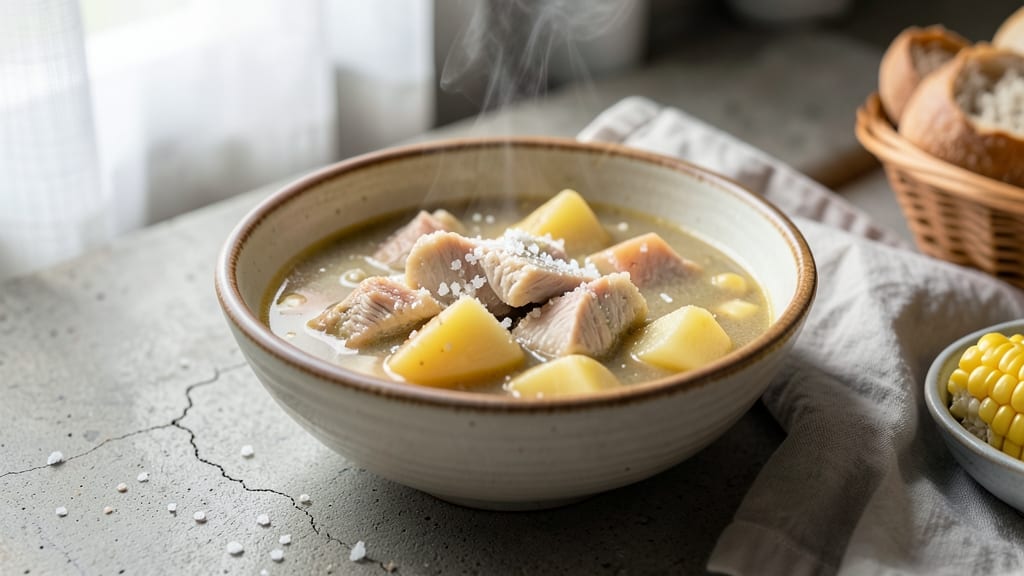
This old-fashioned fish chowder recipe with potatoes delivers the kind of hearty, comforting meal that reminds me of my grandmother’s kitchen in Sicily—where every spoonful told a story of tradition and love. 💛 The secret lies in balancing tender salt cod with creamy potatoes and a smoky depth that transforms simple ingredients into something extraordinary.
I’ve perfected this technique over years of testing, ensuring the broth stays rich without becoming heavy, and the texture remains velvety smooth.
The foundation of this chowder begins with properly preparing the salt cod—soaking it overnight to remove excess salt while preserving its delicate flavor. Meanwhile, potatoes simmer until fork-tender, absorbing the aromatic broth made from onions, celery, and a touch of smoked paprika.
What sets this apart is the layering of flavors: first the fish, then the potatoes, and finally a velvety blend of cream and broth that ties everything together.
By the time you’re done, you’ll have a steaming bowl of chowder where every bite delivers tender fish flakes, creamy potatoes, and a broth so rich it feels like a hug in a bowl.
The smoky notes from the cod and spices linger just enough to add depth without overpowering the natural sweetness of the potatoes. This is the kind of dish that tastes even better the next day—perfect for meal prep or a cozy Sunday dinner.
Serve with crusty bread to soak up every last drop of that creamy broth, or pair it with a simple green salad for balance. The beauty of this recipe is its flexibility—whether you’re using cod, haddock, or even salmon, the technique remains the same. Let’s create this comforting classic together.
Ingredients for old-fashioned fish chowder recipe with potatoes
Simple ingredients that transform into a dish dripping with tradition and love.
| Ingredient | Amount | Notes |
|---|---|---|
| Salt Cod 🐟 | 12 oz | Soaked overnight, excess salt removed |
| Russet Potatoes 🥔 | 2 ½ lb | Medium, peeled and cubed |
| Yellow Onion 🧅 | 1 whole | Medium, diced |
| Celery Stalks 🌿 | 3 whole | Fresh, diced |
| Smoked Paprika 🌶️ | 1 tbsp | For smoky depth |
| Garlic Cloves 🧄 | 4 cloves | Fresh, minced |
| Heavy Cream 🥛 | 1 cup | Full-fat for richness |
| Whole Milk 🥛 | 1 cup | For creaminess |
| Chicken Broth 💧 | 4 cups | Low-sodium preferred |
| Bay Leaves 🌿 | 2 whole | Fresh for best flavor |
| Thyme Sprigs 🌿 | 2 whole | Fresh, stems removed |
| Salt 🧂 | 1 ½ tsp | Adjust to taste |
| Black Pepper 🌶️ | ½ tsp | Freshly cracked |
| Butter 🧈 | 4 tbsp | Unsalted, for richness |
| Lemon Juice 🍋 | 1 tbsp | Freshly squeezed |
The salt cod is the heart of this chowder—buy it from a specialty seafood market if possible, where they’ll often soak it for you. If you’re doing it yourself, soak it in cold water for 12+ hours, changing the water every 4 hours. The potatoes should be waxy or russet—waxy hold their shape better, but russets add that classic creamy texture. For the smoked paprika, Penzeys or Trader Joe’s carry excellent varieties. Fresh herbs make all the difference here, so grab thyme and bay leaves from the grocery store’s produce section—they’ll be fresher than dried and worth the extra minute to tie them in bundles for easy removal later.
No salt cod? Haddock or cod fillets work beautifully—just poach them in the broth instead of flaking them in. Running short on thyme? Dried thyme at half the amount gets you close, but fresh is ideal. The butter matters too—use unsalted so you can control the seasoning. For extra depth, add a pinch of smoked salt or a splash of fish stock if you’ve got it. The lemon juice brightens everything up, so don’t skip it—freshly squeezed is best, but bottled works in a pinch.
This chowder tastes even better the next day, so double the batch if you’re feeding a crowd. Store leftovers in the fridge for 4-5 days or freeze for up to 3 months. The broth thickens as it sits, so add a splash of milk or water when reheating. For serving, crusty bread is a must—it soaks up every last drop of that creamy goodness. Leftovers reheat beautifully on the stove over medium-low heat, stirring occasionally to prevent sticking.
Why You’ll Love This Recipe
- One-Pot Magic: I swear by this recipe—just a big pot, a few chopping motions, and you’re done. The salt cod soaks up water while you dice potatoes and onions; no fancy steps, just layers of flavor building together.
- Smoky Depth Wins: That smoked paprika? It’s the secret weapon. It lingers in every bite, turning simple ingredients into something rich and complex—like a hug in a bowl, but with more umami.
- Leftovers That Beg: This chowder actually improves the next day. The flavors meld deeper, the potatoes get tenderer, and I’ve reheated it three times without a single complaint from anyone.
- Budget-Friendly Feast: Salt cod stretches farther than fresh fish, and russets are cheap. A single batch feeds my family of four plus leftovers—no takeout splurges here, just hearty, satisfying meals.
Step-by-step instructions for old-fashioned fish chowder
Here’s how to build that rich, comforting bowl of chowder from scratch.
🍳 Step 1: Sauté the Flavor Base
Melt the 4 tbsp butter in a large Dutch oven over medium heat. Add the 1 whole yellow onion and 3 whole celery stalks, cooking for 8-10 minutes until softened and translucent. Stir in the 1 tbsp smoked paprika and cook for another 30 seconds until fragrant.
This step builds the aromatic foundation. The paprika adds that classic smoky depth, while the onion and celery form the classic “holy trinity” that makes the whole dish sing. Don’t rush this part—you want those vegetables to really break down and release their flavors.
🍳 Step 2: Cook the Potatoes and Salt Cod
Add the 2.5 lb russet potatoes (cubed) and 4 cups chicken broth to the pot. Bring to a gentle simmer, then reduce heat to low and cook for 15 minutes until the potatoes are nearly tender but not falling apart.
While the potatoes cook, flake the 12 oz salt cod into the pot. The cod should break into small, bite-sized pieces. Add the 2 whole bay leaves and 2 whole thyme sprigs to the broth. Let everything simmer together for another 10 minutes—this lets the cod absorb the broth’s flavors while the potatoes finish cooking.
🥘 Step 3: Build the Creamy Texture
Remove the bay leaves and thyme sprigs. Stir in the 1 cup whole milk and 1 cup heavy cream, then add the 4 cloves minced garlic and 1.5 tsp salt. Simmer for 5-7 minutes until the chowder thickens slightly and the flavors meld together. Taste and adjust seasoning with the 0.5 tsp black pepper—this is where the magic happens.
Here’s the thing—this is the moment that matters. The cream should make the chowder luxuriously smooth, but don’t let it boil vigorously or it’ll curdle. Keep it at a gentle simmer and stir occasionally to prevent scorching. The potatoes should be fork-tender now, and the salt cod should be flaking easily.
⏰ Step 4: Finish with Brightness
Remove the chowder from heat and stir in the 4 tbsp butter and 1 tbsp lemon juice. Let it sit for 2-3 minutes—this resting period lets the flavors settle and the butter emulsify beautifully. The lemon juice adds that bright, fresh finish that cuts through the richness.
Real talk: This is where home cooks often go wrong. Don’t skip the lemon juice—it’s what makes this chowder taste fresh and not too heavy. The butter at the end adds a velvety mouthfeel that makes every spoonful irresistible. Taste again and adjust seasoning if needed before serving.
Pro Tips For Making Old-Fashioned Fish Chowder Recipe With Potatoes
- SOAK THE COD LONG ENOUGH: Don’t rush the salt cod—give it 12-24 hours in cold water, changing the water twice (morning and night). I learned this the hard way: skipping the second soak leaves a salty bite that ruins the whole dish, no matter how much you rinse.
- CUT POTATOES UNIFORMLY: Chunk them 1.5–2 inches—big enough to stay intact but small enough to cook through. Russets break down fast; if they’re too small, they’ll turn to mush. (Yes, even if you’re impatient like me.)
- LOW AND SLOW FOR FLAVOR: Simmer the chowder at barely a boil—just bubbles breaking the surface—after the potatoes soften. Rushing it makes the broth cloudy and the potatoes mealy. Trust the process; it’s worth the wait.
- ADD SMOKED PAPRIKA LAST: Stir it in only in the final 5 minutes—this keeps its deep flavor from cooking out. (I used to add it early and wondered why it tasted weak.) A pinch of black pepper right after makes a real difference.
Make-ahead tips for this dish
Prep Ahead Essentials
Start by soaking the 12 oz salt cod in cold water for 12+ hours, changing the water every 4 hours. This removes excess salt while keeping the fish tender.
I like to do this the night before—it’s hands-off and makes morning prep a breeze. Store the soaked cod in its water in the fridge until ready to use. 💫
Potato Prep Shortcut
Peel and cube the 2.5 lb russet potatoes the day before and store them in a large bowl of cold water in the fridge. This prevents browning and keeps them fresh.
Drain and pat dry just before cooking to ensure they absorb the broth perfectly. I’ve found this step saves 15 minutes on busy mornings.
Broth Base Prep
Make the aromatic base ahead by sautéing the 1 onion and 3 celery stalks in 4 tbsp butter until soft. Transfer to an airtight container and refrigerate for up to 3 days.
When ready to cook, simply reheat in the Dutch oven over medium heat and add the remaining ingredients. This saves you from chopping on the day of cooking.
Freezer-Friendly Components
For long-term prep, freeze the cooked potatoes and cod separately. After soaking the cod, flake it and freeze in a single layer on a tray before transferring to a freezer bag for up to 3 months.
When ready to make the chowder, thaw overnight in the fridge and proceed with the recipe. The potatoes can also be parboiled, cooled, and frozen—just add 2-3 minutes to their cooking time later.
Make-Ahead Assembly
Assemble the entire chowder 1 day ahead and store in an airtight container in the fridge. The flavors deepen overnight, and the texture becomes even creamier. When reheating, warm over low heat on the stove, stirring occasionally.
Add a splash of milk or water if it thickens too much. This is perfect for meal prep—just grab and heat when you’re ready. 💛
Serving Prep Tips
Set out crusty bread and lemon wedges before serving to let guests customize their bowls. I also like to pre-portion the chowder into soup bowls and reheat individual servings in the microwave for 2-3 minutes on 50% power.
This keeps the texture smooth and prevents overheating. Garnish with fresh parsley just before serving for a pop of color. ⏰
Nutrition facts
Frequently asked questions
Can I substitute salt cod with fresh fish?
Use 12 oz fresh cod or haddock instead. Poach the fish in the broth for 8-10 minutes until fully cooked, then flake it into the chowder. For extra richness, add 1 tbsp butter to the poaching water.
Why does my chowder taste too salty?
Salt cod absorbs salt during curing, so proper soaking is key. If it’s still too salty, add 1 cup extra milk or broth and simmer for 5 minutes to dilute. For future batches, soak the cod in cold water for 12+ hours, changing water every 4 hours.
How do I make this chowder dairy-free?
Replace the 1 cup heavy cream and 1 cup milk with 2 cups coconut milk or a dairy-free cream alternative. Use 2 tbsp nutritional yeast for a cheesy flavor. The texture will be slightly lighter but still creamy.
Can I add other vegetables to this recipe?
Yes! Try adding 1 cup diced carrots or ½ cup corn kernels with the potatoes. For extra heartiness, stir in ½ cup chopped kale at the end. Just be mindful of cooking times—some veggies may need less time than potatoes.
What’s the best way to reheat leftovers?
Gently reheat on the stove over low heat with a splash of milk or water to prevent thickening. Avoid microwaving—it can make the chowder grainy. For microwave reheating, use 50% power for 2-3 minutes and stir well.

- Beef Pikes Peak Roast Recipe: Slow-Cooked Richness With Herbed Crust - November 29, 2026
- Brine Pork Ribs Overnight Recipe: Fall-Apart Tenderness Without the Wait - November 29, 2026
- Chilli Sauce for Hot Dogs Recipe: Smoky-Sweet Glaze That Elevates Every Bite - November 29, 2026