
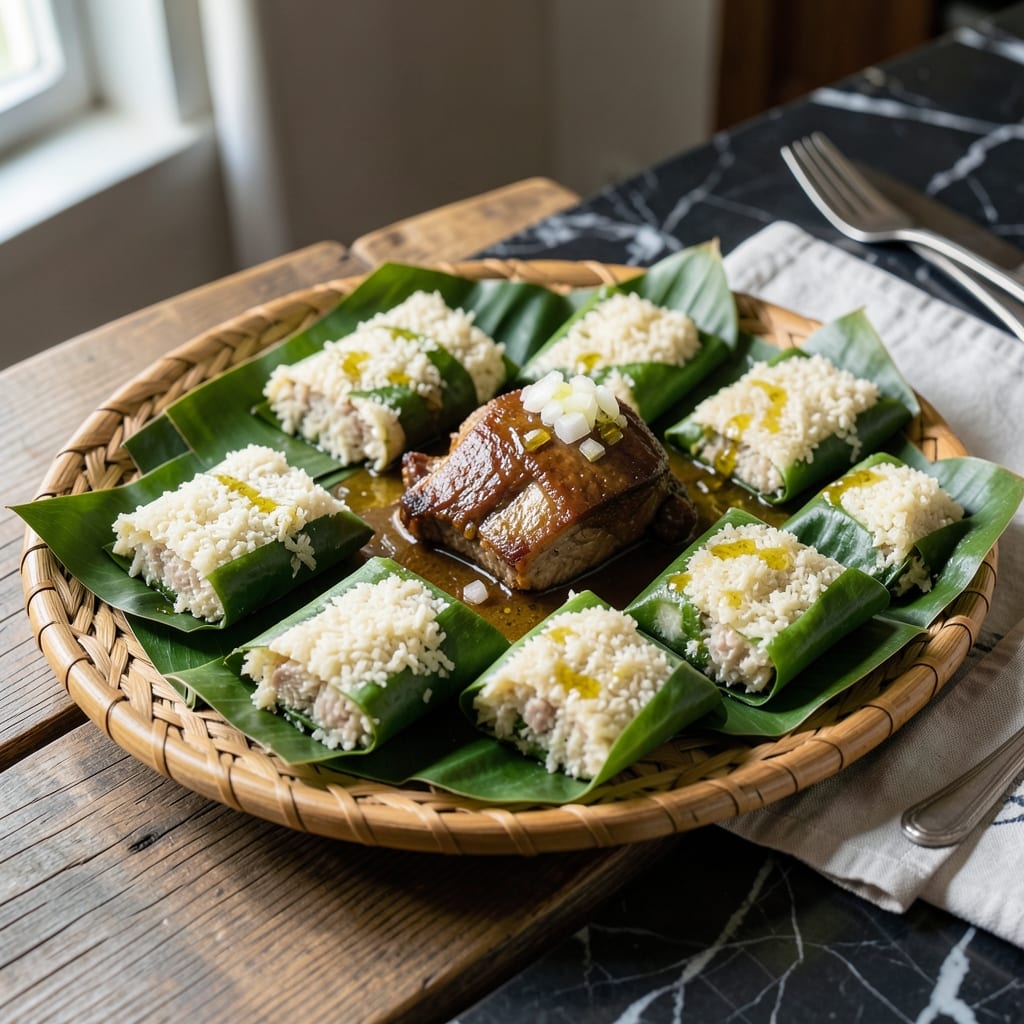
Pasteles embody the heart of Puerto Rican culinary tradition, where generations have perfected the art of steamed masa wrapped in banana leaves. This dish carries the warmth of family gatherings and holiday celebrations in every bite.
The process transforms simple ingredients—green bananas, yautía, and pork—into a savory masterpiece. Each component is prepared with care, from grinding the masa to seasoning the filling, ensuring authentic flavor in every layer.
Wrapping them in banana leaves is more than technique; it’s a ritual that infuses aroma and keeps the pasteles moist during steaming. The result is a tender, flavorful dish that honors tradition.
Whether for a special occasion or a taste of home, this recipe delivers the soul of Puerto Rico in every bite. Here’s how to bring this cherished dish to your table.
Ingredients for Pasteles Recipe Puerto Rican Style
Traditional ingredients transform into a savory Puerto Rican classic wrapped in aromatic banana leaves.
| Ingredient | Amount | Notes |
|---|---|---|
| Green Bananas 🍌 | 6 whole | Very firm, unripe plantains |
| Yautía 🌱 | 2 lb | Peeled and grated, also called malanga |
| Pork Shoulder 🐷 | 1 ½ lb | Diced into small pieces, fat trimmed |
| Banana Leaves 🍃 | 8 sheets | Cut into 12-inch squares, softened |
| Olive Oil 🫒 | ¼ cup | For sautéing pork filling |
| Onion 🧅 | 1 whole | Medium, finely diced |
| Garlic Cloves 🧄 | 6 cloves | Minced for seasoning |
| Recao 🌿 | ½ cup | Fresh culantro, finely chopped |
| Ajíes Dulces 🌶️ | 2 whole | Sweet chili peppers, seeded and minced |
| Ground Cumin 🌿 | 1 tsp | Toasted for depth |
| Dried Oregano 🍃 | 1 tsp | Crushed between fingers |
| Salt 🧂 | 1 ½ tsp | Adjusted to taste |
| Black Pepper 🌶️ | ½ tsp | Freshly ground preferred |
| Adobo Seasoning 🧂 | 1 tbsp | Puerto Rican blend, or homemade mix |
| Tomato Sauce 🍅 | ½ cup | For moistening masa |
Sourcing authentic yautía and recao is essential. Latin markets or specialty grocers like Eden’s carry both—yautía should be firm with smooth skin. For banana leaves, look for frozen at Whole Foods or Asian markets. Pork shoulder, with good marbling, ensures a rich filling. Costco offers pre-diced pork that saves prep time.
No recao? Cilantro at double the amount works in a pinch, though the flavor differs. Ajíes dulces can be swapped for cubanelle peppers if unavailable. Adobo seasoning is a must—Goya or Badia brands are reliable. For a lighter masa, some cooks add a splash of milk (not traditional but acceptable).
Banana leaves keep frozen for up to 1 year. Once thawed, use within 2 days. Pasteles freeze beautifully for 3 months—wrap individually in plastic, then foil. Reheat by steaming from frozen, adding 5 extra minutes.
Why You’ll Love This Recipe
- One Pot Magic: The green bananas and yautía cook together in one pot with the pork shoulder, so I’m not juggling multiple pans.
- That Smell Though: Honestly, the aroma of olive oil, banana leaves, and slow-cooked pork filling my kitchen is worth the effort alone.
- Holiday or Tuesday: I make these for Christmas, but they’re just as good packed for lunch the next day.
- Stretch Your Dollar: Pork shoulder goes a long way here, and the banana leaves add that authentic touch without breaking the bank.
Step-by-Step Instructions for Puerto Rican Style Pasteles
Master the art of this traditional dish with precise technique and authentic method.
Step 1: Prepare the Banana Leaves and Masa Base
Begin by softening the 8 sheets Banana Leaves over an open flame or in hot water for 1 minute per side. This makes them pliable and prevents cracking during assembly. While they soften, peel and grate the 2 lb Yautía using the fine side of a box grater.
Peel the 6 whole Green Bananas and grate them as well. Combine the grated yautía and green bananas in a large bowl with the 0.5 cup Recao, 1 tsp Ground Cumin, 1 tsp Dried Oregano, 1.5 tsp Salt, 0.5 tsp Black Pepper, and 0.5 cup Tomato Sauce. Mix thoroughly until the masa achieves a uniform, slightly sticky consistency.
Step 2: Create the Pork Filling
Heat the 0.25 cup Olive Oil in a large skillet over medium-high heat. Add the diced 1 whole Onion and cook for 3-4 minutes until translucent. Stir in the minced 6 cloves Garlic Cloves and minced 2 whole Ajíes Dulces, cooking for 1 minute until fragrant.
Add the diced 1.5 lb Pork Shoulder and 1 tbsp Adobo Seasoning. Cook for 8-10 minutes, stirring occasionally, until the pork is browned and cooked through. The filling should be moist but not soupy. Remove from heat and let cool slightly before assembly.
Step 3: Assemble the Pasteles
Lay a softened Banana Leaf flat on your work surface, veined side up. Place about ½ cup of the masa mixture in the center, pressing it into a thin, even layer roughly 4×6 inches. Spoon 2-3 tablespoons of the pork filling down the center of the masa.
Fold the banana leaf over the filling, creating a neat packet. Fold the ends upward to seal completely, similar to wrapping a burrito. The packet should be tight enough to hold its shape but not so tight that it splits the leaf. Repeat with remaining masa and filling.
Step 4: Cook the Pasteles to Perfection
Arrange the pasteles seam-side down in a large pot. Add enough water to cover the pasteles completely. Bring to a boil, then reduce heat to medium-low and simmer for 45-50 minutes. The water should maintain a gentle simmer—vigorous boiling may cause the pasteles to burst.
Check doneness by carefully removing one pastel and unwrapping a small section. The masa should be firm and hold together, not sticky or raw. If underdone, return to the pot and cook for an additional 5-10 minutes. Drain and serve warm, still wrapped in their banana leaves for presentation.
Pro Tips For Making Pasteles Recipe Puerto Rican Style
- Soften the Yautía: I learned this the hard way—grate the yautía and green bananas while they’re still slightly firm, then let them sit with a pinch of salt for 10 minutes to soften before mixing.
- Prep Banana Leaves Right: Pass the banana leaves over a low flame for 30 seconds per side to make them pliable, then wipe them clean with a damp cloth to remove any residue.
- Skip Overcooked Pork: Simmer the pork shoulder in its own fat with sofrito for 45 minutes until tender but not falling apart, or it’ll turn to mush when you fold the pasteles.
- Use a Food Processor: After years of grating by hand, I finally switched to pulsing the green bananas and yautía in a food processor—saves 20 minutes and your knuckles.
Health Benefits of This pasteles recipe puerto rican style
Nutrient-Rich Masa
The masa base of green bananas and yautía delivers a significant dose of dietary fiber—about 5g per serving—supporting digestive health. These starchy roots are also packed with potassium, helping regulate blood pressure. I love how this dish turns humble ingredients into a nutritional powerhouse. 💪
Lean Protein Source
Pork shoulder provides high-quality protein, roughly 25g per serving, essential for muscle repair and satiety. The slow cooking process breaks down collagen, making the protein easier to digest. It’s a hearty, protein-rich meal that keeps you full for hours.
Vitamin Boost
Green bananas are rich in vitamin B6 and vitamin C, supporting immune function and metabolism. The recao and ajíes dulces add vitamin A and antioxidants. Together, they make this dish as nourishing as it is delicious.
Gluten-Free & Clean
Naturally gluten-free, this dish is perfect for anyone avoiding wheat. The banana leaves act as a natural, chemical-free wrapper. It’s a clean, wholesome meal with no artificial additives—just pure, traditional ingredients.
Energy for Hours
The combination of complex carbs from the masa and protein from the pork provides sustained energy. I often make a big batch for meal prep—it fuels me through long days. The slow-release carbs prevent energy crashes, making it ideal for active lifestyles. ✨
Low in Saturated Fat
While pork shoulder has some fat, most renders out during cooking. The final dish contains less saturated fat than many red meat alternatives. Paired with fiber-rich masa, it creates a balanced, heart-healthy profile.
Nutrition Facts
Frequently Asked Questions
Can I use ripe plantains instead of green bananas?
No, ripe plantains are too sweet and soft. Green bananas are essential for the firm, starchy texture of authentic masa.
How do I prevent the banana leaves from tearing?
Soften them properly by passing over an open flame for 1 minute per side or soaking in hot water. This makes them pliable and less likely to crack.
Can I bake pasteles instead of boiling?
Steaming is traditional, but baking at 350°F for 1 hour in tightly sealed foil works. They won’t have the same texture, but it’s a good alternative.
How long can I store cooked pasteles?
They keep in the fridge for 5 days or frozen for 3 months. Reheat by steaming from frozen, adding 5 extra minutes.

- Beef Kidney Recipe Keto: Bold Flavors with Low-Carb Simplicity - October 8, 2026
- Pea Salad Recipe With Egg and Mayonnaise: Classic Creamy Potluck Favorite - October 8, 2026
- Peach Salsa Canning Recipe No Tomatoes: Sweet and Spicy Preservation - October 8, 2026