
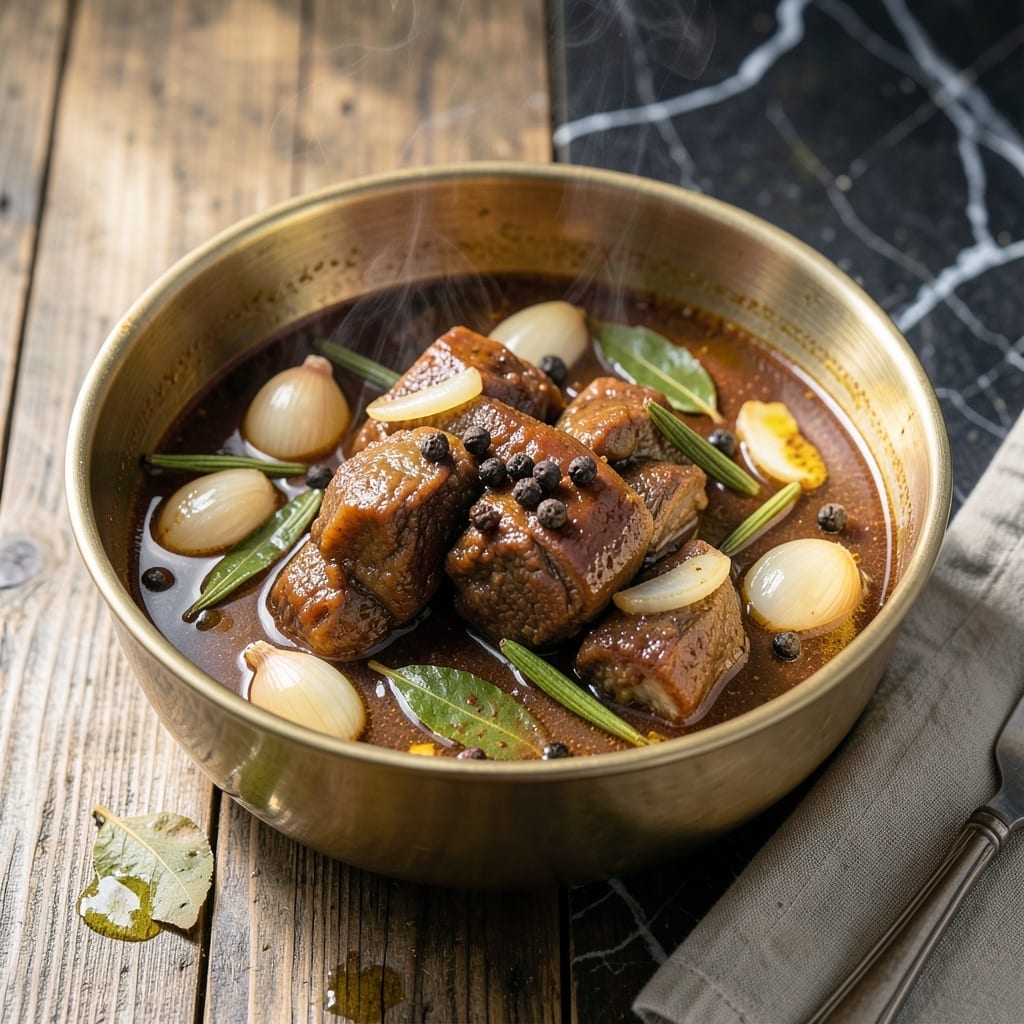
There’s a reason paya remains a beloved comfort food—its rich, gelatinous texture and deep, meaty flavor are unmatched. This pressure cooker method unlocks that signature tender result without the long simmering time.
By using controlled pressure, the connective tissues break down quickly, infusing the broth with intense flavor. The result is fall-off-the-bone meat in a fraction of the traditional cooking time.
What you get is a bowl of paya so soft it practically dissolves on the tongue, with a broth so aromatic it demands to be soaked up with fresh bread.
Serve it steaming hot, garnished with fresh cilantro and a squeeze of lemon for brightness. Here’s how to make it perfectly every time.
Ingredients for Paya Recipe in Pressure Cooker
Rich, collagen-packed beef trotter plus aromatic spices create this deeply flavorful dish.
| Ingredient | Amount | Notes |
|---|---|---|
| Beef Trotter 🥩 | 2 lb | Cleaned and split, skin on |
| Onions 🧅 | 2 whole | Large, quartered with skin |
| Garlic Cloves 🧄 | 8 cloves | Lightly crushed, peeled |
| Fresh Ginger 🌿 | 2 tbsp | Peeled and sliced thick |
| Green Cardamom Pods 🌿 | 6 whole | Lightly crushed to release seeds |
| Black Peppercorns 🌶️ | 1 tbsp | Whole, not ground |
| Bay Leaves 🍃 | 2 whole | Dried, whole leaves |
| Cumin Seeds 🌿 | 1 ½ tsp | Toasted lightly for aroma |
| Salt 🧂 | 1 ½ tbsp | Kosher or coarse sea salt |
| Water 💧 | 6 cups | Or enough to cover trotter |
| Fresh Cilantro 🌿 | ½ cup | Chopped, for garnish |
| Lemons 🍋 | 2 whole | Cut into wedges for serving |
| Fresh Bread 🍞 | 4 slices | Crusty, for serving |
The beef trotter is non-negotiable here. Request split trotter from your butcher—this exposes more surface area for flavor extraction. Asian or halal markets often carry them pre-cleaned, saving prep time. Look for pieces with good marbling and intact skin (the gelatin comes from here). If you’re squeamish about handling, ask the butcher to clean and split them for you. The skin must remain on for texture.
No beef trotter? Pork hock is the closest substitute, though the flavor profile differs slightly. Missing cardamom? Skip it entirely—don’t substitute with ground spice. Fresh ginger can be replaced with half the amount of powdered, but it’s less vibrant. For the cumin, ground cumin at one-fourth the quantity works if you’re out of seeds. The water quantity depends on your pressure cooker size—just cover the trotter by an inch.
This tastes better the next day as the gelatin sets. Refrigerates for up to 4 days—the broth will thicken when cold. Freezes beautifully for 3 months (leave some headspace in containers). Reheat gently to preserve the delicate texture. Always serve with fresh cilantro and lemon—brightness cuts through the richness.
Why You’ll Love This Recipe
- Set It & Forget: The pressure cooker does all the work—just toss in beef trotter, onions, and those aromatic cardamom pods, then walk away.
- Rich & Fragrant: Garlic, ginger, and cardamom infuse the broth with a warmth that’s deep, comforting, and impossible to resist.
- Feeds a Crowd: I make a big batch and it disappears fast—perfect for family dinners or when friends drop by unannounced.
- Budget Stretcher: Beef trotter is inexpensive, and one pot yields multiple meals. Honestly, it’s my wallet’s favorite dish.
Step-by-Step Instructions for Paya in Pressure Cooker
Master the pressure cooker technique for perfectly tender beef trotter with layered South Asian flavors.
Step 1: Toast Whole Spices and Aromatics
Heat your pressure cooker over medium heat without oil. Add the 6 whole Green Cardamom Pods, 1 tbsp Black Peppercorns, 2 whole Bay Leaves, and 1.5 tsp Cumin Seeds. Toast for 1-2 minutes, stirring constantly, until the spices release their aromatic oils and become fragrant.
Immediately add the 2 whole Onions, 8 cloves Garlic Cloves, and 2 tbsp Fresh Ginger. Sauté for 3-4 minutes until the onions begin to soften and develop a light golden color. This builds the flavor foundation that will infuse into the beef trotter during cooking.
Step 2: Brown the Beef Trotter
Add the 2 lb Beef Trotter pieces to the pressure cooker, skin-side down. Sear for 4-5 minutes per side until the skin develops a deep golden-brown crust. This caramelization step is critical for developing rich, complex flavors in the finished dish.
As the trotter browns, sprinkle the 1.5 tbsp Salt evenly over all pieces. The salt will help draw out moisture and create a better sear. Ensure each piece has direct contact with the cooker’s surface for optimal browning.
Step 3: Pressure Cook to Tender Perfection
Pour in the 6 cups Water, ensuring the liquid covers the beef trotter completely. Secure the pressure cooker lid and bring to high pressure over medium-high heat. Once pressure is reached, reduce heat to maintain a steady pressure and cook for 45 minutes.
The beef trotter is done when it reaches fall-off-the-bone tenderness—a knife should slide through the meat with virtually no resistance. If the meat isn’t tender enough after 45 minutes, return to pressure and cook for an additional 10-15 minutes. Allow the pressure to release naturally for 10 minutes before quick-releasing any remaining pressure.
Step 4: Shred and Serve with Garnishes
Carefully remove the beef trotter pieces from the pressure cooker and transfer to a serving platter. Using two forks, shred the meat from the bones, discarding any large pieces of skin or cartilage. The meat should separate effortlessly when properly cooked.
Ladle some of the cooking liquid over the shredded beef trotter to keep it moist. Garnish generously with the 0.5 cup Fresh Cilantro and serve immediately with the 2 whole Lemons cut into wedges and 4 slices Fresh Bread on the side for soaking up the rich broth.
Pro Tips For Making Paya Recipe In Pressure Cooker
- Pre-cook the Trotters: Parboil the beef trotter for 10 minutes before pressure cooking to remove impurities and reduce the gamy smell—this step is non-negotiable for a clean, rich broth.
- Crush the Cardamom: Lightly crush the green cardamom pods before adding them to release their aroma; whole pods just don’t give the same depth of flavor.
- Skip the Overfilling: Never fill the pressure cooker more than two-thirds full—paya releases a lot of gelatin and foam, and overfilling risks clogging the valve or a messy stovetop.
- Use a Quick Release: Once the cooking time is up, use the quick-release method to stop the trotter from overcooking and turning mushy—this keeps the meat tender but still holding its shape.
Perfect Pairings for These Flavors
Bread Pairings
Nothing beats soaking up paya’s rich broth with crusty naan or garlic bread. I always warm mine in a dry skillet for 30 seconds per side to restore that fresh-baked texture. Whole wheat roti adds a nutty depth that complements the dish beautifully. 🍞
Fresh Toppings
Brighten each bowl with ½ cup chopped cilantro and lemon wedges—the acidity cuts through the richness. For extra freshness, thinly slice 1 small red onion and soak in ice water for 10 minutes to mellow the bite.
Side Dishes
A simple cucumber raita made with 1 cup yogurt, ½ cup grated cucumber, and ½ tsp cumin cools the palate. Alternatively, a mango salad with lime and chili flakes adds a sweet-spicy contrast.
Beverage Pairings
Serve with masala chai—its warming spices echo the paya’s aromatics. For alcohol, a crisp Indian lager like Kingfisher or Taj Mahal cleanses the palate. I prefer my chai with a pinch of cardamom for consistency. 🍵
Nutrition Facts
Frequently Asked Questions
What’s the best pressure cooker setting for this?
Use high pressure for 45 minutes after reaching pressure. This ensures the collagen breaks down completely for that signature gelatinous texture. Always allow a 10-minute natural release before quick-releasing.
Can I use pork trotter instead of beef?
Yes, pork trotter works well as a substitute. The cooking time remains the same, but the flavor will be slightly different. Pork trotter tends to be richer, so adjust salt to taste.
How do I know when the paya is done?
The meat should fall off the bone effortlessly. Test with a fork—if it slides in with no resistance, it’s ready. If not, cook under pressure for another 10-15 minutes.
Can I skip toasting the spices?
No, toasting the spices for 1-2 minutes unlocks their aromatic oils, which are essential for depth of flavor. Skipping this step will result in a bland broth.

- Pea Shoots Recipe Salad: Fresh Greens With Asian-Inspired Dressing - October 9, 2026
- Peanut Butter Bark Recipe With Pretzels: Sweet and Salty Holiday Treat - October 9, 2026
- Peach Crisp Recipe With Fresh Peaches: Buttery Oat Topping Over Juicy Summer Fruit - October 9, 2026