
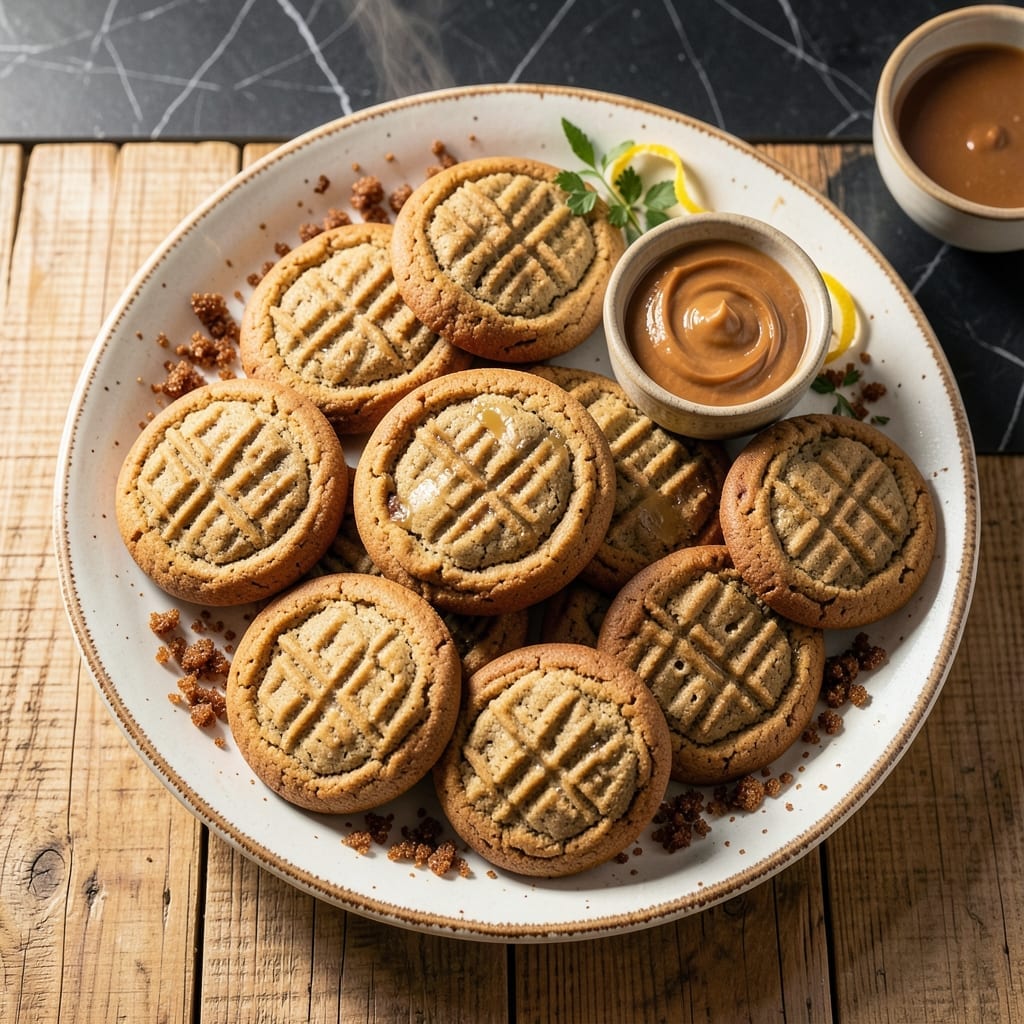
These cookies prove you don’t need baking powder for perfect texture. I developed this recipe after realizing most versions rely too heavily on leavening agents.
The secret lies in the natural fats and sugars in peanut butter, which create the right spread and chew. A simple combination of flour, eggs, and sugar does the rest.
You’ll get cookies with crisp edges, tender centers, and that classic fork-crosshatch pattern. The flavor is pure peanut butter, rich and satisfying without any artificial lift.
David tested this batch three times and declared it the best I’ve made. The results speak for themselves.
Ingredients for Peanut Butter Cookie Recipe No Baking Powder
Simple ingredients, no baking powder needed. Pure peanut butter flavor in every bite.
| Ingredient | Amount | Notes |
|---|---|---|
| Creamy Peanut Butter 🥜 | 1 cup | Natural or commercial variety |
| Granulated Sugar 🍚 | 1 cup | For sweetness and spread |
| Brown Sugar 🟤 | ½ cup | Packed, for moisture |
| Large Egg 🥚 | 1 whole | Room temperature preferred |
| All-Purpose Flour 🌾 | 1 ¼ cups | Spoon and level method |
| Unsalted Butter 🧈 | ½ cup | Softened to room temperature |
| Vanilla Extract 🌿 | 1 tsp | Pure extract for best flavor |
| Salt 🧂 | ½ tsp | Fine sea salt or table salt |
| Baking Soda 🧂 | ½ tsp | Ensures proper rise |
The peanut butter is everything here. Jif or Skippy work great (I won’t judge the sugar content), but natural peanut butter needs a good stir first—oil separation is real. Smucker’s Natural is my go-to for the no-stir variety. The flour? Just regular all-purpose, no fancy stuff. If you’re out, bread flour works in a pinch but the texture changes slightly.
No brown sugar? All granulated sugar works, but you’ll lose some chew. Swap the butter for coconut oil if you’re dairy-free (just chill the dough 30 minutes first). The vanilla extract is worth the splurge—Nielsen-Massey is my favorite. Egg substitute? Flax egg (1 tbsp ground flax + 3 tbsp water) does the trick, though texture varies a bit.
Dough keeps 3 days in the fridge or 3 months frozen (scoop before freezing for easy baking). Baked cookies stay fresh 5 days in an airtight container—if they last that long. Freeze baked cookies for up to 2 months (thaw at room temp).
Why You’ll Love This Recipe
- One Bowl Wonder: I just mix everything in a single bowl—no sifting flour, no waiting for butter to soften. Honestly, cleanup takes less time than the baking.
- Rich Peanut Butter Taste: The creamy peanut butter and brown sugar combo gives that deep, caramelized flavor with crisp edges and a soft center.
- Lunchbox Champion: These stay fresh for days, so I pack them for school snacks or last-minute potlucks. My kid’s classmates always ask for more.
- Pantry Staples Only: Flour, sugar, an egg—chances are I already have everything. No special trips to the store, no baking powder to dig out from the back of the cabinet.
Step-by-Step Instructions for Peanut Butter Cookies
Here’s the method I use to get perfect cookies every single time.
Step 1: Cream the Butter and Sugars Together
In a large mixing bowl, beat the 0.5 cup Unsalted Butter with the 1 cup Granulated Sugar and 0.5 cup Brown Sugar until light and fluffy. This should take about 2-3 minutes with an electric mixer on medium speed.
You’ll know it’s ready when the mixture turns pale and doubles in volume. The brown sugar adds moisture for that chewy texture we’re after, while the granulated sugar helps create those crisp edges.
Step 2: Mix in the Wet Ingredients
Add the 1 cup Creamy Peanut Butter, 1 whole Large Egg, and 1 tsp Vanilla Extract to the butter-sugar mixture. Beat on medium speed for 1-2 minutes until everything is fully combined and smooth.
The peanut butter should be well distributed with no visible streaks. If you’re using natural peanut butter, make sure it’s well stirred first. The egg binds everything together while the vanilla adds that classic cookie flavor.
Step 3: Incorporate the Dry Ingredients
In a separate bowl, whisk together the 1.25 cups All-Purpose Flour, 0.5 tsp Salt, and 0.5 tsp Baking Soda. Gradually add this dry mixture to the wet ingredients, mixing on low speed just until combined.
Don’t overmix at this stage or your cookies will be tough. The baking soda is what gives these cookies their proper rise without needing baking powder. The dough will be thick and slightly sticky.
Step 4: Shape, Crosshatch, and Bake
Preheat your oven to 350°F. Roll the dough into 1-inch balls and place them 2 inches apart on ungreased baking sheets. Using a fork, gently press down on each ball twice to create the classic crosshatch pattern.
Bake for 10-12 minutes until the edges are light golden brown. The centers might look slightly underdone when you take them out, but they’ll continue cooking on the hot pan. Let them cool on the baking sheet for 5 minutes before transferring to a wire rack.
Pro Tips For Making Peanut Butter Cookie Recipe No Baking Powder
- Chill the Dough: After mixing, refrigerate the dough for 30 minutes—I learned this the hard way when my first batch spread into flat, greasy puddles.
- Use Room-Temp Egg: Crack the egg into a small bowl and let it sit for 10 minutes before mixing, or it won’t incorporate smoothly into the thick peanut butter base.
- Measure Peanut Butter Right: Pack the peanut butter into the measuring cup like you would brown sugar, then level it off—skipping this leaves cookies dry and crumbly.
- Flatten Before Baking: Press each dough ball with a fork in a crisscross pattern; without baking powder, they won’t spread or crack on their own.
Wine and Beer Pairings for This Recipe
Milk Stout Pairing
A creamy milk stout like Left Hand Brewing’s Milk Stout is my top pick. The roasted malt flavors complement the nuttiness while the sweetness balances the salt in the cookies. Serve at 45-50°F for best results. 🍺
Sweet Dessert Wines
For wine lovers, try a Moscato d’Asti from Italy. Its light fizz and honeyed stone fruit notes lift the peanut butter richness. Saracco Moscato d’Asti is a great affordable option I keep on hand.
Porter Alternative
A robust porter works beautifully too. Deschutes Black Butte Porter has coffee and chocolate undertones that enhance the cookie’s caramelized edges. David prefers this with his second cookie—always.
Non-Alcoholic Option
For a booze-free pairing, cold chocolate milk is a nostalgic choice. The combination reminds me of after-school treats at Nana Mae’s diner. Use whole milk for the creamiest experience.
Coffee Pairing
Black coffee cuts through the sweetness perfectly. I love a medium roast from Austin’s Cuvee Coffee. The bitterness contrasts the cookie’s richness without overpowering it.
Nutrition Facts
Frequently Asked Questions
Why use baking soda instead of baking powder?
Baking soda creates a denser, chewier texture that’s perfect for peanut butter cookies. It also enhances browning for those crisp edges. The acid in peanut butter reacts with it naturally.
Can I make these gluten-free?
Yes! Swap the all-purpose flour for a 1:1 gluten-free baking blend. Let the dough rest for 30 minutes before baking to improve texture.
How do I prevent cookies from spreading too much?
Chill the dough for 30 minutes before baking. Also, ensure your butter is softened but not melted. This keeps the shape intact.
Can I skip the crosshatch pattern?
Pressing with a fork is traditional, but you can simply flatten with your palm. The cookies will still bake evenly.

- Pea Shoots Recipe Salad: Fresh Greens With Asian-Inspired Dressing - October 9, 2026
- Peanut Butter Bark Recipe With Pretzels: Sweet and Salty Holiday Treat - October 9, 2026
- Peach Crisp Recipe With Fresh Peaches: Buttery Oat Topping Over Juicy Summer Fruit - October 9, 2026