
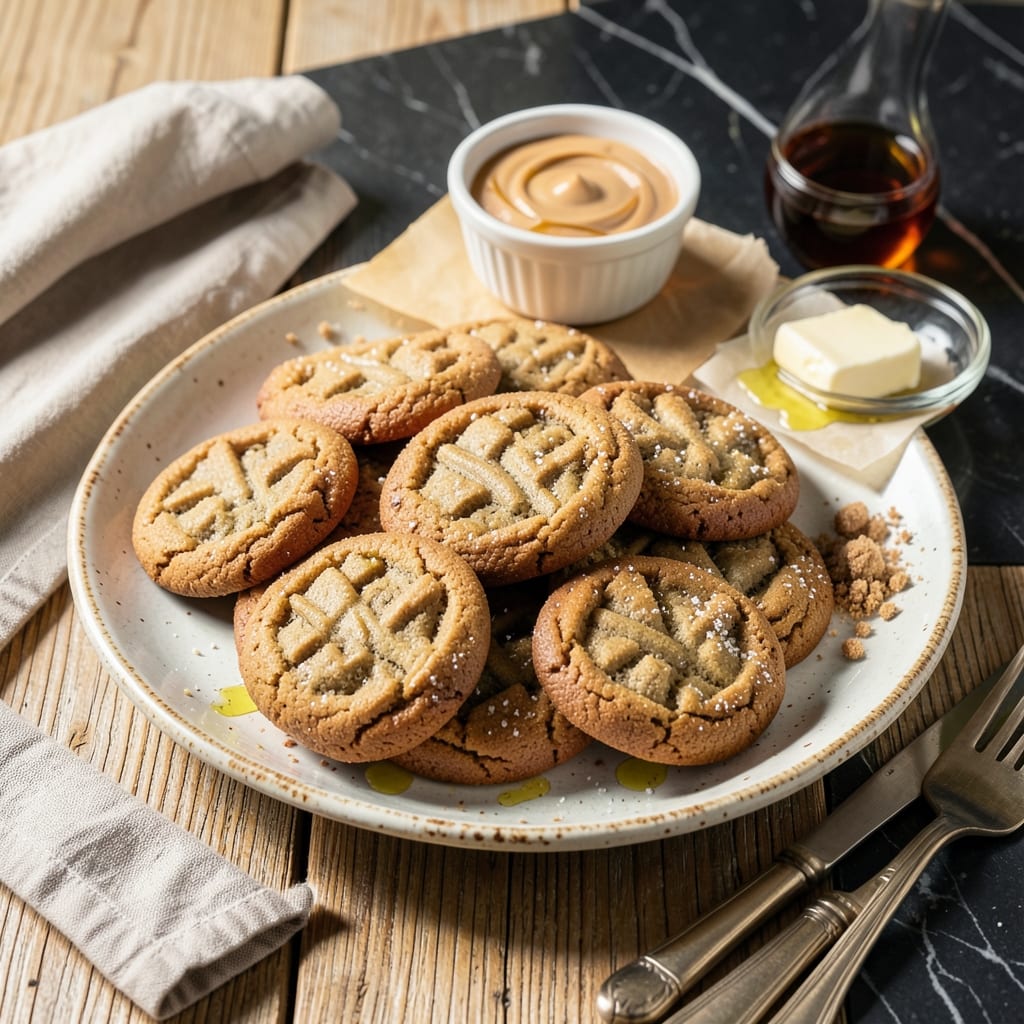
This peanut butter cookie recipe delivers classic flavor and texture without relying on baking soda. The secret lies in using baking powder as a reliable leavening agent that still creates those signature soft centers and golden edges.
I developed this version after running out of baking soda mid-recipe, discovering that baking powder works just as effectively. The dough comes together quickly with standard pantry ingredients, and the crosshatch pattern remains a must for that authentic look.
What emerges from the oven are cookies with tender interiors, slightly crisp edges, and that unmistakable peanut butter richness. They spread just enough to create perfect thickness while maintaining their shape.
The results prove you can achieve bakery-quality peanut butter cookies without every traditional ingredient. This method ensures consistent success with every batch.
Ingredients for Peanut Butter Cookie Recipe Without Baking Soda
Standard pantry staples create this bakery-quality treat with a simple twist.
| Ingredient | Amount | Notes |
|---|---|---|
| Creamy Peanut Butter 🥜 | 1 cup | Natural or commercial, well-stirred |
| Unsalted Butter 🧈 | ½ cup | Softened to room temperature |
| Granulated Sugar 🍚 | 1 cup | Fine white sugar preferred |
| Packed Light Brown Sugar 🟤 | ¾ cup | For chewiness and moisture |
| Large Egg 🥚 | 1 whole | Room temperature for even mixing |
| Vanilla Extract 🌿 | 1 tsp | Pure vanilla, not imitation |
| Baking Powder 🧂 | 1 ½ tsp | Fresh, aluminum-free preferred |
| All-Purpose Flour 🌾 | 1 ½ cups | Spoon and level method |
| Salt 🧂 | ½ tsp | Fine sea salt or table salt |
The peanut butter is critical—Jif or Skippy for consistency, though natural works if thoroughly stirred. Unsalted butter allows you to control the salt content precisely. Use room-temperature ingredients for a smooth dough that doesn’t separate. Most supermarkets carry reliable brands, but Whole Foods has great organic options if you prefer.
No baking soda? Baking powder at 1.5 teaspoons replaces it perfectly here. Out of brown sugar? All granulated sugar works (texture will be slightly different). For a nuttier flavor, chunky peanut butter adds great texture. The egg can be replaced with 1/4 cup applesauce if needed, though the texture will be denser.
Dough keeps in the fridge for 3 days or freeze for 3 months. Baked cookies stay fresh in an airtight container for 5 days. For best results, let them cool completely before storing to maintain that perfect soft center.
Why You’ll Love This Recipe
- No Fuss Mixing: I just cream the peanut butter, butter, and sugars together, add an egg, and we’re done—no sifting or extra steps.
- Rich PB Flavor: Honestly, the double sugars with creamy peanut butter give that deep, caramelized taste without any baking soda aftertaste.
- Lunchbox Hero: These stay soft for days, so I pack them in lunches or keep a batch in the cookie jar for after-school snacks.
- Pantry Friendly: Between us, I always have these five ingredients on hand, so I can bake a fresh batch whenever a craving hits.
Step-by-Step Instructions for Peanut Butter Cookies Without Baking Soda
This method delivers soft-centered cookies with perfect crosshatch patterns every time.
Step 1: Cream the Peanut Butter and Butter with Sugars
In a stand mixer with the paddle attachment, beat 1 cup Creamy Peanut Butter and 0.5 cup Unsalted Butter on medium speed for 1 minute until smooth. The softened butter should blend seamlessly with the peanut butter, creating a homogeneous base.
Add 1 cup Granulated Sugar and 0.75 cup Packed Light Brown Sugar, then cream for 3-4 minutes until light and fluffy. The mixture should increase in volume and take on a pale, airy appearance—this incorporates air for a tender texture.
Step 2: Incorporate the Wet Ingredients
Add 1 whole Large Egg and 1 tsp Vanilla Extract to the creamed mixture. Beat on low speed for 30 seconds until fully combined, scraping the bowl as needed. The egg should be room temperature to prevent the butter from seizing up.
The mixture will appear slightly sticky at this stage, which is normal. Ensure the vanilla extract is pure for optimal flavor depth. Avoid overmixing, as this can introduce too much air and affect the cookie’s spread.
Step 3: Combine the Dry Ingredients
In a separate bowl, whisk together 1.5 cups All-Purpose Flour, 1.5 tsp Baking Powder, and 0.5 tsp Salt. Use the spoon-and-level method for the flour to avoid compacting it, which can lead to dense cookies.
Gradually add the dry ingredients to the wet mixture, beating on low speed for 45 seconds until just combined. The dough will be thick and slightly tacky. Do not overmix, as this develops gluten and can make the cookies tough.
Step 4: Roll, Fork, and Bake
Preheat the oven to 350°F and line baking sheets with parchment paper. Roll the dough into 1-inch balls (about 1.5 tablespoons each) and place them 2 inches apart on the prepared sheets.
Using a fork, gently press down on each ball to flatten slightly, then make a second perpendicular press to create the classic crosshatch pattern. Bake for 10-12 minutes until the edges are lightly golden but the centers still look slightly underdone.
Step 5: Cool and Set
Remove the baking sheets from the oven and let the cookies cool on the pan for 5 minutes. The cookies will appear soft when they first come out but will firm up as they cool.
Transfer the cookies to a wire rack to cool completely. The centers should remain soft and chewy, while the edges provide a slight crispness. Store in an airtight container at room temperature for up to 5 days.
Pro Tips For Making Peanut Butter Cookie Recipe Without Baking Soda
- Chill the Dough: After mixing, refrigerate the dough for at least 30 minutes—I learned this the hard way when my first batch spread like pancakes.
- Use Room Temp Butter: Soften the unsalted butter to room temperature first; cold butter leaves streaks and uneven texture in the cookies.
- Flatten Before Baking: Press the dough balls with a fork in a crisscross pattern—without baking soda, they won’t spread enough on their own.
- Swap in Dark Brown Sugar: If you have it, use dark brown sugar instead of light for deeper flavor—it actually changes the outcome, especially with no leavening agent.
Flavor Customization for This Dish
Sweet Heat Twist
Add ½ tsp cayenne pepper to the dry ingredients for a subtle kick that enhances the peanut butter flavor. This creates a sweet-spicy balance that surprises and delights. I discovered this trick when trying to replicate a cookie from a local bakery. 🌶️
Nutty Crunch
Fold in ½ cup chopped roasted peanuts or pecans after combining the dry ingredients. This adds texture and amplifies the nutty profile. For extra crunch, press a few whole peanuts into the tops before baking.
Chocolate Lovers
Mix in ½ cup chocolate chips or chunks with the dry ingredients. The melty chocolate pairs perfectly with peanut butter. I prefer semi-sweet chocolate, but milk chocolate works for a sweeter treat.
Oatmeal Boost
Replace ½ cup of flour with rolled oats for a heartier texture. This adds chewiness and makes the cookies more substantial. Use quick oats for a finer texture or old-fashioned for more bite.
Double Peanut
Swap ½ cup of the peanut butter for peanut butter chips in the dough. This intensifies the peanut flavor and adds pockets of melted peanut butter throughout. The chips can be found in the baking aisle of most grocery stores.
Brown Sugar Swap
Replace all granulated sugar with 1¾ cups packed light brown sugar for an even chewier cookie. This increases moisture content and deepens the caramel notes. The cookies will spread slightly more, so leave extra space between them. 💡
Nutrition Facts
Frequently Asked Questions
Why use baking powder instead of baking soda?
Baking powder contains both an acid and a base, so it activates with moisture and heat. This makes it a perfect 1:1 substitute for baking soda in recipes like this. It provides the lift needed for soft, chewy cookies.
Can I use natural peanut butter?
Yes, but stir it thoroughly to incorporate the oils. Natural peanut butter can make the dough slightly greasier, so chilling the dough for 30 minutes before baking helps maintain shape. The texture may vary slightly but the flavor remains delicious.
How do I prevent cookies from spreading too much?
Chill the dough for 30-60 minutes before rolling and baking. Also, ensure your butter is softened but not melted. Using parchment paper and spacing dough balls 2 inches apart helps control spread.

- Beef Kidney Recipe Keto: Bold Flavors with Low-Carb Simplicity - October 8, 2026
- Pea Salad Recipe With Egg and Mayonnaise: Classic Creamy Potluck Favorite - October 8, 2026
- Peach Salsa Canning Recipe No Tomatoes: Sweet and Spicy Preservation - October 8, 2026