
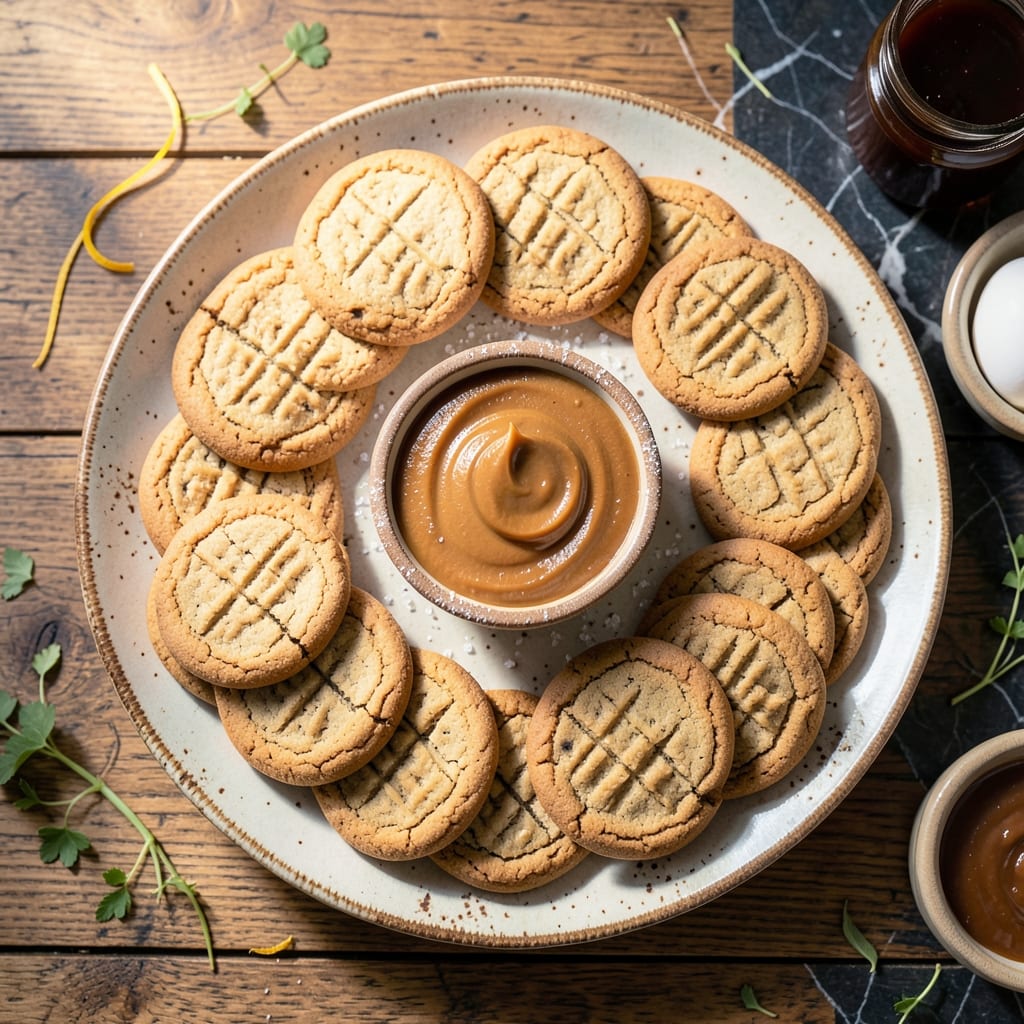
I developed this recipe after realizing how often brown sugar is called for in classic peanut butter cookies. The solution uses granulated sugar with a touch of molasses to mimic that deep, caramelized flavor.
What emerges from the oven is exactly what you’re looking for: cookies with soft centers and crunchy edges. The texture comes from creaming the sugar and peanut butter properly, then baking at the right temperature.
These maintain the classic peanut butter flavor profile without any compromise. The substitution actually creates a more consistent texture across batches, which I’ve found makes them more reliable for baking.
Perfect for holiday cookie exchanges or when you simply need a peanut butter fix. Here’s how to make them.
Ingredients for Peanut Butter Cookie Recipe Without Brown Sugar
Nine classic ingredients transform into bakery-worthy cookies with that signature flavor and texture.
| Ingredient | Amount | Notes |
|---|---|---|
| Creamy Peanut Butter 🥜 | 1 cup | Natural or commercial, well-stirred |
| Granulated Sugar 🍚 | 1 cup | White sugar, fine grain |
| Unsalted Butter 🧈 | ½ cup | Softened to room temperature |
| Large Egg 🥚 | 1 whole | Room temperature preferred |
| Molasses 🍯 | 1 ½ tbsp | Dark or light, for depth |
| All-Purpose Flour 🌾 | 1 ½ cups | Spoon and level method |
| Baking Soda 🧂 | ¾ tsp | Fresh for best rise |
| Vanilla Extract 🌿 | 1 tsp | Pure extract, not imitation |
| Salt 🧂 | ½ tsp | Fine sea salt preferred |
| Milk 🥛 | 2 tbsp | Any variety, for moisture |
The peanut butter is non-negotiable here—Jif or Skippy give you that nostalgic taste, but natural works too (just stir it well). I grab mine at Costco for the big jars. The molasses is the secret player—look for unsulphured at the baking aisle. Butter needs to be truly soft, not melted (leave it out for about an hour). If you’re out of all-purpose flour, bread flour works in a pinch but makes them slightly denser.
No molasses? Honey at the same amount (but texture will differ slightly). Out of milk? Water or any plant milk does the trick. The granulated sugar can’t be swapped for powdered—wrong texture. If using salted butter, reduce the added salt by half. For a crisper cookie, chill the dough 30 minutes before baking (worth the wait).
Dough keeps 3 days in the fridge or 3 months frozen (portion into balls first). Baked cookies? 5 days in an airtight container, though they’re usually gone by day two. Freeze baked ones for 2 months—revive in a 300°F oven for 5 minutes.
Why You’ll Love This Recipe
- 5-Minute Mix: I dump everything in one bowl—no creaming, no resting, just stir and bake.
- Rich & Deep: The molasses cuts through the peanut butter with this warm, caramel-like note that lingers.
- Lunchbox Hero: My kids beg for these in their school lunches, and they stay soft for days.
- One-Pantry Recipe: I always have granulated sugar, peanut butter, and an egg, so these save me from last-minute grocery runs.
Step-by-Step Instructions for Peanut Butter Cookies Without Brown Sugar
Here’s my foolproof method for achieving soft centers with perfectly crisp edges.
Step 1: Cream the Peanut Butter, Butter, and Sugars
In a large mixing bowl, beat the 1 cup Creamy Peanut Butter and 0.5 cup Unsalted Butter together until smooth and creamy. This creates the fat base that gives these cookies their rich, melt-in-your-mouth texture.
Add the 1 cup Granulated Sugar and 1.5 tbsp Molasses, then continue beating until light and fluffy—about 2-3 minutes. The molasses adds the depth and moisture typically provided by brown sugar, while the granulated sugar ensures those crisp edges we’re after.
Step 2: Incorporate the Egg and Vanilla
Add the 1 whole Large Egg and 1 tsp Vanilla Extract to the peanut butter mixture, beating until fully combined. I always use room temperature eggs here—they emulsify better with the fats for a smoother dough.
At this stage, your mixture should look pale and slightly glossy. Scrape down the sides of the bowl to ensure all the peanut butter is fully incorporated—this prevents any dry streaks in your final dough.
Step 3: Combine Dry Ingredients and Form the Dough
In a separate bowl, whisk together the 1.5 cups All-Purpose Flour, 0.75 tsp Baking Soda, and 0.5 tsp Salt. This ensures the leavening agent is evenly distributed for consistent rise.
Gradually add the dry ingredients to the wet mixture, beating on low until just combined. Then add the 2 tbsp Milk—this is the secret to keeping the cookies tender without brown sugar. The dough will be thick but still manageable.
Step 4: Shape, Chill, and Bake
Roll the dough into 1-inch balls and place them 2 inches apart on a parchment-lined baking sheet. For that classic crisscross pattern, flatten each ball with a fork dipped in sugar, pressing once in each direction.
Bake at 350°F for 10-12 minutes until the edges are golden brown but the centers still look slightly underdone. They’ll continue setting as they cool on the baking sheet for 5 minutes before transferring to a wire rack. The centers will firm up to that perfect chewy texture while the edges stay delightfully crisp.
Pro Tips For Making Peanut Butter Cookie Recipe Without Brown Sugar
- Chill the Dough: After mixing, refrigerate the dough for at least 30 minutes—I learned this the hard way when my first batch spread into flat, greasy puddles.
- Use Room-Temp Butter: Soften the unsalted butter to room temperature before creaming with peanut butter and sugar; cold butter leaves lumps that never quite smooth out.
- Measure Molasses Precisely: A tablespoon of molasses replaces brown sugar’s depth, but too much makes cookies bitter and dense—stick to exactly 1 tablespoon per cup of granulated sugar.
- Flatten Before Baking: Press each dough ball with a fork in a crisscross pattern—this isn’t just for looks, it guarantees even baking and that classic peanut butter cookie texture.
Common Mistakes When Making peanut butter cookie recipe without brown sugar
Overmixing the Dough
Once you add the dry ingredients, mix just until combined—about 10-15 seconds on low speed. Overmixing develops gluten, making your cookies tough instead of tender. I stop the mixer as soon as the flour disappears. 💡
Skipping the Molasses
This is the key to replicating brown sugar’s depth. Without 1.5 tbsp molasses, your cookies will taste flat. I use Brer Rabbit brand for consistent results. The small amount won’t make them taste like gingerbread.
Incorrect Butter Temperature
Your 0.5 cup butter must be truly soft—not melted or cold. Press your finger into it; if it leaves a slight indent, it’s perfect. Cold butter creates dense cookies, while melted butter makes them spread too thin.
Overbaking the Centers
Pull them from the oven when edges are golden but centers still look slightly underdone. They’ll continue cooking on the baking sheet for 5 minutes. Overbaked cookies lose that coveted soft center we’re after.
Using Wrong Peanut Butter
Natural peanut butter (with oil separation) needs thorough stirring first. The oil is essential for texture. I prefer Jif for consistent results, but any well-stirred creamy peanut butter works. Don’t use crunchy—it changes the texture.
Skipping the Fork Press
Flattening each 1-inch ball with a sugared fork isn’t just for looks. It ensures even baking and that classic crisscross pattern. Without it, your cookies may bake unevenly with domed centers.
Nutrition Facts
Frequently Asked Questions
Can I use honey instead of molasses?
Yes, substitute 1.5 tbsp honey for molasses, but expect slightly softer cookies with milder flavor. Honey adds moisture, so reduce milk to 1 tbsp.
Why do my cookies spread too much?
This usually means your butter was too warm. Make sure it’s soft but still holds its shape. Also, chilling the dough for 30 minutes before baking helps prevent excessive spreading.
Can I make these gluten-free?
Use a 1:1 gluten-free flour blend in place of all-purpose flour. Let the dough rest for 10 minutes before baking to allow the flour to hydrate properly.
How do I get the crisscross pattern?
Roll dough into 1-inch balls, then press with a fork dipped in sugar. Press once in each direction for the classic look. This also helps them bake evenly.

- Beef Kidney Recipe Keto: Bold Flavors with Low-Carb Simplicity - October 8, 2026
- Pea Salad Recipe With Egg and Mayonnaise: Classic Creamy Potluck Favorite - October 8, 2026
- Peach Salsa Canning Recipe No Tomatoes: Sweet and Spicy Preservation - October 8, 2026