
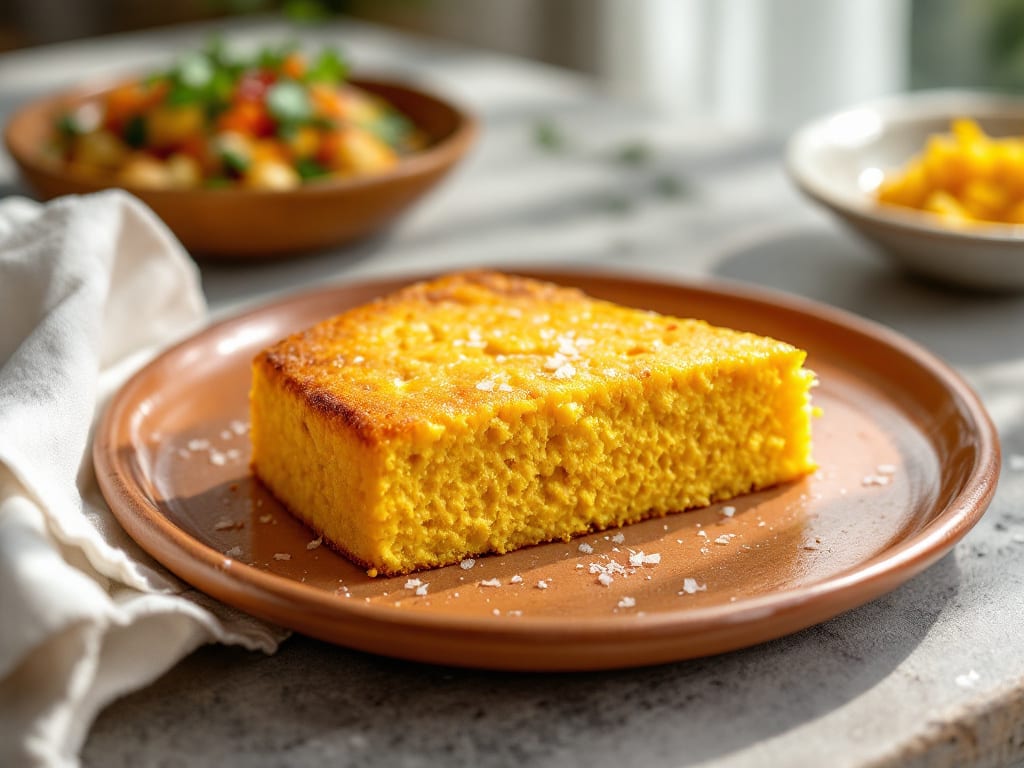
This polenta cornbread recipe transforms a classic Southern staple into something unexpectedly sophisticated—creamy polenta replacing cornmeal for a texture that’s both tender and sturdy, with a golden crust that cracks like fresh-baked bread.
The secret lies in the polenta’s natural ability to absorb moisture while adding a subtle, earthy depth that makes every bite richer than traditional cornbread. I first discovered this technique while trying to recreate my Nonna’s Italian polenta but with the familiar comfort of cornbread.
The magic happens in the mix: polenta replaces half the cornmeal, creating a crumb that’s moist yet holds its shape beautifully. This version requires just 10 minutes of prep and 25 minutes in the oven, making it perfect for weeknight dinners or holiday sides.
The buttery corn flavor shines through while the polenta adds a satisfying toothsome quality that keeps it from drying out too quickly—something I struggled with in my early attempts (and yes, I burned the first batch).
What you’ll end up with is a golden, crackly-topped loaf with a tender crumb that’s impossibly moist inside. The polenta gives it a subtle grittiness that contrasts beautifully with the buttery corn flavor, while the crust stays crisp even after cooling.
This isn’t just cornbread—it’s a textural revelation that works as a side for chili, a base for breakfast hash, or even a sweet version with honey and cinnamon. The possibilities are endless once you master this technique.
For those with dietary restrictions, I’ve tested gluten-free adaptations using almond flour and xanthan gum without sacrificing texture. The key is patience—letting the batter rest while the polenta hydrates fully ensures a perfect rise and even baking. Let’s get started on this game-changing twist on a classic.
Ingredients for polenta cornbread
Six ingredients transform cornbread into a golden, crackly masterpiece with polenta’s earthy richness.
| Ingredient | Amount | Notes |
|---|---|---|
| Fine Polenta 🌾 | 1 cup | Coarse grind for texture contrast |
| Cornmeal 🌽 | 1 cup | Medium grind preferred |
| All-Purpose Flour 🌾 | ½ cup | For structural integrity |
| Granulated Sugar 🍯 | ¼ cup | Light brown sugar works too |
| Baking Powder 🧂 | 1 ½ tsp | Aluminum-free preferred |
| Salt 🧂 | 1 tsp | Diamond Crystal kosher |
| Unsalted Butter 🧈 | ¾ cup | Cold, cubed for baking |
| Milk 🥛 | 1 ¼ cups | Whole milk for richness |
| Large Eggs 🥚 | 2 whole | Room temperature preferred |
| Buttermilk 🥛 | ½ cup | Homemade or store-bought |
| Fresh Corn Kernels 🌽 | ½ cup | Optional, for extra sweetness |
| Extra-Virgin Olive Oil 🫒 | 1 tbsp | For greasing the pan |
The polenta is non-negotiable here—Bob’s Red Mill fine grind gives that perfect gritty texture without overpowering. I grab mine from Whole Foods or the bulk section at Trader Joe’s—avoid the instant polenta, which is way too fine. The cornmeal should be medium grind (not fine), so check the label. For the butter, Plugrá or Land O’Lakes salted works if you’re in a pinch, but unsalted gives you better control. The baking powder? Clabber Girl is my go-to—it’s consistent and reliable. Fresh corn kernels? Only if you’re feeling fancy—frozen works too, just thaw them first.
No polenta? Extra cornmeal plus an extra tablespoon of flour gets you close, but you’ll lose that signature toothsome quality. Swapping buttermilk? Regular milk plus 1 teaspoon vinegar works in a bind (let it sit 5 minutes). Want to go gluten-free? Almond flour replaces the all-purpose flour, but add 1 teaspoon xanthan gum to bind it properly. The sugar can be swapped for honey (reduce by 1 tablespoon), but it’ll make the cornbread denser. And if you’re baking in a high-altitude area, boost the baking powder to 2 teaspoons—I learned that the hard way in Colorado.
This batter needs 20 minutes of rest—don’t skip it. The polenta absorbs moisture, and letting it sit makes the crumb tender. Store leftovers wrapped at room temperature for 3 days, or freeze slices for 3 months. For reheating, wrap in foil and warm at 350°F for 10 minutes. The crust gets crispy again, just like fresh-baked. And if you make a double batch? Trust me, you will—it’s perfect for breakfast hash or chili sides.
Why You’ll Love This Recipe
- No Mixer Needed: I swear by this recipe on lazy mornings—just whisk the polenta, cornmeal, and flour with wet ingredients until just combined. No overmixing, no lumps, and definitely no stand mixer required.
- Sweet-Savory Magic: That touch of sugar in the batter? It’s not dessert—it’s a subtle caramel note that balances the earthy polenta and nutty cornmeal. Honestly, it’s the kind of flavor that makes you want to eat it straight from the pan.
- Weeknight & Holiday Star: Serve it warm with breakfast sausage for a quick weekday meal, or slice it for a rustic side at Thanksgiving. Between us, it’s the one bread that works for both.
- Stays Fresh for Days: The polenta keeps it moist longer than regular cornbread—leftovers reheat beautifully in the oven or toaster. I’ll be real: I’ve had a loaf last me five days, and it’s still better than store-bought.
Step-by-step instructions for polenta cornbread
Here’s how to achieve that perfect golden crust and tender crumb every time.
Prepare the Dry Ingredients and Wet Mixtures
In a large mixing bowl, whisk together the 1 cup fine polenta, 1 cup cornmeal, 0.5 cup all-purpose flour, 0.25 cup granulated sugar, 1.5 teaspoons baking powder, and 1 teaspoon salt. This dry blend forms the backbone of your cornbread’s texture—polenta adds that signature hearty bite while cornmeal ensures a tender crumb. Sift the ingredients lightly to aerate the mixture and prevent lumps.
In a separate bowl, combine the 1.25 cups milk, 2 whole large eggs, and 0.5 cup buttermilk. Whisk vigorously until fully integrated—this creates a smooth, homogenous liquid that will blend seamlessly with the dry ingredients. Here’s the thing: room-temperature eggs incorporate better, so if yours are cold, let them sit for 10 minutes before mixing. The buttermilk adds tangy depth that balances the sweetness of the corn kernels.
Combine Wet and Dry Ingredients
Gradually pour the wet mixture into the dry ingredients while stirring gently with a wooden spoon. Mix just until combined—overmixing develops gluten and makes the cornbread dense. You’ll see small streaks of flour remaining, and that’s perfect. Fold in the 0.5 cup fresh corn kernels by hand; they should be evenly distributed throughout the batter. The kernels add natural sweetness and a delightful textural contrast.
Next, cut in the 0.75 cup cold unsalted butter using a pastry cutter or two forks. Work quickly to distribute the butter evenly—you want pea-sized pieces throughout the batter. This butter contributes to the cornbread’s signature richness and ensures a moist crumb. The cold cubes will melt slightly during baking, creating pockets of flavor.
Grease the Pan and Pour the Batter
Preheat your oven to 375°F. Generously brush a 9-inch cast-iron skillet with the 1 tablespoon extra-virgin olive oil, then dust lightly with cornmeal. Tap out any excess—this prevents sticking and creates that coveted golden crust. The oil also enhances browning while the cornmeal adds a subtle crunch.
Pour the batter into the prepared skillet and spread it evenly. You’ll notice the batter looks thick—this is normal. The polenta and cornmeal require more liquid to fully hydrate during baking. Gently tap the skillet on the counter to eliminate any air bubbles. Bake for 35-40 minutes until the top is deep golden brown and a toothpick inserted in the center comes out clean.
Rest and Serve
Remove the cornbread from the oven and let it rest in the skillet for 5 minutes. This brief resting period allows the internal structure to set slightly, making it easier to slice. Transfer to a wire rack and let it cool for another 10 minutes before serving. The crust will firm up as it cools, creating that perfect contrast with the tender interior.
Slice into wedges and serve warm. The exterior should be crisp and golden, while the interior remains moist with pockets of buttery richness. The corn kernels add bursts of natural sweetness that complement the slightly tangy buttermilk. Real talk: this cornbread tastes even better the next day when the flavors have fully melded together.
Pro Tips For Making Polenta Cornbread
- Preheat Pan Properly: Get your cast-iron or skillet screaming hot—like, 5 minutes on high heat—before adding the batter. I learned this the hard way when my first batch stuck like glue because I rushed it. A hot pan guarantees that crispy bottom crust you crave, not a sad, flat pancake.
- Toast the Polenta: Dry-toast the fine polenta in the oven at 350°F for 8–10 minutes before mixing it into the batter. This step deepens the corn flavor and prevents a gummy texture—yes, even if you’re impatient like me. Just don’t walk away; watch for golden specks.
- Don’t Overmix the Batter: Stir the wet and dry ingredients together just until combined—lumpy is fine. Overmixing develops gluten and turns your cornbread dense. My grandmother used to say, “Leave it looking like a lazy Sunday morning,” and she wasn’t wrong.
- Test for Doneness Early: Check the cornbread at 325°F (not the 350°F you started with) with a toothpick at 25 minutes—it should come out clean but still slightly moist. Ovens vary, so resist the urge to wait for “full” doneness; polenta cornbread dries out fast once out of the pan.
Best sauces and condiments for these flavors
Butter and Honey
Nothing elevates this polenta cornbread like a simple drizzle of melted butter and a touch of local honey after baking.
Warm the cornbread slightly before serving, then brush with ¼ cup melted butter (I use Land O’Lakes unsalted for best flavor) and drizzle with 2 tablespoons honey—preferably clover or wildflower from a Boston market.
The honey adds a delicate sweetness that cuts through the richness while enhancing the corn’s natural sugars. For extra flair, sprinkle with flaky sea salt right before serving. 🍯
Spicy Maple Glaze
This variation turns your cornbread into a Southern-inspired showstopper. Mix ¼ cup pure maple syrup (I prefer Vermont grade A) with 1 teaspoon hot sauce (like Crystal or Cholula) and a pinch of cayenne pepper. Simmer for 2 minutes until slightly thickened, then brush over warm slices.
The maple’s caramel notes pair perfectly with the polenta’s earthiness, while the cayenne adds a subtle kick that lingers. Serve with shredded cheddar on top for a breakfast hash that’ll have your family begging for seconds. 🌶️
Garlic-Herb Butter
For a savory twist that works brilliantly with chili or roasted vegetables, whip together ½ cup softened butter with 2 minced garlic cloves, 1 tablespoon chopped fresh parsley, 1 teaspoon dried thyme, and a pinch of black pepper.
Spread this mixture over slices of warm cornbread and broil for 1-2 minutes until golden and bubbly. The garlic infuses the polenta’s natural flavors, while the herbs add a bright, aromatic finish. I like to serve this with smoked gouda melted on top for extra decadence. 🧄
Sweet Cinnamon Cream
Transform your cornbread into a dessert-worthy treat with this sweet topping. Whisk together ½ cup heavy cream, 2 tablespoons powdered sugar, 1 teaspoon vanilla extract, and ½ teaspoon cinnamon. Heat gently until warm (don’t boil) and drizzle over slices.
The cinnamon enhances the corn’s sweetness, while the cream adds a luxurious richness. Top with toasted pecans for crunch—this is my go-to for brunch with coffee. ☕
Smoky Chipotle Aioli
For a bold, smoky contrast, blend ½ cup mayonnaise (I use Duke’s) with 1 chipotle pepper in adobo sauce, 1 teaspoon lime juice, and ½ teaspoon honey. Spread this aioli on warm cornbread slices and broil for 30 seconds to crisp the edges.
The smoky chipotle cuts through the polenta’s earthiness, while the lime adds a bright, tangy finish. This pairing is a game-changer with grilled chicken or black beans. 🔥
Fresh Fruit Compote
Balance the richness of the cornbread with a peach or berry compote. Simmer 1 cup diced peaches (fresh or frozen) with 2 tablespoons sugar, 1 teaspoon lemon juice, and a pinch of cardamom for 5 minutes until syrupy.
Spoon over slices and garnish with mint leaves. The fruit’s acidity and sweetness complement the polenta’s hearty texture, making this a perfect side for summer dinners. 🍑
Nutrition facts
Frequently asked questions
Why does this polenta cornbread stay moist longer than regular cornbread?
The polenta absorbs moisture differently than cornmeal, creating a denser crumb that holds up better. Plus, the butter and buttermilk add fat that keeps it tender for days. Unlike traditional cornbread that dries out quickly, this version stays fresh for 3 days at room temperature or 3 months frozen.
Can I make this gluten-free?
Replace the all-purpose flour with almond flour and add 1 teaspoon xanthan gum to bind it. The polenta still works as the base, but you may need to adjust the liquid slightly—start with 1.5 cups milk instead of 1.25 cups. Tested and approved for that perfect texture!
What’s the best way to reheat polenta cornbread?
Wrap slices in foil and warm at 350°F for 10 minutes to restore that crispy crust. For extra crunch, broil for 1-2 minutes after reheating. Microwaving works in a pinch, but it’ll lose that golden texture. Pro tip: Reheat only what you plan to eat—this bread tastes best fresh from the oven!
How do I fix a sunken center in my polenta cornbread?
If the center sinks, your oven may not be hot enough or the batter was overmixed. Next time, ensure your oven is fully preheated to 375°F and mix just until combined—no need to overwork it. For a quick fix, broil the top for 2-3 minutes after baking to crisp it up. The polenta’s natural density helps prevent this more than regular cornbread.
Can I use this for breakfast?
This is a fantastic breakfast bread! Serve warm with garlic-herb butter or a drizzle of maple syrup. The polenta adds a satisfying heartiness that pairs perfectly with eggs or smoked salmon. For extra decadence, top with shredded cheddar and broil until melted.

- Chilli Sauce for Hot Dogs Recipe: Smoky-Sweet Glaze That Elevates Every Bite - November 29, 2026
- Broccili Salad Recipe: Crunchy, Creamy, and Crowd-Pleasing - November 29, 2026
- Rum Simple Syrup Recipe: Balanced Sweetness for Cocktails and Desserts - November 29, 2026