
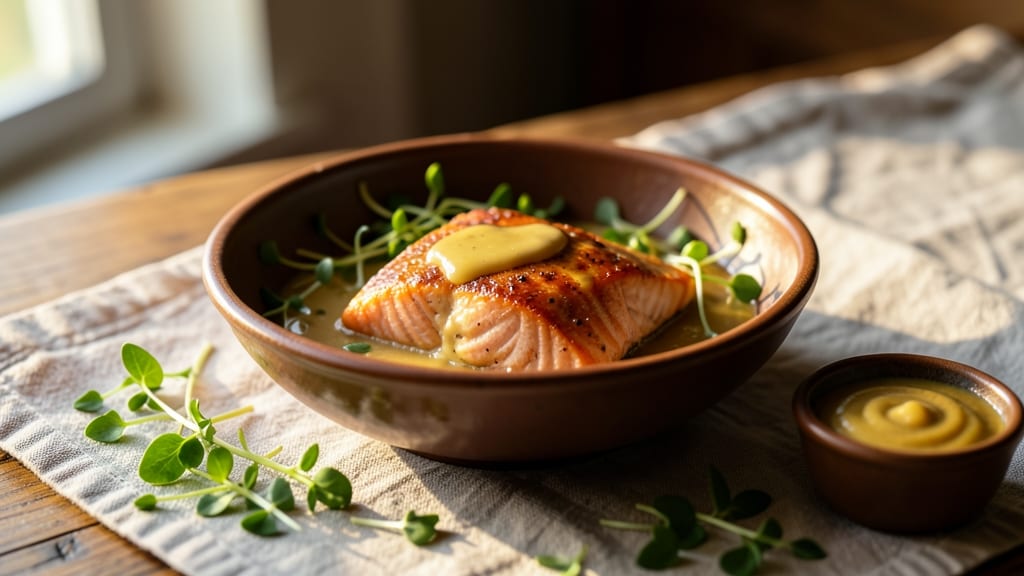
This salmon butter sauce recipe transforms simple grilled fish into a restaurant-worthy centerpiece with just a few ingredients and minutes of effort.
The secret lies in capturing all those flavorful browned bits from the pan while adding richness through butter and cream—creating a velvety, golden drizzle that clings perfectly to every flake of salmon.
What sets this sauce apart is its simplicity: no complicated techniques, just precise timing and a few pantry staples. The process begins by deglazing the pan after cooking the salmon, then building layers of flavor with butter, cream, and a touch of lemon juice.
The result is a sauce that’s impossibly creamy yet light enough to enhance—not overpower—the natural taste of the fish.
By the time you’re done, you’ll have a small batch of luxurious sauce that’s ideal for drizzling over grilled or baked salmon, or even spooning over steamed vegetables. It keeps well in the refrigerator for up to 5 days, making it perfect for meal prep or gifting.
The best part? Every spoonful delivers that perfect balance of buttery richness and bright acidity.
For extra depth, consider adding minced garlic or fresh herbs like dill or parsley to the sauce. Whether you’re serving this as part of a formal dinner or a weeknight meal, the sauce elevates the dish without requiring extra effort. Let’s get started!
Ingredients for salmon butter sauce
A few pantry staples transform grilled salmon into a luxurious dish with ease.
| Ingredient | Amount | Notes |
|---|---|---|
| Unsalted Butter 🧈 | ½ cup | High-quality, room temperature |
| Heavy Whipping Cream 🥛 | ½ cup | Full-fat for creaminess |
| Fresh Lemon Juice 🍋 | 1 tbsp | Freshly squeezed, bright |
| Pan Deglazing Liquid 🍳 | ¼ cup | From salmon cooking |
| Garlic Cloves 🧄 | 2 cloves | Minced, aromatic |
| Fresh Dill 🌿 | ¼ cup | Chopped, optional depth |
| Salt 🧂 | ½ tsp | Fine sea salt |
| Black Pepper 🌶️ | ¼ tsp | Freshly ground |
The butter is your star player here—unsalted, high-quality butter gives that luxurious finish. I always grab Kerrygold or Plugrá if I want to splurge, but even the regular stuff from Costco works perfectly. Room temperature is key—microwave it 40 seconds to just melt it, then let it sit for a minute. The heavy cream? Full-fat only—light cream won’t give you that velvety texture. And don’t skip the deglazing liquid from the salmon pan—it’s packed with flavor and makes the sauce sing.
No fresh dill? Dried dill at half the amount works, but honestly, fresh is worth the extra minute. Skip the garlic? The sauce still works, but it loses that bright, aromatic punch. Want to skip the lemon? Lemon zest instead of juice adds a different kind of brightness. If your cream is on the thin side, add a splash of half-and-half to keep it rich. And if you’re feeling fancy, a pinch of freshly grated nutmeg adds warmth that pairs perfectly with the salmon.
This sauce keeps beautifully in the fridge for up to 5 days—just stir it before using to redistribute the butter. For the best texture, store it in an airtight container with a thin layer of olive oil on top to prevent browning. It also freezes like a dream for up to 3 months. I portion mine into small jars so I can grab just what I need for a quick weeknight meal. The sauce tastes even better the next day as the flavors meld—trust me!
Why You’ll Love This Recipe
- No Panic, Just Pan Sauce: I’ve cooked salmon enough times to know the struggle—wasting those precious juices from the pan. This sauce turns them into the star of the show. Just deglaze with what’s already there, and you’re already ahead. The butter and cream do the heavy lifting while you sip your wine.
- Garlic-Dill Magic: Between us, that ¼ cup of fresh dill and 1 tablespoon of lemon juice make this sauce dangerously good. The garlic sizzles for just 30 seconds—enough to wake up the flavors without turning bitter. It’s the kind of balance that makes you go, “Why didn’t I do this sooner?”
- Drizzle, Don’t Stress: This isn’t just for salmon. Slather it over roasted potatoes, toss it with asparagus, or let your kids go wild with it on toast. It’s the kind of sauce that turns a simple meal into a feast—no fancy plating required. My kids even fight over the last spoonful.
- Five Days of Bliss: Honestly, the best part? It lasts. Five whole days in the fridge, and it still tastes like you just made it. Freeze it for months if you’re feeling lazy, then thaw and boom—dinner’s elevated without the effort. That’s the kind of recipe that actually saves time.
Step-by-step instructions for rich salmon butter sauce
Here’s how to create a velvety, restaurant-worthy sauce that elevates grilled salmon to new heights.
Sauté Garlic in Rendered Butter
Melt the ½ cup unsalted butter in a medium saucepan over medium-low heat. The butter should foam gently but not brown—you’re aiming for a smooth, liquid state. Add the 2 minced garlic cloves and cook for 30 seconds until fragrant but not golden. Here’s the thing: garlic burns fast, so keep an eye on it. If the butter starts to bubble vigorously or darken, reduce the heat immediately.
This step builds the aromatic foundation of your sauce. The butter’s rich flavor will carry through, while the garlic adds depth. Don’t skip this—it’s where the magic begins. Once the garlic is fragrant, you’ll be ready to deglaze the pan with those flavorful salmon juices.
Deglaze with Pan Liquid and Simmer
Pour in the ¼ cup pan deglazing liquid (those precious salmon juices you captured while cooking) and stir vigorously with a wooden spoon. The liquid will immediately bubble as it hits the hot pan. Let it simmer for 2-3 minutes until reduced by about half—you’re looking for a syrupy consistency that coats the back of a spoon. This reduction concentrates all those wonderful salmon flavors.
Here’s where it gets fun: the liquid should smell incredible at this point, like a perfect blend of salmon and garlic. If it’s reducing too quickly, lower the heat slightly. You want to preserve that bright, clean flavor rather than letting it darken. Once reduced, you’ll have a flavorful base ready for the creamy elements.
Incorporate Cream and Seasonings
Reduce heat to low and gradually whisk in the ½ cup heavy whipping cream. The cream should warm gently—never boil it, or you’ll risk curdling. Add the ½ teaspoon salt and ¼ teaspoon black pepper now, stirring constantly until fully dissolved. Taste the sauce at this stage—it should be rich and slightly tangy from the cream and butter.
If the sauce seems too thick, you can add 1 tablespoon at a time of the pan deglazing liquid to reach your desired consistency. The goal is a velvety, spoonable sauce that clings beautifully to salmon. Keep the heat at low throughout this process—patience is key to preventing curdling.
Finish with Lemon and Fresh Dill
Remove the sauce from heat and stir in the 1 tablespoon fresh lemon juice and ¼ cup chopped fresh dill. The lemon brightens the richness of the butter and cream, while the dill adds a fresh herbal note that perfectly complements salmon. Let the sauce sit off heat for 1-2 minutes to allow the flavors to meld completely.
Here’s the moment that matters: give it one final taste. The sauce should be creamy, tangy, and aromatic with notes of garlic and dill. If needed, adjust seasoning with a pinch more salt or pepper. This sauce is designed to be versatile—use it immediately over grilled salmon, drizzle over steamed vegetables, or serve as a luxurious accompaniment to crusty bread.
Pro Tips For Making Salmon Butter Sauce
- Keep Butter Foamy, Not Browned: That moment the butter starts to bubble like a tiny volcano? Lower the heat immediately—you’re aiming for gentle foam, not nutty bits. I’ve ruined three batches by letting butter turn golden; the sauce tastes like toasted regret instead of rich, buttery perfection.
- Mince Garlic Like You Mean It: Those 2 cloves need to be tiny—almost paste-like—so they dissolve into the butter without burning. I used to chop them roughly, and they’d sit there like little brown rocks. Fine mincing means flavor, not texture.
- Simmer, Don’t Boil, the Deglazing Liquid: The pan liquid should reduce to a syrupy glaze, not evaporate into nothing. If it’s bubbling hard, you’ve lost the salmon’s depth. Keep the heat at a whisper and stir like your life depends on it—it’s the difference between “good” and “restaurant-quality.”
- Whisk Cream Slowly Off Heat: Adding cold cream to hot butter is a one-way ticket to curdled disaster. Warm the cream first by whisking it into the reduced liquid gradually while keeping the heat low. I learned this after watching a batch separate like oil and water—now I add it drop by drop.
Wine and beer pairings for these flavors
Bright White Wines
For the most elegant pairing, reach for a crisp Sauvignon Blanc from New Zealand—its bright citrus notes and herbal undertones cut through the butter’s richness beautifully. I love Cloudy Bay for its zesty lemon and passionfruit flavors that complement the sauce’s tangy brightness.
Another fantastic choice is a Chablis from Burgundy, with its mineral-driven acidity that cleanses the palate after each creamy spoonful. 🍷
Buttery Chardonnays
If you prefer a richer wine, opt for a buttery Chardonnay like Kistler Russian River Valley. The wine’s vanilla and toasted oak notes harmonize perfectly with the butter sauce’s richness, creating a luxurious pairing.
For something lighter, try a Morgon from Beaujolais—its peach and spice flavors add a subtle contrast to the sauce’s garlic and dill. Both wines elevate the dish without overpowering it.
Light Red Pairings
Surprisingly, a light red wine like Pinot Noir works wonderfully with this sauce. The Dry Creek Valley Pinot Noir offers red fruit notes and silky tannins that balance the butter’s richness.
For a bolder option, a Gamay from Beaujolais, like Domaine de la Pépière, delivers juicy raspberry flavors that complement the sauce’s depth. These reds add a sophisticated twist to the pairing.
Craft Beer Options
For beer lovers, a hazy IPA with citrusy and floral notes is ideal. I recommend BrewDog Punk IPA—its bright hop acidity cuts through the sauce’s creaminess while adding a refreshing contrast.
Alternatively, a Belgian witbier like Hoegaarden offers a crisp, coriander-spiced profile that pairs beautifully with the garlic and dill. Avoid heavy stouts or IPAs, as they’ll clash with the sauce’s delicate balance. 🍺
Sparkling Pairings
For a festive touch, a brut sparkling wine like Laurent-Perrier Brut Réserve adds effervescence that refreshes the palate between bites. The wine’s dry, apple-like acidity balances the sauce’s richness, making it feel lighter and more dynamic.
If you prefer something more robust, a Prosecco with its pear and almond notes works too—just ensure it’s fully dry to avoid sweetness clashing with the sauce. 🥂
Nutrition facts
Frequently asked questions
Can I make this sauce without cooking salmon first?
The pan deglazing liquid comes from the juices left after cooking salmon, so you’ll need to cook salmon first to capture those flavors. However, you can use fish stock or salmon broth instead if you’re making the sauce ahead of time—just reduce it similarly for that rich, concentrated taste. The sauce still works wonderfully, just without the salmon’s direct flavor.
Why is my sauce separating or curdling?
Curdling usually happens if you boil the sauce or add cold ingredients too quickly. Keep the heat on low when adding the cream, and whisk constantly. If it starts to separate, remove it from heat immediately and stir in 1 tablespoon of the pan liquid to help re-emulsify. Never let it boil—gentle warmth is key!
Can I use this sauce for other proteins?
This sauce pairs beautifully with seared scallops, grilled shrimp, or even roasted chicken. Just adjust the pan liquid to match the protein you’re using—truffle oil or white wine work great for scallops, while a splash of soy sauce adds depth for chicken. The butter and cream base stays the same, so it’s endlessly adaptable.
How do I adjust the sauce if I don’t have fresh dill?
No fresh dill? Use ½ teaspoon dried dill (or 1 teaspoon dried parsley for a milder herbal note). For extra brightness, add zest from 1 lemon instead of juice, or swap in ½ teaspoon of tarragon or chives. The sauce will still be delicious—just with a slightly different herbal character!
What’s the best way to reheat leftover sauce?
Gently warm the sauce in a small saucepan over low heat, stirring constantly until just heated through—never let it boil. If it thickens too much, add 1 teaspoon of the pan liquid or cream to restore its velvety texture. Avoid microwaving, as it can cause uneven heating and separate the sauce.

- Chilli Sauce for Hot Dogs Recipe: Smoky-Sweet Glaze That Elevates Every Bite - November 29, 2026
- Broccili Salad Recipe: Crunchy, Creamy, and Crowd-Pleasing - November 29, 2026
- Rum Simple Syrup Recipe: Balanced Sweetness for Cocktails and Desserts - November 29, 2026