
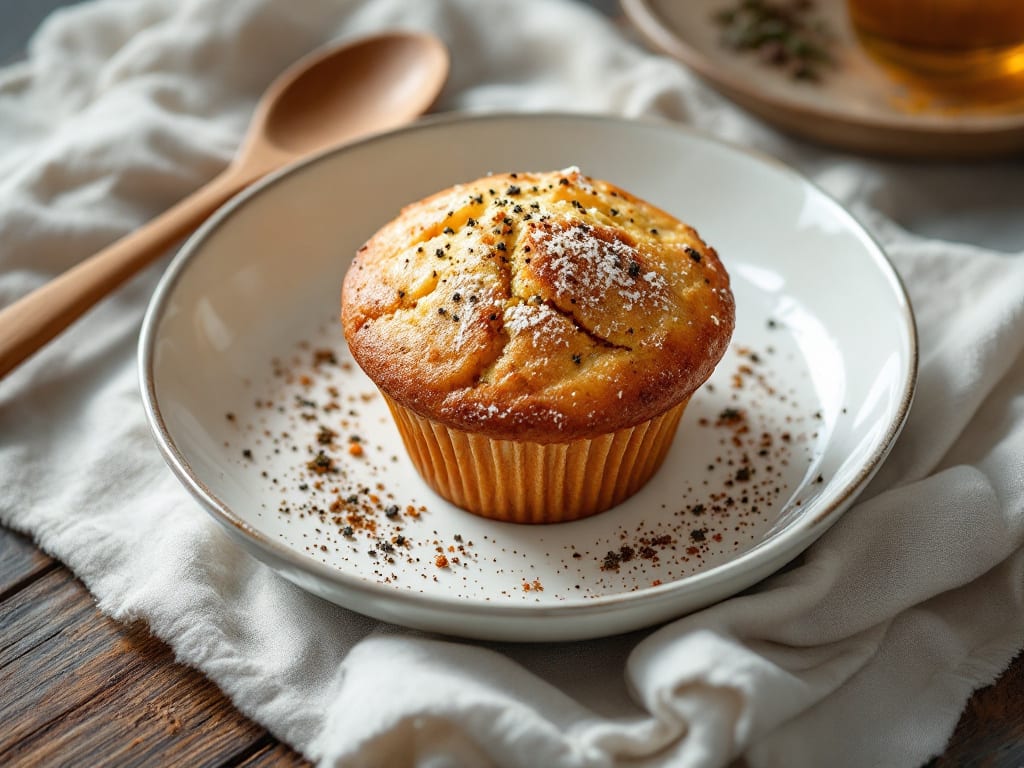
Creating sugar-free muffins with a light, fluffy rise that doesn’t compromise on taste is entirely possible—and this recipe proves it. After years of testing sugar substitutes, I’ve perfected a method using erythritol that delivers the same tender crumb and subtle sweetness as traditional muffins, without the blood sugar spike.
The key lies in precise ingredient ratios and a gentle folding technique that develops air pockets without overmixing.
This recipe relies on a blend of almond flour and oat fiber for structure, which mimics the moisture retention of sugar while keeping muffins light and airy. A touch of apple cider vinegar reacts with baking soda to create lift, and unsweetened applesauce replaces oil without sacrificing richness.
The result? Muffins with a golden crown, a tender interior, and just enough natural sweetness from vanilla and cinnamon to satisfy cravings.
Baking at 375°F for 18-20 minutes ensures even browning and a springy texture, while optional toppings like chopped nuts or seeds add crunch. These muffins freeze beautifully for grab-and-go breakfasts, and the recipe scales effortlessly for meal prep. No refined sugar here—just wholesome ingredients that deliver on flavor and satisfaction.
Perfect for diabetics, keto dieters, or anyone watching sugar intake, these muffins prove healthy eating doesn’t mean sacrificing indulgence. The secret? Balancing natural sweeteners with texture-enhancing ingredients that fool even the most skeptical taste buds. Let’s get baking—your taste buds will thank you.
Ingredients for sugar free muffin
Twelve wholesome ingredients transform into sugar-free muffins with a golden crown and tender crumb—no refined sugar in sight.
| Ingredient | Amount | Notes |
|---|---|---|
| Erythritol 🍯 | ½ cup | Granulated, non-crystalline preferred |
| Almond Flour 🌰 | 2 cups | Finely ground, unsweetened |
| Oat Fiber 🌾 | ½ cup | Pure, not pre-sweetened |
| Unsweetened Applesauce 🍎 | ¾ cup | No added sugar, chunky texture |
| Large Eggs 🥚 | 2 whole | Room temperature for even mixing |
| Unsalted Butter 🧈 | ½ cup | Cold, cubed for easier incorporation |
| Pure Vanilla Extract 🌿 | 1 tbsp | High-quality, no alcohol |
| Ground Cinnamon 🌶️ | 1 ½ tsp | Freshly ground for optimal flavor |
| Apple Cider Vinegar 🍏 | 1 tbsp | Raw, unfiltered preferred |
| Baking Soda 🧂 | ½ tsp | Aluminum-free for best results |
| Diamond Crystal Kosher Salt 🧂 | ¼ tsp | Fine grain for even distribution |
| Xanthan Gum 🧪 | ¼ tsp | Ensures proper binding |
| Almond Milk 🥛 | ½ cup | Unsweetened, for moisture balance |
| Chopped Walnuts 🥜 | ¼ cup | Toasted for enhanced flavor (optional) |
The erythritol is non-negotiable for texture and sweetness. Lakanto or Swerve brands deliver consistent granulation without crystallization, but Wholesale Club or Amazon carry reliable bulk options. Almond flour should be freshly ground—pre-ground often loses moisture retention. Oat fiber from Bob’s Red Mill or Trader Joe’s ensures proper structure without grittiness. For applesauce, Mott’s Unsweetened or homemade (just apples and a sieve) prevents excess moisture. The butter must be cold and cubed—this prevents overmixing and maintains fluffiness.
No erythritol? Monk fruit sweetener works at a 1:1 ratio, though texture may vary slightly. Substitute oat fiber with psyllium husk powder at half the amount for binding. Applesauce can be swapped for Greek yogurt (plain, full-fat)—reduce almond milk by 2 tbsp to balance moisture. For extra richness, replace 2 tbsp almond milk with melted coconut oil. Walnuts can be omitted or swapped for pecans or sunflower seeds (toasted). The baking soda must be fresh—old baking soda loses its lift. Test with vinegar: if it fizzes vigorously, it’s active.
Store baked muffins in an airtight container with parchment between layers for up to 5 days. For longer storage, freeze portions wrapped individually—3 months with no texture loss. Reheat in a 350°F oven for 5-7 minutes for optimal freshness. These muffins reheat beautifully but are best enjoyed fresh from the oven. The golden crown develops fully after 10 minutes of cooling—resist slicing too soon. For meal prep, bake a double batch and freeze half immediately.
Why You’ll Love This Recipe
- Here’s what sold me: the erythritol gives that sweet, crispy crust without the crash, while the oat fiber adds a subtle caramel note that keeps you reaching for seconds. It’s the closest thing I’ve found to a bakery muffin without the guilt.
- No Mixer Needed: I swear by this recipe when I’m in a rush—just fold the dry ingredients with the wet, drop into cups, and bake. The almond flour keeps it tender without overworking, and the applesauce binds everything together like magic.
- Taste Like a Treat: Here’s what sold me: the erythritol gives that sweet, crispy crust without the crash, while the oat fiber adds a subtle caramel note that keeps you reaching for seconds. It’s the closest thing I’ve found to a bakery muffin without the guilt.
- Breakfast or Snack: Between us, these muffins work for everything—grab one on your way out the door, pack them in lunchboxes, or serve them warm with coffee. My kids even ask for them at dinner sometimes (yes, really).
Step-by-step instructions for sugar-free muffins
This method delivers tender, fluffy muffins with perfect rise—all without refined sugar.
Prepare the Dry Ingredients
In a medium bowl, whisk together the 2 cups almond flour, 0.5 cup oat fiber, 1.5 teaspoons ground cinnamon, 0.5 teaspoon baking soda, 0.25 teaspoon diamond crystal kosher salt, and 0.25 teaspoon xanthan gum. Sift the mixture through a fine-mesh sieve to eliminate any lumps and aerate the flour. This step ensures even distribution of leavening agents and prevents dense muffins.
I like to press the mixture gently with my fingers to break up any remaining clumps. The oat fiber and almond flour combination creates a light yet sturdy structure, but proper sifting prevents pockets of dryness that could lead to a heavy crumb. Keep this mixture at room temperature until ready to combine with wet ingredients.
Combine Wet Ingredients for Maximum Moisture
In a separate large bowl, melt the 0.5 cup unsalted butter in 10-second intervals in the microwave (or over low heat) until fully liquid but not browned. Stir in the 0.5 cup erythritol, 0.75 cup unsweetened applesauce, 1 tablespoon pure vanilla extract, and 1 tablespoon apple cider vinegar until smooth. The vinegar reacts with the baking soda later to create lift, while the applesauce adds moisture without sugar.
Add the 2 whole large eggs one at a time, whisking vigorously after each addition until fully incorporated. The mixture should be thick but pourable. If the butter wasn’t fully melted, the final batter could become grainy. I’ve found that room-temperature eggs blend more smoothly, so take them out of the fridge 10 minutes before mixing if they’re cold.
Fold in Dry Ingredients and Walnuts
Gradually add the dry ingredient mixture to the wet ingredients in three additions, gently folding with a spatula after each to maintain air incorporation. Avoid overmixing—just until the batter comes together. The xanthan gum helps bind the almond flour, which can be more delicate than traditional flour.
Fold in the 0.25 cup chopped walnuts (if using) and the 0.5 cup almond milk until evenly distributed. The batter should be thick but not stiff—similar to pancake batter. If it’s too thick, add 1 tablespoon more almond milk; if too thin, add 1 tablespoon more almond flour. The walnuts add crunch and healthy fats, but they’re optional for a smoother texture.
Bake for Perfect Rise and Texture
Preheat the oven to 350°F and line a 12-cup muffin tin with liners or lightly grease with nonstick spray. Divide the batter evenly among the muffin cups, filling each ¾ full. Tap the pan gently on the counter to release any air bubbles—this prevents dome-shaped muffins.
Bake for 20-22 minutes until the tops are golden brown and a toothpick inserted in the center comes out clean. The erythritol helps create a slight caramelization on the edges without sugar crystallization. If your oven runs hot, start checking at 18 minutes. Remove from the oven immediately to prevent overbrowning.
Cool and Serve for Best Results
Let the muffins cool in the pan for 5 minutes, then transfer to a wire rack. This brief resting period prevents them from becoming gummy in the center. Serve warm for maximum tenderness, or store in an airtight container at room temperature for up to 3 days. The applesauce keeps them moist, but they’re best enjoyed fresh.
Each muffin should have a tender crumb with a slightly crisp exterior. The cinnamon and vanilla extract provide natural sweetness, while the walnuts add texture. For extra flavor, brush the tops with a thin layer of melted butter before serving—this enhances the nutty undertones without adding sugar.
Pro Tips For Making Sugar Free Muffin
- Measure Erythritol Right: Use a kitchen scale for the erythritol—spoons pack it differently, and you’ll end up with muffins that taste either bland or overly sweet. I learned this after making a batch that collapsed because the ratio was off by just 5 grams.
- Whisk Eggs Until Foamy: Beat those eggs for a full 30 seconds until they’re thick and pale—this incorporates air, which lightens the dense almond flour. I used to skip this, and the muffins turned out heavy and compact.
- Don’t Overmix the Batter: Stir the wet and dry ingredients together just until combined—overmixing with oat fiber makes the muffins tough. Fold in the applesauce last, and stop when there are a few lumps left.
- Bake at 350°F, Not Higher: Almond flour burns fast, so stick to 350°F and check for doneness at 18 minutes—even if the edges look set. I’ve ruined batches by cranking the heat, and the muffins end up dry and bitter.
Make-ahead tips for this dish
Batter Prep Ahead
Prepare the batter up to 24 hours in advance and store it in an airtight container in the refrigerator. The flavors meld beautifully overnight, and the almond flour absorbs moisture more evenly.
When ready to bake, let the batter sit at room temperature for 10-15 minutes before dividing into muffin cups—this ensures even distribution and prevents cold spots in the oven. I like to cover the container with plastic wrap pressed directly onto the surface to minimize air exposure. 💡
Freezer-Friendly Muffin Dough
For long-term prep, freeze the batter in 1-tablespoon portions using silicone mini muffin molds or a freezer-safe bag. Thaw overnight in the fridge before baking—this maintains texture better than microwaving. Each portion yields one standard muffin.
Label bags with the date; frozen batter keeps for up to 3 months. When baking from frozen, add 2-3 extra minutes to the cook time to account for the cold batter. ❄️
Baked Muffins Storage
Cool muffins completely before storing to prevent condensation. Place parchment paper between layers in an airtight container to maintain freshness for 5 days at room temperature. For longer storage, freeze individual muffins wrapped in plastic wrap—this prevents freezer burn and preserves moisture.
Thaw at room temperature for 1 hour or reheat frozen muffins in a 350°F oven for 5-7 minutes to restore warmth and texture. 🍂
Batch Baking Strategy
Double the recipe and bake two trays simultaneously for efficiency. Use the middle oven rack for even heat distribution, and rotate pans halfway through baking if your oven has hot spots.
I recommend baking one tray at a time if your oven is small—this prevents temperature fluctuations that can cause uneven rise. Label baked muffins with the date to track freshness. For meal prep, bake one batch fresh and freeze the second immediately for future breakfasts. 📅
Reheating for Optimal Texture
Microwave reheating works in a pinch, but it can make muffins gummy. For best results, reheat in a 350°F oven for 5 minutes—this restores the crisp exterior and tender crumb. Place muffins on a baking sheet to catch any butter drips.
If reheating from frozen, add 1-2 extra minutes to ensure even warming. A light brush of melted butter before serving enhances flavor and texture without adding sugar. 🔥
Portion Control Tips
Divide batter evenly using a kitchen scale for precision—each muffin should weigh about 40-45 grams before baking. This ensures consistent size and baking time. For single-serving portions, use a ¼-cup scoop**—this works perfectly for mini muffins or snack-sized portions.
Store individual portions in labeled containers to grab and go without thawing the whole batch. Perfect for diabetics or keto dieters who need portion-controlled snacks. 🥛
Nutrition facts
Frequently asked questions
Can I substitute erythritol with other sugar-free sweeteners?
Yes, but results vary. Monk fruit sweetener works 1:1 for texture, while stevia requires ½ the amount but may taste bitter. Allulose mimics sugar’s caramelization best, but check brands—some leave a grainy texture. For a neutral taste, Swerve or Lakanto are safest choices. Always measure carefully, as over-sweetening can affect rise.
Why do my sugar-free muffins turn out dense instead of fluffy?
Overmixing or underbaking are common culprits. Fold dry ingredients gently in 3 additions to preserve air pockets. Bake until a toothpick comes out clean (20-22 minutes at 350°F). Cold butter or eggs can also cause density—ensure both are room temperature. The almond flour needs proper sifting to avoid heavy texture.
How do I make these muffins nut-free?
Simply omit the walnuts and replace the 0.25 cup almond milk with coconut milk (unsweetened) for a nut-free version. The recipe already uses almond flour, but you can substitute 1:1 with oat flour (blend rolled oats into flour). For extra moisture, add 1 tablespoon chia seeds soaked in 3 tbsp water for 5 minutes.
Can I add chocolate chips to these muffins?
Use sugar-free dark chocolate chips (85%+ cocoa) to avoid sugar spikes. Fold in 0.25 cup during the last step—don’t overmix. For a keto-friendly option, try Lily’s or ChocZero brands. Add chips after mixing to prevent melting during baking. These muffins hold up well to mix-ins like cinnamon chips or shredded coconut too.
Are these muffins suitable for a keto diet?
Yes, with one adjustment: replace the 0.5 cup oat fiber with 0.5 cup psyllium husk powder to reduce net carbs further. The recipe already contains 4g net carbs per muffin (without walnuts). For strict keto, verify your erythritol brand—some contain trace carbs. These muffins fit under 5g net carbs per serving when modified, making them ideal for low-carb breakfasts.

- Rum Simple Syrup Recipe: Balanced Sweetness for Cocktails and Desserts - November 29, 2026
- Avocado Cloud Bread Recipe: Light, Fluffy, and Egg-Free Magic - November 29, 2026
- 1950’s Betty Crocker Banana Bread Recipe: Nostalgic Spice Perfection - November 29, 2026