
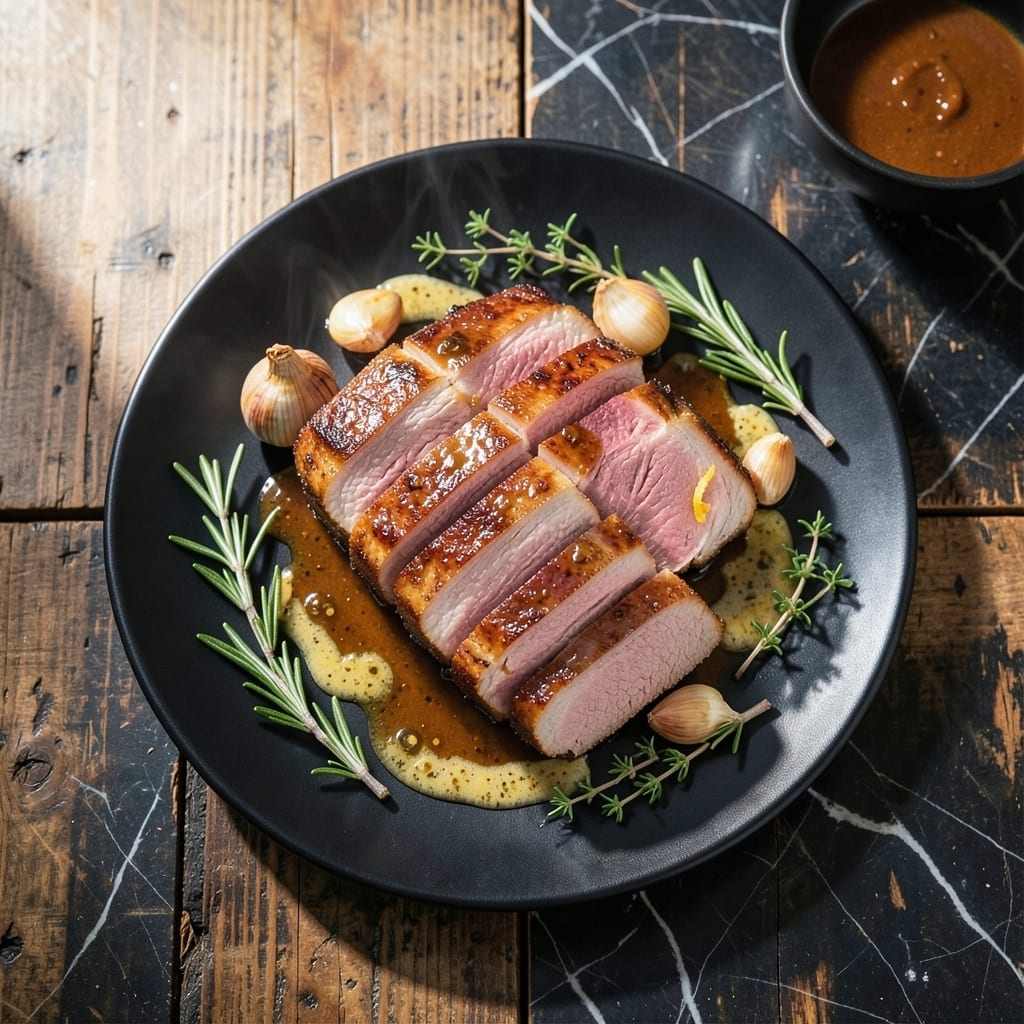
This pork tenderloin recipe delivers tender, flavorful results every time with minimal effort. I developed this method to ensure juicy meat without drying out the lean cut.
The secret is a simple herb marinade that penetrates the meat during a short rest. Cooking at high heat creates a beautiful crust while keeping the inside perfectly moist.
You’ll have a centerpiece worthy of Sunday dinner in under an hour. The marinade works its magic in just 30 minutes, making this ideal for weeknight cooking.
Serve with roasted vegetables or mashed potatoes for a complete meal. The leftovers make excellent sandwiches the next day.
Ingredients for 2 Lb Pork Tenderloin
Twelve ingredients transform lean pork into a juicy, herb-crusted masterpiece in under an hour.
| Ingredient | Amount | Notes |
|---|---|---|
| Pork Tenderloin 🥩 | 2 lb | Trimmed of excess fat |
| Olive Oil 🫒 | ¼ cup | Extra-virgin for marinade |
| Fresh Rosemary 🌿 | 2 tbsp | Finely chopped, stems removed |
| Fresh Thyme 🍃 | 2 tbsp | Leaves stripped from stems |
| Garlic Cloves 🧄 | 4 cloves | Minced for marinade |
| Dijon Mustard 🟡 | 1 ½ tbsp | Smooth, not whole grain |
| Balsamic Vinegar 🍷 | 2 tbsp | Aged for depth of flavor |
| Kosher Salt 🧂 | 1 ½ tsp | Diamond Crystal preferred |
| Black Pepper 🌶️ | 1 tsp | Freshly ground for best results |
| Brown Sugar 🟤 | 1 tbsp | Light or dark variety |
| Smoked Paprika 🌶️ | 1 tsp | For subtle smoky depth |
| Red Wine 🍷 | ¼ cup | Dry variety for marinade |
The pork tenderloin is the star—look for uniform thickness to ensure even cooking. Whole Foods or Costco typically carry high-quality cuts. For the herbs, fresh is non-negotiable (dried won’t deliver the same vibrant flavor). The olive oil should be extra-virgin; its fruity notes complement the marinade beautifully. Always check the tenderloin’s color—it should be pink with white marbling, not gray or brown.
No red wine? Substitute apple cider vinegar plus 1 tsp sugar for similar acidity. Short on fresh herbs? Use dried at one-third the amount, but rehydrate in warm water first. Dijon mustard can be swapped for whole-grain mustard if you prefer texture. The brown sugar balances the acidity—honey or maple syrup work too (just reduce by half). For a non-alcoholic marinade, beef or vegetable broth adds depth.
Marinate the pork for exactly 30 minutes—longer and the acidity can start to “cook” the meat. Leftovers keep beautifully for 4-5 days in the fridge or freeze for 3 months. Slice against the grain before storing for easier sandwich assembly later. Always bring pork to room temperature before cooking for even doneness.
Why You’ll Love This Recipe
- One Pan Dinner: I sear the tenderloin, toss in the herbs, and roast—no extra dishes, no fuss.
- Herb Crust Perfection: The rosemary and thyme with garlic create a crust so good I fights the kids for the last bite.
- Feeds the Week: A 2 lb tenderloin gives us dinner plus sandwiches for two days, no extra effort.
- Budget Hero: Pork tenderloin stays affordable, and the fresh herbs stretch across multiple meals without breaking the bank.
Step-by-Step Instructions for 2 Lb Pork Tenderloin
This method guarantees succulent results with minimal effort and maximum flavor.
Step 1: Prepare the Herb Marinade
In a medium bowl, whisk together the 0.25 cup olive oil, 1.5 tbsp Dijon mustard, 2 tbsp balsamic vinegar, 0.25 cup red wine, 1 tbsp brown sugar, 1.5 tsp kosher salt, 1 tsp black pepper, and 1 tsp smoked paprika until fully emulsified. The mixture should appear smooth and slightly thickened.
Add the 2 tbsp fresh rosemary, 2 tbsp fresh thyme, and 4 cloves minced garlic cloves to the bowl. Stir to distribute the herbs and garlic evenly throughout the marinade. This ensures every bite of the pork tenderloin will be infused with aromatic depth.
Step 2: Marinate the Pork Tenderloin
Place the 2 lb pork tenderloin in a resealable plastic bag or shallow dish. Pour the prepared marinade over the pork, turning to coat it completely. Massage the marinade into the meat for 1-2 minutes to ensure full coverage.
Seal the bag or cover the dish and refrigerate for at least 4 hours, or preferably overnight. This extended marinating time allows the flavors to penetrate deeply while the acid in the vinegar and wine begins tenderizing the meat.
Step 3: Sear the Pork Tenderloin
Preheat your oven to 400°F. Remove the pork tenderloin from the marinade (reserve the marinade) and pat it dry with paper towels. This step is crucial for achieving a proper sear.
Heat an oven-safe skillet over medium-high heat. Add the pork tenderloin and sear for 3-4 minutes per side until the surface develops a rich, deep golden brown crust. The searing creates a flavorful fond that will enhance the final dish.
Step 4: Roast to Perfection
Transfer the skillet with the seared pork tenderloin to the preheated oven. Pour the reserved marinade around (not over) the pork to prevent washing away the sear. Roast for 20-25 minutes or until the internal temperature reaches 145°F.
The pork is done when an instant-read thermometer inserted into the thickest part reads 145°F and the juices run clear. The exterior should be caramelized, and the interior should still appear slightly pink but firm to the touch.
Step 5: Rest and Serve
Transfer the pork tenderloin to a cutting board and tent loosely with foil. Let it rest for 10 minutes before slicing. This resting period allows the juices to redistribute, ensuring the meat remains moist and tender when cut.
Slice the pork tenderloin against the grain into ½-inch thick medallions. The slices should glisten with juices and display a uniform pink center. Serve immediately to preserve the optimal texture and temperature.
Pro Tips For Making 2 Lb Pork Tenderloin
- Sear High, Finish Low: I learned this the hard way—start with a screaming hot pan to get that golden crust on the pork, then drop the heat to medium-low to cook it through without burning the garlic and herbs.
- Pound Even Thickness: That 2 lb tenderloin tapers at the ends, so pound the thinner parts to match the center’s thickness—guarantees even cooking instead of dry tips and raw middles.
- Skip Cold Meat: Pull the pork from the fridge 30 minutes before cooking. My first few tries were tough because I rushed it straight from cold to pan.
- Smash the Garlic: Press the garlic cloves with the flat of your knife before mincing—it releases way more flavor into the oil and herbs, and you’ll taste the difference.
Make-Ahead Tips for 2 lb pork tenderloin
Marinate Ahead
Prepare the marinade the night before and let the pork soak up flavors for 8-12 hours in the fridge. I use a gallon-size zip-top bag for easy cleanup. The longer marinating time intensifies the herb and garlic notes beautifully. 💡
Prep Ingredients
Chop all herbs and mince garlic up to 24 hours ahead. Store in separate airtight containers with a damp paper towel to keep them fresh. This saves 15 minutes of prep work on cooking day.
Pre-Sear Option
Sear the tenderloin in the morning, then refrigerate it (uncooked) until dinner. When ready, finish cooking in the oven at 400°F for 15-20 minutes. The initial sear locks in juices for later cooking.
Partial Cook Method
Cook the pork to 130°F internal temperature in the morning, then refrigerate. At dinner, sear again and finish to 145°F. This method works perfectly for busy schedules.
Cold Storage
Store marinated pork in the fridge for up to 2 days before cooking. The acid in the marinade preserves the meat while tenderizing it. I always label my bags with the date to track freshness. ❄️
Room Temp Ready
Take the pork out of the fridge 30 minutes before cooking to ensure even cooking. This step is crucial for achieving that perfect 145°F throughout without overcooking the outside.
Nutrition Facts
Frequently Asked Questions
How long should I marinate the pork?
Marinate for at least 4 hours, but overnight is ideal for maximum flavor. The acid in the marinade tenderizes the meat while herbs infuse it deeply.
Can I use dried herbs instead of fresh?
Yes, but use one-third the amount and rehydrate in warm water first. Fresh herbs provide superior flavor, but dried work in a pinch.
What’s the best way to check doneness?
Use an instant-read thermometer inserted into the thickest part. It’s done at 145°F with slightly pink, firm meat. Never rely on color alone.
Why let the pork rest before slicing?
Resting for 10 minutes allows juices to redistribute, keeping the meat moist. Slicing too soon causes dryness as juices spill out.

- BBQ Sausage Recipe Oven: Smoky Depth Without the Grill - September 28, 2026
- BBQ Chicken Bowl Recipe Rice: Smoky Sweetness Over Fluffy Grains - September 28, 2026
- Beef Cutlet Recipe Ideas: Crispy Breaded Patties With Bold Seasonings - September 28, 2026