
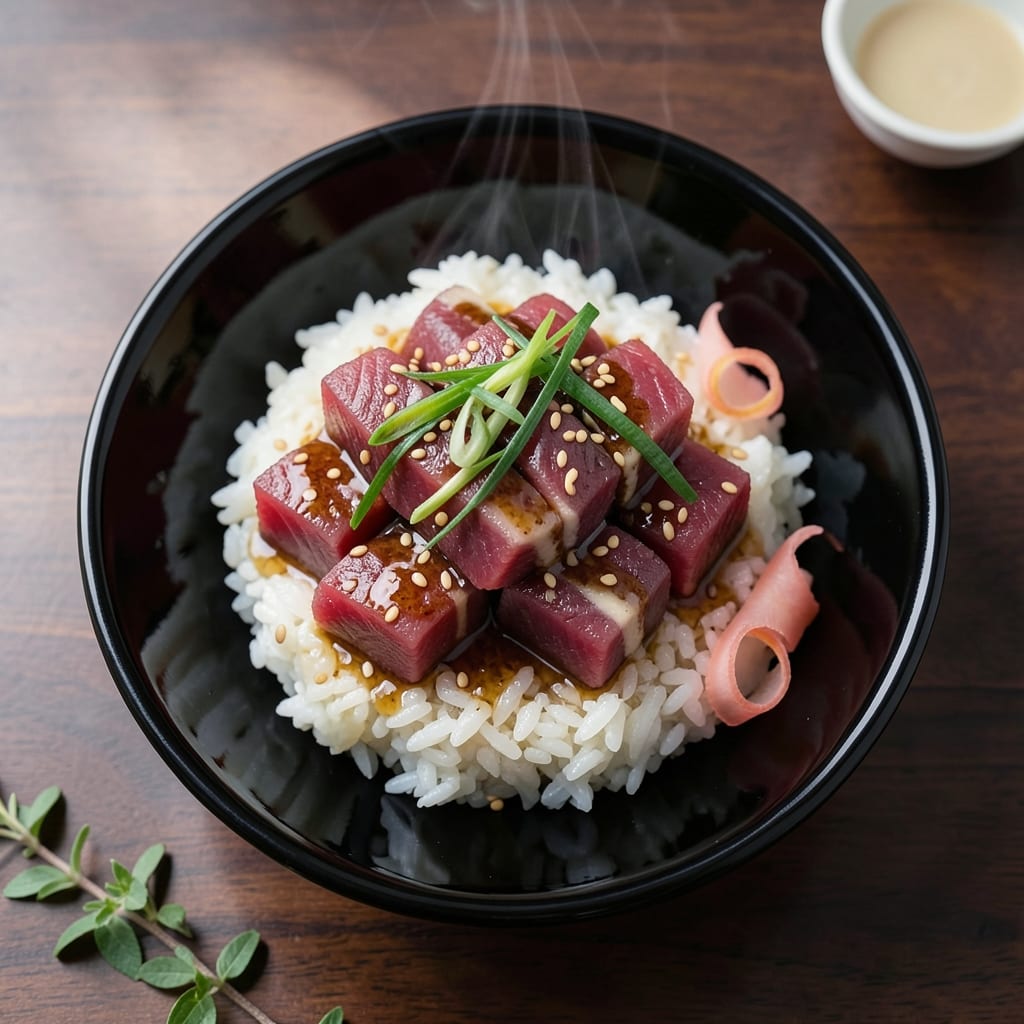
Working with sushi-grade bluefin tuna requires precision and respect for the ingredient. I developed these recipes after testing multiple techniques to highlight the fish’s natural richness without overpowering it.
The seared version creates a perfectly caramelized crust while keeping the center raw and tender. For the sesame-crusted preparation, toasted seeds add both texture and nutty depth to each bite.
Both methods deliver restaurant-quality results at home with minimal effort. The key is using high heat for a short time to preserve the delicate flavor and texture of the tuna.
These preparations work equally well as an elegant appetizer or the centerpiece of a special dinner. The techniques are simple but the results are anything but ordinary.
Ingredients for Bluefin Tuna Recipe Ideas
High-quality bluefin tuna and a handful of supporting ingredients create these elegant preparations.
| Ingredient | Amount | Notes |
|---|---|---|
| Sushi-Grade Bluefin Tuna 🐟 | 1 ½ lb | Cut into 1-inch thick steaks |
| Sesame Seeds 🌰 | ½ cup | Toasted, divided for crust and garnish |
| Soy Sauce 🫒 | ¼ cup | Low-sodium preferred for balance |
| Neutral Oil 🛢️ | 3 tbsp | High smoke point, avocado or grapeseed |
| Rice Vinegar 🍚 | 2 tbsp | For acidity and brightness |
| Fresh Ginger 🌿 | 1 tbsp | Finely grated for marinade |
| Garlic Cloves 🧄 | 2 cloves | Minced for depth of flavor |
| Scallions 🧅 | 4 whole | Thinly sliced for garnish |
| Sesame Oil 🫒 | 1 tsp | Toasted, for finishing |
| Kosher Salt 🧂 | 1 tsp | Diamond Crystal for even seasoning |
| Black Pepper 🌶️ | ½ tsp | Freshly cracked for best aroma |
| Lemon 🍋 | 1 whole | Zested and juiced for brightness |
| Wasabi Paste 🟢 | 1 tbsp | Optional, for serving |
| Pickled Ginger 🍃 | ¼ cup | For palate cleansing |
The tuna is non-negotiable here—sushi-grade bluefin from a reputable fishmonger is essential. Look for vibrant color and a clean, oceanic scent (never fishy). Whole Foods and specialty seafood markets typically carry it. If buying pre-cut steaks, ensure they’re at least 1-inch thick for proper searing. The sesame seeds? Toast them yourself—pre-toasted lose their freshness fast.
No sesame seeds? Crushed macadamia nuts offer similar crunch and richness. Swap rice vinegar for apple cider vinegar if needed, but reduce by half as it’s more assertive. For the soy sauce, tamari works for gluten-free needs. The neutral oil must handle high heat—avocado or grapeseed are ideal. Skip the wasabi if unavailable; the dish stands alone.
Tuna is best consumed immediately—sear just before serving. Leftovers? Wrap tightly and consume within 24 hours (though texture changes). Sesame seeds keep in a cool, dry place for 3 months. The marinade components can be prepped a day ahead—combine just before using to preserve freshness.
Why You’ll Love This Recipe
- No-Cook Wonder: I just slice the bluefin, toss it with soy sauce and rice vinegar, and it’s done—no stove, no fuss.
- Umami Bomb: The sesame seeds toasted in oil with the tuna? That nutty crunch with the rich fish is ridiculous.
- Dinner or Appetizer: I serve it as a quick weeknight meal or as fancy bite-sized pieces for guests. Same prep, two vibes.
- Stretches Far: Honestly, a little bluefin goes a long way—one small portion feeds us with leftovers for lunch the next day.
Step-by-Step Instructions for Sushi-Grade Seared and Sesame-Crusted Bluefin Tuna
This professional method ensures a perfect sear with a crispy sesame crust while maintaining the tuna’s delicate interior.
Step 1: Prepare the Sesame Crust and Marinade
Toast the 0.5 cup sesame seeds in a dry skillet over medium heat for 2-3 minutes until lightly golden and fragrant. Immediately transfer to a shallow dish to cool. In a small bowl, whisk together the 0.25 cup soy sauce, 2 tbsp rice vinegar, 1 tbsp fresh ginger, and 2 cloves minced garlic cloves.
This marinade balances umami, acidity, and aromatic depth. The toasted sesame seeds will create a nutty, crunchy exterior that contrasts beautifully with the tender tuna. Set both aside while you prepare the fish.
Step 2: Season and Coat the Tuna
Pat the 1.5 lb sushi-grade bluefin tuna steaks dry with paper towels, then season all over with the 1 tsp kosher salt and 0.5 tsp black pepper. Brush each steak lightly with some of the 3 tbsp neutral oil to help the sesame seeds adhere.
Press the tuna steaks into the toasted sesame seeds, coating all sides completely. Use firm pressure to ensure maximum coverage. The oil and marinade create a flavorful base layer, while the sesame seeds add texture and visual appeal.
Step 3: Sear the Tuna to Perfection
Heat the remaining neutral oil in a large skillet over high heat until shimmering. Carefully place the sesame-crusted tuna steaks in the pan. Sear for 1-2 minutes per side for medium-rare, watching for a golden-brown crust to form.
The high heat creates a beautiful sear without overcooking the interior. Avoid moving the steaks too soon—let them develop a crisp crust before flipping. The tuna should have a warm red center when done.
Step 4: Rest and Finish with Aromatics
Transfer the seared tuna to a cutting board and let rest for 3-5 minutes. Meanwhile, thinly slice the 4 whole scallions and zest the 1 whole lemon. Drizzle the tuna with the 1 tsp sesame oil and sprinkle with half the scallions and lemon zest.
This resting period allows the juices to redistribute. The sesame oil adds a final layer of nutty flavor, while the scallions and lemon zest provide fresh, bright notes that cut through the richness of the dish.
Step 5: Slice and Serve with Accompaniments
Slice the tuna against the grain into ½-inch thick pieces. Arrange on a platter and garnish with the remaining scallions and lemon zest. Serve immediately with the 0.25 cup pickled ginger and 1 tbsp wasabi paste on the side.
The pickled ginger cleanses the palate between bites, while the wasabi adds a spicy kick for those who enjoy it. The combination of textures and flavors—crispy sesame crust, tender tuna, bright lemon, and pungent wasabi—creates a truly exceptional dish.
Pro Tips For Making Bluefin Tuna Recipe Ideas
- Chill the Tuna First: Always refrigerate your sushi-grade bluefin for at least 30 minutes before slicing—it firms up the flesh, making cleaner cuts and better texture. I learned this the hard way after too many ragged, uneven pieces.
- Toast the Sesame: Lightly toast your sesame seeds in a dry pan for 1-2 minutes until fragrant before sprinkling. Sounds weird, but it works: the nutty flavor actually changes the outcome of your dish.
- Skip the Over-Marinate: Resist the urge to let the tuna sit in soy sauce or rice vinegar for more than 5-10 minutes—any longer and the acid starts to “cook” the fish, turning it mushy. My grandmother swore by this, and she was right.
- Heat the Oil High: If searing, get your neutral oil smoking hot before adding the tuna—about 2 tablespoons, enough to coat the bottom. High heat. Seriously, crank it up, or you’ll end up with a sad, gray steak instead of that golden crust.
Dietary Considerations for This bluefin tuna recipe ideas
Gluten-Free Friendly
This recipe is naturally gluten-free when using tamari instead of regular soy sauce. I always check labels to ensure no hidden gluten in marinades or sauces. The sesame crust and fresh ingredients make it safe for gluten-sensitive guests. 💪
Pescatarian Perfection
Bluefin tuna is an excellent pescatarian protein source, rich in omega-3s and lean protein. I love how this dish highlights the fish without heavy sauces or fillers. It fits perfectly into a seafood-focused diet.
For strict vegetarians, swap the tuna for extra-firm tofu pressed and prepared the same way.
Low-Carb Option
With no added sugars or starches, this dish is keto-friendly as is. The sesame crust adds healthy fats, while the tuna provides protein. I often serve it with a side of steamed greens for a complete low-carb meal.
Allergen Awareness
Sesame is a common allergen, so omit the crust if needed. Replace with crushed macadamia nuts or breadcrumbs for similar texture. Always disclose sesame use to guests with allergies. 💡
Dairy-Free
This preparation contains no dairy, making it suitable for lactose-intolerant diners. The natural richness of the tuna stands on its own without butter or cream. I appreciate how the dish stays light yet satisfying.
Soy Alternatives
For soy allergies, use coconut aminos instead of soy sauce or tamari. The flavor profile is slightly different but still delicious. I’ve tested this swap and it works beautifully with the sesame and ginger.
Nutrition Facts
Frequently Asked Questions
How thick should the tuna steaks be?
Aim for 1-inch thick steaks for proper searing without overcooking. Thinner cuts may cook through too quickly, while thicker pieces won’t sear evenly. This thickness ensures a perfect medium-rare center with a crispy crust.
Can I use a different oil for searing?
Yes, but choose one with a high smoke point. Avocado or grapeseed oil work best. Avoid olive oil as it can burn at high temperatures, creating bitter flavors. The oil should be hot but not smoking before adding the fish.
What if my sesame seeds won’t stick?
Pat the tuna completely dry first, then brush lightly with oil. Press the seeds firmly into the fish. If still problematic, chill the steaks for 15 minutes before coating to help the seeds adhere better.
How do I know when it’s done?
The exterior should be golden-brown and crispy. Inside, the center should remain warm red for medium-rare. For 1-inch steaks, 1-2 minutes per side over high heat is typically perfect.

- Bluefin Tuna Recipe Ideas: Sushi-Grade Seared and Sesame-Crusted - September 28, 2026
- Blue Zone Recipe Ideas: Longevity-Boosting Meals for Vibrant Living - September 28, 2026
- Beefaroni Recipe With Tomato Soup: One-Pot Nostalgic Comfort - September 28, 2026