
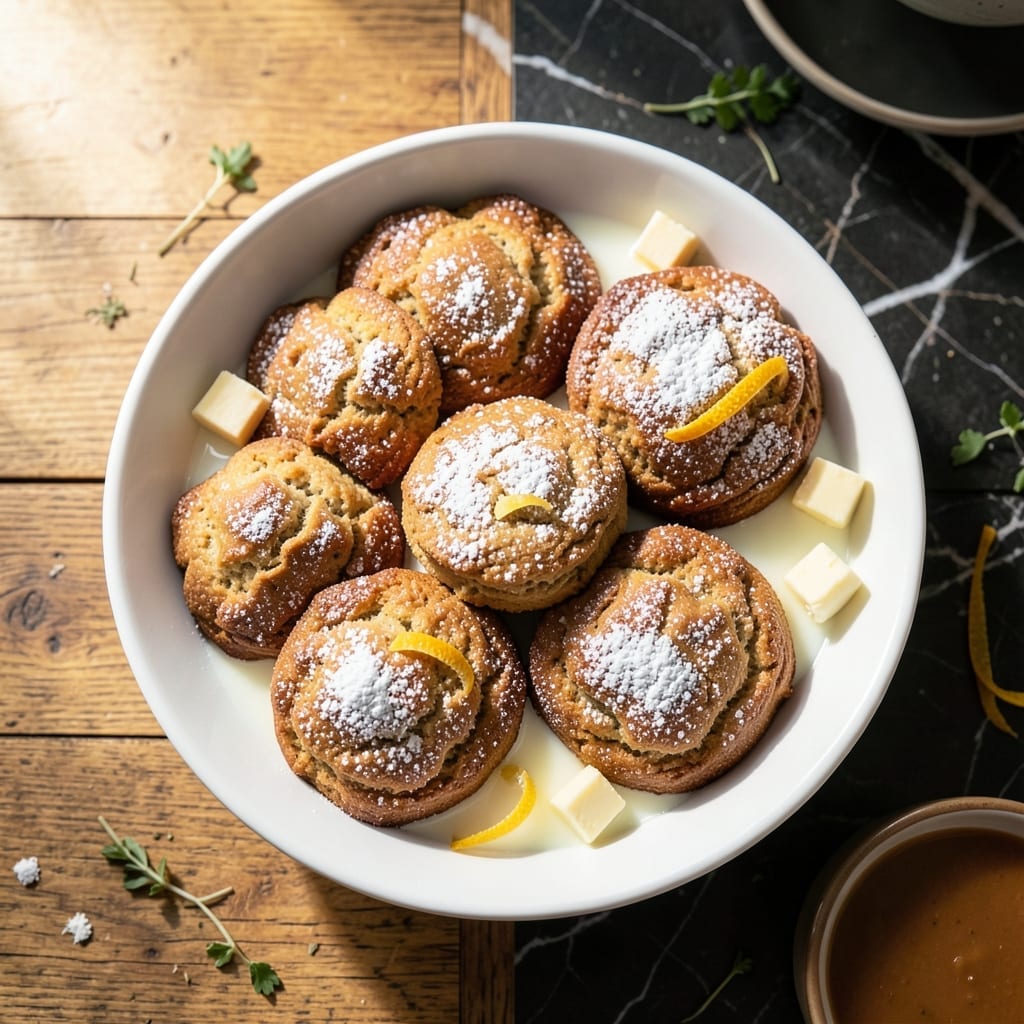
This three-ingredient biscuit method delivers flaky, golden layers with minimal effort. The secret lies in cold ingredients and gentle handling to create perfect texture.
With just self-rising flour, milk, and butter, you’ll have warm biscuits ready in under 30 minutes. The simplicity makes it foolproof for beginners and satisfying for seasoned bakers.
Ingredients for 3 Ingredient Biscuit Recipe with Milk
Just three pantry staples create these flaky, golden layers with ease.
| Ingredient | Amount | Notes |
|---|---|---|
| Self-Rising Flour 🌾 | 2 cups | All-purpose can substitute with baking powder added |
| Whole Milk 🥛 | ¾ cup | Cold for best texture |
| Unsalted Butter 🧈 | ¼ cup | Chilled and cubed |
The flour is non-negotiable here. Self-rising flour already contains the leavening agent, which simplifies the process. White Lily is the gold standard for Southern biscuits (available at Walmart or Publix), but any brand works. For best results, measure by spooning into the cup—don’t scoop directly from the bag, which compacts the flour.
No self-rising flour? All-purpose flour plus 1 tbsp baking powder and ½ tsp salt per cup does the trick. Whole milk is ideal for richness, but 2% or buttermilk (slightly tangy) work too. The butter must be cold—freeze it for 10 minutes if it’s soft. Vegan? Swap in coconut oil (solid, not melted) for a flaky, dairy-free version.
This dough comes together fast—bake immediately for maximum rise. Leftover biscuits keep 2-3 days in an airtight container at room temperature. Reheat in a 350°F oven for 10 minutes to revive the flakiness. Or freeze unbaked dough for 1 month.
Why You’ll Love This Recipe
- Minimal Effort: I just stir, pat, and bake—no yeast, no waiting, no fuss.
- Buttery Layers: That flaky crust from cold butter and milk makes them melt in your mouth.
- Breakfast to Dinner: Honestly, they’re just as good with jam at dawn as with gravy at suppertime.
Step-by-Step Instructions for 3 Ingredient Biscuits
This foolproof method delivers tall, flaky layers with minimal effort and maximum flavor.
Step 1: Cut Cold Butter into Flour
In a large bowl, combine the 2 cups Self-Rising Flour. Add the 0.25 cup Unsalted Butter that’s been chilled and cubed into ½-inch pieces. The cold temperature is crucial—it prevents the butter from melting prematurely, which is what creates those coveted flaky layers.
Using a pastry cutter or fork, work the butter into the flour until the mixture resembles coarse crumbs with pea-sized butter pieces visible throughout. This uneven texture ensures pockets of butter that will melt during baking, creating steam that lifts the dough into flaky layers. Avoid overworking; you want visible butter flecks.
Step 2: Form the Dough with Cold Milk
Create a well in the center of your flour-butter mixture and pour in the 0.75 cup Whole Milk. Using a wooden spoon, gently stir until the dough just begins to come together. The milk should be cold—this keeps the butter firm and maintains the integrity of your flaky structure.
Once the dough starts to form, turn it out onto a lightly floured surface. Gently pat it into a 1-inch thick rectangle. Fold the dough in half like a book, then pat it down again to 1-inch thickness. This lamination step creates additional layers without requiring advanced techniques. Repeat this fold-and-pat process 2 more times for maximum flakiness.
Step 3: Cut and Arrange for Baking
Pat the dough to a final thickness of ¾ inch. Using a 2½-inch biscuit cutter (or a glass of similar size), press straight down without twisting to cut out biscuits. Twisting seals the edges and prevents proper rise. Gather the scraps, gently re-pat, and cut additional biscuits until all dough is used.
Place the biscuits on a parchment-lined baking sheet with their sides touching. This close arrangement helps the biscuits rise upward rather than spreading outward, contributing to their tall, flaky structure. For best results, don’t flatten the tops—keep the cutter’s cylindrical shape intact.
Step 4: Bake to Golden Perfection
Preheat your oven to 450°F. Bake the biscuits on the center rack for 12-15 minutes or until the tops are golden brown. The high heat creates a quick rise and ensures the butter melts before it can absorb into the flour, maintaining distinct layers.
Watch for the visual cue of golden tops rather than relying solely on time—ovens vary, and the butter content can affect baking duration. The biscuits are done when the tops are uniformly golden and the layers are visibly separated at the edges. Remove them from the oven just as they reach this stage to prevent over-browning.
Pro Tips For Making 3 Ingredient Biscuit Recipe With Milk
- Chill the Butter: Cut your unsalted butter into small cubes and freeze for 15 minutes before mixing—I learned this the hard way after my first few batches spread flat in the oven.
- Use Cold Milk: Pour your whole milk straight from the fridge; the colder the liquid, the flakier the layers in your biscuits.
- Handle Lightly: Mix just until the dough comes together, then stop—overworking it develops gluten and makes biscuits tough instead of tender.
- Bake Hot and Fast: Crank the oven to 450°F and bake for 12-15 minutes; high heat gives that golden crust while keeping the inside soft.
Dietary Considerations for This 3 ingredient biscuit recipe with milk
Vegetarian Friendly
This creation is naturally vegetarian with its simple combination of flour, milk, and butter. No meat products are involved, making it perfect for those following plant-based diets while still enjoying dairy. The richness comes entirely from the butter and milk.
Dairy-Free Options
For a dairy-free version, I swap in coconut oil for the butter and unsweetened almond milk for the whole milk. Keep the coconut oil solid and cold, just like the butter. The texture remains flaky, though the flavor will have a slight coconut note.
Gluten Considerations
Traditional self-rising flour contains gluten, so this recipe isn’t suitable for those with celiac disease or gluten sensitivity. However, you can experiment with 1:1 gluten-free baking flour blends. I’ve had success with King Arthur’s gluten-free flour in similar recipes.
Nut Allergies
The original recipe is nut-free, but if you use almond milk for the dairy-free version, be aware of potential cross-contamination. For nut allergies, stick with soy milk or oat milk instead. Always check labels to ensure your ingredients are processed in nut-free facilities.
Lactose-Free Adaptation
For those avoiding lactose, lactose-free milk works perfectly as a direct substitute. The texture and flavor remain identical to the original. I’ve also used buttermilk with great results, though it adds a slight tang.
Sodium Content
Self-rising flour contains added salt, contributing to the overall sodium content. To reduce sodium, make your own self-rising flour substitute using all-purpose flour, 1 tbsp baking powder, and ½ tsp salt per cup. This gives you control over the salt level. 💡
Frequently Asked Questions
Can I use all-purpose flour instead?
Yes! Replace self-rising flour with all-purpose flour plus 1 tbsp baking powder and ½ tsp salt per cup. This creates the same leavening effect.
Why must the butter be cold?
Cold butter creates steam when baking, which separates the dough into flaky layers. If softened, it absorbs into the flour, resulting in dense biscuits instead.
Can I make these ahead of time?
Shape and cut the dough, then freeze on a tray. Transfer to a bag and store for up to 1 month. Bake from frozen, adding 2-3 minutes to the time.
What if my biscuits don’t rise?
Overworking the dough or using warm ingredients can prevent rising. Handle gently and keep everything cold until baking.
Nutrition Facts

- BBQ Sausage Recipe Oven: Smoky Depth Without the Grill - September 28, 2026
- BBQ Chicken Bowl Recipe Rice: Smoky Sweetness Over Fluffy Grains - September 28, 2026
- Beef Cutlet Recipe Ideas: Crispy Breaded Patties With Bold Seasonings - September 28, 2026