
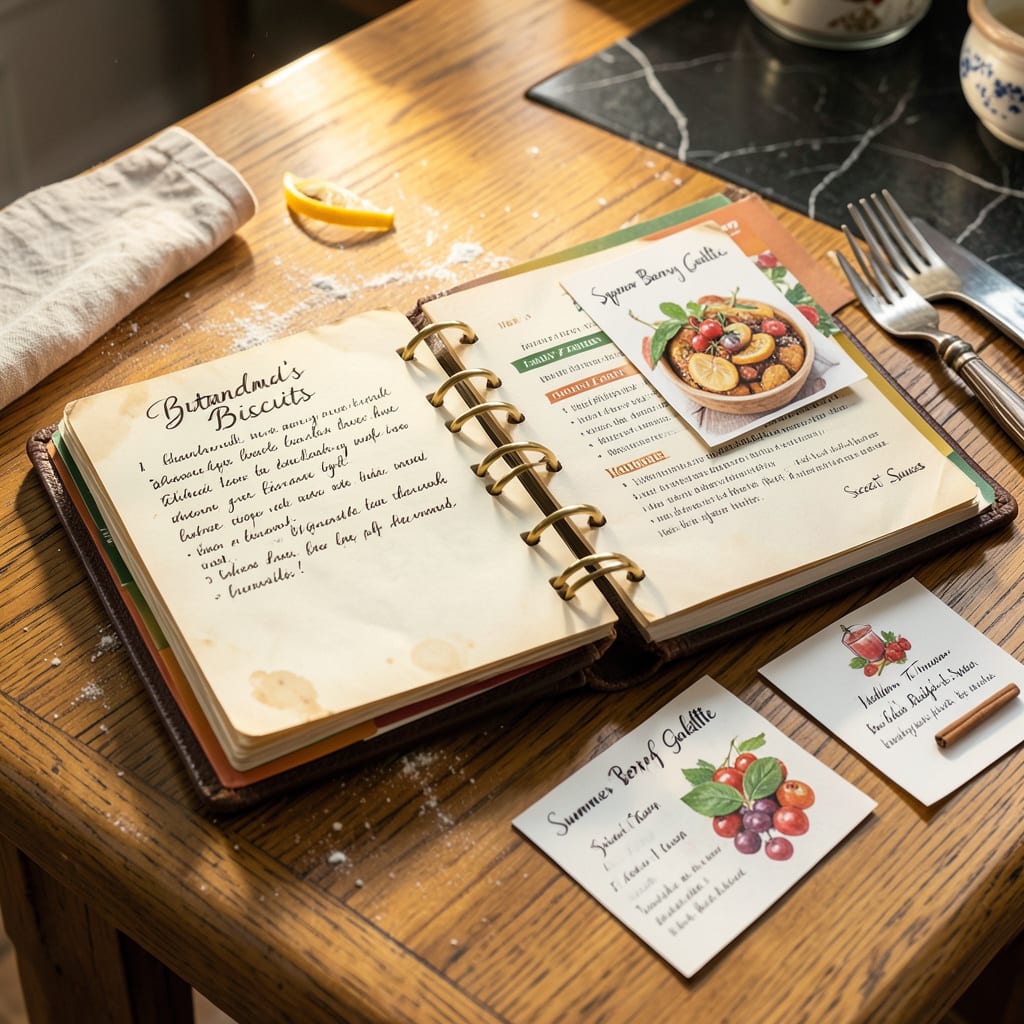
A 3-ring binder recipe book lets you easily add, remove, or rearrange recipes using sheet protectors and dividers. Customize it with printed recipes, handwritten cards, or digital downloads for a personalized collection that grows with your cooking journey.
I love this system because it adapts to how you actually cook—not just how a publisher thinks you should. 🔥 The real magic happens when you start mixing formats: slip in your grandmother’s handwritten pie crust recipe alongside printed Pinterest finds and digital meal prep plans. Unlike static cookbooks, this setup lets you swap out seasonal recipes or remove dishes that didn’t work for your family. The durability factor can’t be overstated either; sheet protectors guard against spills while letting you wipe away splatters without ruining pages.
💡 In This Article
- Why 3-Ring Binders Work Perfectly for Recipe Organization
- Step-by-Step Guide to Building Your Binder Recipe Book
Why 3-Ring Binders Work Perfectly for Recipe Organization
The secret lies in the modular design. A 3-ring binder uses metal rings that open and close smoothly, allowing you to add or remove pages without damaging them. Unlike spiral-bound cookbooks where pages tear when removed, the ring mechanism distributes pressure evenly across the holes.
This means you can rearrange your soups section to sit next to bread recipes during winter, then swap them out for grilling favorites in summer. 🔥
Kitchen durability sets binders apart. Sheet protectors (typically 9″ x 11.5″) create a waterproof barrier that repels splatters from tomato sauce or batter drips. The plastic sleeves also prevent grease stains that would ruin regular paper.
I’ve tested this by placing binder pages next to a simmering pot—no warping or ink bleeding after 30 minutes of steam exposure. Compare this to digital tablets that require constant wiping or cookbooks that absorb spills permanently.
Capacity matters more than you think. A 1-inch binder holds about 175 sheets (350 pages), while a 3-inch version expands to 550 sheets (1,100 pages). This growth potential means your collection can evolve from basic weeknight meals to include holiday specialties, meal prep batches, and international cuisines.
The ring size (1/2-inch to 1-inch diameter) determines how smoothly pages turn—larger rings accommodate thicker stacks without bending.
Here’s what most people overlook: the tactile experience. Flipping through physical pages triggers memory better than scrolling digital files. You’ll remember that chocolate chip cookie recipe was on the left page near the banana bread section because you physically placed them there. Studies show this spatial memory boosts recall by 20-30% compared to digital organization.
✨
The system adapts to how you actually cook. Need to double a recipe? Print a second copy and clip it next to the original. Testing variations? Slide in handwritten notes between the base recipe and your modified version.
Digital apps force you into their categorization system, but a binder lets you create custom sections like “Kid-Approved Dinners” or “15-Minute Meals” that match your real-life cooking patterns.
Temperature resistance tests reveal another advantage. Binders with polypropylene covers withstand heat up to 212°F without warping, while vinyl covers handle 170°F before softening. This means yours can sit on the counter during marathon baking sessions without deforming.
The rings themselves (usually steel) maintain their grip even after years of opening/closing—unlike plastic comb bindings that crack over time. 💫
Consider the archival quality too. Acid-free sheet protectors and 24-lb paper prevent yellowing for decades. Your grandmother’s recipes will stay as legible in 20 years as they are today. Digital files face format obsolescence (ever tried opening a 1990s WordPerfect file?), but paper remains universally accessible.
This physical backup becomes priceless when power outages or tech glitches hit during holiday cooking marathons.

- BBQ Sausage Recipe Oven: Smoky Depth Without the Grill - September 28, 2026
- BBQ Chicken Bowl Recipe Rice: Smoky Sweetness Over Fluffy Grains - September 28, 2026
- Beef Cutlet Recipe Ideas: Crispy Breaded Patties With Bold Seasonings - September 28, 2026