
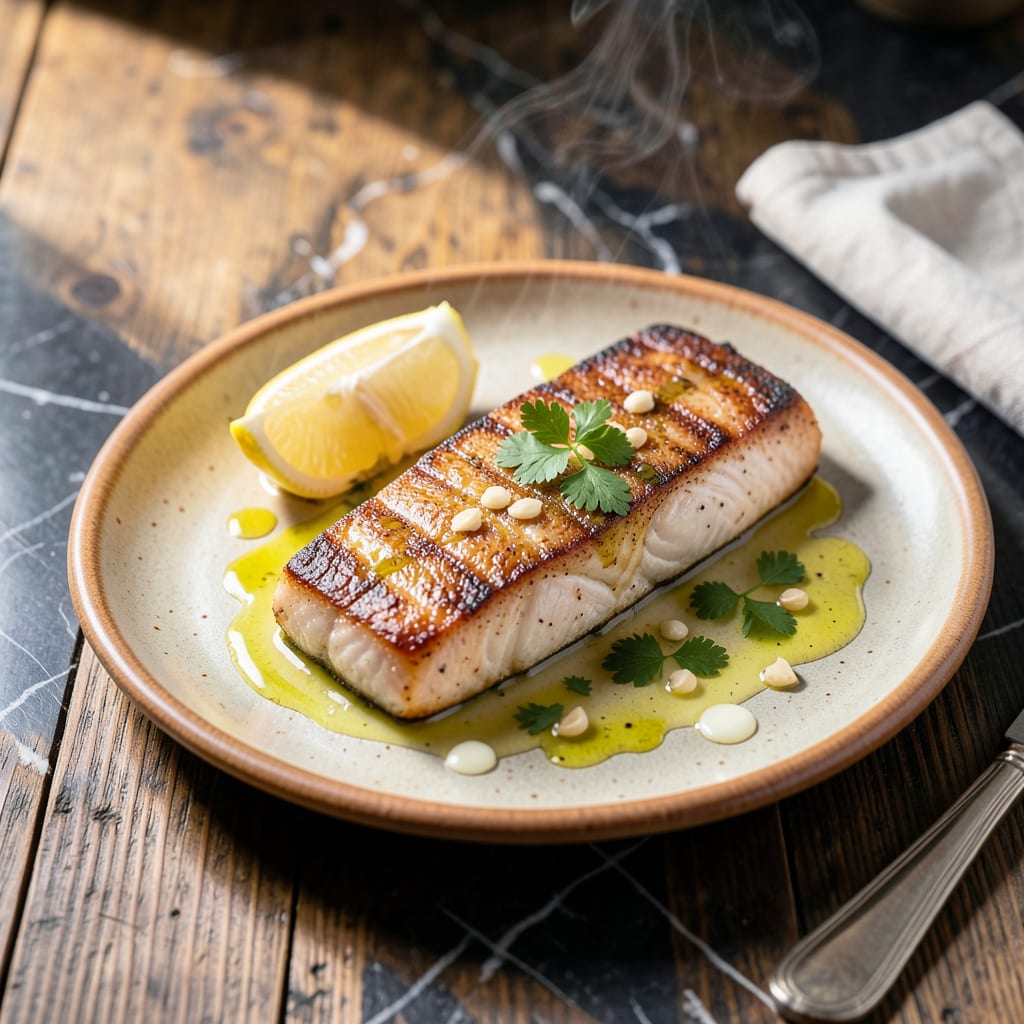
Alaska pollock delivers a mild, buttery white flesh that cooks quickly and adapts to countless preparations. This versatile fish holds its shape beautifully whether pan-seared, baked, or poached.
With just 15 minutes of cooking time, you can achieve tender, flaky fillets that pair perfectly with lemon, herbs, or simple seasonings. The clean flavor makes it ideal for both weeknight dinners and special occasions.
Ingredients for Alaska Pollock Fillet
Fresh fish, bright herbs, and a few pantry staples bring this dish to life.
| Ingredient | Amount | Notes |
|---|---|---|
| Alaska Pollock Fillets 🐟 | 1 ½ lb | Skinless, boneless, fresh or thawed |
| Extra-Virgin Olive Oil 🫒 | 3 tbsp | Divided for cooking and finishing |
| Unsalted Butter 🧈 | 2 tbsp | For basting and richness |
| Garlic Cloves 🧄 | 3 cloves | Minced for aromatic base |
| Fresh Lemon 🍋 | 1 whole | Zested and juiced |
| Fresh Flat-Leaf Parsley 🌿 | ¼ cup | Chopped for garnish |
| Dry White Wine 🍷 | ¼ cup | For deglazing pan |
| All-Purpose Flour 🌾 | 2 tbsp | For light dredging |
| Kosher Salt 🧂 | 1 tsp | Diamond Crystal preferred |
| Freshly Ground Black Pepper 🌶️ | ½ tsp | Coarse grind recommended |
| Fresh Dill 🌿 | 2 tbsp | Chopped, or sub tarragon |
| Shallot 🧅 | 1 whole | Finely minced for depth |
| Capers 🫒 | 1 tbsp | Drained, for briny contrast |
The pollock is the star—look for wild-caught Alaska pollock fillets at Whole Foods or Trader Joe’s (their frozen works in a pinch). Skinless, boneless is ideal for even cooking. The butter should be European-style if you can swing it—higher fat means better browning. Fresh herbs matter here, so grab the parsley and dill from the produce section, not the sad bundles by the bagged salads.
No white wine? Sub chicken broth with a squeeze of lemon. Dried dill at one-third the amount works if fresh isn’t available. Out of capers? Chopped green olives add a similar briny pop. The flour dredge is optional but gives a lovely light crust—skip it for gluten-free. And if your lemon is looking sad, bottled juice is fine, but fresh zest is non-negotiable.
Cook immediately or store fillets in the coldest part of your fridge for 1-2 days max. Leftovers? Flake into salads or tacos within 3 days—pollock reheats gently, or it’ll dry out. Freeze raw fillets for up to 3 months if you’re batch-prepping.
Why You’ll Love This Recipe
- 20-Minute Meal: I can get this from fridge to plate faster than ordering takeout.
- Buttery Garlic Magic: That combo of butter, garlic, and lemon with the flaky pollock? Ridiculously good.
- Feeds Any Night: Honestly, it works for a quiet Tuesday or when the in-laws pop over unexpectedly.
- Budget-Friendly Fish: I get restaurant-quality flavor without the seafood counter sticker shock.
Step-by-Step Instructions for Alaska Pollock Fillets
Here’s the method. Straightforward, tested, works every time.
Step 1: Prep and Dredge the Fillets
Pat the 1.5 lb Alaska Pollock Fillets completely dry with paper towels—this is crucial for achieving a golden crust. Season both sides evenly with the 1 tsp Kosher Salt and 0.5 tsp Freshly Ground Black Pepper. I press the seasoning in gently to ensure it adheres well.
Spread the 2 tbsp All-Purpose Flour on a plate and lightly dredge each fillet, shaking off any excess. The flour creates a delicate barrier that prevents sticking and adds a subtle crispness to the exterior. Don’t over-flour; a light, even coating is all you need.
Step 2: Sear the Fillets to Golden Perfection
Heat 2 tbsp Extra-Virgin Olive Oil in a large skillet over medium-high heat until it shimmers. Add the fillets and cook undisturbed for 3-4 minutes per side until they develop a golden-brown crust and release easily from the pan. Resist the urge to move them around—patience ensures even browning.
During the last minute of cooking, add the 2 tbsp Unsalted Butter to the pan and let it foam. Spoon the melted butter over the fillets repeatedly to baste them. This adds richness and a glossy finish. Transfer the fillets to a plate and tent loosely with foil to keep warm.
Step 3: Build the Pan Sauce with Aromatics
In the same skillet, reduce the heat to medium and add the minced 1 whole Shallot. Sauté for 2 minutes until softened and translucent. Add the minced 3 cloves Garlic Cloves and cook for 30 seconds until fragrant—don’t let it brown or it’ll turn bitter.
Pour in the 0.25 cup Dry White Wine and scrape up all the browned bits from the bottom of the pan with a wooden spoon. Let the wine simmer for 2-3 minutes until it reduces by half. This deglazing step captures all the concentrated flavor from the fillets and creates the base of your sauce.
Step 4: Finish with Bright, Fresh Flavors
Stir in the 1 tbsp Capers and 2 tbsp Fresh Dill, then remove the skillet from heat. Squeeze in the juice from the 1 whole Fresh Lemon and add a pinch of its zest for brightness. Taste and adjust seasoning if needed—though the capers and lemon usually provide enough salt and acidity.
Return the fillets to the skillet and spoon the sauce over them. Let them warm through for 1-2 minutes off heat. The residual warmth will meld the flavors together without overcooking the delicate fish.
Step 5: Garnish and Serve Immediately
Transfer the fillets to serving plates and drizzle any remaining sauce from the pan over the top. Scatter the chopped 0.25 cup Fresh Flat-Leaf Parsley over the dish for a pop of color and freshness. Finish with a final drizzle of the remaining 1 tbsp Extra-Virgin Olive Oil for a silky touch.
Serve immediately while the fillets are hot and the sauce is vibrant. The pollock should flake easily with a fork, and each bite should deliver a balance of buttery richness, briny capers, and bright citrus notes.
Pro Tips For Making Alaska Pollock Fillet
- Pat Fillets Dry: I learned this the hard way—pollock releases a lot of moisture, so blot the fillets with a paper towel before cooking to guarantee a golden crust instead of steaming in the pan.
- Hot Pan, Cold Fish: Make sure your skillet is screaming hot (medium-high, about 375°F) before adding the fillets, and resist the urge to move them for the first 2-3 minutes—this is how you get that crispy exterior.
- Butter Last, Not First: Sounds counterintuitive, but start with olive oil to sear the pollock, then add butter and garlic in the last 2 minutes to prevent burning and infuse the fish with rich, nutty flavor.
- Rest Before Serving: Give the fillets 3-4 minutes off the heat under a loose foil tent—they’ll finish cooking gently and stay juicy, rather than drying out on your plate.
Troubleshooting This Dish
Fillets Stick to Pan
If your fillets stick, your pan likely wasn’t hot enough or the fish wasn’t dry. Pat the Alaska Pollock Fillets thoroughly with paper towels and ensure your Extra-Virgin Olive Oil is shimmering before adding them. A well-seasoned cast iron or stainless steel skillet works best. 💡
Fish Falls Apart
Pollock flakes easily when overcooked. Reduce heat to medium and cook for exactly 3-4 minutes per side. Use a thin, flexible spatula to flip gently. If the fillets are thin, aim for the lower end of that time range.
Sauce Too Thin
Let the Dry White Wine reduce by half before adding other ingredients. If it’s still thin, simmer for an additional 2-3 minutes off heat. The butter will also help thicken it slightly as it emulsifies with the liquid.
Dry Fillets
Pollock dries out quickly if overcooked. Pull fillets when they reach 145°F internal temperature and rest them tented with foil. Basting with butter during cooking adds moisture and richness to prevent dryness.
If they do dry out, a quick drizzle of the pan sauce before serving can revive them.
Sauce Too Salty
Capers add significant saltiness. Taste before adding extra Kosher Salt. If it’s too salty, balance with a splash more lemon juice or a pinch of sugar. The lemon zest also adds brightness without extra salt. 🍋
Nutrition Facts
Frequently Asked Questions
Can I use frozen fillets instead of fresh?
Yes, thaw frozen fillets overnight in the fridge. Pat them completely dry before cooking to prevent sticking. Avoid microwaving to thaw, as it can make the texture mushy.
What’s the best way to check doneness?
Use a fork to gently test flakiness. The fillets are done when they reach an internal temperature of 145°F and separate easily. Overcooking dries them out, so pull them off heat just as they finish.
Can I bake the fillets instead of pan-searing?
Bake at 400°F for 12-15 minutes on a lined tray. Brush with oil and season as directed. Baking works well for larger batches.
What sides pair well with this dish?
Try roasted asparagus, mashed potatoes, or a simple arugula salad. The lemon-dill sauce complements steamed green beans or rice pilaf beautifully.

- BBQ Sausage Recipe Oven: Smoky Depth Without the Grill - September 28, 2026
- BBQ Chicken Bowl Recipe Rice: Smoky Sweetness Over Fluffy Grains - September 28, 2026
- Beef Cutlet Recipe Ideas: Crispy Breaded Patties With Bold Seasonings - September 28, 2026