
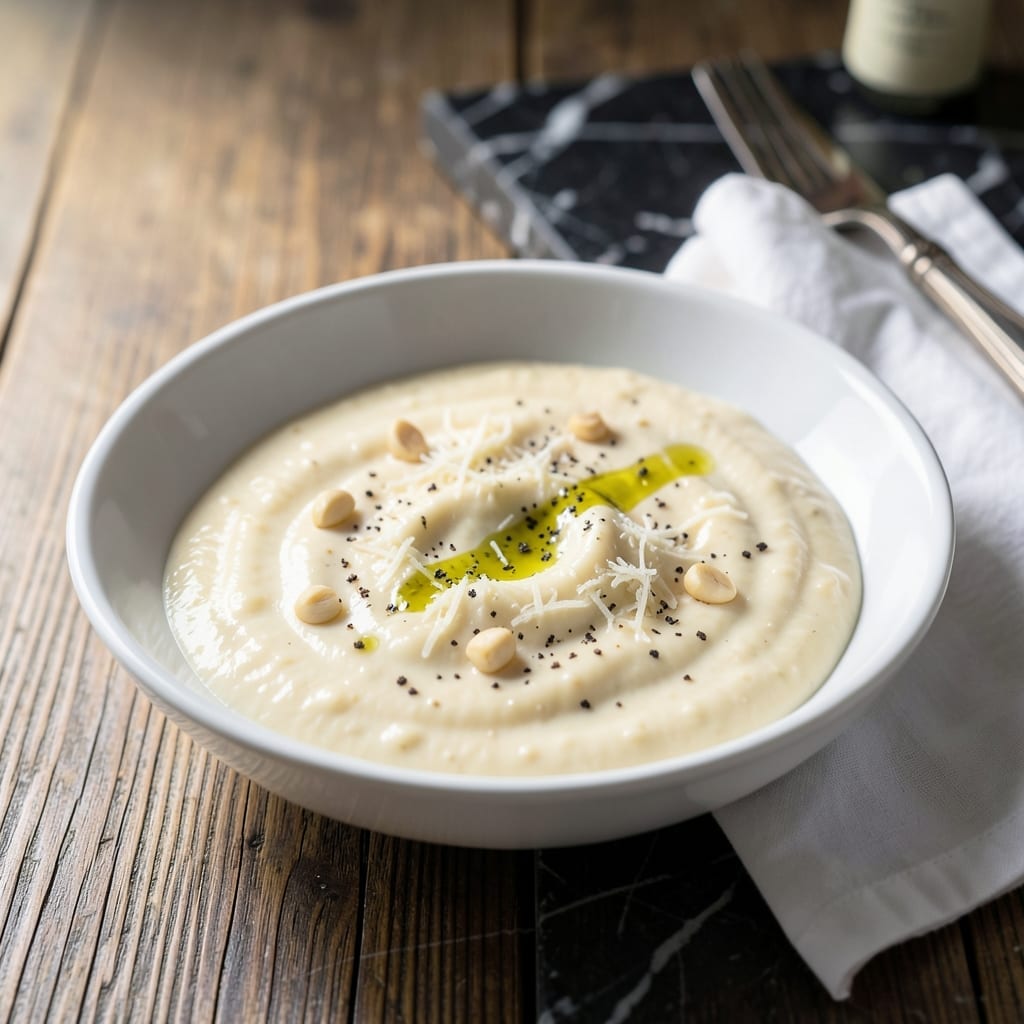
This alfredo sauce proves you don’t need heavy cream to achieve a creamy, restaurant-quality texture at home.
Using just milk, butter, and parmesan, I’ve perfected a smooth, velvety sauce that clings beautifully to pasta and reheats without separating.
Ingredients for Alfredo Sauce Recipe Using Milk
Eight ingredients transform into silky, restaurant-worthy sauce without heavy cream.
| Ingredient | Amount | Notes |
|---|---|---|
| Whole Milk 🥛 | 2 cups | Full-fat for creaminess |
| Unsalted Butter 🧈 | ½ cup | Cut into small cubes |
| All-Purpose Flour 🌾 | 2 tbsp | For thickening the sauce |
| Garlic Cloves 🧄 | 3 cloves | Minced or pressed |
| Parmesan Cheese 🧀 | 1 ½ cups | Freshly grated from block |
| Salt 🧂 | ½ tsp | Diamond Crystal kosher preferred |
| Black Pepper 🌶️ | ¼ tsp | Freshly ground preferred |
| Nutmeg 🌰 | 0.125 tsp | Freshly grated for depth |
The milk is doing double duty here—whole milk is non-negotiable for that velvety texture (skim won’t cut it). Organic Valley or a local dairy brand works great. For the Parmesan, Parmigiano-Reggiano is the gold standard—grate it fresh yourself (the pre-grated stuff has anti-caking agents that make the sauce grainy). Butter should be high-quality, like Plugrá or Kerrygold, and unsalted so you control the seasoning.
No whole milk? Half-and-half works in a pinch but reduce it slightly to avoid thinning the sauce. Out of Parmesan? Pecorino Romano at a 1:1 ratio adds a sharper bite. For a gluten-free version, swap the flour for cornstarch at half the amount. The nutmeg might seem odd, but freshly grated makes a world of difference—skip the pre-ground stuff.
Sauce keeps 4-5 days in an airtight container in the fridge. Reheat gently on low heat, stirring constantly. For longer storage, freeze in ice cube trays for up to 3 months (thaw in the fridge overnight).
Why You’ll Love This Recipe
- Staple Pantry Ingredients: I always have milk, butter, and flour on hand, so this comes together without a last-minute grocery run.
- Rich Garlic Parmesan: The melted butter and garlic bloom into this deep, creamy base that the parmesan just makes sing.
- Pasta Night Hero: I toss it with fettuccine, drizzle over roasted veggies, or use as a dip—honestly, it’s my weekly wildcard.
- Budget Stretcher: Here’s what sold me—it feeds four for the cost of a takeout appetizer, with leftovers that reheat like a dream.
Step-by-Step Instructions for Alfredo Sauce Using Milk
Here’s my method for achieving that velvety texture without heavy cream.
Step 1: Create a Smooth Roux Base
Melt the 0.5 cup Unsalted Butter in a medium saucepan over medium heat. I cut it into small cubes first so it melts evenly and quickly without burning.
As soon as the butter is fully melted and bubbling slightly, whisk in the 2 tbsp All-Purpose Flour. This is your roux—the foundation that thickens the sauce. Cook for 1-2 minutes, stirring constantly, until the mixture turns a pale golden color and smells slightly nutty. Don’t let it brown; that changes the flavor profile.
Step 2: Gradually Add Warm Milk
While whisking constantly, slowly pour in the 2 cups Whole Milk a little at a time. I warm mine first in the microwave for 30-45 seconds—this prevents the sauce from seizing up when it hits the hot roux.
After each addition, wait until the mixture is smooth before adding more. This gradual incorporation prevents lumps from forming. Once all the milk is in, continue whisking for 2-3 minutes until the mixture thickens enough to coat the back of a spoon and leaves a clear path when you run your finger through it.
Step 3: Infuse with Garlic Flavor
Reduce the heat to medium-low and add the 3 cloves Garlic Cloves. I prefer minced garlic here because it distributes evenly and releases its flavor quickly. Cook for 1-2 minutes, stirring constantly, until the garlic is fragrant but not browned.
If the garlic browns, it becomes bitter and overpowers the delicate flavor of the sauce. You want just enough heat to mellow the raw edge and release its aroma. At this point, the mixture should look like a thick, creamy base.
Step 4: Finish with Cheese and Seasonings
Remove the saucepan from heat and stir in the 1.5 cups Parmesan Cheese until fully melted and smooth. I always use freshly grated from a block—pre-shredded cheese contains anti-caking agents that can make the sauce grainy.
Season with the 0.5 tsp Salt, 0.25 tsp Black Pepper, and 0.125 tsp Nutmeg. The nutmeg is the secret here—it adds a subtle depth that rounds out the flavors. Taste and adjust seasoning as needed, then serve immediately while warm and creamy.
Pro Tips For Making Alfredo Sauce Recipe Using Milk
- Whisk Constantly: After adding milk to the butter-flour roux, keep whisking nonstop for 3-4 minutes—this prevents lumps and guarantees a silky texture. I learned this the hard way after my first three batches came out grainy.
- Grate Fresh Parmesan: Skip the pre-shredded stuff; freshly grated Parmesan melts smoothly and avoids the anti-caking agents that make sauce clumpy. Sounds tedious, but it actually changes the outcome.
- Low and Slow Heat: Cook the sauce on medium-low heat—cranking it up too high will scorch the milk and give your alfredo a bitter taste. My grandmother swore by this, and she was right.
- Warm Your Milk: Take the milk out of the fridge 10 minutes before starting, or microwave it for 20 seconds. Cold milk can cause the roux to seize up, and nobody wants a lumpy alfredo.
Storing and Reheating This Recipe
Refrigerator Storage
Let your alfredo sauce cool to room temperature, then transfer to an airtight container. I use glass jars with screw-top lids. It will keep in the fridge at 40°F or below for 4-5 days without losing quality. The flavors actually deepen as it rests. ❄️
Freezer Storage
For longer storage, freeze in ice cube trays for up to 3 months. Once solid, transfer cubes to a freezer bag, squeezing out excess air. This portioning makes it easy to thaw only what you need. Label with the date so you can track freshness.
Stovetop Reheating
Reheat gently over low heat in a saucepan, stirring constantly. Add a splash of whole milk (1-2 tbsp) to restore creaminess if it thickens too much. Avoid high heat, which can cause the cheese to separate. 🔥
Microwave Reheating
For quick reheating, use 50% power in 30-second intervals, stirring between each. Cover with a damp paper towel to prevent a skin from forming. This method works well for single servings.
Reviving Separated Sauce
If your sauce separates, don’t panic. Remove from heat and whisk vigorously until smooth. If needed, add 1 tsp warm milk at a time while whisking. The emulsion will come back together with patience.
Frequently Asked Questions
Can I use 2% milk instead of whole?
Whole milk is essential for the creamy texture. 2% milk lacks enough fat, resulting in a thinner, less rich sauce that may not coat pasta properly.
Why does my sauce turn grainy?
This usually happens with pre-shredded cheese due to anti-caking agents. Always use freshly grated Parmesan from a block. Also, avoid high heat which can cause the cheese to clump.
How can I make this gluten-free?
Replace the 2 tbsp flour with 1 tbsp cornstarch. Mix the cornstarch with cold milk first to prevent lumps, then proceed with the recipe as written.
What’s the best pasta to use?
Choose shapes with nooks and ridges like fettuccine, penne, or rigatoni. These hold the thick sauce better than smooth pasta. Fresh pasta absorbs the sauce especially well.
Nutrition Facts

- BBQ Sausage Recipe Oven: Smoky Depth Without the Grill - September 28, 2026
- BBQ Chicken Bowl Recipe Rice: Smoky Sweetness Over Fluffy Grains - September 28, 2026
- Beef Cutlet Recipe Ideas: Crispy Breaded Patties With Bold Seasonings - September 28, 2026