
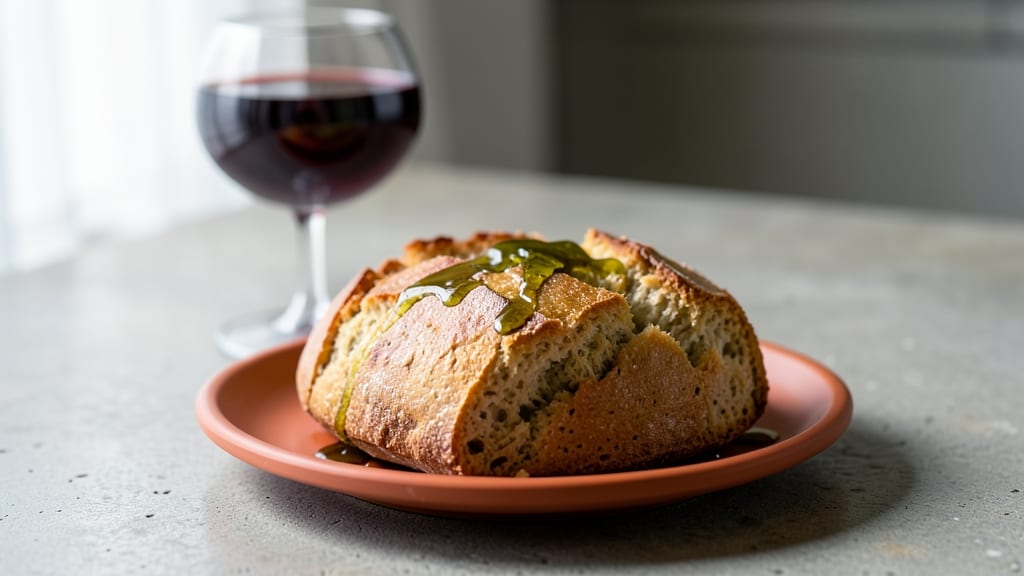
This American soda bread recipe delivers the perfect balance of rustic texture and tangy flavor in a single, no-yeast bowl. The classic combination of buttermilk and baking soda creates a tender crumb with a golden, buttery crust—ideal for pairing with soups or serving alongside hearty meals.
I’ve perfected this version to include a subtle swirl of sweet raisins, though savory variations with herbs or cheese work beautifully too.
The beauty of soda bread lies in its simplicity: just five core ingredients come together in 15 minutes of prep, followed by a 40-minute bake. No kneading, no waiting for yeast to rise—just mix, shape, and bake.
The traditional cross cut on top ensures even baking, while the buttermilk keeps the texture moist and slightly tangy. This recipe stays true to its roots while offering flexibility for customization.
What you’ll end up with is a loaf of bread with a crisp, golden crust and a tender, slightly dense interior—perfect for slicing thick and spreading with butter. The raisins add a touch of sweetness that contrasts beautifully with the bread’s mild tang.
Whether served warm with soup or as a side to roasted meats, this bread brings comfort and tradition to your table.
For those who prefer savory flavors, swap the raisins for fresh herbs like rosemary or thyme, or add shredded cheddar for a cheesy twist. The possibilities are endless, but the foundation remains the same: a foolproof, rustic loaf that’s ready in under an hour. Let’s get baking!
Ingredients for american soda bread
Five core ingredients plus one optional twist—this rustic loaf comes together faster than store-bought.
| Ingredient | Amount | Notes |
|---|---|---|
| All-Purpose Flour 🌾 | 4 cups | Spooned and leveled, not packed |
| Buttermilk 🥛 | 1 ½ cups | Room temperature for best mixing |
| Baking Soda 🧂 | 1 tbsp | Freshly opened for maximum lift |
| Salt 🧂 | 1 tsp | Fine sea salt preferred |
| Unsalted Butter 🧈 | ½ cup | Cold, cubed for swirling |
| Seedless Raisins 🍇 | ½ cup | Plumped in warm water if dry |
| Granulated Sugar 🍯 | ¼ cup | Light brown sugar for depth |
| Fresh Rosemary 🌿 | 1 tbsp | Chopped, optional savory variation |
The flour is your foundation, so King Arthur or Gold Medal are ideal—they hold up to the buttermilk’s tang without collapsing. Buttermilk needs to be room temperature; cold buttermilk creates dense bread. Store-bought buttermilk works, but for extra tang, mix 1 tbsp vinegar or lemon juice with 1.5 cups milk and let sit 5 minutes. The baking soda must be fresh—if it’s been open over a month, toss it. For the raisins, Sun-Maid or Thompson Seedless are classic choices, but any plump, sweet raisins will do. If you prefer savory, swap the raisins for the rosemary and add 1 cup shredded cheddar instead.
No buttermilk? Substitute with 1.5 cups milk plus 1 tbsp vinegar, let it curdle 5 minutes. Running short on raisins? Dried cranberries or chopped dates work beautifully. For a cheesy variation, use sharp cheddar or Gruyère—the latter adds a nutty depth. The sugar can be omitted entirely for a more rustic, slightly bitter loaf. If you’re using the rosemary variation, toast the sprigs in a dry pan for 30 seconds first to intensify the flavor. The butter should be cold when mixed in—this creates those signature swirls that make the bread look (and taste) special.
This bread keeps well at room temperature for 2-3 days wrapped in a clean kitchen towel. For longer storage, freeze the whole loaf for up to 3 months. To revive, wrap in foil and warm in a 350°F oven for 10 minutes. The best part? It reheats beautifully—just a few minutes in the oven with a sprinkle of water on the pan bottom restores that fresh-baked aroma. Slice thick for maximum buttery goodness, and always serve with more butter. Leftovers make excellent croutons or breadcrumbs.
Why You’ll Love This Recipe
- No-Mix Magic: I swear, this bread comes together with three ingredients (plus butter) and zero fuss. Just fold, shape, bake—no kneading, no waiting for dough to rise. The buttermilk’s tang and baking soda’s lift do all the work while you’re still deciding what to watch on TV.
- Tangy Crust, Soft Core: That crispy, golden crust? It’s not just for show—the buttermilk’s acidity cuts through the richness of the butter, leaving you with a loaf that’s dangerously easy to polish off. Honestly, I’ve caught myself eating slices straight from the pan, crust and all.
- Breakfast to Brunch: Toast it for a lazy morning, tear it into chunks for soup, or serve it warm with jam when unexpected guests show up. It’s my go-to for feeding a crowd without stressing—one batch feeds four, and the leftovers? They last exactly as long as my willpower to save them.
- Pantry Staple, Pocket-Friendly: Flour, buttermilk, butter—these are ingredients you already own, and they cost next to nothing. I’ve made this on a budget, for picnics, and even as a last-minute side. The best part? It freezes like a dream, so you’re never stuck without a loaf when hunger strikes.
Step-by-step instructions for American soda bread
Here’s the straightforward method for creating a tender crumb with a buttery crust and rosemary-infused swirls.
Combine Dry Ingredients and Buttermilk
In a large mixing bowl, whisk together the 4 cups all-purpose flour, 1 tbsp baking soda, 1 tsp salt, and 0.25 cup granulated sugar. This dry blend should be smooth with no visible lumps. I like to use a whisk for this step to ensure even distribution of the baking soda, which is crucial for that signature soda bread rise.
Make a well in the center of the dry ingredients and pour in the 1.5 cups buttermilk. Using a wooden spoon or silicone spatula, gently mix the buttermilk into the flour until just combined. You’re looking for a shaggy dough that comes together but still has rough edges—overmixing develops gluten and makes the bread dense. The dough will be sticky, so don’t be tempted to add more flour at this stage.
Incorporate Butter and Raisins
Cut the 0.5 cup unsalted butter into small cubes and distribute them evenly over the dough. Using your fingers or the silicone spatula, gently work the butter into the dough until it’s fully incorporated and the mixture looks slightly streaky. This cold butter will create pockets of flavor and contribute to that signature tender crumb.
Fold in the 0.5 cup seedless raisins and 1 tbsp chopped fresh rosemary using the same gentle folding motion. The raisins should be evenly distributed throughout the dough. If the dough feels too sticky to handle, wet your hands slightly with cold water to help shape it. The dough should hold together when pressed but still feel soft and pliable.
Shape and Prepare for Baking
Turn the dough out onto a lightly floured surface and shape it into a round loaf about 8 inches in diameter. I like to use a bench scraper to help create a smooth, even surface. Place the shaped dough on a parchment-lined baking sheet and gently press down on the center to create a slight indentation—this helps the bread rise evenly and gives it that classic soda bread shape.
Cover the dough loosely with plastic wrap and let it rest at room temperature for 20 minutes. This brief rest allows the dough to relax slightly and helps the butter redistribute, which ensures a more even bake. Preheat your oven to 375°F during this resting time so it’s ready when you are. 4
