
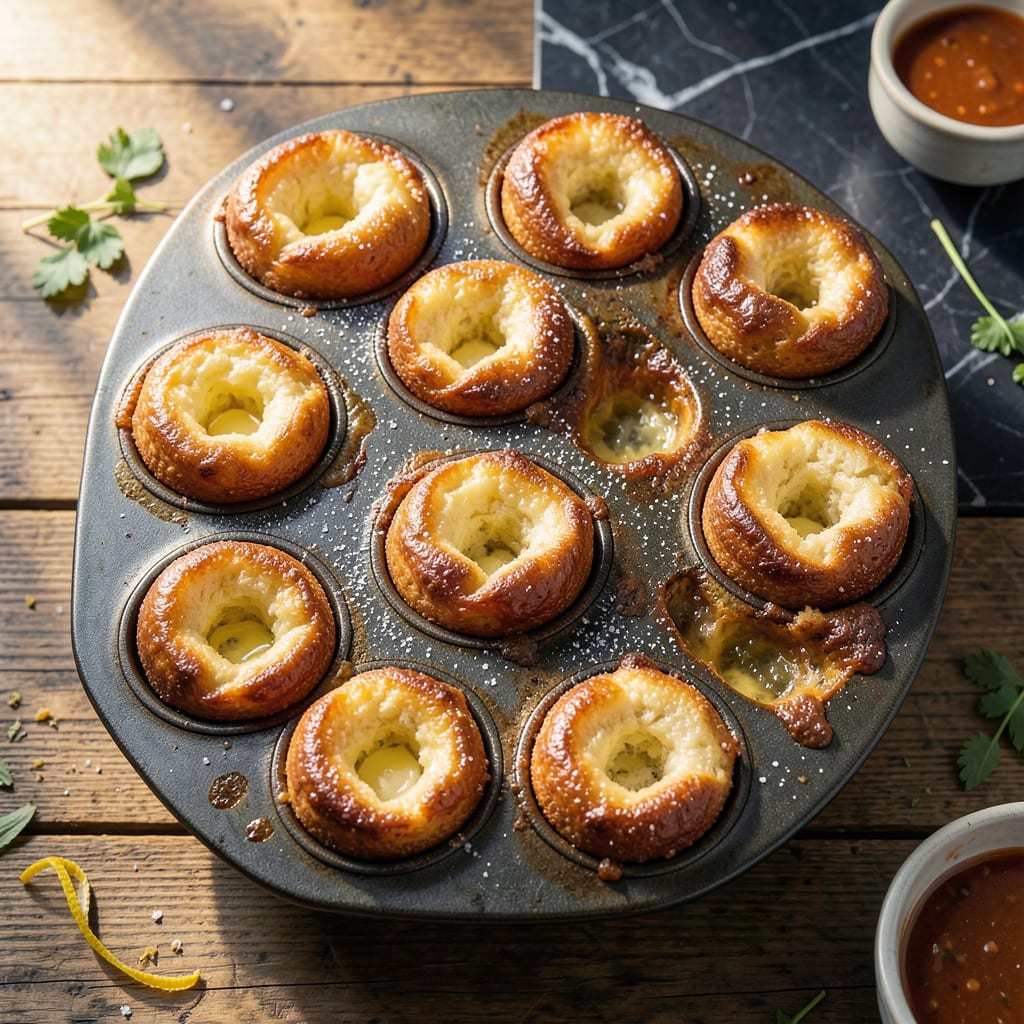
This tested recipe delivers the towering popovers America’s Test Kitchen is known for, with golden exteriors and airy hollow centers every time. The method relies on precise oven temperature and a well-preheated pan.
With just a handful of pantry staples and a few key techniques, you’ll achieve bakery-quality results at home. The steam created during baking is what makes these popovers rise dramatically.
Ingredients for America’s Test Kitchen Popover
A handful of pantry staples and a few eggs create these bakery-quality golden puffs.
| Ingredient | Amount | Notes |
|---|---|---|
| All-Purpose Flour 🌾 | 1 ½ cups | Sifted for lightness |
| Whole Milk 🥛 | 1 ½ cups | Room temperature preferred |
| Large Eggs 🥚 | 4 whole | Room temperature for best rise |
| Unsalted Butter 🧈 | 3 tbsp | Melted, divided for pan and batter |
| Kosher Salt 🧂 | ¾ tsp | Diamond Crystal preferred |
| Granulated Sugar 🍚 | 1 tbsp | Fine granulated for even distribution |
| Vanilla Extract 🌿 | 1 tsp | Pure extract for best flavor |
The flour is critical here—King Arthur or Gold Medal all-purpose yield consistent results. Sift it if it’s lumpy (worth the extra minute). Milk and eggs at room temperature incorporate better into the batter. Whole milk provides the fat needed for structure; skim won’t work as well. For the butter, Plugrá or Kerrygold give superior flavor, but any unsalted brand will do.
No whole milk? Half-and-half mixed with water (equal parts) works in a pinch. For a richer popover, replace 2 tablespoons of milk with heavy cream. Out of vanilla? Almond extract at half the amount adds a different but pleasant depth. Sugar can be omitted for savory popovers—just add 1/4 tsp black pepper to the batter instead.
Popovers are best eaten immediately but can be reheated. Warm in a 350°F oven for 5-10 minutes to crisp the exterior. Leftovers keep 1 day at room temperature or 3 days refrigerated. Freeze for up to 1 month in an airtight container.
Why You’ll Love This Recipe
- One Bowl Wonder: I just dump flour, milk, eggs, and a pinch of salt in a bowl, whisk, and pour—no fancy steps, no fuss.
- Buttery Clouds: That rich whole milk and butter create a popover so light and golden, it’s like biting into a warm, crisp-edged cloud.
- Brunch Star: Honestly, these disappear faster than pancakes at a family gathering—equally great with jam or gravy.
Step-by-Step Instructions for Towering Golden Puffs with Hollow Centers
Master these techniques for popovers that rise dramatically and maintain their structure.
Step 1: Preheat the Pan and Prepare the Batter Base
Position a rack in the lower-middle of your oven and preheat to 450°F. Place a standard 12-cup muffin tin in the oven to heat. This critical step ensures the batter immediately begins to puff when it hits the hot pan.
While the oven heats, melt 3 tbsp unsalted butter and divide it: use 1 tbsp to grease the muffin cups (this prevents sticking and aids in rise) and reserve the remaining 2 tbsp for the batter. The pan must be scorching hot when you add the batter—this is non-negotiable for proper steam formation.
Step 2: Whisk the Wet Ingredients to Silky Smoothness
In a large bowl, whisk together the 4 whole large eggs until no streaks remain. The eggs should be at room temperature—cold eggs won’t emulsify properly with the fat, resulting in dense popovers.
Gradually whisk in the 1.5 cups whole milk, 2 tbsp melted butter, 1 tbsp granulated sugar, 0.75 tsp kosher salt, and 1 tsp vanilla extract until fully combined. The mixture should look homogeneous with a pale, creamy appearance. Avoid overmixing at this stage—you want to incorporate air, not beat it out.
Step 3: Incorporate the Dry Ingredients with Precision
Add the 1.5 cups all-purpose flour all at once to the wet ingredients. Using a wooden spoon or silicone spatula, fold gently until just combined. The batter will be thin—about the consistency of heavy cream—with small lumps visible. These lumps will dissolve during baking, so resist the urge to overmix.
Let the batter rest for 5 minutes at room temperature. This brief pause allows the flour to fully hydrate, which develops the gluten just enough to give the popovers structure while maintaining their airy texture. The batter should look slightly thicker after resting but still pourable.
Step 4: Fill the Pan and Bake Undisturbed
Carefully remove the hot muffin tin from the oven. Working quickly, fill each cup about ¾ full with batter—this typically uses about ¼ cup of batter per popover. The batter will sizzle when it hits the hot greased cups, which is exactly what you want for that initial lift.
Return the pan to the oven and bake at 450°F for 20 minutes. Do not open the oven door during this time—any drop in temperature can cause the popovers to collapse. After 20 minutes, reduce the heat to 350°F and bake for an additional 15-20 minutes until the popovers are deep golden brown and sound hollow when tapped.
Step 5: Cool and Serve Immediately
Remove the popovers from the oven and let them cool in the pan for 2-3 minutes. This brief rest allows them to set slightly so they don’t deflate when removed. Then transfer them to a wire rack to prevent the bottoms from becoming soggy.
Serve the popovers immediately while still warm. They should stand at least 4-5 inches tall with a crisp, golden exterior and a completely hollow interior. If they begin to deflate as they cool, this is normal—popovers are best enjoyed fresh from the oven when they’re at their most dramatic height and airiest texture.
Pro Tips For Making America’S Test Kitchen Popover
- Preheat the Pan: I learned this the hard way—your popover pan needs to be screaming hot (450°F) with the butter sizzling before adding the batter, otherwise they won’t rise properly.
- Use Room Temp Eggs: After burning three batches, I finally figured out that cold eggs make the batter too thick; let them sit out for 20 minutes or warm in a bowl of hot water.
- Skip Overmixing: Sounds weird, but it works: stir the batter just until the flour disappears—lumps are fine, and overmixing makes popovers tough.
- Don’t Open the Oven: My grandmother swore by this, and she was right: resist the urge to peek during baking, or the sudden temperature drop will collapse your popovers.
Wine and Beer Pairings for americas test kitchen popover
Sparkling Wine Pairings
A crisp Prosecco or Cava cuts through the richness of these buttery popovers beautifully. The effervescence cleanses your palate between bites, making each one taste as fresh as the first. I love serving chilled La Marca Prosecco for brunch. 🍾
Light Beer Options
A pilsner like Stella Artois or a wheat beer such as Blue Moon complements the airy texture. The light, slightly citrusy notes of a Belgian witbier also pair wonderfully with the vanilla undertones in the batter.
Fruity White Wines
A Riesling with its honeyed sweetness balances the savory butter. For a drier option, try a Sauvignon Blanc—its crisp acidity and herbaceous notes create a delightful contrast. I prefer Kim Crawford Sauvignon Blanc for its vibrant finish.
Tea and Coffee
For non-alcoholic pairings, a chai latte or Earl Grey tea enhances the vanilla and sugar notes. The warmth of a light roast coffee also complements the golden, buttery flavor of fresh popovers. 💛
Cocktail Pairings
A mimosa (equal parts orange juice and champagne) is a classic brunch choice. For something stronger, a Bloody Mary with its savory, spicy kick contrasts the sweetness of the popovers perfectly.
Nutrition Facts
Frequently Asked Questions
Why do my popovers collapse after baking?
This usually happens if the oven door is opened too soon or the temperature drops. Keep the door closed for the first 20 minutes at 450°F to ensure proper rise and structure.
Can I use a different pan instead of a muffin tin?
A popover pan works best, but a standard muffin tin is fine. Avoid nonstick pans—they don’t heat as evenly. Always preheat the pan to 450°F before adding batter.
How do I get the tallest popovers?
Use room temperature ingredients and fill cups ¾ full. The initial high heat (450°F) creates steam for maximum lift. Don’t overmix the batter—lumps are okay!
Can I make these ahead of time?
Popovers are best served fresh, but you can reheat them. Warm at 350°F for 5-10 minutes to crisp the exterior. They’ll lose some height but still taste great.

- BBQ Sausage Recipe Oven: Smoky Depth Without the Grill - September 28, 2026
- BBQ Chicken Bowl Recipe Rice: Smoky Sweetness Over Fluffy Grains - September 28, 2026
- Beef Cutlet Recipe Ideas: Crispy Breaded Patties With Bold Seasonings - September 28, 2026