
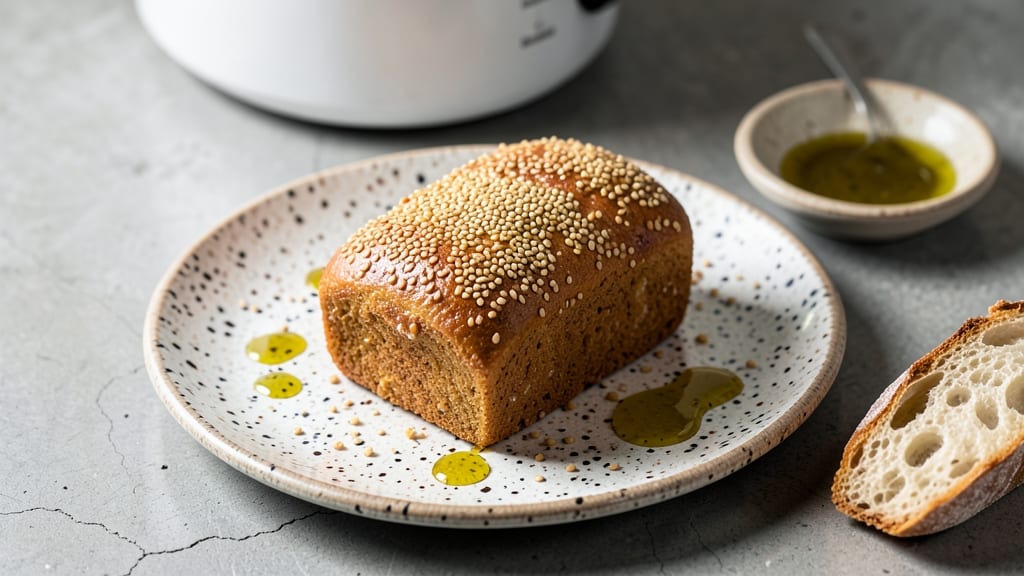
Creating Amish white bread in a bread machine brings the simplicity and tradition of Amish baking into modern kitchens—no kneading required. This recipe captures the essence of that classic homemade crust while leveraging the convenience of your bread machine.
The key lies in a slow fermentation process and precise ingredient ratios that deliver a tender, fluffy loaf with a crisp exterior.
The beauty of this method is its simplicity: just combine flour, yeast, milk, and a touch of sugar in your bread machine pan.
The machine handles the kneading and rising, while you focus on the small adjustments that make all the difference—like using a slightly lower yeast amount for a slower rise. This approach mimics traditional Amish techniques while adapting them for home bread machines.
What you’ll end up with is a loaf that’s light, airy, and perfectly golden—just like the bread you’d find at an Amish bakery. The crust develops a satisfying crunch, while the interior remains soft and pillowy, with a subtle sweetness from the milk and sugar.
This recipe is designed to work in most standard bread machines, but I’ll share troubleshooting tips to avoid common pitfalls like dense bread or overproofing.
Whether you’re baking for a family meal or simply craving that homemade bread flavor, this method delivers professional-quality results with minimal effort. Let’s get started on creating your perfect loaf.
Ingredients for amish white bread machine
Just eight ingredients transform your bread machine into an Amish bakery.
| Ingredient | Amount | Notes |
|---|---|---|
| All-Purpose Flour 🌾 | 5 cups | White bread flour preferred |
| Active Dry Yeast 🍞 | 1 ½ tsp | Fresh yeast works too |
| Granulated Sugar 🍚 | 1 tbsp | White or brown sugar |
| Unsalted Butter 🧈 | ¼ cup | Softened, full-fat preferred |
| Whole Milk 🥛 | 1 ¼ cups | Room temperature preferred |
| Large Eggs 🥚 | 1 whole | Room temperature for best rise |
| Salt 🧂 | 1 ½ tsp | Kosher or sea salt |
| Water 💧 | ½ cup | Warm, 110°F ideal |
| Cornmeal 🌽 | 1 tbsp | For bread machine pan |
The flour makes all the difference here—King Arthur White Bread Flour or Bob’s Red Mill are my go-tos for that signature Amish texture. If you only have all-purpose, it’ll still work, but the loaf might lack that extra tenderness. The yeast is non-negotiable for that classic slow rise; Saf-Instant is my secret weapon since it doesn’t need proofing. For the milk, whole milk gives the richest flavor, but 2% works in a pinch. I always grab organic eggs from the grocery store—room temperature is key for even rising.
No yeast? Active dry yeast works too—just proof it first. Short on milk? Evaporated milk or even water keeps it going, though flavor suffers. Butter stuck in the fridge? Microwave it 40 seconds to soften—no one wants to knead cold butter. The cornmeal isn’t just for looks—it prevents sticking in your bread machine pan. Trader Joe’s sells it in bulk if you bake often. For the sugar, brown adds depth, but white keeps it classic. And if your bread machine pan is new, lightly grease it with butter before adding cornmeal.
This dough keeps for 24 hours in the fridge if you need to delay baking—just let it sit at room temp for 30 minutes before starting the cycle. The finished loaf? 3 days on the counter wrapped in a towel, or 1 week in the fridge. For extra crispiness, brush the warm loaf with melted butter. Freezing? Slice first, then freeze—3 months max. I always bake two loaves—one for the family, one for neighbors. That’s the Amish way.
Why You’ll Love This Recipe
- No-Knead Magic: The bread machine does all the hard work—just toss in flour, yeast, sugar, butter, and milk, then press start. I’ve made this while scrolling through emails; it’s that hands-off.
- Buttery Soft Crust: That touch of unsalted butter and whole milk? The bread turns out pillowy soft with just the right crispness—like a hug for your sandwiches. (Yes, even on a Tuesday night.)
- Weeknight & Picnic Star: Freezes beautifully for quick toast later, or pack slices for lunch—no soggy bread here. Honestly, it’s my go-to for church potlucks or kids’ packed lunches.
- Pantry Staple Power: Uses ingredients you already own, and the dough’s forgiving—no need for fancy tools. Between us, this is my budget-friendly secret for fresh bread without the grocery run.
Step-by-step instructions for Amish white bread machine recipe
This no-knead method delivers that classic Amish white bread texture with minimal effort.
Prepare the Bread Machine Pan
First, lightly grease the inside of your bread machine pan with a small amount of the 0.25 cup unsalted butter using a paper towel. This prevents sticking and creates that perfect pull-apart crust. Then sprinkle 1 tablespoon cornmeal evenly over the bottom of the pan. The cornmeal creates a barrier that makes removing the bread effortless later.
Here’s the thing—don’t skip this step. I’ve seen many bread machine failures because people forget to grease or use cornmeal. The butter ensures a golden crust, while the cornmeal guarantees that beautiful loaf shape without tearing. Your bread machine manual might suggest flour, but cornmeal works better for this recipe.
Combine Wet Ingredients in the Pan
In the prepared pan, combine the 1.25 cups whole milk, 1 whole large egg, 1 tablespoon granulated sugar, and 1.5 teaspoons salt. Use a whisk or fork to mix until the sugar and salt dissolve completely. The milk should be at room temperature—this helps the yeast activate properly later. If your milk is cold, let it sit at room temperature for about 30 minutes before mixing.
I like to add the egg last because it helps bind everything together. The mixture should look slightly thick but pourable. If it’s too thin, you might need to adjust the flour slightly later, but we’ll use all 5 cups all-purpose flour as called for—this recipe is designed to work perfectly with these measurements.
Add Dry Ingredients and Yeast
Gradually sprinkle the 5 cups all-purpose flour over the wet ingredients while stirring gently with a wooden spoon. You’ll want to create a well in the center to avoid creating a flour mountain that the yeast can’t activate properly. In this well, add the 1.5 teaspoons active dry yeast. The reason we wait until last is that yeast needs moisture to activate, and we want it to bloom right in the pan.
Stir everything together until just combined—you should still see some flour streaks. Overmixing develops gluten too early, which can make the bread dense. The dough will look shaggy and sticky, but that’s exactly what we want for this no-knead method. Cover the pan loosely with plastic wrap and let it rest for 10 minutes at room temperature while the yeast begins to activate.
Load and Set the Bread Machine
After the resting period, scrape the dough back into the corners of the pan using a wet rubber spatula. This ensures even distribution and helps prevent dry spots. Place the pan in your bread machine and select the “Basic White Bread” setting. The machine will automatically mix, knead, and bake the bread for you.
Here’s where it gets fun—the bread machine will handle most of the work. The cycle typically takes about 3 to 3.5 hours, including a 10-minute kneading phase. You’ll hear the machine go through its paces: mixing, kneading, rising, and finally baking. Don’t be tempted to open the lid during the process—this disrupts the rise and can lead to a dense loaf.
Finish with a Golden Crust
When the bread machine finishes its cycle, you’ll hear a beep and see steam rising from the pan. Let the bread cool in the pan for 5 minutes before removing it. This resting period is crucial—it allows the steam to set the crust and prevents the loaf from falling apart when you transfer it.
Real talk: the bread will look slightly underbaked when you first take it out, but it continues cooking as it cools. Use a toothpick to check the center—it should come out clean with just a few moist crumbs. For that classic Amish white bread appearance, brush the cooled loaf with a little melted unsalted butter while it’s still warm. This creates a beautiful sheen and enhances the flavor. Let it cool completely on a wire rack before slicing.
Pro Tips For Making Amish White Bread Machine
- Warm the Milk First: Pour whole milk into a small saucepan and heat it just until it steams—about 90 seconds. Cold milk slows yeast activation, and this recipe relies on that yeast working fast to get that signature tender crumb. (Yes, even if you’re impatient like me, resist the urge to skip this.)
- Measure Butter by Weight: Use a kitchen scale for the unsalted butter—4 ounces, not a “generous tablespoon.” Butter’s density varies by brand, and too much throws off the dough’s balance, making it gummy. I learned this the hard way after a batch turned out like a hockey puck.
- Don’t Overload the Machine: If your bread machine’s max capacity is 1.5 pounds, stop at 1.4 pounds of flour. Packing it too full means uneven baking, dense spots, and a crust that’s more brick than crackly. Trust me, your bread will thank you.
- Poke the Dough Early: After the first kneading cycle, open the machine and press down on the dough with your fingers—just once. This releases trapped air and prevents a gummy texture. Sounds weird, but it works: my loaves now have that light, airy Amish-style crumb.
Perfect pairings for this amish white bread machine
Classic Spreads
Nothing complements Amish white bread like homemade butter or honey butter—the rich, creamy texture of the bread pairs perfectly with these simple spreads. I love using Land O’Lakes cultured butter for its tangy depth, or local honey from a Pennsylvania farm for a touch of sweetness.
For a savory option, try apple butter with cinnamon—it’s a classic Amish pairing that brings warmth to every bite. 🍯
Sweet Toppings
Fresh sliced strawberries or blueberries add a bright contrast to the bread’s mild sweetness. I often drizzle maple syrup (I prefer Grade B for its robust flavor) over warm slices, or sprinkle powdered sugar for an old-fashioned touch.
For a more indulgent treat, layer with whipped cream cheese and a sprinkle of cinnamon—this combo is a favorite at Amish bakeries.
Savory Pairings
This bread isn’t just for dessert—it’s fantastic with smoked ham, turkey, or cheddar cheese. I like to serve warm slices with homemade chicken noodle soup during colder months, or pair it with apple butter and bacon for a hearty breakfast.
The bread’s soft interior soaks up flavors beautifully, making it a versatile staple for any meal. 🥓
Drink Pairings
For a cozy morning, sip hot black coffee or chamomile tea alongside fresh bread. Iced sweet tea with a splash of lemon is perfect for summer, while milk (especially whole milk) enhances the bread’s richness.
Avoid overly sweetened drinks—they can overpower the bread’s delicate flavor. A simple sparkling water with lemon keeps it refreshing without competition. 🍵
Breakfast Combinations
Turn your bread into a breakfast sandwich by adding scrambled eggs, crispy bacon, and a smear of cream cheese. For a sweeter start, toast slices and top with peanut butter and banana slices, or jam (I recommend strawberry or raspberry).
The bread’s softness makes it ideal for soaking up flavors, so don’t be shy with toppings! 🍳
Dessert Variations
Dip warm bread in vanilla ice cream for a no-bake dessert, or layer with whipped cream and chocolate chips for a quick treat. I also love making French toast with this bread—its texture holds up perfectly when soaked in cinnamon-spiced egg batter and pan-fried.
For a festive touch, dust slices with powdered sugar and serve with hot cocoa. 🍫
Nutrition facts
Frequently asked questions
Can I use whole wheat flour instead of all-purpose for this recipe?
The traditional Amish white bread relies on all-purpose or white bread flour for that signature tender crumb. Whole wheat flour would make the bread denser and less fluffy. If you want a healthier version, try replacing 1 cup of the all-purpose flour with whole wheat, but expect a slightly heavier texture.
Why does my bread machine bread turn out dense?
Dense bread usually means the dough didn’t rise enough. Check these common issues: using cold milk or ingredients, opening the bread machine lid during the cycle, or overmixing the dough. Also, make sure your yeast is fresh—old yeast won’t activate properly. Let the dough rest for 10 minutes before starting the cycle to help the yeast bloom.
Can I make this recipe without a bread machine?
Yes! Mix all ingredients in a large bowl, then knead by hand for 5-7 minutes until smooth. Let the dough rise in a greased bowl for 1-2 hours (until doubled), then shape and bake at 375°F for 25-30 minutes. The texture will be slightly different but still delicious. For best results, use a Dutch oven for that classic crust.
How do I store leftover Amish white bread?
Wrap cooled bread tightly in plastic wrap or aluminum foil and store at room temperature for up to 3 days. For longer storage, freeze slices in a sealed bag for up to 3 months. To revive frozen bread, warm slices in a 350°F oven for 5-10 minutes until crispy. Avoid refrigerating—it makes bread stale faster.
What’s the secret to getting that perfect Amish-style crust?
The golden crust comes from three things: greasing the pan with butter, using cornmeal as a barrier, and brushing the warm loaf with melted butter after baking. For extra crispiness, bake for 5 extra minutes at the end of the cycle. The butter creates steam during baking, which develops that beautiful crust. Don’t skip the cooling period—rushing this step can make the crust tough.

- Beef Pikes Peak Roast Recipe: Slow-Cooked Richness With Herbed Crust - November 29, 2026
- Brine Pork Ribs Overnight Recipe: Fall-Apart Tenderness Without the Wait - November 29, 2026
- Chilli Sauce for Hot Dogs Recipe: Smoky-Sweet Glaze That Elevates Every Bite - November 29, 2026