
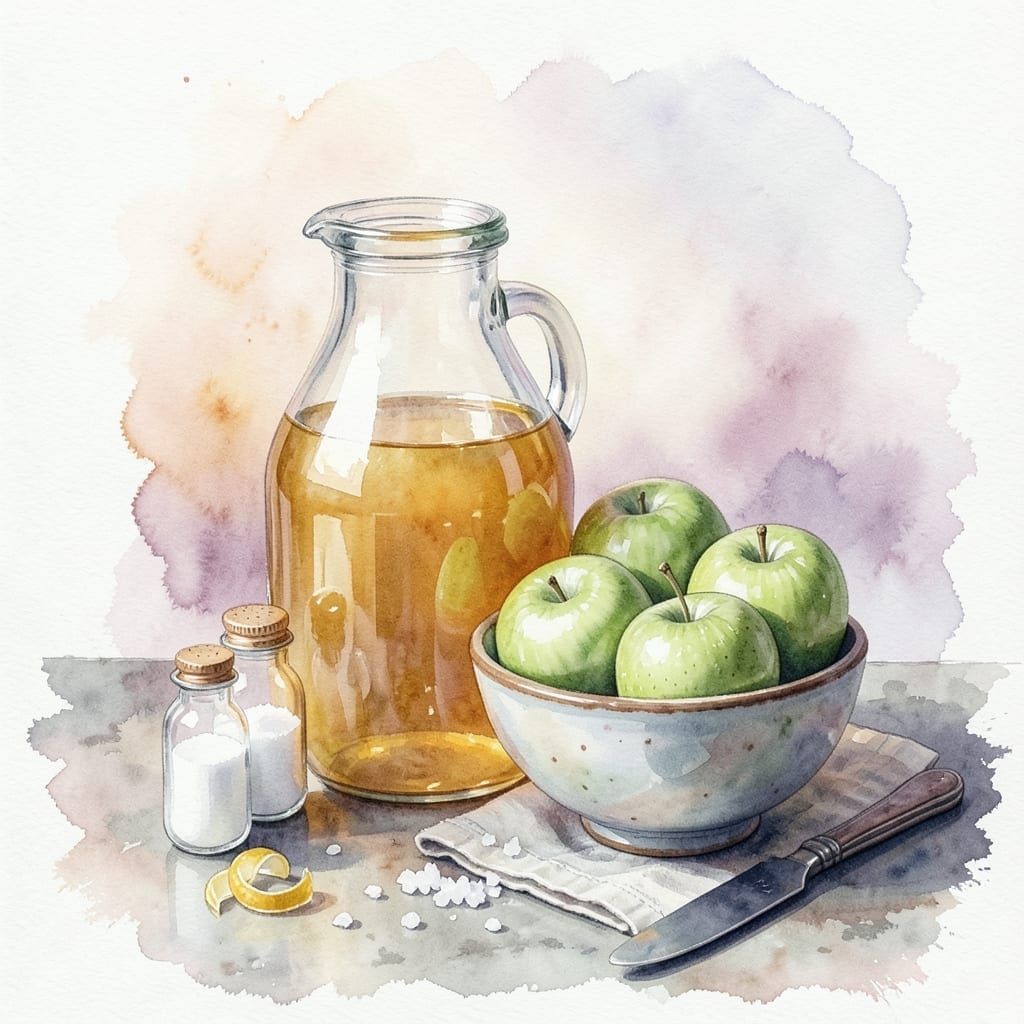
Transforming fresh apple juice into wine at home is simpler than you might expect. This method delivers consistent results for a full 5-gallon batch, perfect for sharing or storing.
The process relies on natural fermentation with basic equipment and precise ingredient ratios. You’ll need sterilized containers, an airlock system, and patience as the juice turns into a crisp, drinkable wine over several weeks.
What emerges is a clear, lightly sweet beverage with the character of fresh apples. The fermentation develops subtle complexity while maintaining the fruit’s natural brightness.
Whether you’re new to home brewing or looking to refine your technique, this approach provides reliable results every time. The investment in time pays off with a rewarding finished product.
Ingredients for Apple Juice Wine Recipe 5 Gallon
Ten simple ingredients transform fresh juice into crisp, fermented wine at home.
| Ingredient | Amount | Notes |
|---|---|---|
| Fresh Apple Juice 🍏 | 640 oz | Unpasteurized, no preservatives preferred |
| Granulated Sugar 🍚 | 4 lb | Dissolved completely before adding |
| Wine Yeast 🍃 | 1 package | Champagne or EC-1118 strain recommended |
| Yeast Nutrient 🧂 | 2 tsp | Ensures healthy fermentation |
| Acid Blend 🍋 | 2 tbsp | Balances sweetness and tartness |
| Pectic Enzyme 🧪 | 1 tsp | Clarifies the finished wine |
| Campden Tablets 💊 | 5 pieces | Sterilizes juice before fermentation |
| Water 💧 | 1 cup | For dissolving sugar and additives |
| Raisins 🍇 | 1 cup | Optional for additional body and flavor |
| Oak Chips 🌳 | ½ oz | Optional for aging complexity |
The apple juice is everything here. Unpasteurized, no-preservative juice from a local orchard gives the cleanest fermentation. I get mine from Whole Foods or a nearby farm stand—look for the cloudy stuff, not the clear pasteurized kind. The yeast strain matters too: Lalvin EC-1118 is my go-to for reliability. Sugar should be plain granulated, nothing fancy needed (organic works fine though).
No fresh juice? Pasteurized works in a pinch but add an extra Campden tablet to be safe. Yeast nutrient can be swapped for tomato paste at half the amount. Skipping the raisins? Boost the acid blend by one extra tablespoon. For oak chips, French or American oak both work—just don’t overdo it. The pectic enzyme is optional but worth the $3 for a bottle if you want crystal-clear wine.
Store juice in sanitized containers in a cool, dark place until ready to use. The finished wine keeps 1-2 years in properly sealed bottles. I keep a few in the fridge for immediate drinking and age the rest in my basement (the patience pays off). Always sanitize everything—Star San is the homebrewer’s best friend.
Why You’ll Love This Recipe
- Minimal Effort: I just mix apple juice, sugar, and yeast—no chopping, no peeling, and the nutrient and acid blend do the heavy lifting.
- Crisp Apple Taste: The fresh juice gives it that bright, orchard-fresh flavor, while the yeast turns it into something smooth and sippable.
- Crowd-Pleasing Batch: Five gallons means I’ve got wine for gatherings, gifts, or just restocking my pantry without constant small batches.
- Budget-Friendly Buzz: Honestly, it costs me less than store-bought wine, and I control the sweetness and strength exactly how I like it.
Step-by-Step Instructions for Apple Juice Wine
Here’s my tested method for transforming fresh juice into wine with professional-level results.
Step 1: Sterilize the Juice and Prepare the Must
Begin by crushing the 5 pieces Campden tablets and dissolving them in the 640 oz Fresh Apple Juice. Stir gently but thoroughly to distribute the potassium metabisulfite evenly. Cover with a clean cloth and let sit for 24 hours—this sterilizes the juice and prevents wild yeast contamination.
After sterilization, dissolve the 4 lb Granulated Sugar completely in the 1 cup Water. Heat the water if needed to speed dissolution, but ensure it’s room temperature before adding to the juice. Pour the sugar syrup into your primary fermentation vessel along with the sterilized juice.
Step 2: Add Nutrients and Enzymes
Sprinkle the 2 tsp Yeast Nutrient, 2 tbsp Acid Blend, and 1 tsp Pectic Enzyme over the surface of the must. Stir vigorously for 2-3 minutes to ensure even distribution—this creates the ideal environment for your yeast to thrive.
At this stage, I always add the 1 cup Raisins (if using) for additional body and complexity. The natural sugars in the raisins complement the apple base beautifully. Cover the vessel with a sanitized cloth and let it rest for 12 hours to allow the pectic enzyme to begin clarifying the must.
Step 3: Pitch the Yeast and Begin Fermentation
After the resting period, sprinkle the 1 package Wine Yeast over the surface of the must. I recommend Champagne or EC-1118 strain for its reliability with fruit wines. Cover with a fermentation lock and place in a 68-72°F area.
You’ll see vigorous bubbling within 12-24 hours as the yeast activates. Stir daily for the first 3-4 days to prevent the raisins from sticking to the bottom and to degas the must. The specific gravity should drop noticeably each day during this active fermentation phase.
Step 4: Rack and Age
When fermentation slows significantly (after about 10-14 days), rack the wine into a sanitized secondary vessel, leaving the sediment behind. At this point, you can add the 0.5 oz Oak Chips if you want to introduce subtle aging complexity.
Seal with a fermentation lock and store in a cool, dark place for 3-6 months. I check the airlock weekly to ensure it’s still bubbling gently. The wine will clarify beautifully during this period, and the oak (if used) will integrate smoothly with the apple flavors.
Pro Tips For Making Apple Juice Wine Recipe 5 Gallon
- Sanitize Everything: I learned this the hard way—anything touching your wine (fermenter, airlock, spoon) needs a star-san or potassium metabisulfite bath. One lazy batch taught me why cloudy, off-flavored wine isn’t worth the risk.
- Use Pasteurized Juice: Skip the fresh-pressed stuff unless you pasteurize it first. Unpasteurized juice can introduce wild yeasts that compete with your wine yeast and ruin the flavor.
- Mind the Sugar Ratio: Stick to 2-2.5 pounds of granulated sugar per gallon of juice—more than that stresses the yeast and leaves a cloying, unfermented sweetness. My first over-sugared batch tasted like syrup.
- Degas Daily: Stir the fermenting wine with a sanitized spoon for the first 3-4 days to release CO2. Sounds tedious, but it prevents stuck fermentation and keeps the yeast happy.
Storing and Reheating This Recipe
Bulk Storage
After racking and aging, transfer your wine to sanitized 5-gallon glass carboys or food-grade plastic buckets. I use Star San solution for sterilization—mix 1 oz per 5 gallons of water. Store in a cool, dark place (55-65°F) like a basement or closet. 💡
Bottling Process
When ready to bottle, siphon the wine into clean 750ml wine bottles, leaving 1 inch headspace. Use new corks or screw caps for a tight seal. I prefer natural corks for aging potential. Label each bottle with the date for tracking.
Refrigeration
Once opened, recork and refrigerate your wine. It will stay fresh for 2-3 weeks in the fridge. For unopened bottles, store at 55°F for optimal aging. Avoid temperature fluctuations, which can spoil the flavor.
Aging Potential
This wine improves with age. I find 6-12 months in bulk storage develops the best complexity. The apple notes mellow while the oak (if used) integrates. Taste test every 2 months to monitor progress.
Serving Temperature
Serve chilled at 45-50°F for the best experience. Remove from the fridge 15 minutes before serving to let the aromas open up. The crisp apple character shines at this temperature. ❄️
Long-Term Storage
Properly stored, this wine keeps for 2-3 years. Use a wine preservation system like Vacu Vin for opened bottles. Keep unopened bottles lying horizontally to maintain cork moisture.
Nutrition Facts
Frequently Asked Questions
How long does fermentation take?
Active fermentation typically lasts 10-14 days, but full maturation requires 3-6 months of aging. The bubbling slows after the first two weeks, signaling it’s time to rack.
Can I use pasteurized juice?
Yes, but add an extra Campden tablet to ensure proper sterilization. Unpasteurized juice is preferred for its natural yeast and bacteria, which contribute to more complex flavors.
Why do I need yeast nutrient?
It feeds the yeast, ensuring a strong, complete fermentation. Without it, you risk stuck fermentation or off-flavors. 2 tsp is the ideal amount for a 5-gallon batch.
Can I skip the pectic enzyme?
You can, but your wine may remain cloudy. The enzyme helps break down pectin, resulting in a clearer finished product. It’s worth the small investment for professional-looking results.

- BBQ Sausage Recipe Oven: Smoky Depth Without the Grill - September 28, 2026
- BBQ Chicken Bowl Recipe Rice: Smoky Sweetness Over Fluffy Grains - September 28, 2026
- Beef Cutlet Recipe Ideas: Crispy Breaded Patties With Bold Seasonings - September 28, 2026