
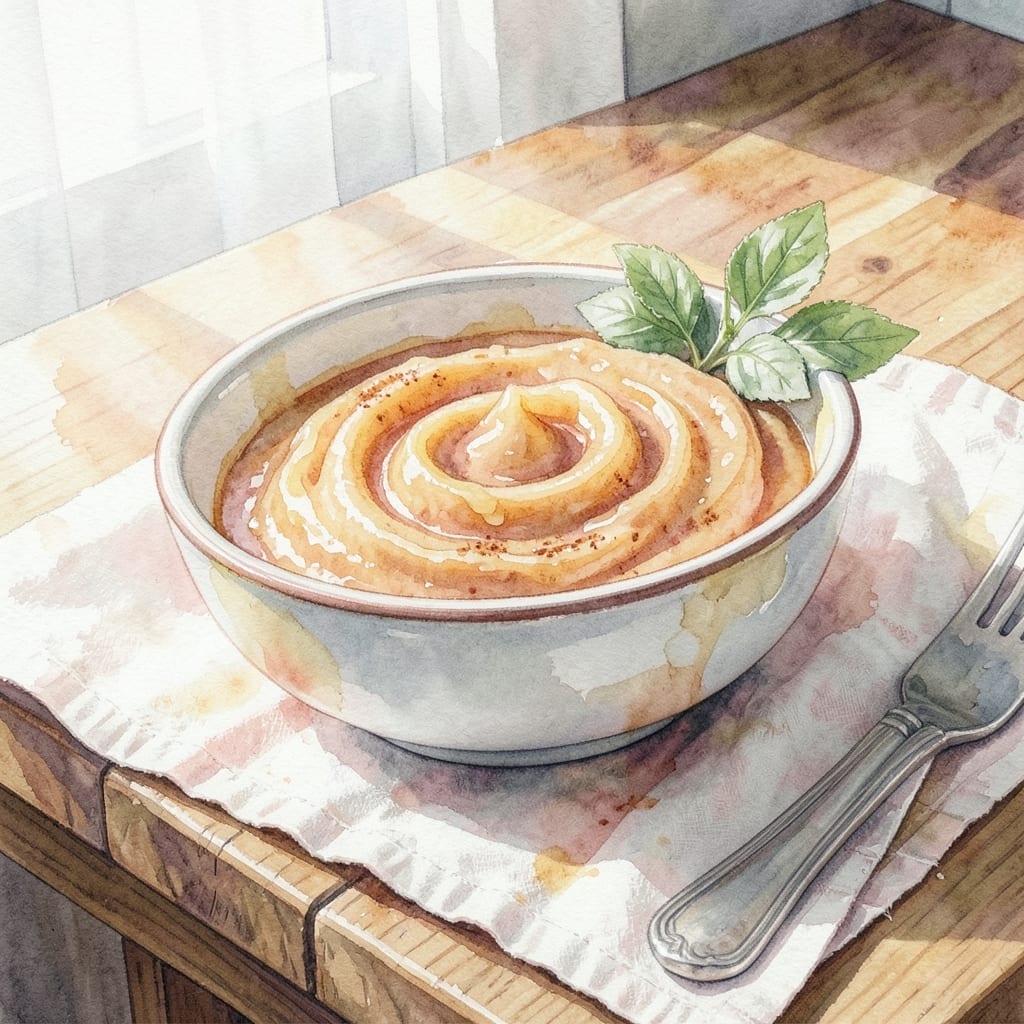
Apple puree is one of the most versatile kitchen staples you can make at home. This simple preparation transforms fresh apples into a smooth, flavorful base that works beautifully in both sweet and savory dishes.
The process couldn’t be easier—just cook down apples until soft, then blend until smooth. I prefer using a mix of sweet and tart varieties for balanced flavor, but any apples will work in a pinch.
What you end up with is a naturally sweet puree that can be used in baking, as a sauce base, or even stirred into yogurt. Its mild apple flavor enhances without overpowering, making it endlessly adaptable.
Store in the refrigerator for up to a week, or freeze in portions for later use. The possibilities are nearly limitless with this kitchen workhorse.
Ingredients for Apple Puree Recipe Ideas
Eight simple ingredients transform into a smooth, adaptable base for countless dishes.
| Ingredient | Amount | Notes |
|---|---|---|
| Sweet Apples 🍎 | 2 lb | Gala or Fuji preferred |
| Tart Apples 🍏 | 1 lb | Granny Smith ideal |
| Water 💧 | ½ cup | For cooking apples |
| Lemon Juice 🍋 | 1 tbsp | Freshly squeezed preferred |
| Maple Syrup 🍁 | 2 tbsp | Optional for sweetness |
| Ground Cinnamon 🌿 | ½ tsp | Optional for spice |
| Vanilla Extract 🌿 | ½ tsp | Pure for best flavor |
| Pinch of Salt 🧂 | 1 pinch | Enhances natural sweetness |
The apples are everything here. Sweet varieties like Gala or Fuji balance the tartness of Granny Smith—this combo gives you that perfect, rounded flavor. Hit up Trader Joe’s or Whole Foods for organic options if you’re into that (I usually am). Look for firm apples without bruises—freshness matters more than price. The water is just to prevent sticking, so tap is fine.
No maple syrup? Agave or date syrup works just as well. Skip the cinnamon if you’re going savory—this puree shines in both directions. The lemon juice is non-negotiable though—prevents browning and brightens the flavor. If you’re out of fresh lemons, bottled works (but check for additives). Want more depth? A pinch of nutmeg is a quiet game-changer.
This keeps 1 week in the fridge (glass jar, tightly sealed). Freeze in ice cube trays for single-serving portions—good for 6 months. Thaw overnight in the fridge or microwave straight from frozen. The texture might separate, but a quick stir brings it right back.
Why You’ll Love This Recipe
- No-Peel Simplicity: I just core the apples, no fussy peeling, and they soften perfectly in minutes with a splash of water.
- Tart-Sweet Balance: The mix of sweet apples with a squeeze of lemon juice and a drizzle of maple syrup hits that just-right tangy-sweet spot.
- Endless Uses: I stir it into oatmeal, swirl it into yogurt, or use it as a natural sweetener in baking—so versatile.
- Pantry Staple: Honestly, it keeps for days in the fridge, and I always have apples on hand, so it’s my go-to for quick breakfasts.
Step-by-Step Instructions for Apple Puree
This simple method transforms fresh apples into a smooth, versatile puree with minimal effort.
Step 1: Prepare and Peel the Apples
Start by thoroughly washing the 2 lb sweet apples and 1 lb tart apples. I prefer Gala or Fuji for sweetness and Granny Smith for tartness, as they balance each other perfectly. Peel the apples using a sharp vegetable peeler, removing all the skin to ensure a silky-smooth texture in the final puree.
Cut the peeled apples into uniform 1-inch chunks, discarding the cores and seeds. Uniform pieces cook evenly, so you won’t end up with some mushy and some undercooked bits. Place the chunks in a large bowl and toss immediately with 1 tbsp lemon juice to prevent browning—this keeps your puree looking fresh and vibrant.
Step 2: Cook the Apples Until Tender
Transfer the apple chunks to a medium saucepan and add 0.5 cup water. The liquid helps steam the apples as they cook, ensuring they soften without sticking to the pan. Bring the mixture to a gentle boil over medium heat, then reduce the heat to low and cover the pan.
Let the apples simmer for 15-20 minutes, stirring occasionally, until they’re completely tender when pierced with a fork. You’ll notice the apples breaking down and the liquid reducing slightly. If the mixture starts to look dry before the apples are soft, add a splash more water to keep things moving.
Step 3: Sweeten and Spice to Taste
Once the apples are tender, stir in 2 tbsp maple syrup, 0.5 tsp ground cinnamon, 0.5 tsp vanilla extract, and 1 pinch pinch of salt. The maple syrup adds a natural sweetness, while the cinnamon and vanilla deepen the flavor. The salt might seem small, but it enhances the apples’ natural sweetness beautifully.
Taste the mixture and adjust the seasoning if needed. If you prefer a sweeter puree, you can add a bit more maple syrup, but I’ve found this balance works perfectly for most uses. Let the mixture cook for another 2-3 minutes to allow the flavors to meld together.
Step 4: Blend to Smooth Perfection
Remove the saucepan from the heat and let the apples cool slightly for 5 minutes. This prevents steam from building up in the blender, which can be dangerous. Transfer the mixture to a blender or food processor in batches if necessary—don’t overfill the container.
Blend until completely smooth, scraping down the sides as needed. For an extra-silky texture, you can strain the puree through a fine-mesh sieve, but I usually skip this step unless I’m using it for a particularly delicate dessert. The puree should be thick but pourable, with a vibrant apple flavor that’s ready for any recipe.
Pro Tips For Making Apple Puree Recipe Ideas
- Peel After Cooking: I learned this the hard way—cook the apples whole (or in large chunks) first, then peel and core. The flesh softens evenly, and you save half the prep time.
- Balance the Apples: Use a 2:1 ratio of sweet to tart apples (like Honeycrisp and Granny Smith). All sweet apples make the puree cloying, and all tart ones need too much syrup to fix.
- Simmer, Don’t Boil: Keep the heat at a gentle simmer with just enough water to cover the bottom of the pot. Boiling turns the puree grainy and dulls the fresh apple flavor.
- Add Lemon Late: Stir in the lemon juice only after cooking—adding it at the start can make the apples tough. A tablespoon at the end brightens the flavor without changing the texture.
Regional Styles of These Flavors
French Compote Style
In France, apple puree often becomes a compote, cooked with vanilla bean and a touch of honey instead of maple syrup. I love adding 1 star anise pod while simmering for subtle depth, then removing it before blending. Serve it warm over crêpes or cold as a dessert sauce.
British Apple Sauce
The UK version skips the spices entirely, focusing on pure apple flavor. Use only tart apples like Bramley, cook with 2 tbsp water and no sugar, then blend to a chunky texture. It’s the perfect pairing for roast pork or bangers and mash.
Middle Eastern Touch
For a Levantine twist, add ½ tsp cardamom and 1 tsp rose water during cooking. This fragrant version works beautifully in baklava or drizzled over muhalabia (Middle Eastern milk pudding). I discovered this at a Beirut bakery. 🌟
American South Style
Down South, they often reduce the puree further into a thick apple butter. Cook it 1 additional hour with ½ cup brown sugar and 1 tsp pumpkin pie spice. Spread on biscuits or use as a glaze for pork chops.
German Apfelmus
German Apfelmus keeps it simple: equal parts sweet and tart apples, cooked with 1 cinnamon stick. They typically leave it slightly chunky. It’s a staple with pork schnitzel or potato pancakes.
Indian Spiced Version
Add ¼ tsp ground ginger, ⅛ tsp turmeric, and 1 crushed green cardamom pod while cooking. This warmly spiced puree elevates samosas or pairs with gulab jamun. The turmeric adds a golden hue. 💛
Nutrition Facts
Frequently Asked Questions
Can I use unpeeled apples for this puree?
You can, but peeling ensures a silky texture. The skin adds fiber but can create a slightly grainy consistency, especially with tart varieties like Granny Smith.
How long can I store homemade puree in the fridge?
Properly sealed in an airtight container, it stays fresh for 1 week. For longer storage, freeze in portions for up to 6 months.
What’s the best way to thin out thick puree?
Stir in 1-2 tablespoons of water, apple juice, or lemon juice. Add gradually until reaching your desired consistency.
Can I substitute sugar for maple syrup?
Yes, use 1 tablespoon of granulated sugar per 2 tablespoons of syrup. Adjust to taste, as sugar is sweeter.

- BBQ Sausage Recipe Oven: Smoky Depth Without the Grill - September 28, 2026
- BBQ Chicken Bowl Recipe Rice: Smoky Sweetness Over Fluffy Grains - September 28, 2026
- Beef Cutlet Recipe Ideas: Crispy Breaded Patties With Bold Seasonings - September 28, 2026