
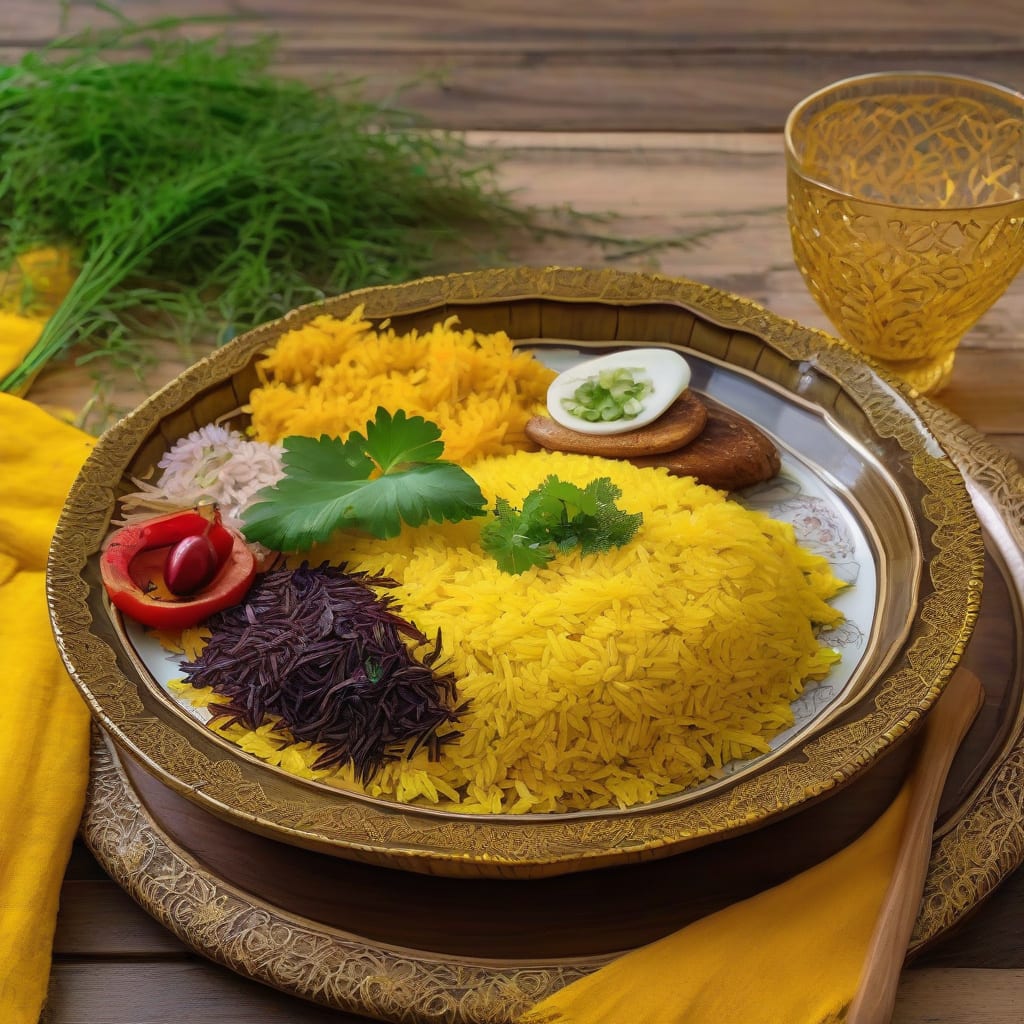
Aromatic and vibrant, this Arabic yellow rice recipe transforms any meal into a Middle Eastern feast. 🔥 I prepare this dish frequently for family gatherings, as it’s both simple and impressive, requiring just a few ingredients and 20 minutes of cooking time.
The secret to its rich flavor lies in the perfect blend of spices and saffron, which gives the rice its characteristic yellow hue and subtle earthy taste. Serve alongside grilled meats or stews for a complete and satisfying meal that’s sure to delight.
Ingredients for Arabic Yellow Rice
Essential ingredients for this vibrant Arabic yellow rice dish, ready in 20 minutes.
| Ingredient | Amount | Notes |
|---|---|---|
| Basmati Rice 🍚 | 1 ½ cups | Long-grain preferred |
| Water 💧 | 3 cups | For cooking rice |
| Olive Oil 🫒 | 2 tbsp | Extra-virgin recommended |
| Onion 🧅 | 1 whole | Finely chopped |
| Garlic Cloves 🧄 | 3 cloves | Minced |
| Saffron Threads 🌿 | ½ tsp | Soaked in hot water |
| Turmeric Powder 🌶️ | 1 tsp | Ground |
| Cumin Powder 🌿 | 1 tsp | Ground |
| Cinnamon Stick 🌿 | 1 piece | Whole stick |
| Cardamom Pods 🌿 | 2 whole | Crushed lightly |
| Salt 🧂 | 1 tsp | Kosher or sea salt |
| Black Pepper 🌶️ | ¼ tsp | Freshly ground |
The saffron is crucial here. Look for high-quality threads—they’re worth the investment. I find mine at Middle Eastern markets or specialty spice stores. If you’re using Spanish saffron, be aware it can be more potent. The basmati rice should be long-grain for the best texture.
No saffron? Turmeric gives a similar color, but the flavor is different. You can substitute cumin powder with ground coriander if that’s what you have on hand. The cinnamon stick and cardamom pods are essential for that authentic flavor. If you can’t find cardamom pods, you can omit them or use a pinch of ground cardamom.
This rice reheats beautifully. Store leftovers in an airtight container for up to 3 days. You can also freeze it for 3 months. When reheating, add a splash of water and cover to prevent drying out.
❤️
Why You’ll Love This Recipe
- Quick Side Dish: I can whip up this Arabic yellow rice in under 20 minutes, making it perfect for busy weeknights when I need a side dish that’s both quick and impressive.
- Garlic Love: The combination of sautéed garlic and onion with the Basmati Rice creates a ridiculously good flavor that elevates any meal – honestly, it’s my secret weapon for making even the simplest dishes taste special.
- Meal Prep Magic: This recipe makes a generous batch, so I can use it for meal prep throughout the week or serve it at gatherings – it’s a solid choice for feeding a crowd without breaking the bank.
- Leftover Friendly: I love that this Arabic yellow rice recipe makes great leftovers – the flavors meld together even more after a day in the fridge, and it’s a great way to stretch my grocery budget.
Step-by-Step Instructions for Arabic Yellow Rice
Follow these straightforward steps to create a flavorful and aromatic Arabic yellow rice dish that serves 4 people.
🔥 Step 1: Sauté Aromatics and Spices
Heat the 2 tbsp Olive Oil in a large saucepan over medium heat. Add the 1 whole Onion, finely chopped, and sauté for 5 minutes until it becomes translucent and fragrant. The onion should be softened but not browned, as this will create a rich base for the dish.
Next, add the 3 cloves Garlic Cloves, minced, and cook for another 1 minute, stirring constantly to prevent burning. The garlic should be fragrant and well combined with the onion.
👨🍳 Step 2: Add Spices and Rice
Add the 1 tsp Turmeric Powder and 1 tsp Cumin Powder to the saucepan, stirring well to coat the onion and garlic mixture evenly. Cook for 1 minute until the spices are fragrant, releasing their aromatic oils.
Then, add the 1.5 cups Basmati Rice to the saucepan, stirring gently to combine with the spice mixture. Ensure the rice is coated evenly with the oil and spices, which will help to infuse the rice with flavor.
🍳 Step 3: Add Liquid and Simmer
Pour in the 3 cups Water, and add the 1 piece Cinnamon Stick and 2 whole Cardamom Pods, crushed lightly. Bring the mixture to a boil, then reduce the heat to low, cover the saucepan with a tight-fitting lid, and simmer for 15-20 minutes or until the rice is cooked and the liquid is absorbed.
About 5 minutes before the rice is done, stir in the 0.5 tsp Saffron Threads, soaked in hot water, along with the 1 tsp Salt and 0.25 tsp Black Pepper. This will distribute the saffron’s vibrant color and flavor throughout the rice.
⏰ Step 4: Rest and Serve
Once the rice is cooked, remove the saucepan from the heat and let it rest, covered, for 5 minutes. This allows the rice to steam off the heat and become fluffy. Fluff the Arabic yellow rice gently with a fork to separate the grains.
Serve the aromatic and flavorful Arabic yellow rice hot, garnished with additional saffron threads or fresh herbs if desired. This dish pairs well with a variety of Middle Eastern and Mediterranean cuisine.
👨🍳
Pro Tips For Making Arabic Yellow Rice
- TOAST THE RICE: Before cooking, sauté the Basmati Rice in olive oil for about 2-3 minutes until it’s lightly toasted and fragrant. This step makes a real difference in the texture and flavor of your Arabic yellow rice.
- SOFTEN THE ONIONS: Cook the onions over medium-low heat, stirring occasionally, until they’re translucent and starting to caramelize. I learned this the hard way—rushing the onions leads to a less flavorful dish.
- USE GOOD STOCK: Replace some or all of the water with a high-quality chicken or vegetable stock to add depth to your Arabic yellow rice. My grandmother swore by this, and she was right: it elevates the entire dish.
Health Benefits of arabic yellow rice
Nutritional Powerhouse
Arabic yellow rice is more than just a flavorful side dish – it’s packed with nutritional benefits. The basmati rice provides complex carbohydrates for sustained energy, while the turmeric contains curcumin, a compound with potent anti-inflammatory properties. 💪
Digestive Health
The cumin and coriander in this dish aid digestion by stimulating digestive enzymes. These spices have been used for centuries in Middle Eastern cooking to promote gut health and reduce bloating. I find that this rice dish is particularly gentle on the stomach.
Antioxidant Benefits
Saffron, the key ingredient giving this rice its yellow color, is rich in antioxidants that help protect cells from damage. It’s also known to have mood-enhancing properties. Even in small amounts, saffron makes a significant difference in both flavor and nutrition.
Mineral-Rich
This dish provides essential minerals through its various ingredients. The cardamom pods contribute minerals like potassium and magnesium, while the black pepper enhances nutrient absorption. These elements work together to support overall health and well-being.
Low Fat Content
When prepared with minimal oil, Arabic yellow rice remains a low-fat side dish option. Using 2 tbsp olive oil for the entire recipe keeps the fat content relatively low while adding healthy monounsaturated fats. This makes it a heart-friendly accompaniment to various main courses.
Customizing for Health
To make this dish even healthier, consider using low-sodium broth instead of water for added flavor without extra salt. You can also increase the amount of garlic for its additional cardiovascular benefits. Experiment with these adjustments to suit your dietary needs.
Nutrition Facts
260kcal
Frequently Asked Questions
Can I make Arabic yellow rice without saffron?
Yes, you can make Arabic yellow rice without saffron, but keep in mind that saffron gives the rice its characteristic yellow color and unique flavor. You can substitute it with turmeric for color, but the flavor will be different. Turmeric has a more earthy taste, while saffron has a subtle, luxurious flavor.
How do I store leftover Arabic yellow rice?
Store leftover Arabic yellow rice in an airtight container in the refrigerator for up to 3 days. You can also freeze it for 3 months. When reheating, add a splash of water and cover to prevent drying out. This helps maintain the rice’s moisture and flavor.
Can I use other types of rice for this recipe?
While basmati rice is traditional for Arabic yellow rice, you can experiment with other long-grain rice varieties. However, basmati’s unique texture and flavor make it the best choice. Other types of rice may yield different results in terms of texture and flavor absorption.
What’s the best way to reheat frozen Arabic yellow rice?
To reheat frozen Arabic yellow rice, thaw it overnight in the refrigerator, then reheat it in the microwave or on the stovetop with a splash of water. Covering the rice during reheating helps retain moisture and prevents drying out. This method ensures the rice stays fluffy and flavorful.

- BBQ Sausage Recipe Oven: Smoky Depth Without the Grill - September 28, 2026
- BBQ Chicken Bowl Recipe Rice: Smoky Sweetness Over Fluffy Grains - September 28, 2026
- Beef Cutlet Recipe Ideas: Crispy Breaded Patties With Bold Seasonings - September 28, 2026