
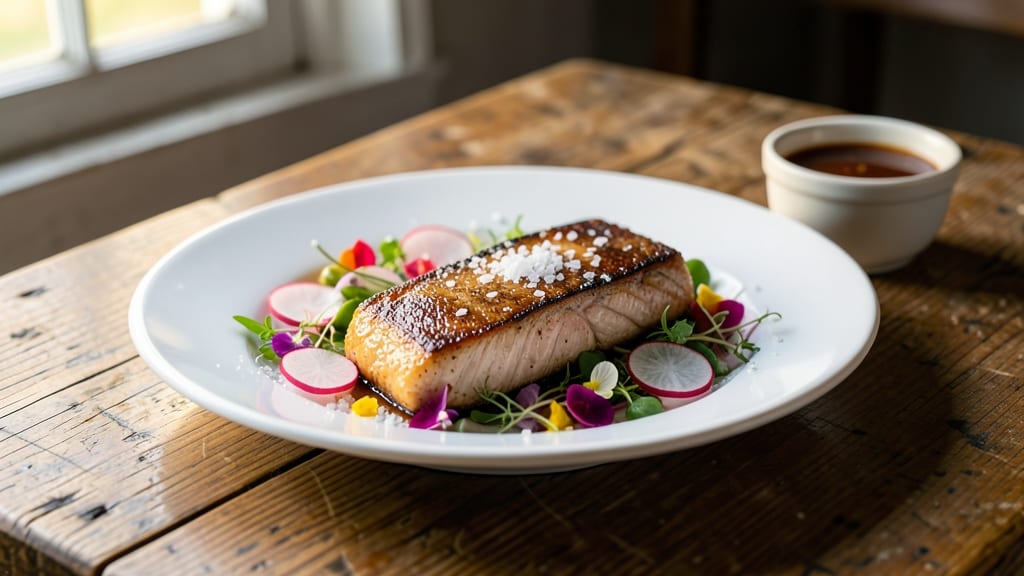
This Asian swordfish steak recipe transforms restaurant-quality dining into a weeknight reality with just a hot pan and a few key ingredients. The magic lies in the perfect balance of searing heat and aromatic garlic butter, which creates a crisp exterior while keeping the fish tender inside.
After years of perfecting this technique, I can confidently say this method delivers results that rival any seafood dish you’d order out.
The process begins with a simple marinade of soy sauce, ginger, and garlic, which infuses the swordfish with bold Asian flavors while tenderizing the meat. From there, the real transformation happens in the pan—high heat sears the steak to a golden finish, while the garlic butter adds richness and depth.
This isn’t just another fish recipe; it’s a technique that elevates swordfish into something extraordinary with minimal effort.
By the time you plate it, you’ll have perfectly seared swordfish with a caramelized crust and a buttery, aromatic interior. The dish pairs beautifully with stir-fried vegetables, steamed jasmine rice, or a light Asian salad, making it a complete meal that’s both impressive and satisfying.
The presentation is modern yet approachable, perfect for impressing guests or treating yourself to a special dinner at home.
What makes this recipe truly special is its versatility—adjust the marinade to suit your taste, swap in different vegetables, or serve it with your favorite sides. The method is foolproof, the flavors are bold, and the result is a dish that feels like a culinary achievement without requiring advanced skills.
Let’s get started on creating this restaurant-worthy meal in your own kitchen.
Ingredients for asian swordfish steak
Restaurant-quality Asian swordfish steaks start with these 12 essential ingredients—simple yet transformative.
| Ingredient | Amount | Notes |
|---|---|---|
| Swordfish Steaks 🐟 | 4 whole | 1-inch thick, center-cut preferred |
| Unsalted Butter 🧈 | ½ cup | Cold, cut into 8 pieces |
| Garlic Cloves 🧄 | 6 cloves | Minced, fresh preferred |
| Low-Sodium Soy Sauce 🥢 | ¼ cup | Kikkoman preferred |
| Fresh Ginger 🌿 | 1 tbsp | Grated, finely |
| Vegetable Oil 🫒 | ½ cup | High smoke point |
| Sesame Oil 🫒 | 1 tbsp | Toasted, for finishing |
| Asian Sesame Seeds 🌾 | 1 tbsp | Toasted for garnish |
| Green Onions 🧅 | 3 whole | Thinly sliced, white and green parts |
| Salt 🧂 | 1 tsp | Kosher or sea salt |
| Black Pepper 🌶️ | ½ tsp | Freshly cracked |
| Jasmine Rice 🍚 | 1 cup | Uncooked, for serving |
The swordfish steaks are the star, so choose center-cut pieces about 1-inch thick—they sear best without drying out. Whole Foods Market and Trader Joe’s carry excellent quality, or ask your fishmonger for ‘swordfish steaks’ rather than fillets. Freshness is key: the flesh should be translucent with a clean, briny smell. For the butter, Plugrá or Land O’Lakes unsalted work perfectly—just make sure it’s cold when you start. The garlic? Freshly minced makes all the difference; pre-minced garlic in jars lacks the aromatic punch. If you’re short on time, peel and roughly chop the cloves yourself—it takes 30 seconds.
No soy sauce? Coconut aminos or tamari work as substitutes, though the flavor profile shifts slightly. The ginger can be swapped for 1/2 teaspoon ground ginger, but fresh is ideal—it brightens the dish. Running out of sesame oil? Toasted peanut oil adds a different but complementary richness. For the garlic butter, if you forget to slice the butter into pieces, chill it for 10 minutes and grate it—it melts beautifully. The jasmine rice? Any long-grain white rice works, but jasmine has that signature aroma. And if you’re feeling adventurous, swap the green onions for shredded bok choy or scallions—both add a fresh crunch.
The swordfish marinade keeps for up to 24 hours in the fridge, but the butter mixture should be prepped right before searing. Store the butter and garlic in an airtight container in the fridge for up to 3 days—it’s perfect for quick weeknight dinners. The cooked steaks reheat beautifully in a skillet with a splash of water for 2-3 minutes. For the rice, double the batch—it pairs perfectly with the steaks and keeps for 4-5 days in the fridge. Freeze any leftovers in single portions for up to 2 months—just thaw overnight in the fridge before reheating.
Why You’ll Love This Recipe
- Pan-Fry Perfection: That butter, garlic, and ginger combo? It turns swordfish into something ridiculously tender in under 10 minutes. No fancy searing skills needed—just a hot pan and a steady hand.
- Umami Bomb: The low-sodium soy sauce and butter create this deep, savory punch that sticks to every bite. It’s the kind of flavor that makes you forget it’s a “healthy” dish—because it is healthy and crave-worthy.
- Weeknight or Date Night: Throw it together for a quick weeknight dinner or dress it up with steamed bok choy for a restaurant-worthy meal. Same ingredients, two totally different vibes—no extra shopping required.
- Leftovers That Don’t Suck: Unlike some proteins, swordfish stays juicy when reheated. Pack the extras for lunch or freeze them—just a quick pan-heat later, and you’ve got another satisfying meal with zero effort.
Step-by-step instructions for Asian swordfish steak
Here’s how to achieve perfectly seared swordfish with rich garlic butter and aromatic Asian flavors.
Prepare the Garlic Butter Marinade
In a small bowl, combine the 0.5 cup unsalted butter, 6 cloves minced garlic cloves, 0.25 cup low-sodium soy sauce, and 1 tablespoon finely grated fresh ginger. Mix until fully incorporated and the butter begins to soften slightly from the garlic’s heat. This marinade will both flavor and tenderize the swordfish while creating a luxurious sauce.
Transfer the mixture to a shallow dish large enough to accommodate the 4 whole swordfish steaks. Let it sit at room temperature for 15 minutes before using. The butter should be soft enough to spread evenly but still hold its shape when brushed onto the fish. This preparation ensures maximum flavor transfer during the searing process.
Sear the Swordfish to Perfect Doneness
Heat 0.5 cup vegetable oil in a large skillet over medium-high heat until it reaches 375°F—the oil should shimmer but not smoke. Pat the 4 whole swordfish steaks dry with paper towels to ensure maximum contact with the hot oil. Season each steak generously with 1 teaspoon salt and 0.5 teaspoon black pepper, focusing on both sides and edges.
Carefully place the seasoned swordfish steaks into the hot oil. Cook for 2 minutes per side until the exterior develops a deep golden-brown crust and the internal temperature reaches 130°F when measured with an instant-read thermometer. The fish should release easily from the pan when ready to flip. Remove the steaks to a warm plate and tent loosely with foil to keep warm.
Finish with Garlic Butter and Garnishes
Reduce the heat to medium and add the prepared garlic butter mixture to the same skillet. Cook for 1-2 minutes until the butter melts and begins to bubble gently, creating a fragrant compound sauce. The garlic should be golden but not burned, and the butter should coat the back of a spoon. If the sauce appears too thick, add 1 tablespoon water to loosen it slightly.
Return the swordfish steaks to the skillet and spoon the garlic butter sauce evenly over each piece. Cook for an additional 30 seconds to allow the sauce to adhere and heat through. Remove from heat and drizzle with 1 tablespoon toasted sesame oil for added depth of flavor. Garnish each steak with thinly sliced green onions and sprinkle with 1 tablespoon toasted Asian sesame seeds for texture and presentation.
Serve with Jasmine Rice
While the swordfish rests, prepare the 1 cup jasmine rice according to package instructions for perfectly fluffy grains. The rice should be cooked to an al dente texture, with each grain distinct and separate. This neutral base allows the bold flavors of the swordfish to truly shine.
Divide the rice evenly among four plates and place a swordfish steak atop each serving. Spoon any remaining garlic butter sauce from the skillet over the top, and garnish with additional green onions if desired. Serve immediately while the fish is still warm and the sauce remains silky. The combination of crispy sear, rich garlic butter, and fragrant rice creates a harmonious balance of textures and flavors.
Pro Tips For Making Asian Swordfish Steak
- Sear First, Butter Later: Swordfish cooks fast—get it screaming hot in the pan for 30 seconds per side before adding butter and aromatics. I used to toss everything in at once, and the fish ended up steamed instead of seared. High heat locks in moisture while building that golden crust.
- Mince Ginger Like Mad: Skip the julienne—finely mince the ginger (almost paste-like) so it dissolves into the butter. I learned this the hard way after biting into a chunk that ruined the texture. A microplane works, but a knife takes 10 seconds and does the job.
- Don’t Overcrowd the Pan: Cook swordfish in a single layer, or it’ll steam instead of sear. I’ve crowded two steaks in a small pan and ended up with sad, gray fish. Use a 12-inch skillet or cook in batches—your future self will thank you.
- Deglaze with Soy Sauce: After searing, splash in 1 tablespoon of soy sauce while the pan is still hot—it’ll caramelize into a glossy glaze. Dumping it cold just makes a sad sauce. Add the rest after the butter melts for balance.
Common mistakes when making your asian swordfish steak
Overcooking the Fish
Swordfish cooks fast, and once it hits 130°F internal temperature, it’s done—overcooking turns it rubbery and dry. I’ve ruined more swordfish this way than I’d admit! Use an instant-read thermometer to check doneness.
If you don’t have one, look for a deep golden crust and a slightly opaque center. The fish should flake easily with a fork but still hold together. 🔥
Skipping the Rest
Rushing to serve swordfish immediately after cooking is a mistake. The steaks need 2-3 minutes of rest under foil to redistribute juices. I’ve seen well-seared fish turn dry because someone cut into it too soon. Tent with foil and let it rest—this simple step keeps the meat tender and juicy.
Using Cold Butter
The garlic butter marinade must be at room temperature when applied. Cold butter won’t melt properly, leaving your fish with uneven flavor and a greasy texture. Take the butter out of the fridge 15-20 minutes before cooking.
If it’s still too firm, microwave it for 10 seconds to soften—just enough to spread smoothly. 🧈
Overcrowding the Pan
Don’t try to cook all four steaks at once in a small skillet. Overcrowding lowers the pan’s temperature, leading to steaming instead of searing. Cook the steaks in two batches if needed, and keep the first batch warm in a 200°F oven while finishing the second.
This ensures a crispy crust every time.
Ignoring the Oil Temp
Oil that’s too hot burns the fish before it cooks inside, while oil that’s too cool steams it. Aim for 375°F—the oil should shimmer but not smoke.
I use a thermometer, but if you’re guessing, test with a small piece of bread: it should sizzle and turn golden in 30 seconds. Adjust heat as needed.
Not Patting Dry
Wet fish won’t sear properly—it’ll steam instead of develop that golden crust. Always pat the steaks very dry with paper towels before seasoning and cooking. I double-check by wiping them again just before hitting the pan. This small step makes a huge difference in texture and flavor. 💫
Nutrition facts
Frequently asked questions
Can I substitute another type of fish for swordfish in this recipe?
Yes, but choose wisely! Tuna or mahi-mahi work well as they have a similar firm texture. Avoid delicate fish like cod or flounder—they’ll fall apart during searing. For best results, stick with swordfish or use thick-cut halibut. The cooking time may vary slightly depending on the fish’s thickness and density.
How do I know when swordfish is fully cooked?
Use a meat thermometer for precision—the fish is done at 130°F internal temperature. Without one, look for a deep golden crust and slightly opaque center that flakes easily with a fork. Overcooking by even 30 seconds can turn the flesh dry, so timing is everything.
Can I make this recipe ahead of time?
Yes! Prep the garlic butter marinade up to 24 hours ahead and store it in the fridge. For the steaks, sear them just before serving—they reheat best in a skillet with a splash of water for 2-3 minutes to restore moisture. The rice can be cooked in advance and reheated with a damp towel.
What’s the best way to reheat leftover swordfish?
Reheat gently in a skillet over medium-low heat with 1 tablespoon butter for 2-3 minutes per side. Add a splash of water to create steam and prevent drying. Microwaving is not recommended—it makes the fish rubbery. For extra flavor, spoon some of the reserved garlic butter sauce over the steaks during reheating.
How can I adjust the marinade for spicier flavors?
Add 1 teaspoon of chili flakes or 1/2 teaspoon of red pepper flakes to the marinade for heat. For a sweeter kick, include 1 tablespoon of honey or 1 teaspoon of fish sauce. Balance the flavors by adjusting the soy sauce quantity—start with 1/4 cup and taste before cooking.

- Broccili Salad Recipe: Crunchy, Creamy, and Crowd-Pleasing - November 29, 2026
- Rum Simple Syrup Recipe: Balanced Sweetness for Cocktails and Desserts - November 29, 2026
- Avocado Cloud Bread Recipe: Light, Fluffy, and Egg-Free Magic - November 29, 2026