
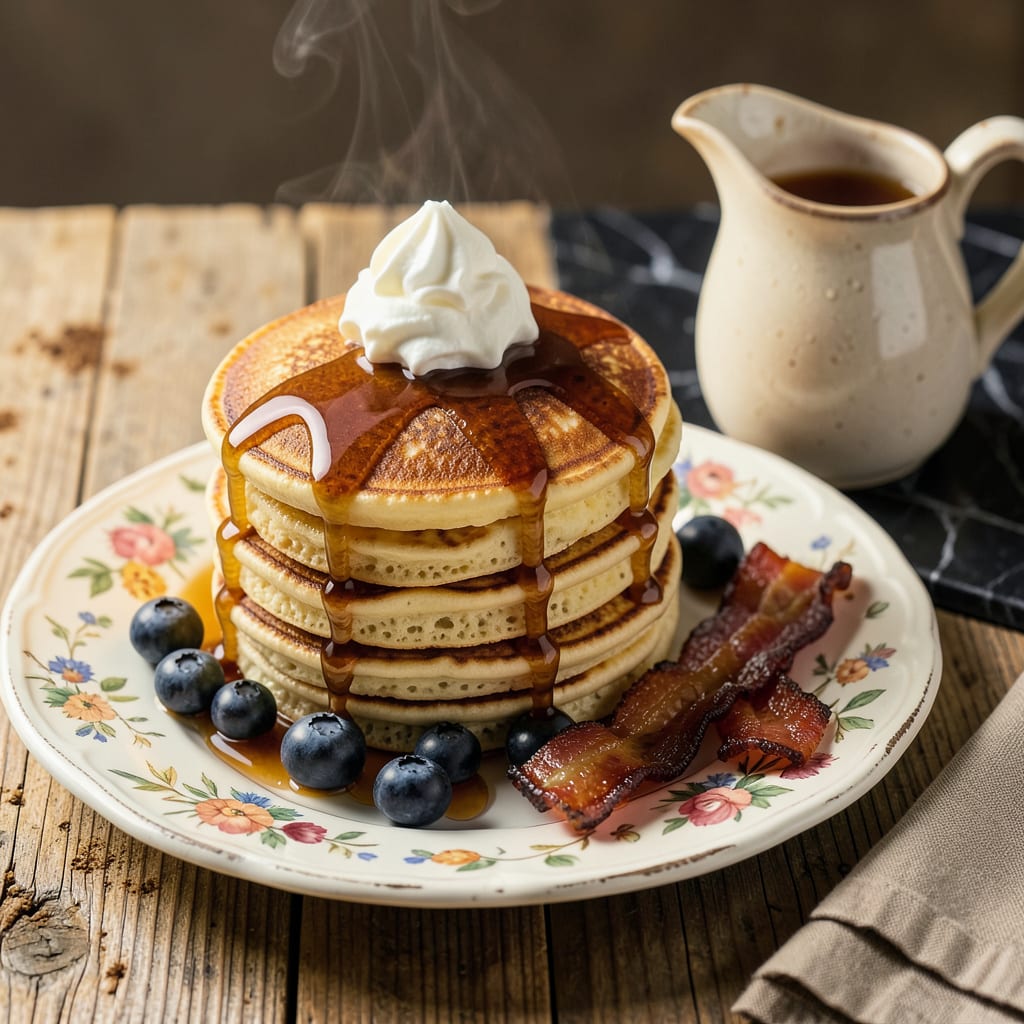
The original Aunt Jemima pancake recipe uses flour, baking powder, salt, sugar, eggs, milk, and vegetable oil for fluffy, golden-brown pancakes. The key is mixing wet and dry ingredients separately before combining for perfect texture.
This time-tested formula delivers that nostalgic diner-style pancake experience we all love. The baking powder creates those signature air pockets, while the vegetable oil keeps them tender without weighing them down. What I appreciate most is how the separate mixing method prevents overdeveloping gluten, which is what gives these pancakes their melt-in-your-mouth quality. 🔥
It’s fascinating how such simple ingredients can produce such consistent results – the sugar caramelizes just enough for that golden crust, while the milk-to-egg ratio ensures the batter has the right viscosity for perfect pouring. This balance is why the recipe has stood the test of time across generations.
💡 In This Article
- The Secret Behind Aunt Jemima’s Fluffy Pancake Texture
- Modern Twists on the Classic Aunt Jemima Pancake Recipe
The Secret Behind Aunt Jemima’s Fluffy Pancake Texture
The magic starts with baking powder—specifically 1 tablespoon per 2 cups of flour. This isn’t arbitrary: baking powder contains both an acid (cream of tartar) and a base (baking soda), creating a double-acting reaction. The first rise happens when wet ingredients hit the powder, while the second occurs during cooking at 350-375°F.
This two-stage process produces more consistent air pockets than baking soda alone, which only reacts once with acid. 🔥
The separate mixing method serves a critical purpose beyond convenience. When you combine dry ingredients first, you distribute the baking powder evenly before any reaction begins. The wet ingredients (milk, eggs, oil) then hydrate the flour just enough to form gluten strands—but not so much that they become tough.
The ideal ratio is about 1 cup liquid to 2 cups flour, creating a batter that’s pourable but not runny, with 2 tablespoons oil adding tenderness without heaviness.
Here’s where science meets technique: the vegetable oil coats flour proteins, physically preventing them from forming excessive gluten. Unlike melted butter (which solidifies when cooled), oil remains liquid at room temperature, ensuring consistent texture from mixing to griddle.
The 1 egg in the recipe provides structure through its proteins while the fat in the yolk contributes richness—think of it as nature’s emulsifier that binds everything together without drying out the crumb.
Temperature control makes all the difference in execution. A griddle at 375°F creates the perfect Maillard reaction—where sugars and proteins brown beautifully—while allowing the baking powder’s second rise to complete. Too hot (400°F+) and you’ll burn the outside before the center cooks; too cool (325°F) and the pancakes turn dense. The visual cue?
Bubbles form and pop on the surface, leaving small craters that become the fluffy interior’s signature. ✨
What most home cooks overlook is the resting period. Letting the batter sit for 5-10 minutes after mixing allows the flour to fully hydrate and the gluten to relax. This step transforms good pancakes into great ones—the difference between chewy and cloud-like.
The starches absorb liquid evenly, while the baking powder’s initial reaction subsides, preventing that soapy aftertaste that plagues rushed batches.
Even the salt (1/2 teaspoon) and sugar (2 tablespoons) play crucial roles beyond flavor. Salt strengthens gluten just enough for structure, while sugar not only sweetens but also aids browning through caramelization. Together they create that nostalgic golden crust that crackles slightly when you cut into it, releasing steam from the tender interior.
It’s this precise balance that’s made the recipe endure for over a century. 💫

- BBQ Sausage Recipe Oven: Smoky Depth Without the Grill - September 28, 2026
- BBQ Chicken Bowl Recipe Rice: Smoky Sweetness Over Fluffy Grains - September 28, 2026
- Beef Cutlet Recipe Ideas: Crispy Breaded Patties With Bold Seasonings - September 28, 2026