
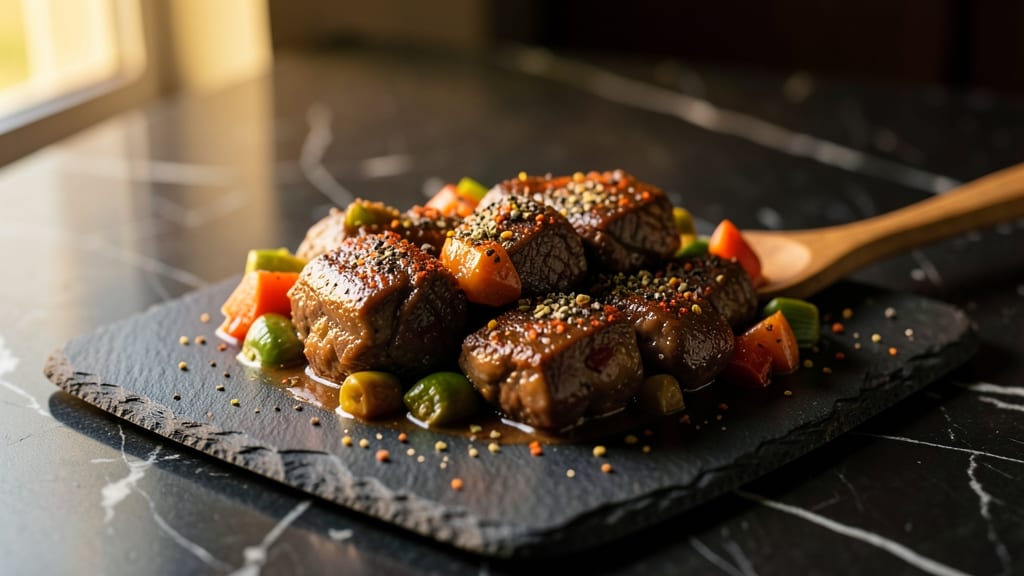
This authentic beef caldereta recipe brings the rich, comforting flavors of Filipino home cooking to your table with tender beef, hearty potatoes, and a deeply aromatic sauce. The secret lies in slow-simmering the beef until it practically melts in your mouth, while the vegetables soak up all that savory goodness.
I’ve recreated this dish exactly as my lola used to make it—no shortcuts, just the traditional method that builds layers of flavor over time.
The beauty of caldereta is in its simplicity: just a few key ingredients working together to create something extraordinary. Short ribs or chuck beef break down beautifully during the long simmer, while potatoes and carrots absorb the rich, pepper-infused sauce.
The green beans add a fresh contrast, and tomatoes bring a touch of brightness to balance the deep flavors. This isn’t just a stew—it’s a celebration of Filipino comfort food.
By the time you’re done, you’ll have a pot of tender beef swimming in a velvety sauce, surrounded by perfectly cooked vegetables. The aroma alone will have everyone gathering at the table, and the first bite delivers that perfect harmony of spice, savory, and sweet.
Serve it with steamed rice to soak up every last drop of that delicious sauce—this is the kind of meal that feels like a warm embrace.
Perfect for family dinners or special occasions, this caldereta is the kind of dish that gets better with time. The longer it simmers, the deeper the flavors become, making it ideal for meal prep or feeding a crowd. Let’s get cooking—this is Filipino comfort food at its finest.
Ingredients for authentic beef caldereta
Six ingredients transform into tender beef and aromatic sauce—Filipino comfort food at its best.
| Ingredient | Amount | Notes |
|---|---|---|
| Beef Chuck Roast 🥩 | 3 lb | Cut into 1-inch cubes |
| Yellow Onions 🧅 | 3 whole | Medium size, sliced |
| Garlic Cloves 🧄 | 8 cloves | Minced, fresh preferred |
| Russet Potatoes 🥔 | 3 lb | Cut into 2-inch chunks |
| Carrots 🥕 | 4 whole | Medium size, sliced into rounds |
| Green Beans 🌱 | 1 ½ lb | Trimmed, cut into 2-inch pieces |
| Tomatoes 🍅 | 4 whole | Roma or vine-ripened, quartered |
| Black Peppercorns 🌶️ | 1 ½ tbsp | Freshly cracked, not ground |
| Bay Leaves 🍃 | 2 whole | Dried, standard size |
| Salt 🧂 | 2 tsp | Kosher or sea salt |
| Vegetable Oil 🫒 | ½ cup | For browning beef |
| Water 💧 | 4 cups | For simmering |
| Soy Sauce 🍶 | ¼ cup | Light or regular, not low-sodium |
| Calamansi or Lemon Juice 🍋 | ¼ cup | Calamansi preferred, lemon works |
The beef is everything here—chuck roast breaks down beautifully during the long simmer, giving you that melt-in-your-mouth texture. Costco or local butcher shops often have the best cuts, but any grocery store with a meat counter will work. Look for good marbling—those little white flecks of fat mean more flavor. If you can’t find chuck, short ribs are a great substitute, but they’ll take a little longer to tenderize. I always buy extra beef because it’s worth it—this dish tastes even better the next day. The potatoes and carrots should be firm, not waxy, for the best texture.
No calamansi? Lemon juice works perfectly—just squeeze fresh if you can, bottled is fine in a pinch. Soy sauce is non-negotiable here—light or regular, not low-sodium. The black peppercorns need to be cracked fresh for the best flavor, but if you’re in a hurry, pre-ground works at double the amount. Green beans can be fresh or frozen—frozen works great if you’re short on time. The tomatoes? Roma or vine-ripened make the most juice, but any variety will work. For extra authenticity, Filipino banana ketchup in the sauce is a game-changer, but regular ketchup works if that’s all you’ve got.
This dish tastes even better the next day—make extra. Keeps for 4-5 days in the fridge, and freezes beautifully for up to 3 months. I always portion it into containers so I can grab a meal straight from the freezer. The sauce thickens as it cools, so you might want to add a splash of water or broth when reheating. Serve it with steamed rice—jasmine rice is traditional, but any white rice works. The leftovers? Even better than the first batch.
Why You’ll Love This Recipe
- One-Pot Magic: I swear by this recipe when I’m too tired to scrub pots—just brown the beef, toss in the onions and garlic, add the potatoes and carrots, then let it simmer. The beef practically falls apart on its own, and the veggies soak up all that rich, savory sauce without extra effort.
- Deep, Savory Soul: That beef chuck roast? It turns ridiculously tender, melting in your mouth while the onions caramelize into something sweet and jammy. The garlic cloves? They don’t just add flavor—they make the whole stew sing, especially when you toast them until they’re golden and fragrant first.
- Leftovers That Beg: Between us, this dish tastes better the next day. The flavors meld into something even richer, and I’ve sent it to work with my husband in a lunchbox more times than I can count. Just reheat with a splash of water, and it’s like eating a restaurant-quality meal at home—again.
- Budget-Friendly Feast: A single chuck roast stretches to feed four (or five, if someone’s hungry), and the potatoes and carrots stretch the meal even further. Honestly, I make this when I’m pinching pennies, and no one ever complains—because it’s hearty, filling, and still feels special. Win-win.
Step-by-step instructions for slow-simmered beef caldereta
Here’s the traditional method that delivers rich, savory flavors and tender meat every time.
Sear the Beef Chuck Roast in Vegetable Oil
Heat the 0.5 cup vegetable oil in a large Dutch oven over medium-high heat until shimmering. Working in batches if needed, add the 3 lb beef chuck roast cut into 1-inch cubes, spreading them out in a single layer. Let them sear undisturbed for 3-4 minutes until they develop a deep golden-brown crust.
This initial browning creates the foundational flavor for your caldereta. Don’t overcrowd the pan—if the oil smokes excessively, reduce the heat slightly. Once all beef pieces are browned, transfer them to a plate and set aside. You’ll notice the oil will darken slightly from the caramelized beef juices—this is exactly what you want.
Sauté Onions, Garlic, and Vegetables
In the same Dutch oven, add the 3 whole yellow onions sliced and cook over medium heat for 5-6 minutes until softened and beginning to caramelize. Add the 8 cloves minced garlic cloves and cook for another 30 seconds until fragrant—don’t let it burn, or you’ll get bitter flavors.
Next, add the 3 lb russet potatoes cut into 2-inch chunks, 4 whole carrots sliced into rounds, and 4 whole tomatoes quartered. Stir to combine and cook for 5 minutes until the potatoes begin to soften slightly. The vegetables should absorb some of the beefy flavor from the pan, creating a delicious base for the stew.
Build the Caldereta Base with Water and Seasonings
Pour in the 4 cups water, scraping up any browned bits from the bottom of the pot. Add the 2 whole bay leaves, 1.5 tablespoons freshly cracked black peppercorns, and 2 teaspoons salt. Bring the mixture to a gentle boil, then reduce heat to low and let it simmer uncovered for 30 minutes. This allows the vegetables to soften and the flavors to meld together.
Here’s where the magic happens: the water should reduce slightly, concentrating the flavors. You’ll notice the potatoes will become tender and the carrots will soften while maintaining their shape. If the liquid reduces too much before the vegetables are tender, add a splash of water—but don’t overdo it, as we want a rich, thick sauce.
Add the Beef and Simmer Until Tender
Return the browned beef to the pot and stir gently to combine. Add the 0.25 cup soy sauce and 0.25 cup calamansi or lemon juice, stirring well. The acidity from the calamansi or lemon juice will brighten the flavors and help tenderize the beef. Bring the mixture back to a gentle simmer and cover partially, leaving a small gap for steam to escape.
Simmer for 1.5 to 2 hours until the beef is fork-tender and easily pulls apart. You’ll know it’s done when the meat shreds easily and the sauce has thickened into a rich, velvety consistency. The potatoes should be tender throughout, and the carrots should be soft but still hold their shape. If the sauce becomes too thick before the beef is tender, add a little water to maintain the proper consistency.
Finish with Green Beans and Adjust Seasoning
In the last 15 minutes of cooking, add the 1.5 lb green beans cut into 2-inch pieces. Stir gently to distribute them evenly throughout the stew. The green beans will cook quickly and absorb the rich flavors of the caldereta. Taste and adjust the seasoning if needed—you might need a little more salt or soy sauce to balance the flavors, depending on your preference.
Once everything is perfectly cooked, remove the 2 whole bay leaves and discard them. Serve the caldereta hot, family-style, with steamed rice to soak up every delicious bite of the rich, savory sauce. The combination of tender beef, hearty vegetables, and aromatic spices makes this dish a true comfort food classic.
Pro Tips For Making Authentic Beef Caldereta
- Brown the Beef First: That dark crust on the beef isn’t just for looks—it’s where all the flavor hides. Sear the chuck roast in batches over medium-high heat until it’s deep brown on all sides, about 3-4 minutes per side. I used to skip this, and my caldereta always tasted like it needed more seasoning—turns out, the Maillard reaction is your friend here.
- Peel and Quarter Potatoes: Whole potatoes? No thanks. Cut them into 2-inch chunks (peeled) so they cook evenly and soak up the rich beef broth without turning to mush. I learned this the hard way—my first attempt left me with a pot of unevenly cooked spuds and sad, watery beef.
- Don’t Overcrowd the Pot: If you dump everything in at once, your beef will steam instead of braise, and the veggies will cook in their own water. Start with the beef and onions in the pot, then add the potatoes and carrots in stages as the liquid reduces. Trust me, your future self will thank you when the dish isn’t swimming in broth.
- Simmer Low and Slow: Caldereta isn’t a hurry-up meal—it’s a long, slow dance. Once everything’s in the pot, reduce the heat to a gentle simmer (barely bubbling) and let it cook uncovered for at least 2.5 hours. I was skeptical until I tried it: the beef fell apart like butter, and the flavors melded into something magical.
Wine and beer pairings for these flavors
Filipino Red Wine
For an authentic pairing, reach for a medium-bodied red wine like Cabernet Sauvignon or Merlot—both complement the rich, peppery depth of caldereta. I love a Filipino Cabernet from Tara Vineyards in Batangas, where the bold fruit notes balance the dish’s savory-spicy profile.
If you can’t find Filipino wine, a California Cabernet with 12-14% ABV works perfectly. The tannins stand up to the beef while the acidity cuts through the sauce’s richness. 🍷
Light-Bodied Whites
A crisp white wine like Sauvignon Blanc or Pinot Grigio offers refreshing contrast to the hearty stew. I prefer Sauvignon Blanc from New Zealand—its citrus notes and herbal undertones mirror the calamansi and green beans.
Chill it to 45-50°F before serving to enhance its brightness against the warm, spiced beef. For a local option, Filipino Riesling from Lambat in Batangas provides a lighter, slightly floral pairing that won’t overpower the dish.
Local Filipino Beer
No wine on hand? San Miguel Pale Pilsen is the ultimate Filipino beer pairing—its malty sweetness and subtle hop bitterness complement the caldereta’s savory depth. For a darker option, try San Miguel Dark Beer, which adds a caramel richness that echoes the caramelized onions in the stew.
Serve it chilled to 40°F to balance the dish’s warmth. Pro tip: Pour a San Miguel Light over ice for a crisp, refreshing sipper that cleanses the palate between bites. 🍺
Non-Alcoholic Options
For a non-alcoholic match, ginger beer or hibiscus iced tea (salabat) works beautifully. The ginger’s spice echoes the black peppercorns, while the tartness of hibiscus tea cuts through the richness.
I make my own hibiscus tea by steeping 2 tbsp dried hibiscus flowers in 4 cups hot water for 10 minutes, then sweetening with 1 tbsp honey. Serve it well-chilled with a slice of lemon for that bright, zesty kick. 💛
Regional Filipino Pairings
In the Visayas region, locals often pair caldereta with barong-barong—a sweet, coconut-based dessert wine made from fermented coconut sap. For a modern twist, try Filipino craft beer like Beer Haus’ “Filipino Lager” or Tanduay Light (a Filipino rum-based beer).
The latter’s smooth, slightly sweet profile balances the dish’s spice and savory notes. If you’re feeling adventurous, a Filipino lambanog (coconut vodka) cocktail with pineapple juice adds a tropical contrast to the hearty stew.
Nutrition facts
Frequently asked questions
What makes this beef caldereta recipe truly authentic?
The authenticity comes from using chuck roast (or short ribs) seared until deeply browned, simmered for 1.5-2 hours with black peppercorns (not ground pepper), and finishing with calamansi or lemon juice for brightness. The slow cooking and traditional spices like bay leaves create that signature Filipino depth of flavor.
Can I substitute chuck roast with another beef cut?
Yes! Short ribs or chuck steak work perfectly—they’re more flavorful and tenderize beautifully during the long simmer. If using brisket, cut it into smaller pieces (1-inch cubes) and simmer for 2-2.5 hours instead. Avoid lean cuts like sirloin, as they won’t become tender enough.
Why does my caldereta sauce turn out watery?
Watery sauce usually means the beef wasn’t cooked long enough or too much liquid was added. Let the beef simmer until it’s fork-tender (1.5-2 hours), then reduce the heat to low and let it simmer uncovered for 10-15 minutes to thicken. If needed, remove the beef and reduce the sauce separately over medium-high heat until it reaches your desired consistency.
How do I make this recipe spicier?
For extra heat, add 1-2 tablespoons of chopped siling labuyo (Filipino chili) or 1 teaspoon of cayenne pepper when browning the beef. You can also stir in 1 tablespoon of banana ketchup (Filipino-style) for a sweet-spicy balance. Adjust to taste—start with ½ teaspoon and add more gradually.
Can I prepare caldereta ahead of time?
This dish tastes even better the next day. Let it cool completely, then store in an airtight container in the fridge for 4-5 days or freeze for up to 3 months. When reheating, add a splash of water or beef broth to prevent drying out. The flavors deepen over time, making it perfect for meal prep.

- Broccili Salad Recipe: Crunchy, Creamy, and Crowd-Pleasing - November 29, 2026
- Rum Simple Syrup Recipe: Balanced Sweetness for Cocktails and Desserts - November 29, 2026
- Avocado Cloud Bread Recipe: Light, Fluffy, and Egg-Free Magic - November 29, 2026