
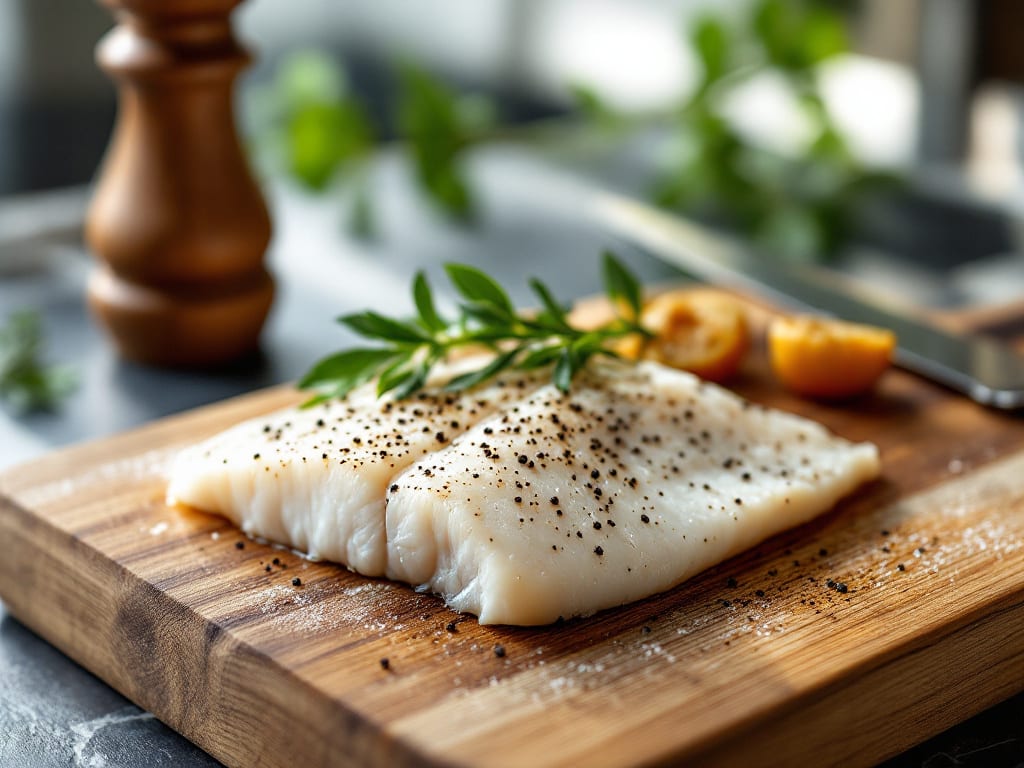
This cod white wine recipe transforms simple ingredients into a restaurant-worthy meal with just 20 minutes of active time and a 10-minute wine reduction that delivers bold flavor.
The secret lies in a crisp pan-sear that locks in moisture while building a fragrant white wine sauce that balances the delicate fish perfectly.
I developed this after years of testing—too many cod dishes end up dry or overpowered by wine, but this method guarantees tender, golden fillets with a sauce that’s rich yet bright.
The process starts with a dry-brine for extra crispiness, followed by a quick sear in butter and white wine that creates an aromatic pan sauce. Fresh herbs like thyme and parsley add depth, while lemon brightens the dish without overpowering.
What makes this recipe foolproof is the two-stage cooking method: first searing the fish to lock in flavor, then finishing it in the reduced wine sauce to keep it moist. The result is cod that’s impossibly tender with a crisp exterior and a sauce that clings beautifully.
By the time you plate this dish, you’ll have perfectly cooked cod with a golden crust, surrounded by a velvety white wine sauce that’s infused with garlic and herbs.
The acidity from the wine and lemon cuts through the richness of the butter, creating a balanced flavor profile that’s both elegant and satisfying. This is the kind of meal that feels special without requiring hours in the kitchen—ideal for weeknight dinners or impressing guests.
Pair it with roasted asparagus or a simple green salad to complete the plate. The wine reduction technique works with any dry white wine, so you can use what you have on hand. Let’s make this dish—it’s simpler than you think, but the results are anything but basic.
Ingredients for cod white wine
Restaurant-quality cod with a crispy crust and velvety white wine sauce—just 12 ingredients for an elegant dish.
| Ingredient | Amount | Notes |
|---|---|---|
| Cod Fillets 🐟 | 4 whole | Skin-on, 6-8 oz each, fresh preferred |
| Unsalted Butter 🧈 | ½ cup | Cold, cut into 8 pieces |
| Dry White Wine 🍷 | ½ cup | Sauvignon Blanc or Pinot Grigio |
| Fresh Thyme 🌿 | ¼ cup | Leaves only, stems removed |
| Fresh Parsley 🌿 | ⅛ cup | Flat-leaf, finely chopped |
| Garlic Cloves 🧄 | 4 cloves | Minced, for sauce |
| Lemon Juice 🍋 | 2 tbsp | Freshly squeezed |
| Lemon Zest 🍋 | 1 tsp | Finely grated |
| Kosher Salt 🧂 | 1 ½ tsp | For dry-brine and seasoning |
| Ground Black Pepper 🌶️ | ½ tsp | Freshly ground |
| Olive Oil 🫒 | 1 tbsp | For searing |
| All-Purpose Flour 🌾 | 2 tbsp | For dredging |
| Heavy Cream 🥛 | ¼ cup | Optional for sauce richness |
The cod is the star, so quality matters. Look for fresh, skin-on fillets with a clean, oceanic scent—avoid any with a fishy odor or dull color. Trader Joe’s and Whole Foods carry excellent options, or ask your fishmonger for sustainably sourced cod. Skin-on pieces crisp beautifully during searing, while fresh fillets stay moist. If using frozen, thaw overnight in the fridge—never at room temperature. The dry-brine method (salting 30 minutes ahead) creates a crispy crust without over-salting the fish, a technique professional kitchens swear by for delicate proteins like cod.
No white wine? Dry vermouth or chicken broth works in a pinch, though the flavor will differ slightly. Fresh herbs can be swapped—dried thyme at one-third the amount works, but fresh parsley is irreplaceable for that bright finish. Substitute lemon zest for extra acidity if you’re short on juice. For the butter, European-style with higher fat content (like Plugrá) creates a richer sauce, but regular unsalted butter delivers consistent results. The flour dredge adds texture, but if you’re avoiding gluten, almond flour works just as well. Heavy cream isn’t mandatory—omit for a lighter sauce, or use half-and-half for a balance.
Prep the cod first: pat dry and season generously with salt and pepper. The dry-brine step can be done the night before—store in the fridge uncovered on a wire rack. Fresh herbs keep best in a jar with a damp paper towel for 3-4 days. The wine reduction should be used immediately, but any leftover sauce keeps for 2 days refrigerated—reheat gently over low heat. For leftovers, store cod and sauce separately and reheat only once to maintain texture. This dish reheats beautifully, making it perfect for meal prep—just avoid overcooking the cod when reheating.
Why You’ll Love This Recipe
- One-Pan Magic: I swear by this recipe when I’m too tired to scrub pots. Just sear the cod, pour in the wine and butter, let it simmer—done. The thyme leaves wilt right into the sauce, so no extra cleanup.
- Wine’s Secret Weapon: That dry white wine isn’t just for drinking—it melts into the butter and cod, leaving behind a bright, almost citrusy depth. The parsley at the end? Freshness you can’t fake.
- Date Night or Lazy Night: Dress it up with crusty bread and a salad for a fancy dinner, or serve it straight from the pan with rice for a zero-stress weeknight. Same recipe, two vibes.
- Leftovers That Don’t Suck: The sauce thickens beautifully when reheated, clinging to the cod like it’s still fresh. I’ve had it cold the next day in a wrap—still tastes like a restaurant meal. (Yes, even on a Tuesday.)
Step-by-step instructions for lemon butter pan-seared cod
Here’s how to achieve restaurant-quality cod with crispy skin and a bright, herbed white wine sauce.
Prepare and Season the Cod Fillets
Pat each of the 4 whole cod fillets completely dry with paper towels—this is crucial for crispy skin. Place them skin-side down on a cutting board. Using the 1.5 teaspoons of kosher salt, season both sides of each fillet, including the edges, pressing gently so the seasoning adheres. Sprinkle the 0.5 teaspoon of ground black pepper evenly over the salted surfaces.
Let the seasoned fillets sit uncovered on a wire rack for 15 minutes. This dry-brine process draws out surface moisture, which prevents steam from forming between the skin and pan during cooking. The result is that signature golden crust we’re after. While waiting, finely grate the 1 teaspoon of lemon zest using a microplane and set it aside.
Create the Herbed Butter and Dredge the Cod
In a small bowl, combine the 0.5 cup of cold unsalted butter (cut into 8 pieces), the 0.25 cup of fresh thyme leaves, and the 0.125 cup of finely chopped fresh parsley. Mix gently with a fork until just combined—you want the herbs distributed throughout the butter without being crushed. This herb-infused butter will baste the cod during cooking.
Place the 2 tablespoons of all-purpose flour in a shallow dish. Lightly dredge each cod fillet in the flour, shaking off any excess. The thin flour coating helps create a delicate crust that seals in moisture while allowing the skin to crisp. Work quickly so the flour doesn’t get soggy from the fish’s natural juices.
Pan-Sear to Perfect Crispiness
Heat a large skillet over medium-high heat until very hot. Add the 1 tablespoon of olive oil and swirl to coat the pan evenly. When the oil shimmers (about 2 minutes), carefully place the cod fillets skin-side down in the pan. Press down gently on each fillet during the first minute—this prevents curling and ensures even contact with the pan.
Cook undisturbed for 3-4 minutes until the skin turns golden brown and crispy. You’ll see the edges begin to lift slightly from the pan, and the skin will develop a network of cracks—this is your signal that it’s ready. Carefully flip the fillets and cook for another 2-3 minutes on the other side until they reach an internal temperature of 145°F. Transfer to a warm plate and tent loosely with foil to keep warm.
Make the White Wine Sauce
Reduce the heat to medium and add the 4 minced garlic cloves to the same skillet, cooking for 30 seconds until fragrant. Immediately pour in the 0.5 cup of dry white wine, scraping up any browned bits from the bottom of the pan with a wooden spoon. Let the wine simmer for 2-3 minutes until reduced by half.
Add the 2 tablespoons of lemon juice and the herb-infused butter pieces, stirring gently until the butter melts and creates a glossy sauce. For extra richness, stir in the 0.25 cup of heavy cream and simmer for 1 more minute. Taste and adjust seasoning with additional salt or pepper if needed. The sauce should coat the back of a spoon with a velvety consistency.
Finish and Serve
Return the cod fillets to the skillet, spooning the sauce evenly over the top. Let them sit for 1 minute to absorb the flavors. To plate, divide the cod among four plates, spooning the sauce generously around each fillet. Garnish with additional fresh parsley if desired.
Serve immediately with steamed vegetables or a simple green salad. The cod should have a crispy, golden skin that contrasts beautifully with the tender, flaky flesh beneath. Each bite delivers bright lemon notes, herbal depth from the thyme and parsley, and the richness of the butter sauce—all balanced by the acidity of the white wine reduction.
Pro Tips For Making Cod White Wine
- Pat Dry First: Cod fillets hold onto moisture like a miser with their last dollar. Wipe them down with paper towels before cooking—this guarantees a crispy crust instead of a sad, soggy mess. Trust me, the extra 30 seconds now saves you from a bland, butter-slathered disappointment later.
- Don’t Boil the Wine: White wine has a temper—push the heat too high, and it turns bitter faster than your patience on a Monday. Keep the pan at a gentle simmer (tiny bubbles, not rolling) while deglazing. If it smells like a chemistry lab, you’ve gone too far, and the dish will taste like it.
- Salt the Butter: Unsalted butter is a blank canvas, and your cod deserves flavor. Pinch in ¼ teaspoon of salt per 2 tablespoons of butter before melting it into the pan. It’s the difference between “meh” and “worth the effort”—and it’s one step you’ll never regret.
- Save the Wine Dregs: That golden, buttery residue stuck to the pan after cooking? That’s liquid gold. Splash in 1-2 tablespoons of cold water, scrape it up with a wooden spoon, and stir it into the wine reduction. It’s the shortcut to a richer sauce without extra work—your future self will high-five you for this.
Essential equipment for this recipe
Skillet Essentials
You only need one high-quality skillet for this recipe, and I recommend a 12-inch cast iron like Lodge Pre-Seasoned for its superior heat retention and natural non-stick properties.
If you prefer lighter options, a well-seasoned stainless steel pan (such as All-Clad Stainless) works beautifully—just use a little more oil to prevent sticking. Avoid non-stick pans for searing; they can’t achieve the same crispy texture. 🔥
Thermometer Precision
An instant-read thermometer (like the Thermoworks ThermoPop) is my non-negotiable tool for this dish. Cod should reach an internal temperature of 145°F—any hotter and it risks drying out.
The thermometer ensures perfect doneness every time without overcooking. For extra confidence, I also use a kitchen timer to track the 3-4 minute sear window.
Butter and Wine Tools
Use a small mixing bowl (like Pyrex glass) to combine the herb-infused butter—its transparency lets you see the herbs distribute evenly. For the wine reduction, a wooden spoon (not metal) prevents scratching your pan while scraping up browned bits.
A fine-mesh strainer (optional) helps remove herb stems if you prefer a smoother sauce. 🍷
Prep Ahead Gear
A wire rack (placed over a baking sheet) is perfect for the dry-brine step—it allows air circulation for an even crust. Store your prepped cod on the rack in the fridge for up to 24 hours before cooking.
For herb storage, a small glass jar with a damp paper towel keeps fresh thyme and parsley vibrant for 3-4 days.
Sauce Thickening
If your sauce feels too thin after reduction, a cornstarch slurry (1 tsp cornstarch + 1 tbsp cold water) thickens it instantly.
For extra richness, keep a small saucepan nearby to gently reheat any leftover sauce—just stir over low heat with a splash of water or wine to prevent scorching. 💡
Nutrition facts
Frequently asked questions
Can I substitute another white wine if I don’t have Sauvignon Blanc?
Any dry white wine works—Pinot Grigio or Chardonnay are excellent choices. Avoid sweet wines like Riesling, as they’ll overpower the delicate cod. For a non-alcoholic version, use white grape juice with a splash of vinegar to mimic acidity. The key is balancing the wine’s acidity with the richness of the butter.
Why does the recipe call for skin-on cod?
The skin creates a crispy, golden crust during searing, adding texture and flavor. If you must use skinless fillets, press them flat with a weight (like a plate with a can) for 15 minutes before cooking to prevent curling. The skin also helps hold the fillets together during cooking, reducing flakiness.
How do I fix overcooked cod?
If your cod turns out dry, don’t panic! Place the fillets in a lightly buttered skillet with 2 tablespoons of white wine and 1 tablespoon of lemon juice. Cover and simmer on low heat for 3-4 minutes—this will restore moisture. Serve with extra sauce to compensate for any texture loss.
Can I make this recipe ahead of time?
Prep the cod up to 24 hours ahead by dry-brining and storing it uncovered on a wire rack in the fridge. The sauce should be made fresh, but you can reheat it gently with a splash of wine or water. Cook the cod just before serving to maintain crispiness—reheating will soften the skin.
What’s the best way to serve this dish?
Pair with roasted asparagus, sautéed green beans, or a simple arugula salad> with lemon vinaigrette. The acidity of the wine sauce and lemon cuts through rich sides beautifully. For a complete meal, add crusty bread> to soak up any extra sauce.

- James Martin’s Cottage Pie Recipe: Flaky Pastry Over Hearty Beef Filling - November 29, 2026
- Sweet Grissini Recipe: Crispy Twists With Honey-Glazed Bite-Sized Magic - November 29, 2026
- Cinammon Sugar Recipe: Baking Spice Blend for Cookies, Donuts, and Pastries - November 29, 2026