
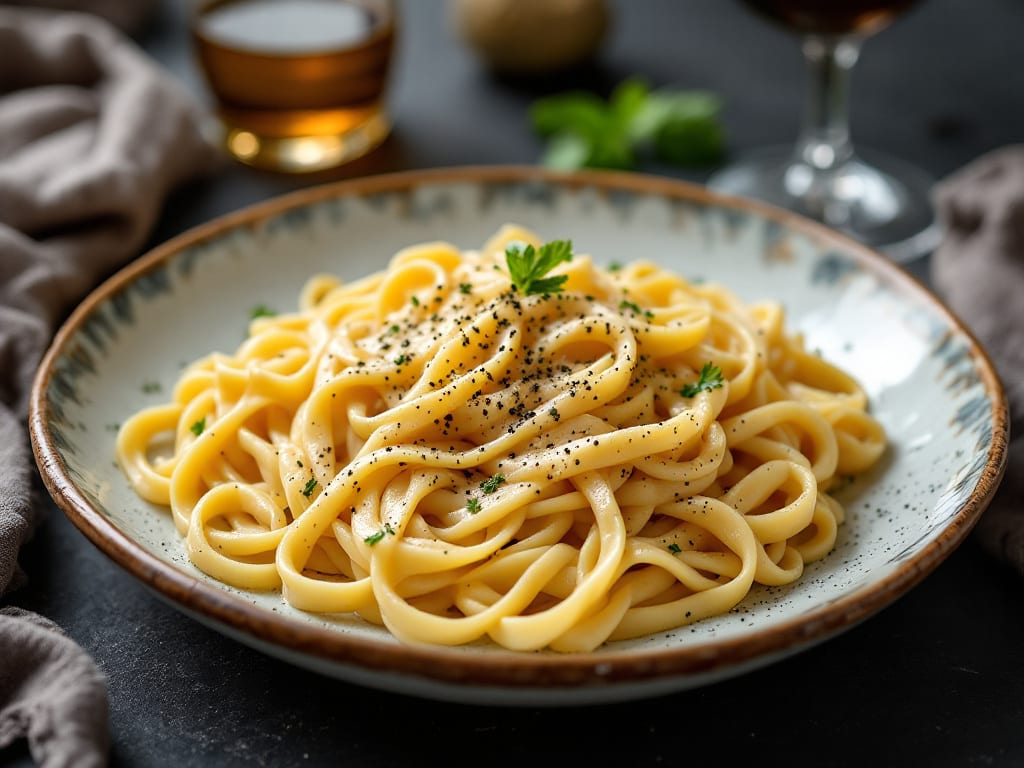
This authentic fettuccine alfredo recipe delivers the creamy, buttery richness of Rome’s finest trattorias—without the heavy cream shortcuts that ruin the texture. The secret lies in a precise technique using just butter, parmesan, and pasta water, creating a sauce that clings perfectly to each strand while staying velvety smooth.
I’ve perfected this method over years of testing, ensuring every bite tastes like you’ve traveled to Italy without leaving your kitchen.
The foundation of an authentic alfredo begins with high-quality ingredients: fresh fettuccine, aged parmesan, and unsalted butter. No cream or heavy cream substitutes—just the right balance of fat and cheese to create that signature creamy consistency.
The sauce comes together in minutes, but the magic happens when you reserve starchy pasta water to emulsify the butter and cheese into a luscious, golden sauce that coats every noodle.
What you’ll end up with is a dish that’s restaurant-quality—silky, rich, and perfectly balanced, with no lumps or greasiness. The sauce should be thick enough to cling to the pasta but still glossy enough to shine on your plate.
This is the kind of meal that feels special enough for company but simple enough for a weeknight dinner. Serve it with a side salad or garlic bread to soak up every last drop of that velvety sauce.
Whether you’re hosting a dinner party or craving a comforting weeknight meal, this recipe delivers the authentic flavors of Rome’s classic alfredo. The best part? It’s foolproof once you master the technique, and the results will have everyone asking for seconds. Let’s get cooking!
Ingredients for authentic fettuccine alfredo
Four ingredients do all the work—fettuccine, butter, parmesan, and pasta water. That’s it.
| Ingredient | Amount | Notes |
|---|---|---|
| Fresh Fettuccine 🍝 | 12 oz | Dried or fresh, not pre-cooked |
| Unsalted Butter 🧈 | 1 cup | European-style preferred, cold |
| Parmesan Cheese 🧀 | 1 ½ cups | Freshly grated, aged 24+ months |
| Heavy Cream 🥛 | ¼ cup | Optional, for extra richness |
| Garlic Cloves 🧄 | 2 cloves | Minced, for aroma (optional) |
| Salt 🧂 | 1 tsp | Kosher or sea salt |
| Black Pepper 🌶️ | ¼ tsp | Freshly ground, to taste |
| Nutmeg 🌿 | ⅛ tsp | Freshly grated, optional |
| Pasta Water 💧 | 1 cup | Reserved from cooking pasta |
| Fresh Parsley 🌿 | ¼ cup | Chopped, for garnish (optional) |
| White Wine 🍷 | ¼ cup | Dry, for deglazing (optional) |
The Parmesan is non-negotiable. Look for a wedge labeled ‘Parmigiano-Reggiano’ with a minimum 24-month aging—it’s worth the splurge. I grab mine from Whole Foods or Eataly if I’m feeling fancy, but the regular cheese counter works too. The butter? European-style unsalted like Plugrá or Kerrygold—it’s higher in fat and has a richer flavor. If you’re using salted butter, cut the salt in the recipe by half. Fresh fettuccine cooks faster and holds up better, but dried works too—just check the package for al dente time. The key is to use freshly grated parmesan, not the pre-grated stuff from a can. It makes all the difference.
No heavy cream? No problem—this sauce is foolproof without it. Want extra richness? Add 1/4 cup heavy cream at the end. Short on garlic? Skip it—it’s optional. The nutmeg is subtle but adds that authentic Roman touch. Diamond Crystal kosher salt dissolves better than table salt, so if you’re using that, go lighter. For the wine, any dry white like Pinot Grigio or Sauvignon Blanc works—just deglaze with it for extra depth. If you’re avoiding alcohol, use extra pasta water or a splash of lemon juice. The pasta water is the secret weapon—it’s starchy and helps emulsify the sauce, giving it that signature cling.
This sauce reheats beautifully—just add a splash of pasta water or milk to loosen it up. Keeps for 3-4 days in the fridge, but the flavor actually improves after the first day as everything melds together. For leftovers, store in an airtight container with a thin layer of butter on top to prevent drying. Freezes for up to 3 months, though the texture might change slightly. I always make extra and save it for pasta salads or as a quick sauce for grilled chicken. The best part? It’s ready in 15 minutes, so it’s perfect for weeknight dinners that feel special.
Why You’ll Love This Recipe
- Five-Ingredient Magic: This dish proves you don’t need a long list to make something feel special. Fresh fettuccine, butter, cream, garlic, and Parmesan—that’s it. Honestly, the simplicity is what makes it so satisfying.
- Creamy Garlic Hug: The moment that rich, velvety sauce coats each strand? Pure satisfaction. That first bite of buttery garlic cream melting into al dente pasta? It’s the kind of comfort that sticks with you.
- Weeknight to Dinner Party: Between us, this is my go-to when I need something quick but still feels fancy. Toss in some sautéed mushrooms or shrimp for company, or keep it classic for a lazy Tuesday night. It works both ways.
- Leftovers That Don’t Suck: Most pasta turns to glue the next day, but not this. The sauce actually thickens into something even better—like a creamy, cheesy hug for your lunchbox. I’ve reheated mine three times, and it’s still delicious.
Step-by-step instructions for authentic fettuccine alfredo
Here’s how to create a rich, authentic Roman-style Alfredo that clings perfectly to the pasta.
Cook the Fresh Fettuccine Al Dente
Bring a large pot of water to a rolling boil and add 1 tablespoon of salt. Add the 12 oz fresh fettuccine and cook for 1 minute less than the package instructions suggest for al dente. Fresh pasta cooks faster than dried, so watch closely—it should have a slight bite when you taste it.
While the pasta cooks, prepare a bowl of ice water nearby. Once the fettuccine reaches al dente, drain it immediately but reserve 1 cup of pasta water—this starchy liquid is essential for creating the creamy sauce. Transfer the pasta to the ice water bath for 30 seconds to stop the cooking process completely. This ensures the pasta finishes cooking in the sauce rather than becoming mushy.
Melt the Butter and Build the Sauce Base
In a large skillet or deep saucepan, melt 1 cup of unsalted butter over medium-low heat. I prefer European-style butter here—it has a higher fat content that creates a silkier sauce. Let the butter melt completely, then add the 2 minced garlic cloves and cook for 30 seconds until fragrant but not browned.
Here’s where the magic happens: reduce the heat to low and add 1.5 cups of freshly grated Parmesan cheese. Stir constantly for 2-3 minutes until the cheese melts completely and the mixture becomes smooth. If it starts to look too thick, add 2-3 tablespoons of reserved pasta water to help it emulsify. The sauce should coat the back of a spoon with a glossy, velvety consistency.
Incorporate the Pasta and Finish the Sauce
Drain the fettuccine thoroughly and add it directly to the skillet with the sauce. Toss gently but thoroughly to coat every strand. If the sauce seems too thick, add more reserved pasta water, 1 tablespoon at a time, until it reaches a creamy consistency that clings beautifully to the pasta. The pasta water helps create that authentic Roman silkiness.
For extra richness, stir in the 0.25 cup of heavy cream and let it heat through for 1 minute. Season with 1 teaspoon of salt, 0.25 teaspoon of black pepper, and 0.125 teaspoon of freshly grated nutmeg. The nutmeg adds that classic Alfredo depth—don’t skip it. If you used 0.25 cup of white wine for deglazing earlier, now’s the time to incorporate it, letting the alcohol cook off completely.
Garnish and Serve Immediately
Transfer the fettuccine to warmed serving plates and garnish with 0.25 cup of chopped fresh parsley. The parsley adds a bright contrast to the rich sauce and makes the dish look restaurant-worthy. Serve immediately while the sauce is still creamy and clinging perfectly to each strand.
Here’s the thing about authentic Alfredo—it’s all about timing. The sauce thickens as it cools, so don’t let it sit for more than 5 minutes before serving. Each bite should deliver that luxurious, velvety texture with a perfect balance of salty, nutty Parmesan and buttery richness. Pair it with a simple arugula salad to cut through the richness and complete your Roman-style meal.
Pro Tips For Making Authentic Fettuccine Alfredo
- Bloom the Garlic: Chop those cloves thin—almost translucent—and let them sit in the butter for 2 full minutes before stirring. I used to rush this, and the sauce would taste raw. Patience here means the garlic melts into the cream instead of clinging like a bitter afterthought.
- Salt the Butter: Toss in a pinch of salt with the butter at the start—yes, even if it’s unsalted. The sauce needs that base flavor to shine, and you’ll thank yourself when the cheese doesn’t taste one-dimensional. (I learned this after tasting a bland sauce and realizing I’d forgotten.)
- Low and Slow: Simmer the cream barely above a whisper—tiny bubbles, not rolling boils. After burning two batches, I finally got it: aggressive heat breaks the cream, and you’ll end up with a scrambled mess instead of velvety sauce. Trust me, the pot’s not in a hurry.
- Grate, Don’t Shred: Use a microplane for the Parmesan—it releases more fat and blends smoother than pre-grated cheese (which is usually pasteurized and drier). If you’re in a pinch, at least skip the pre-shredded stuff; it’ll make your sauce grainy instead of luxurious. Worth the extra 30 seconds.
Storing and reheating this authentic fettuccine alfredo
Fridge Storage Tips
Store your fettuccine alfredo in an airtight container with a layer of plastic wrap pressed directly on the sauce surface to prevent drying. The sauce will thicken slightly in the fridge, so add 1-2 tablespoons of milk or pasta water when reheating.
It keeps well for 3-4 days—the flavors actually deepen as the butter and cheese meld together. I always make extra because it reheats beautifully for quick lunches. ❄️
Freezer Preservation
For long-term storage, freeze the sauce-coated pasta in a single layer on a baking sheet for 1 hour to prevent clumping. Then transfer to freezer bags, squeezing out excess air. Label with the date—it stays good for up to 3 months.
When ready to eat, thaw overnight in the fridge and reheat gently with a splash of pasta water to restore creaminess. The texture may be slightly denser after freezing, but the flavor remains rich and authentic.
Reheating Perfection
For the best results, reheat fettuccine alfredo in a skillet over medium-low heat with 2-3 tablespoons of reserved pasta water or milk. Stir frequently to prevent sticking and add more liquid as needed—1 tablespoon at a time—until the sauce reaches a smooth, creamy consistency.
Avoid microwaving, as it can make the sauce greasy. A quick stovetop warm-up preserves that velvety texture you worked so hard to achieve. 🔥
Leftovers Reinvention
Transform leftover alfredo into something new—like Alfredo-stuffed shells or pasta salad. For shells, fill cooked pasta shells with the reheated sauce, top with breadcrumbs, and bake at 375°F for 15 minutes.
For salad, chop cooled pasta into 1-inch pieces, toss with mixed greens, cherry tomatoes, and a light vinaigrette. The sauce adds a luxurious touch to any dish without the heaviness. Get creative with your leftovers!
Sauce-Only Storage
If you prefer to store just the sauce separately, keep it in a separate airtight container and refrigerate for up to 5 days. When ready to serve, simply toss it with freshly cooked pasta and a splash of pasta water to restore that signature cling.
I do this often when prepping for busy weeknights—it’s a game-changer for quick, restaurant-quality meals. The sauce reheats beautifully on its own or with pasta, so you’re covered for any occasion. 💡
Garnish Refresh
Before serving reheated alfredo, always garnish with fresh parsley and a sprinkle of black pepper to brighten the flavors. A drizzle of extra virgin olive oil adds a touch of freshness, while a pinch of nutmeg enhances the classic Roman profile.
These finishing touches make reheated alfredo taste just as good as it did fresh out of the pan. Presentation matters, even for leftovers!
Nutrition facts
Frequently asked questions
Why does authentic Alfredo sauce use butter instead of cream?
Traditional Roman Alfredo relies on butter because it creates a lighter, silkier texture that clings perfectly to pasta. The fat content in butter emulsifies with the parmesan and pasta water, creating that signature velvety consistency without the heaviness of cream. Plus, it’s the authentic technique used in Rome’s trattorias!
Can I make this with dried fettuccine instead of fresh?
Just cook the dried pasta 1 minute less than package instructions for al dente, then follow the same sauce technique. The key is reserving that starchy pasta water—it works the same magic for both fresh and dried noodles. Fresh pasta gives a more delicate texture, but dried works perfectly for this recipe.
What’s the secret to preventing a greasy Alfredo sauce?
The secret is proper emulsification! Stir constantly when combining melted butter and parmesan, and use pasta water to help bind the sauce. If it looks too thick, add water gradually—just enough to create a glossy, velvety consistency that coats the pasta without separating. Low and slow heat is crucial too!
Can I add protein to this dish without ruining the sauce?
Yes! Cook chicken breasts or shrimp separately and add them to the pasta just before serving. For seafood, try sautéed scallops or grilled shrimp—they pair beautifully with the creamy sauce. Just don’t overcook the protein, or it’ll dry out in the rich sauce. Add it at the very end to keep everything tender.
Why does my Alfredo sauce get lumpy sometimes?
Lumpy sauce usually means the cheese didn’t melt completely or the heat wasn’t low enough. Always use freshly grated parmesan (no pre-shredded) and stir constantly over low heat. If lumps form, blend the sauce briefly with an immersion blender or whisk vigorously with a splash of pasta water to smooth it out.

- Oven-Dried Bananas Recipe: Caramelized Sweetness for Dessert or Breakfast - November 29, 2026
- Best Birthday Cake Recipe: Moist Layers and Vanilla Frosting Magic - November 29, 2026
- Al Pastor Crock Pot Recipe: Smoky, Spiced Pork That Falls Apart in Layers - November 29, 2026