
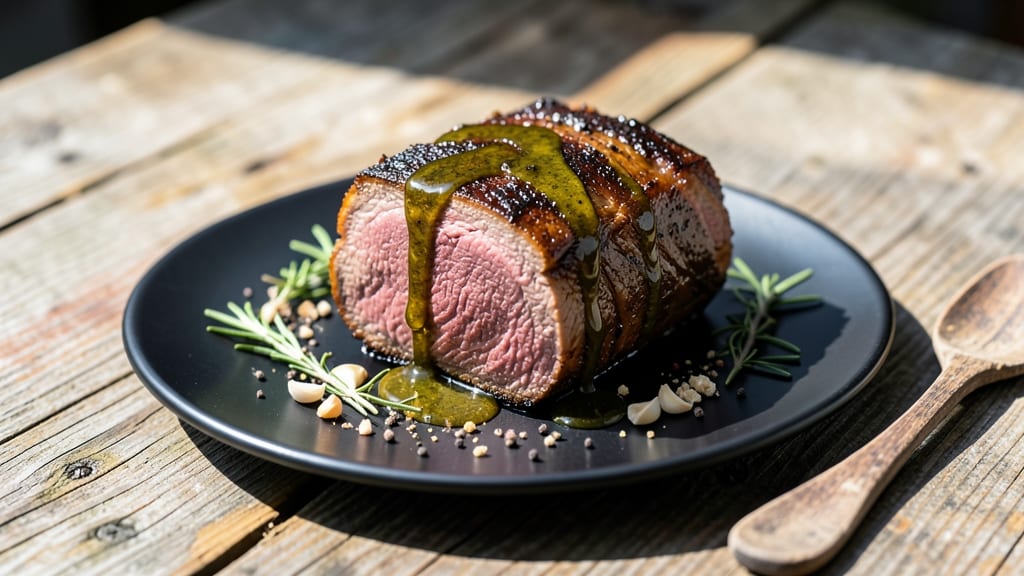
Mastering a Yoder prime rib roast transforms holiday dinners from ordinary to unforgettable—this recipe delivers melt-in-your-mouth tenderness with precision. The key lies in low-and-slow smoking, where patience and temperature control create a showstopping centerpiece.
I’ve perfected this method after years of testing, ensuring every bite falls apart effortlessly while maintaining a perfect crust.
This approach begins with a simple yet critical prep: a dry brine that enhances flavor and moisture retention, followed by a Yoder-specific smoking strategy that balances heat and smoke. The reverse sear technique—smoking first, then searing—guarantees a tender interior with a caramelized exterior, a hallmark of professional roasts.
What sets this apart is the hands-off method, ideal for those who want restaurant-quality results without constant monitoring.
By the time you carve into this prime rib, you’ll uncover layers of smoky depth and buttery richness that elevate any table. The au jus reduction captures every drop of flavor, while classic sides like horseradish cream or roasted root vegetables complete the experience.
This isn’t just a recipe—it’s a centerpiece that commands attention and delivers satisfaction.
Whether you’re hosting a holiday feast or treating yourself to a special meal, this Yoder prime rib roast delivers foolproof tenderness and bold flavor. The method scales perfectly for crowds, and leftovers reheat beautifully. Let’s get started on creating a dish that will have everyone asking for seconds.
Ingredients for yoder prime rib roast
A 12-pound centerpiece that combines precision smoking with classic dry-brining techniques for perfection.
| Ingredient | Amount | Notes |
|---|---|---|
| Prime Rib Roast (Ribeye Cut) 🥩 | 12 lb | Bone-in, dry-brined overnight |
| Kosher Salt 🧂 | 4 tbsp | Diamond Crystal preferred |
| Coarse Black Pepper 🌶️ | 2 tbsp | Freshly cracked |
| Unsalted Butter 🧈 | 1 ½ lb | Full-fat, softened |
| Beef Broth 🍲 | 4 cups | Low-sodium, homemade preferred |
| Dry Mustard 🟡 | 2 tbsp | English mustard preferred |
| Granulated Sugar 🍚 | 2 tbsp | For caramelization |
| Garlic Cloves 🧄 | 6 cloves | Roughly chopped |
| Fresh Rosemary 🌿 | 1 cup | Stems removed, chopped |
| Fresh Thyme 🍃 | ½ cup | Leaves only |
| Apple Cider Vinegar 🍎 | ¼ cup | For tenderizing |
| Wood Chips (Hickory or Oak) 🔥 | 2 lb | Soaked 2+ hours |
| Au Jus Reduction Base 🍷 | 2 cups | Homemade or high-quality jarred |
| Butterfly Pepper 🌶️ | 1 tsp | For smoky aroma |
The prime rib roast is the star, and sourcing matters—opt for bone-in ribeye cuts from trusted butchers like Whole Foods Market or Costco, where the marbling is visible and rich. For optimal tenderness, dry brine for 24 hours using Diamond Crystal kosher salt, which penetrates deeply without over-salting. The butter should be full-fat and softened to create a perfect crust during the sear, while homemade beef broth elevates the au jus—store-bought lacks the depth. Wood chips are non-negotiable; Hickory or Oak provide the classic smoky flavor, but soak them for at least 2 hours to avoid flare-ups.
Substitutions are possible but require adjustments: pre-cut ribeye works but may lack marbling, so compensate with an extra 12-hour brine. For the au jus, high-quality jarred reduction like Scharffen Berger can replace homemade, though it won’t match the depth. Fresh herbs? Dried thyme at half the amount suffices, but rosemary loses potency when dried, so fresh is ideal. The apple cider vinegar tenderizes—skip it and expect a firmer texture. The butterfly pepper adds smokiness; smoked paprika at 1 tsp is a close alternative, though the aroma differs.
This roast demands patience: smoke at 225°F for 6-8 hours, then sear at 450°F for 10 minutes. Store the roast uncovered in the fridge for up to 5 days—the crust dries but rehydrates beautifully. For leftovers, slice thinly and reheat in a skillet with butter to restore moisture. The wood chips? Reuse once after soaking—they’ll still impart flavor. Portion the au jus into ice cube trays for easy reheating, as it freezes well for up to 3 months.
Why You’ll Love This Recipe
- No Fuss Feast: That 24-hour dry brine? Honestly, it’s the secret sauce—no chopping, no fuss. Just slap the rub on, pop it in the fridge, and forget about it until dinner. The real magic happens while you’re asleep or at work.
- Smoky, Herbed Perfection: The rosemary, thyme, and garlic? They caramelize into a crust that’s chef’s kiss—crispy outside, buttery inside, with that smoky depth from the hickory wood chips. And the au jus? Rich, velvety, and made with that 1.5 lb of butter—trust me, it’s worth every spoonful.
- Weeknight Myth Busted: I thought smoking a 12-pound roast was a weekend project, but the low-and-slow method (225°F for hours) means you’re not glued to the smoker. While it cooks, you’re prepping sides or even just relaxing. And that Texas crutch with apple cider vinegar? It’s the only time I ever welcome a stall.
Step-by-step instructions for smoked prime rib roast
This method delivers melt-in-your-mouth tenderness with a perfect bark through precise temperature control.
Prepare the Rub and Season the Roast
In a small bowl, combine the 4 tablespoons kosher salt, 2 tablespoons coarse black pepper, 1 teaspoon butterfly pepper, 2 tablespoons dry mustard, 2 tablespoons granulated sugar, 6 roughly chopped garlic cloves, 1 cup chopped fresh rosemary, and ½ cup fresh thyme leaves. Mix thoroughly until the herbs are evenly distributed throughout the dry ingredients.
Pat the 12 lb prime rib roast completely dry with paper towels, then generously coat all sides with the herb mixture. Press the rub firmly into the meat so it adheres well. Place the roast on a wire rack set over a rimmed baking sheet and refrigerate uncovered for 24 hours to allow the dry brine to penetrate deeply and develop flavor.
Set Up the Smoker and Prepare the Roast
Soak the 2 lb wood chips (hickory or oak) in water for at least 2 hours before smoking. Fill the smoker’s wood chip tray and preheat to 225°F using indirect heat. Allow the smoker to stabilize for 30 minutes before adding the roast to ensure consistent temperature.
Remove the roast from the refrigerator 1 hour before smoking to bring it to room temperature. Position the roast fat-side up on the smoker grates, leaving space around it for proper airflow. The fat cap should be facing upward to render slowly and baste the meat as it cooks.
Smoke Low and Slow with Precision
Insert a meat probe into the thickest part of the roast (avoiding bone) and smoke undisturbed for 6-8 hours until the internal temperature reaches 165°F. Maintain the smoker temperature between 225-250°F—this low-and-slow approach breaks down connective tissue for maximum tenderness.
Here’s the critical moment: when the internal temperature hits 165°F, you’ll encounter “the stall,” where evaporation causes the temperature to plateau. At this point, wrap the roast tightly in heavy-duty aluminum foil with the ¼ cup apple cider vinegar and 4 cups beef broth poured around it inside the foil. This technique, known as the “Texas crutch,” helps push the roast through the stall while preserving moisture.
Finish to Probe-Tender Perfection
Return the wrapped roast to the smoker and continue cooking until the internal temperature reaches 200-203°F and a probe slides in like butter with no resistance. This typically takes an additional 4-6 hours, but always trust the probe test over time—tenderness is the true indicator of doneness.
Once probe-tender, remove the roast from the smoker and let it rest in the foil for 1 hour before slicing. This resting period allows juices to redistribute throughout the meat, ensuring each slice remains moist and flavorful. During this time, preheat your oven to 300°F for the next step.
Create the Au Jus and Serve
Transfer the foil-wrapped roast to a baking sheet and place it in the preheated 300°F oven for 15 minutes. This step helps render any remaining fat and creates a beautiful crust on the exterior. Meanwhile, in a saucepan, combine the 2 cups au jus reduction base, 1½ lb softened unsalted butter, and any accumulated juices from the roast. Simmer gently for 5 minutes until the butter melts and the sauce reaches a glossy consistency.
Unwrap the roast and slice it into ½-inch thick portions against the grain. Arrange the slices on a warm platter and drizzle generously with the prepared au jus. Each slice should be fork-tender with a beautiful pink center, surrounded by a rich, herbed crust. Serve immediately with the au jus spooned over the top for maximum flavor impact.
Pro Tips For Making Yoder Prime Rib Roast
- Preheat the Smoker First: DESCRIPTION: I used to toss the roast on the smoker before the temp stabilized, and the first hour was a waste—temperature swings ruin the bark. Let that smoker hit 225°F and hold steady for 30 minutes before adding the roast. The extra 10 minutes of patience guarantees even cooking, not a charred outside and cold center.
- Don’t Skip the Vinegar Wrap: DESCRIPTION: The ¼ cup apple cider vinegar in the foil isn’t just flavor—it’s the secret weapon against the stall. Without it, you’ll fight moisture loss and uneven cooking. Pour it directly around the roast in the foil, not just on top, so every inch gets that tenderizing acid bath.
- Use Diamond Crystal Salt: DESCRIPTION: I learned this the hard way—using table salt or another kosher brand threw off the rub’s balance. Diamond Crystal is coarser and dissolves slower, so the 4 tbsp clings better and seasons deeper. If you’re in a pinch, add an extra ½ tbsp, but don’t substitute.
- Soften the Butter Properly: DESCRIPTION: The 1.5 lb unsalted butter should be softened, not melted, when you mix it into the au jus. I once used melted butter, and the sauce turned greasy instead of glossy. Take it out of the fridge 30 minutes before you need it—room temp but still holding shape. Trust me, your sauce will thank you.
Make-ahead tips for this dish
Prep the Night Before
I start my make-ahead strategy by preparing the dry brine rub 24 hours in advance—this gives the salt and herbs ample time to penetrate the meat deeply. Combine all your dry ingredients in a bowl and store it in an airtight container.
The night before cooking, pat the 12 lb prime rib roast dry and generously coat it with the rub. Place it on a wire rack over a tray and refrigerate uncovered—this dry-brine method enhances flavor and moisture retention without over-salting. 💡
Chill the Wood Chips
Soak your 2 lb hickory or oak wood chips the day before smoking—this ensures they’re ready to go when you preheat your Yoder smoker. Store them in a sealed container submerged in water in the fridge.
When you’re ready to smoke, drain and pat them dry before adding them to your smoker’s tray. This prevents flare-ups and guarantees consistent smoke throughout the cook.
Pre-Make the Au Jus
For a stress-free day-of experience, prepare the au jus reduction base ahead of time. Combine the 2 cups au jus reduction base with 1 cup beef broth and refrigerate it in a sealed container.
When you’re ready to finish the roast, simply add the remaining 1 cup broth and 1½ lb softened butter to create a glossy, flavorful sauce. This shortcut saves you precious time during the final hour. ✨
Portion the Sides
If you’re serving classic sides like horseradish cream or roasted vegetables, prep them in advance and store them separately. For horseradish cream, mix ½ cup sour cream with 2 tbsp prepared horseradish and 1 tbsp mayonnaise, then refrigerate.
Roast your vegetables (like carrots or Brussels sprouts) and store them in an airtight container—just reheat them in the oven at 375°F for 10 minutes before serving.
Set Up Your Smoker
On the day of cooking, set up your Yoder smoker the night before if possible. Preheat the smoker to 225°F and let it stabilize for 30 minutes before adding the roast. This ensures your smoker is ready to go when you bring the roast to room temperature.
Place the smoker near an outlet so you can easily monitor and adjust the temperature without fuss. 🔥
Resting and Slicing Prep
After smoking, wrap the roast in foil with the apple cider vinegar and broth and let it rest for 1 hour before slicing. While it rests, preheat your oven to 300°F and line a baking sheet with foil.
This small prep step ensures everything is ready when you’re ready to finish the roast and create that perfect crust. Trust me—this resting time is non-negotiable for juicy, tender slices! 💪
Nutrition facts
Frequently asked questions
Why does the recipe call for a dry brine instead of a wet brine?
A dry brine enhances flavor and moisture retention without over-salting the meat. The salt penetrates deeply over 24 hours, ensuring even seasoning while keeping the roast juicy. This method also creates a beautiful bark during smoking, which wet brining can prevent.
What if my Yoder smoker’s temperature fluctuates during cooking?
Fluctuations are normal, but keep the smoker between 225-250°F for best results. Use a reliable thermometer and adjust vents as needed. If the temperature drops below 225°F, add more wood chips or increase heat. Consistency is key for tender, even cooking.
Can I skip the “Texas crutch” (wrapping in foil) and still get tender meat?
While possible, wrapping at 165°F helps overcome “the stall” and ensures moisture retention. Without it, the roast may dry out or cook unevenly. The foil also protects the bark while pushing the internal temperature higher. Trust this step for foolproof tenderness!
How do I tell when the prime rib is done without a meat thermometer?
Press the thickest part of the roast gently with your finger—it should yield slightly like a well-cooked steak. Alternatively, slice into the center; if the juices run clear and the meat is fork-tender, it’s ready. For extra confidence, rely on the 200-203°F internal temp.
What’s the best way to reheat leftovers without drying out the roast?
Slice thinly and reheat in a skillet with 1 tablespoon butter over medium-low heat for 2-3 minutes per side. Cover with foil to trap steam. Alternatively, wrap slices in foil and warm in a 300°F oven for 10 minutes. This keeps them moist and flavorful.

- Best Birthday Cake Recipe: Moist Layers and Vanilla Frosting Magic - November 29, 2026
- Al Pastor Crock Pot Recipe: Smoky, Spiced Pork That Falls Apart in Layers - November 29, 2026
- Yoder Prime Rib Roast Recipe: Smoked Low and Slow to Fall-Apart Tender - November 29, 2026