
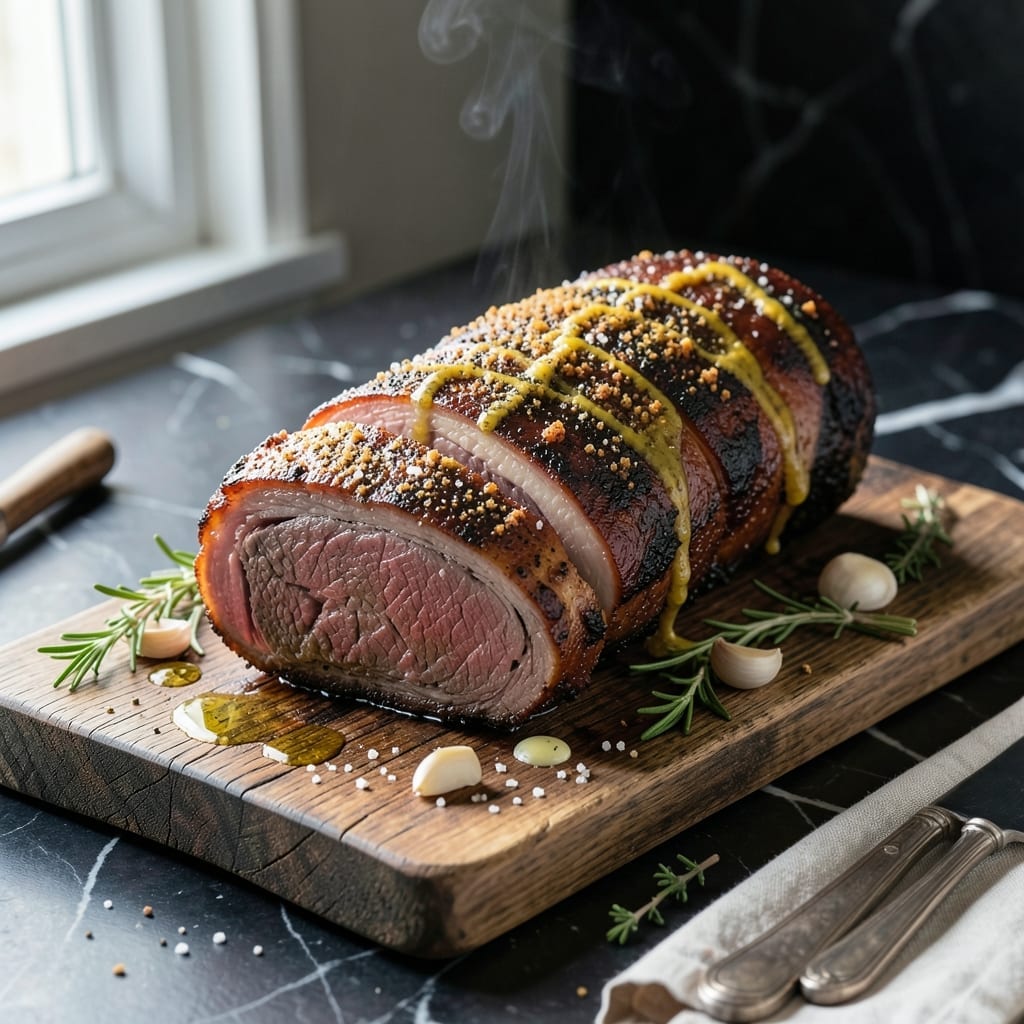
This reverse sear method changed how I cook prime rib forever. The technique delivers perfect results every time—even doneness from edge to edge with a beautifully browned crust.
Start with a low oven to gently bring the roast to temperature, then finish with a high-heat sear. This approach gives you complete control over the cooking process and eliminates the risk of overcooking the outer layers.
You’ll achieve a rosy pink center with a thick, flavorful crust that’s deeply browned and richly caramelized. The meat stays juicy and tender throughout, with every slice as impressive as the last.
The method requires patience but rewards you with restaurant-quality results that will become your go-to for special occasions.
Ingredients for Prime Rib Recipe Reverse Sear
A few quality ingredients transform this roast into a showstopping centerpiece everyone remembers.
| Ingredient | Amount | Notes |
|---|---|---|
| Prime Rib Roast 🥩 | 4 lb | Bone-in, well-marbled preferred |
| Kosher Salt 🧂 | 2 tbsp | Diamond Crystal preferred for even seasoning |
| Freshly Ground Black Pepper 🌶️ | 1 ½ tbsp | Coarse grind for crust texture |
| Garlic Cloves 🧄 | 6 cloves | Smashed, for robust infusions |
| Fresh Rosemary Sprigs 🌿 | 4 whole | Woodsy stems for aromatic depth |
| Fresh Thyme Sprigs 🍃 | 4 whole | Lemon thyme ideal if available |
| Extra-Virgin Olive Oil 🫒 | 2 tbsp | High smoke point for searing |
| Unsalted Butter 🧈 | 4 tbsp | For basting during sear |
| Red Wine 🍷 | ½ cup | Dry variety for deglazing |
| Beef Stock 🥘 | 1 cup | Low-sodium for controlled seasoning |
| Yellow Mustard 🟡 | 2 tbsp | For crust adhesion and tang |
| All-Purpose Flour 🌾 | ¼ cup | For light dusting before sear |
The prime rib is the star here. Costco and Whole Foods carry beautiful bone-in roasts with excellent marbling. Look for bright red meat with creamy white fat—avoid anything gray or dry. I always ask the butcher for a 3-rib roast (about 4 lbs) for even cooking. The salt should be Diamond Crystal kosher; its coarse texture sticks better to the meat.
No red wine? Beef broth with a tsp of vinegar works in a pinch. Fresh herbs are ideal, but dried at half the amount saves a grocery run. If you can’t find bone-in, boneless works too (just reduce cooking time by 20%). The butter can be swapped for ghee if you’re avoiding dairy. For the mustard, Dijon adds extra depth but yellow is classic.
Prime rib keeps beautifully. Leftovers stay tender for 4-5 days in the fridge, or freeze for up to 3 months. I slice mine before storing for easy reheating. Always bring to room temp before searing—this ensures that perfect edge-to-edge doneness.
Why You’ll Love This Recipe
- Set It and Forget It: I love tossing the prime rib in the oven at a low temp, then searing it at the end—no babysitting required.
- That Rosemary Garlic Crust: The mix of fresh rosemary, garlic, and coarse salt forms the most addictive crust on the juiciest meat.
- Holiday Hero: It’s my go-to for Christmas dinner, but honestly, I make it for Sunday suppers too.
- Leftovers for Days: One roast feeds us for three meals, and the sandwiches the next day? Even better.
Step-by-Step Instructions for Prime Rib Reverse Sear
This method delivers an even medium-rare center with a deeply browned crust every time.
Step 1: Season and Slow-Roast the Prime Rib
Pat the 4 lb Prime Rib Roast dry with paper towels, then rub it all over with the 2 tbsp Yellow Mustard—this helps the seasoning stick. Evenly coat the roast with the 2 tbsp Kosher Salt and 1.5 tbsp Freshly Ground Black Pepper, pressing gently to adhere.
Place the roast on a wire rack set in a rimmed baking sheet, fat cap up. Insert a meat thermometer into the thickest part. Roast in a 250°F oven until the internal temperature reaches 115-120°F for medium-rare, about 2 to 2.5 hours. The low temperature ensures even cooking from edge to edge.
Step 2: Prepare the Aromatic Basting Mixture
While the prime rib roasts, smash the 6 cloves Garlic Cloves and combine them in a small bowl with the 4 whole Fresh Rosemary Sprigs, 4 whole Fresh Thyme Sprigs, and 2 tbsp Extra-Virgin Olive Oil. This infusion will add layers of flavor during the searing step.
Melt the 4 tbsp Unsalted Butter in a small saucepan and let it cool slightly. Just before searing, mix the melted butter into the herb-oil mixture. This basting liquid will create a rich, aromatic crust during the high-heat finish.
Step 3: Sear for a Perfect Crust
Remove the prime rib from the oven when it hits 115-120°F internally. Heat a large skillet over high heat until smoking hot. Lightly dust the roast with the 0.25 cup All-Purpose Flour, tapping off any excess—this creates an extra-crispy exterior.
Sear the prime rib on all sides, basting frequently with the herb-butter mixture, for 2-3 minutes per side until deeply browned. The flour will form a golden crust, while the basting adds shine and flavor. Transfer to a cutting board and let rest for 15-20 minutes before slicing.
Step 4: Make the Red Wine Pan Sauce
Pour off excess fat from the skillet, leaving the browned bits. Place the skillet over medium-high heat and add the 0.5 cup Red Wine, scraping up the fond with a wooden spoon. Simmer for 2-3 minutes until reduced by half.
Add the 1 cup Beef Stock and simmer for another 5-7 minutes until the sauce thickens slightly and coats the back of a spoon. Strain out the solids and drizzle this rich, savory sauce over the sliced prime rib before serving. The sauce ties all the flavors together beautifully.
Pro Tips For Making Prime Rib Recipe Reverse Sear
- Dry the Roast: Pat the prime rib completely dry with paper towels before seasoning—any moisture prevents a good crust. I learned this the hard way after wondering why my first few attempts had a steamed exterior instead of a sear.
- Low and Slow First: Start in a 200°F oven until the internal temp hits 110°F for medium-rare, then sear. Sounds weird, but it works: the reverse sear gives even doneness without overcooking the edges.
- Skip the Cold Meat: Let the roast sit on the counter for 1-2 hours before cooking. Resist the urge to rush this—cold meat cooks unevenly, and you’ll end up with a dry outer layer by the time the center is done.
- Crush the Garlic: Smash the garlic cloves with the flat of your knife before slicing—they’ll release more flavor into the rosemary and pepper rub. I was skeptical until I tried it, but the aroma alone is worth the extra 30 seconds.
Storing and Reheating prime rib recipe reverse sear
Refrigerator Storage
Let the prime rib rest for 15-20 minutes after cooking, then slice and transfer to airtight containers. Refrigerate within 2 hours of cooking. It stays tender and flavorful for 4-5 days at 40°F or below. 🥩
Freezer Storage
For longer storage, wrap individual slices tightly in plastic wrap and place in a freezer-safe bag. Prime rib freezes beautifully for up to 3 months. I always label with the date to track freshness.
Stovetop Reheating
This is my preferred method for maintaining tenderness. Add a splash of beef stock to a skillet and warm over medium-low heat for 5-7 minutes, turning occasionally. The liquid prevents drying out.
Oven Reheating
Preheat your oven to 300°F. Place slices on a wire rack over a baking sheet and warm for 10-12 minutes. This method preserves the crust while gently reheating the meat. ✨
Sauce Storage
Store the red wine pan sauce separately in an airtight container. It keeps for 3-4 days refrigerated or can be frozen for up to 2 months. Reheat gently to avoid breaking the emulsion.
Nutrition Facts
Frequently Asked Questions
What temperature should I pull the roast at for medium-rare?
Remove the roast when it hits 115-120°F internally. The temperature will rise 5-10°F during resting.
Can I use a boneless roast instead?
Yes, but reduce cooking time by about 20%. Bone-in insulates the meat, so boneless cooks faster. Always use a thermometer.
How long should I rest the prime rib before slicing?
Let it rest for 15-20 minutes to redistribute juices. Skipping this step can lead to dry meat, even with perfect cooking.
Why does the flour help with searing?
The light dusting creates an extra-crispy crust and helps the basting liquids adhere better during the high-heat sear.

- BBQ Sausage Recipe Oven: Smoky Depth Without the Grill - September 28, 2026
- BBQ Chicken Bowl Recipe Rice: Smoky Sweetness Over Fluffy Grains - September 28, 2026
- Beef Cutlet Recipe Ideas: Crispy Breaded Patties With Bold Seasonings - September 28, 2026