
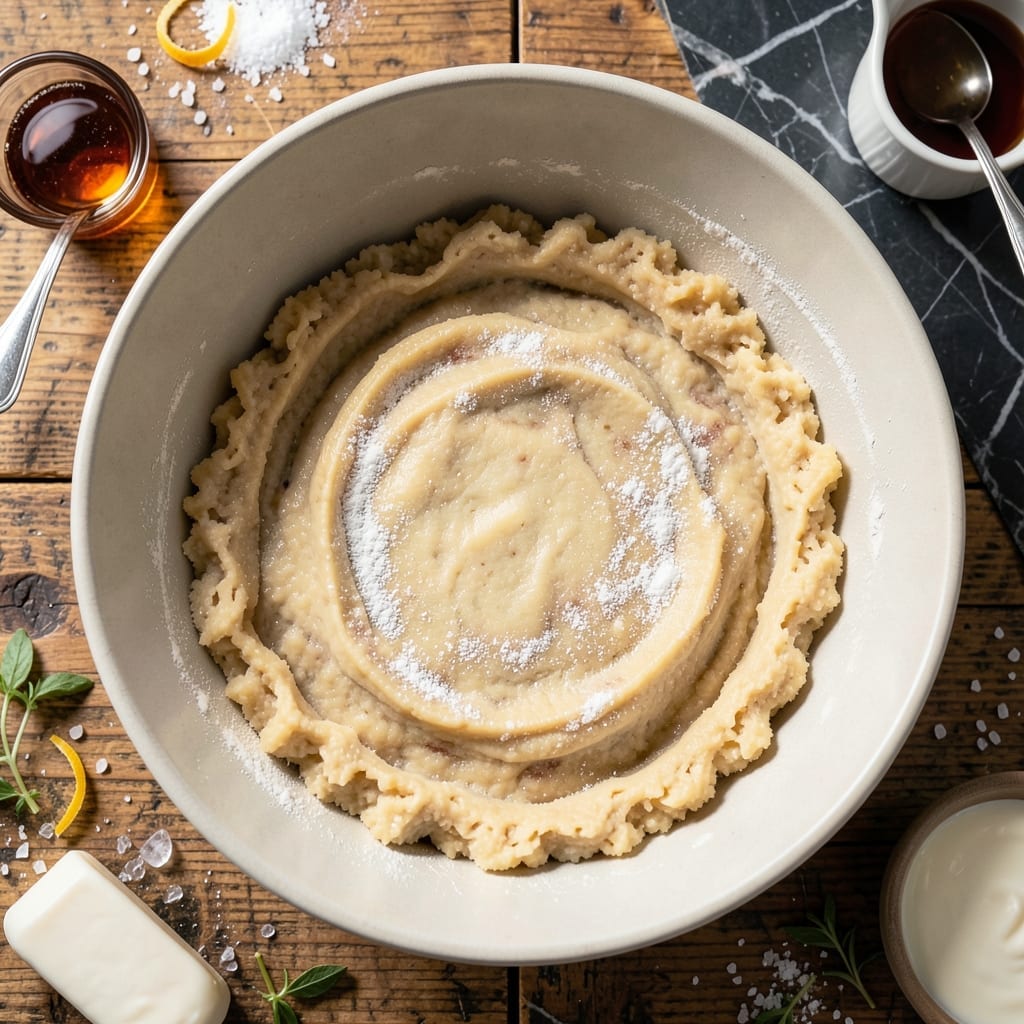
This pie crust delivers on its promise of ultra flaky layers, thanks to a simple combination of lard and apple cider vinegar. The vinegar tenderizes the gluten, while lard creates pockets of flakiness that butter alone can’t match.
I developed this method after years of experimenting with different fats and liquids. The key is keeping everything ice-cold until it hits the oven—this prevents the lard from melting prematurely and ruining those coveted layers.
What emerges from the oven is a golden, shatteringly crisp crust that holds its shape yet melts in your mouth. The apple cider vinegar adds a subtle tang that balances the richness of the lard.
Perfect for pies, tarts, or any recipe where a superior crust makes all the difference. Here’s how to achieve it.
Ingredients for Pie Crust Recipe with Lard and Apple Cider Vinegar
Six ingredients deliver that ultra flaky, golden crust every time without complication.
| Ingredient | Amount | Notes |
|---|---|---|
| All-Purpose Flour 🌾 | 2 ½ cups | Sifted for even texture |
| Lard 🧈 | ¾ cup | Leaf lard preferred for purity |
| Apple Cider Vinegar 🍏 | 1 tbsp | Chilled before using |
| Ice Water 💧 | ½ cup | Plus 1-2 extra tbsp as needed |
| Fine Sea Salt 🧂 | 1 tsp | Dissolved in water |
| Granulated Sugar 🍚 | 1 tbsp | Optional for sweet crusts |
The lard is non-negotiable for that signature flakiness. Leaf lard (rendered from fat around kidneys) is the gold standard—cleaner taste, better texture. Find it at specialty butchers or Latin markets. If you’re in a pinch, regular lard works, but avoid hydrogenated versions (they melt differently). Keep it ice-cold—literally freeze it for 15 minutes before starting. The flour should be all-purpose, nothing fancy (save the bread flour for actual bread).
No lard? Shortening at a 1:1 ratio gets you close, though the flavor won’t be as rich. Apple cider vinegar can be swapped for white vinegar or lemon juice—the acidity does the work, not the flavor. For a whole wheat version, replace half the all-purpose with pastry flour. The sugar is optional, but don’t skip the salt—it enhances all the flavors. Ice water must stay ice-cold; warm water = tough crust.
The dough keeps 2-3 days wrapped tightly in the fridge, or freeze for 1 month. Let it warm slightly before rolling—straight from the fridge cracks. Baked crusts hold 1 week at room temp in an airtight container, or freeze for 3 months.
Why You’ll Love This Recipe
- Five Ingredient Magic: I love that this crust comes together with just flour, lard, vinegar, water, and salt—no fancy ingredients to hunt down.
- Flaky Perfection: The lard makes it so tender, and that hint of apple cider vinegar gives it a subtle tang that pairs perfectly with any filling.
- Freezer Friendly: I always double the batch and freeze half—it keeps beautifully for up to three months, ready for last-minute pies.
- Budget Stretcher: Honestly, lard is so affordable, and this recipe makes enough for two pies, saving me a trip to the store.
Step-by-Step Instructions for Pie Crust With Lard And Apple Cider Vinegar
Master these steps and you’ll achieve exceptionally flaky layers with minimal effort.
Step 1: Combine Dry Ingredients for Even Distribution
In a large mixing bowl, whisk together the 2.5 cups All-Purpose Flour, 1 tsp Fine Sea Salt, and 1 tbsp Granulated Sugar. I sift the flour first to eliminate lumps and ensure an even texture throughout the crust. The salt enhances flavor while the sugar adds a subtle sweetness that complements both fruit and savory fillings.
Whisk vigorously for 30 seconds until the mixture appears uniform in color. This step prevents pockets of concentrated salt or sugar, which could create uneven flavor in your finished crust. The bowl should look clouded with fine, evenly distributed particles.
Step 2: Cut in Lard for Flaky Texture
Add the 0.75 cup Lard to the flour mixture. Using a pastry cutter or two forks, work the lard into the flour until the mixture resembles coarse crumbs with pea-sized pieces of lard visible. I prefer leaf lard for its purity and clean flavor, which results in a more delicate crust.
The key here is speed and minimal handling—you want the lard to remain cold. If the lard starts to melt or the dough feels warm, pause and refrigerate the bowl for 10 minutes before continuing. The visible fat pieces are what create those coveted flaky layers in your finished crust.
Step 3: Add Liquid Ingredients Gradually
In a small bowl, combine the 0.5 cup Ice Water and 1 tbsp Apple Cider Vinegar. The vinegar tenderizes the gluten, ensuring a more tender crust, while the ice water keeps everything cold. Stir until the salt is fully dissolved and the vinegar is evenly distributed.
Create a well in the center of the flour-lard mixture and add the liquid 1 tablespoon at a time, gently stirring with a fork after each addition. You’ll need about 8-10 tablespoons total. The dough is ready when it just begins to hold together when pressed—it should look shaggy, not smooth. Overworking at this stage develops gluten and results in a tough crust.
Step 4: Form and Chill the Dough
Turn the dough out onto a lightly floured surface and gently pat it into a thick disk. If the dough feels sticky, dust your hands with flour. The disk should be about 1 inch thick and have visible streaks of lard—this marbled appearance is the secret to flakiness.
Wrap the disk tightly in plastic wrap and refrigerate for at least 1 hour (or up to 2 days). This chilling period allows the flour to fully hydrate and the lard to firm up, making the dough easier to roll out. It also prevents shrinking during baking. When ready to use, let the dough sit at room temperature for 10 minutes to soften slightly before rolling.
Pro Tips For Making Pie Crust Recipe With Lard And Apple Cider Vinegar
- Chill the Lard: Cut the lard into small cubes and refrigerate for 30 minutes before mixing—this keeps it firm so it doesn’t melt into the flour, giving you that perfect flaky texture.
- Use Ice-Cold Water: I learned this the hard way—warm water makes the crust tough, so fill a glass with ice cubes and water, then measure from that for the liquid.
- Don’t Overwork the Dough: Mix just until the dough comes together, even if it looks a little shaggy. Overmixing develops gluten, and that means a chewy crust instead of a tender one.
- Add Vinegar Last: Stir the apple cider vinegar into the ice water before adding it to the flour mixture—this helps distribute it evenly without overmixing, and it tenderizes the crust just right.
Troubleshooting This Dish
Dough Too Dry
If your mixture looks crumbly and won’t hold together, sprinkle in ice water 1 tsp at a time while gently mixing with a fork. I’ve found that 1-2 extra tablespoons usually does the trick. Avoid adding too much at once—it’s easier to fix dry dough than a soggy one. 💡
Dough Too Sticky
When the dough sticks to your hands or the counter, dust with 1-2 tbsp flour at a time. Work quickly and lightly—over-flouring can make the crust tough. If it’s very sticky, chill the dough for 15 minutes before handling again.
Shrinking Crust
This usually means the gluten was overworked or the dough wasn’t chilled long enough. After rolling, let it rest in the fridge for 20 minutes before baking. I also dock the bottom with a fork to prevent puffing, which can cause uneven shrinking.
Tough Texture
Toughness comes from overmixing or warm ingredients. Keep everything ice-cold and handle the dough as little as possible. If you’ve already mixed too much, try chilling the dough for 30 minutes before rolling—sometimes this relaxes the gluten enough.
Soggy Bottom
Prevent this by baking on a preheated baking sheet or pizza stone. For extra insurance, brush the bottom with 1 beaten egg white before adding fillings. I also poke holes in the base with a fork to allow steam to escape. 🔥
Lard Separation
If you see grease pooling during baking, your lard may have been too warm when incorporated. Next time, freeze the lard for 15 minutes before cutting it in. For this batch, blot excess grease with a paper towel halfway through baking.
Nutrition Facts
Frequently Asked Questions
Why use lard instead of butter?
Lard has a higher melting point than butter, creating more distinct flaky layers. It also lacks water content, reducing toughness and adding a pure, rich flavor.
Can I substitute the apple cider vinegar?
Yes, use white vinegar or lemon juice in equal amounts. The acidity tenderizes the gluten, so any acidic liquid works in a pinch.
How long should I chill the dough?
A minimum of 1 hour is essential, but up to 2 days is fine. This relaxes the gluten and firms the lard for easier rolling.
What if my crust shrinks while baking?
This usually means the dough wasn’t chilled enough or was overworked. Rest it in the fridge for 20 minutes before baking next time.

- Potato Candy Recipe 1933: Vintage Peanut Butter Roll Delight - October 30, 2026
- Potato Chip Cookie Recipe With Pecans: Buttery Crunch Meets Nutty Richness - October 30, 2026
- Potato Patty Recipe No Egg: Crispy Edges Without the Binder - October 30, 2026