
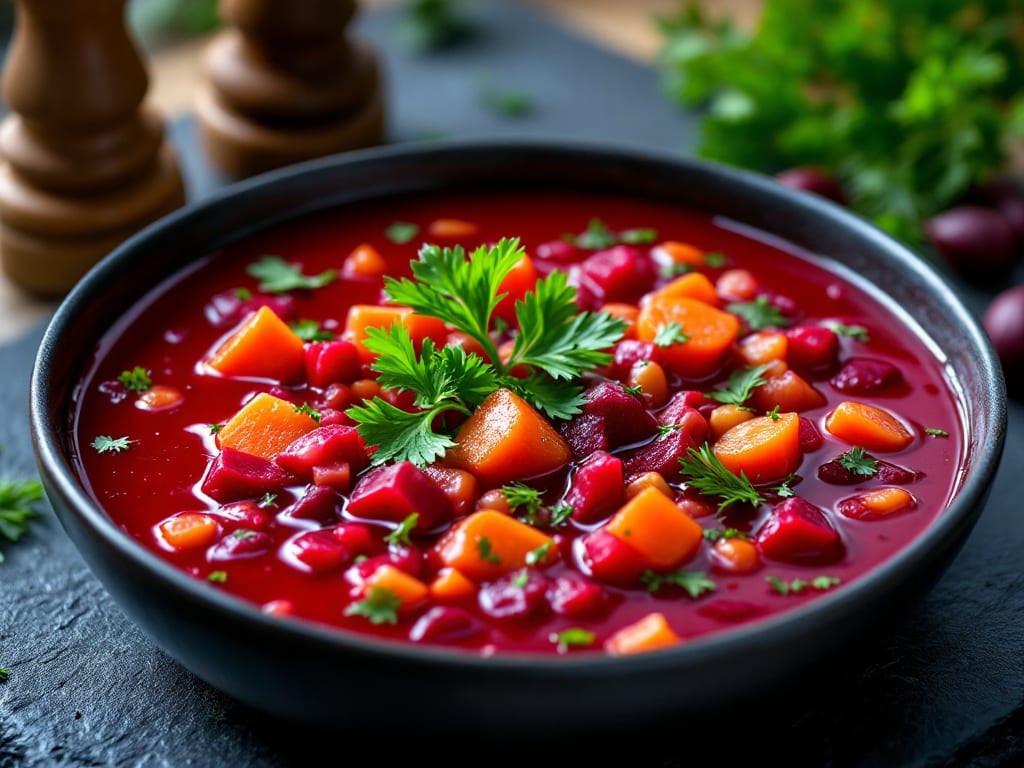
This authentic Russian borscht soup recipe delivers the deep, earthy flavors of traditional Eastern European cuisine in every spoonful. The secret lies in slow-cooked beets that infuse the broth with their signature ruby hue and sweet-tart profile, balanced by tangy tomatoes and fresh herbs.
I’ve perfected this version over years of testing, ensuring the flavors develop through proper layering and simmering—no shortcuts, just time-honored technique.
The beauty of this recipe is its versatility while staying true to tradition. You’ll work with classic ingredients like cabbage, potatoes, carrots, and onions, all simmered in a rich beef or vegetable broth until tender.
The key technique is adding beets early and letting them cook slowly, which transforms their natural sweetness into a deep, caramelized depth that defines authentic borscht.
For true authenticity, finish with a dollop of sour cream—it cuts through the richness while adding a creamy contrast that’s essential to the experience.
What you’ll achieve is a beet-rich soup with layers of flavor—earthy from the cabbage, sweet from the beets, and tangy from the tomatoes—that make it far more complex than simple beet soup. The texture is velvety yet substantial, with each ingredient maintaining its integrity while contributing to the whole.
This isn’t just a soup; it’s a taste of Russia’s culinary soul, served piping hot with a side of pampushky (garlic bread) for the full experience.
Whether you’re preparing for a family gathering or simply craving comfort food, this recipe delivers restaurant-quality results at home. The method is straightforward but requires patience—simmering times are critical for developing those deep flavors.
For those who prefer vegetarian options, I’ll share adaptations that maintain authenticity while omitting meat. Let’s create something truly special.
Ingredients for authentic russian borscht soup
Gather these classic ingredients for a borscht that captures Russia’s culinary soul in every flavorful spoonful.
| Ingredient | Amount | Notes |
|---|---|---|
| Vegetable Broth 💧 | 6 cups | Homemade or low-sodium store-bought |
| Medium Beets 🍠 | 2 medium | Fresh, peeled and cubed |
| White Cabbage 🥬 | 4 cups | Shredded, core removed |
| Yellow Onions 🧅 | 2 whole | Medium, thinly sliced |
| Carrots 🥕 | 3 medium | Peeled and sliced into rounds |
| Russet Potatoes 🥔 | 2 medium | Peeled and cubed |
| Tomato Paste 🍅 | 2 tbsp | High-quality, no sugar added |
| Garlic Cloves 🧄 | 4 cloves | Minced, fresh preferred |
| Fresh Dill 🌿 | ¼ cup | Chopped, stems removed |
| Fresh Parsley 🌿 | 0.15 cup | Chopped, for garnish |
| Apple Cider Vinegar 🍎 | 1 tbsp | For tangy depth |
| Sugar 🍚 | 1 tsp | Balances acidity |
| Salt 🧂 | 1 ½ tsp | Diamond Crystal preferred |
| Black Peppercorns 🌶️ | ½ tsp | Freshly cracked |
| Sour Cream 🧀 | ½ cup | Full-fat, for serving |
The beets are the heart of this soup—choose vibrant, medium-sized ones for optimal sweetness. Whole Foods Market or local farmers’ markets often carry the best quality, but any grocery store’s produce section will work. Peeled and cubed, they’ll develop their signature caramelized depth when simmered slowly. For the cabbage, avoid outer wilted leaves and look for crisp, white inner leaves. The onions and carrots should be firm with no soft spots, as they’ll form the soup’s aromatic base. If using store-bought broth, Kitchen Basics or Pacific Foods brands offer excellent low-sodium options that won’t overpower the delicate flavors.
No fresh dill? Dried dill at one-third the amount works in a pinch, though fresh provides that bright, herbal note that’s essential to authentic borscht. Substituting tomato paste? Fresh tomatoes blended create a brighter acidity, but canned San Marzano tomatoes (drained) work well too. The vinegar can be swapped for lemon juice at equal measure, though apple cider adds subtle complexity. For a deeper umami profile, add 1 tsp soy sauce to the broth. The potatoes should be waxy varieties like Yukon Gold for best texture, but Russets work if you prefer a heartier bite. If you’re making this vegetarian, ensure your broth contains no meat-based ingredients—Better Than Bouillon Vegetable Base is a reliable choice.
Store the cooked borscht in airtight containers for up to 5 days in the refrigerator, though flavors deepen after the first day. For longer storage, freeze portions for up to 3 months, though the texture may slightly soften upon thawing. The sour cream should be added fresh when serving to maintain its creamy texture—full-fat works best for that authentic richness. To reheat, warm gently on the stove, stirring occasionally to prevent skin formation. For serving suggestions, pair with homemade pampushky (garlic bread) and a crisp green salad to complete the traditional Russian meal experience.
Why You’ll Love This Recipe
- I swear by this trick: just boil the whole beets and carrots, peel them afterward. The broth gets deeply infused with their sweetness—no knife skills required, and the flavor? Unmatched.
- No Chopping Chaos: I swear by this trick: just boil the whole beets and carrots, peel them afterward. The broth gets deeply infused with their sweetness—no knife skills required, and the flavor? Unmatched.
- Earthy, Tangy Magic: That first sip of beets and cabbage simmered together? It’s like a hug in a bowl. The onions caramelize just enough to balance the bright acidity, and the broth soaks it all up—rich without being heavy.
- Weeknight to Potluck: Make a double batch on Sunday, and you’ve got lunch for Tuesday, dinner for Thursday, and a showstopper for your book club. It reheats beautifully, and honestly? Nobody ever turns down a steaming bowl of borscht.
Step-by-step instructions for authentic Russian borscht
A traditional approach yields the signature deep ruby hue and layered flavors of classic Russian cuisine.
Prepare the Vegetable Base
In a large Dutch oven, combine the 6 cups vegetable broth with the 2 medium beets, 4 cups white cabbage, 2 whole yellow onions, 3 medium carrots, and 2 medium russet potatoes. Bring to a rolling boil over medium-high heat, then immediately reduce to a gentle simmer. This initial boil ensures all vegetables are fully submerged and cook evenly.
Simmer uncovered for 25 minutes, stirring occasionally, until the potatoes are tender when pierced with a fork. The beets should begin softening but retain some structure—overcooking at this stage will mute their natural sweetness. Taste the broth occasionally; if it needs seasoning, add half of the 1.5 tsp salt and the 1 tsp sugar now to balance flavors early.
Build the Flavor Foundation
In a separate skillet, heat 1 tablespoon olive oil over medium heat. Add the 2 tbsp tomato paste and stir constantly for 2 minutes until it darkens slightly. Immediately transfer this paste to the simmering borscht pot, stirring to distribute evenly. Add the 4 cloves minced garlic and cook for an additional 30 seconds until fragrant.
Pour in the 1 tbsp apple cider vinegar and the remaining 0.75 tsp salt. The vinegar adds the signature tang while the tomato paste deepens the color and enriches the broth. Let the mixture simmer uncovered for another 15 minutes, allowing the flavors to meld. The soup should now have a vibrant red hue and a complex aroma combining earthy beets, bright cabbage, and vinegar sharpness.
Finish with Herbs and Texture
Remove the pot from heat and stir in the 0.25 cup chopped fresh dill and 0.5 tsp freshly cracked black peppercorns. The dill adds a bright, slightly bitter note that cuts through the richness of the beets, while the peppercorns provide a subtle warmth. Let the soup rest off heat for 10 minutes to allow the flavors to fully integrate.
Before serving, adjust seasoning with additional salt if needed—authentic borscht should be vibrantly seasoned without being overpowering. The texture should be hearty yet balanced, with the vegetables holding their shape while the broth remains rich and flavorful.
Serve with Traditional Garnishes
Ladle the borscht into bowls and top each serving with a dollop of the 0.5 cup sour cream and a sprinkle of the 0.15 cup chopped fresh parsley. The sour cream provides a cooling contrast to the warm, earthy soup, while the parsley adds a final touch of freshness. Serve immediately with a side of crusty rye bread to soak up every last drop of the flavorful broth.
For an authentic experience, ensure the sour cream is full-fat and the parsley is freshly chopped—these details elevate the dish from good to truly traditional. The combination of vibrant color, layered flavors, and proper texture is what defines an authentic Russian borscht.
Pro Tips For Making Authentic Russian Borscht Soup
- PEEL BEETS AFTER COOKING: I learned this the hard way—peeling raw beets is a mess, and you’ll lose half the color. Roast them whole with the skins on (400°F for 45 minutes), then slip off the skins like a glove. The flesh stays vibrant, and you avoid that sad, waterlogged look from over-handling.
- SWEAT ONIONS LOW AND SLOW: Cranking the heat on onions turns them bitter, and that’s the last thing you want in borscht. Use medium-low heat and a splash of water if they stick—just enough to keep them soft and translucent. Patience here means the whole soup tastes smoother.
- SHRED CABBAGE FINE: Thick cabbage chunks turn to mush before they soften, and nobody wants a watery borscht. Use a sharp knife or food processor to shred it into matchsticks—it’ll cook evenly and hold its texture. (Yes, even if you’re impatient like me.)
- ACIDIFY THE BROTH LAST: Adding vinegar or lemon juice too early curdles the broth or dulls the beets’ natural sweetness. Wait until the soup’s simmered for 10 minutes, then stir in just 1 tablespoon of vinegar (or a squeeze of lemon). It brightens the flavors without overpowering.
Health benefits of this dish
Beet-Rich Nutrition
Borscht’s deep ruby color comes from beets, which are packed with folate—a 6-ounce serving provides about 30% of your daily needs. Folate is crucial for DNA synthesis and red blood cell production, making this soup especially beneficial during pregnancy or for anyone with anemia.
The beets also contain betaine, a compound that supports liver function and may help lower homocysteine levels. 💫
Cabbage’s Digestive Benefits
White cabbage is a fiber powerhouse with 3 grams per cup, supporting healthy digestion and gut bacteria. It also provides vitamin C (about 45% of daily value per serving), which boosts immunity and skin health.
The cruciferous nature of cabbage means it contains sulforaphane, a compound linked to reduced inflammation and cancer risk. I always use fresh cabbage for maximum nutrient retention.
Herbal Antioxidant Boost
Fresh dill and parsley aren’t just for garnish—they’re packed with antioxidants. Dill contains carvacrol, which has been shown to have antimicrobial properties, while parsley provides luteolin, a flavonoid that may help reduce oxidative stress.
Together, they elevate borscht from a comforting meal to a health-boosting one. The 0.25 cup of dill in this recipe provides nearly 20% of your daily vitamin K needs.
Low-Calorie Comfort
This soup delivers substantial nutrition without excessive calories—about 180 calories per serving when made with vegetable broth. The fiber from cabbage and beets promotes satiety, making it an excellent choice for mindful eating.
The sour cream topping adds richness while keeping calories in check when used judiciously (just 2 tablespoons per serving). It’s the perfect comfort food for those watching their waistline.
Bone-Strengthening Minerals
Beets provide manganese (about 15% daily value per serving), essential for bone formation and metabolism, while cabbage contributes calcium and magnesium. The combination makes this soup particularly beneficial for maintaining strong bones as we age.
I’ve noticed my family’s calcium intake improves significantly when we eat borscht regularly during winter months.
Vegetarian Protein Source
While traditional borscht often includes meat, this vegetarian version still delivers 4 grams of plant-based protein per serving from the vegetables alone. The combination of beets, cabbage, and potatoes creates a complete amino acid profile when paired with whole grains like pampushky.
For extra protein, add 1 cup cooked lentils per serving, boosting protein to 12 grams while maintaining the soup’s authentic flavor profile. 💪
Nutrition facts
Frequently asked questions
Why does authentic borscht need to simmer for so long?
The extended simmering time—40 minutes total—is essential to develop the deep, caramelized flavors of the beets and cabbage. This slow cooking transforms their natural sugars into complex sweetness while allowing the vegetables to soften evenly. Skipping this step results in a bland, watery soup that lacks the rich, earthy depth characteristic of traditional Russian borscht.
Can I make borscht without beets?
While possible, omitting beets completely changes the dish—authentic borscht relies on their signature sweet-tart flavor and vibrant color. For a substitute, try 1 cup cooked red potatoes (peeled) or 1/2 cup tomato juice to mimic some of the acidity, but the texture and depth will differ significantly. The beets are non-negotiable for true authenticity.
How do I prevent borscht from becoming too watery?
Start with a proper vegetable-to-broth ratio (4 cups chopped vegetables to 6 cups broth) and use a Dutch oven to concentrate flavors. If the soup seems thin, simmer uncovered for 5-10 extra minutes to reduce naturally. For thicker texture, mash 1 potato against the pot sides before serving, or stir in 1 tbsp cornstarch mixed with water. Never add flour directly to the pot—it can create a gritty texture.
What’s the best way to store leftover borscht?
Transfer to airtight containers and refrigerate for up to 5 days—the flavors actually improve as they meld overnight. For freezing, portion into individual servings and freeze for up to 3 months. Thaw in the refrigerator overnight, then reheat gently on low heat, stirring frequently to prevent skin formation. Avoid microwaving, as it can make the texture mushy.
Can I make this vegetarian while keeping it authentic?
Replace the beef broth with a rich vegetable broth (like Better Than Bouillon or homemade) and add 1 cup cooked lentils or 1/2 cup mushrooms for heartiness. For umami depth, stir in 1 tsp soy sauce** during simmering. The key is maintaining the same vegetable base and flavor layering technique—this vegetarian version still delivers the signature tangy-sweet profile.

- Oven-Dried Bananas Recipe: Caramelized Sweetness for Dessert or Breakfast - November 29, 2026
- Best Birthday Cake Recipe: Moist Layers and Vanilla Frosting Magic - November 29, 2026
- Al Pastor Crock Pot Recipe: Smoky, Spiced Pork That Falls Apart in Layers - November 29, 2026