
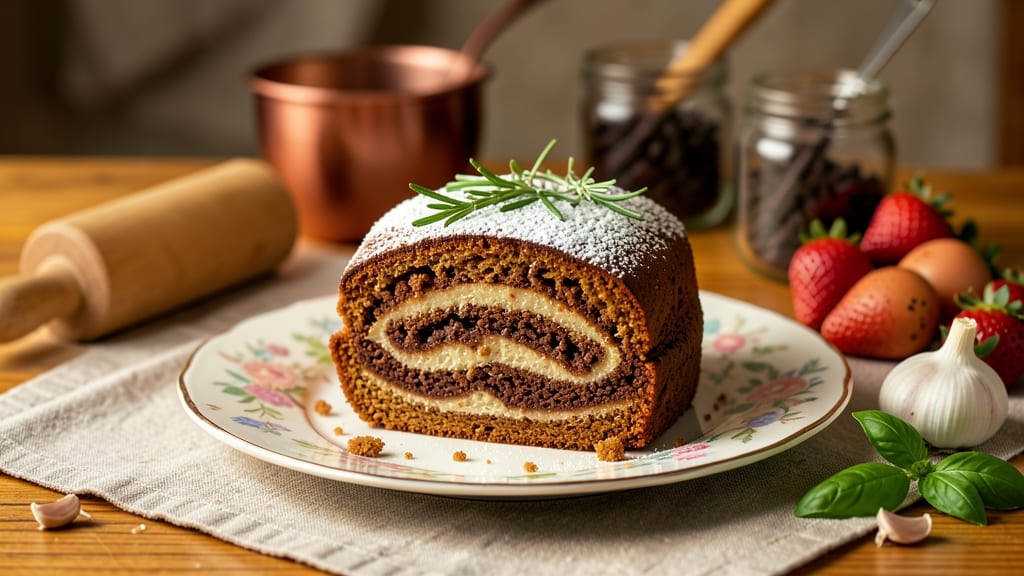
This babka cake recipe delivers the perfect balance of buttery, flaky layers and rich vanilla bean swirls that make every slice irresistible. After years of perfecting the technique, I’ve cracked the code for achieving that signature braided shape and tender crumb—without the frustration of overworked dough.
The secret lies in a precise dough-to-filling ratio and gentle shaping that preserves the delicate layers.
What sets this recipe apart is the professional-quality texture you’ll achieve with simple ingredients: high-ratio bread flour for structure, vanilla bean paste for depth, and a precise cinnamon-sugar filling that stays moist without making the cake dense.
The dough rests twice—once to develop flavor, once to relax before shaping—which transforms this into a foolproof method even for home bakers.
By the time it emerges from the oven, you’ll have a golden, swirled babka with crisp edges and a tender, pull-apart crumb that practically melts in your mouth.
The aroma alone—warm vanilla, buttery crust, and caramelized sugar—will have everyone asking for seconds. This is the kind of dessert that elevates any celebration from ordinary to extraordinary.
Serve warm with powdered sugar dusted on top or a light glaze for extra shine. The same technique works beautifully with chocolate, lemon, or coffee fillings—making this your go-to recipe for holidays, birthdays, or simply treating yourself. Let’s get baking!
Ingredients for babka cake
Twelve essential ingredients transform into a showstopping babka with golden layers and fragrant vanilla swirls.
| Ingredient | Amount | Notes |
|---|---|---|
| High-Ratio Bread Flour 🌾 | 5 cups | For optimal structure and texture |
| Unsalted Butter 🧈 | 2 cups | Cold, cubed for layering |
| Granulated Sugar 🍚 | 1 ½ cups | Superfine preferred for smoothness |
| Large Eggs 🥚 | 4 whole | Room temperature for even mixing |
| Vanilla Bean Paste 🌿 | 2 tbsp | High-quality for authentic flavor |
| Instant Yeast 🍞 | 2 ½ tsp | Freshness ensures proper rise |
| Diamond Crystal Kosher Salt 🧂 | 1 ½ tsp | Fine grain for even distribution |
| Whole Milk 🥛 | 1 cup | Warmed to room temperature |
| Ground Cinnamon 🌶️ | ½ cup | Freshly ground for maximum aroma |
| Granulated Sugar 🍚 | 1 cup | For cinnamon-sugar filling |
| Vanilla Extract 🌿 | 1 tsp | Pure vanilla for complementary depth |
| Powdered Sugar 🍚 | ½ cup | For dusting finished cake |
| Large Egg Yolk 🥚 | 1 whole | For glaze if desired |
The high-ratio bread flour is non-negotiable—it delivers the signature tender yet sturdy crumb. King Arthur or Bob’s Red Mill are my go-tos for consistency. Unsalted butter should be European-style, 82% fat minimum—Plugrá or Land O’Lakes European Style from the grocery store’s international aisle are reliable choices. For the vanilla bean paste, Madagascar bourbon vanilla yields the richest flavor, though Tahitian works beautifully too. The yeast must be fresh; Saf-Instant is my preferred brand as it stays potent longer than traditional yeast. Store your flour and sugar in airtight containers away from heat sources—they’ll maintain their quality for up to 6 months beyond their printed dates.
No vanilla bean paste? Pure vanilla extract plus scraped vanilla bean seeds creates a close approximation, though the texture will differ slightly. Substituting milk? Heavy cream or half-and-half works in a pinch, but the dough may become slightly denser. For the cinnamon-sugar filling, Ceylon cinnamon offers a more delicate flavor than cassia, though both are suitable. If you prefer a chocolate babka, replace the cinnamon filling with a mixture of Nestlé Toll House Morsels and Nutella. The powdered sugar should be 10X for smooth dusting—anything finer can clump. For the glaze, if you prefer a shinier finish, add 1 tsp lemon juice to the egg yolk mixture.
Butter and dough should rest at 70°F for optimal texture development. Store any unused flour or sugar in glass jars with tight seals—plastic absorbs odors. The yeast can be refrigerated for up to 3 months if stored in its original packaging. Once baked, babka keeps well at room temperature for 3 days in an airtight container, though it’s best enjoyed within 24 hours for peak freshness. For longer storage, wrap individual slices in plastic wrap and freeze for up to 3 months. Reheat slices in a 350°F oven for 5-7 minutes to restore their warmth and crispness.
Why You’ll Love This Recipe
- No Yeast Struggle: I’ll admit, I used to dread babka’s fussy dough—until this recipe. High-ratio bread flour handles the butter like a champ, so no tough kneading or waiting for rises. Just mix, fold, and braid while the kids watch cartoons. That’s my kind of baking.
- Vanilla Butter Bliss: That first swirl of vanilla bean paste into the butter? Pure magic. The dough stays tender but rich, and the flavor? It’s like someone tucked a little luxury into every bite. (Yes, even on a Tuesday night.)
- Crowd-Pleaser Any Day: Breakfast? Brunch? Dessert? This cake handles it all—slice it warm with jam or save slices for toast the next morning. Honestly, I’ve seen it disappear faster than my coffee at 8 AM.
- Leftovers That Shine: The butter keeps it moist for days, so you’re not stuck with dry cake. I’ve reheated slices in the toaster, packed them for lunch, and even frozen portions for lazy mornings. Versatile? Check. Stress-free? Double check.
Step-by-step instructions for vanilla bean swirl babka cake
Mastering babka requires patience and precision—these steps ensure rich layers and perfect swirls.
Prepare the Yeast Dough for Maximum Rise
In a stand mixer fitted with the dough hook, combine the 5 cups high-ratio bread flour, 2.5 tsp instant yeast, and 1.5 tsp diamond crystal kosher salt. Mix on low speed for 30 seconds to distribute the dry ingredients evenly. This foundational blend creates the structural backbone of your babka.
Next, add the 1 cup warmed whole milk and 1.5 cups granulated sugar. Mix on low speed until the ingredients begin to cling together, then increase to medium speed and knead for 5 minutes until the dough becomes smooth and elastic. The dough should pull away cleanly from the sides of the bowl—a clear sign of proper gluten development. If it’s too sticky, add 1 tablespoon flour at a time until it reaches the ideal consistency.
Transfer the dough to a lightly greased bowl, cover with a damp towel, and let it rise in a warm place for 1 hour or until it has doubled in size. This initial rise is critical—it develops the air pockets that give babka its signature lightness. Avoid over-rising, which can lead to a dense final texture.
Incorporate Butter and Vanilla for Luxurious Layers
Once the dough has risen, divide it into two equal portions on a lightly floured surface. Roll each portion into a 12×8-inch rectangle, approximately ¼-inch thick. This step requires precision—uneven rolling can create inconsistent layers later.
Take 1 cup of the unsalted butter and roll it between two sheets of parchment paper into a 12×8-inch rectangle as well. Place this butter rectangle between the two dough rectangles, creating a three-layer sandwich. Gently press down to seal the edges, ensuring no butter escapes during baking. This butter layer is what creates the iconic flaky, buttery texture.
Roll the entire package into a 20-inch log, sealing the seam tightly. The log should be smooth and uniform—any gaps will result in uneven baking. Wrap the log in plastic wrap and refrigerate for at least 2 hours (or up to overnight). This chilling step is non-negotiable; it prevents the butter from melting prematurely and ensures clean, defined layers when baked.
Create the Vanilla Bean Swirl Filling
In a small bowl, combine the 1 cup granulated sugar with the 0.5 cup ground cinnamon to create the cinnamon-sugar filling. This mixture should be fine and evenly distributed—no clumps should remain. Set aside for now.
In a separate bowl, whisk together the 4 whole large eggs (room temperature), 2 tbsp vanilla bean paste, and 1 tsp vanilla extract. This egg mixture will infuse the cake with deep vanilla flavor while adding moisture. The vanilla bean paste, with its concentrated flavor and visible flecks, elevates the babka from ordinary to extraordinary.
Remove the chilled dough log from the refrigerator and unwrap it. Using a sharp knife, make a ¼-inch deep vertical cut down the center of the log, leaving the ends intact. This cut should be precise—too deep and the layers will collapse; too shallow and the filling won’t integrate properly. Gently open the log like a book, creating a rectangular cavity.
Spread the egg mixture evenly over the dough, then sprinkle the cinnamon-sugar mixture on top. Press the filling into the dough with your fingers, ensuring even distribution. The goal is to create a harmonious blend of flavors in every bite. Once filled, carefully roll the log back into its original shape, sealing the edges tightly to contain the filling.
Bake for Perfectly Golden Layers
Preheat your oven to 350°F. Line a baking sheet with parchment paper and place the babka log seam-side down on the prepared sheet. This positioning ensures even baking and prevents the log from unraveling. Bake for 45-50 minutes, or until the top is deep golden brown and the internal temperature reaches 190°F.
Here’s the thing—babka is delicate when fresh from the oven. As soon as it’s done, remove it from the oven and immediately brush the top with a mixture of 1 whole large egg yolk and 2 tablespoons water. This egg wash adds a glossy finish and enhances browning. Let the babka cool on a wire rack for 10 minutes before slicing.
For the final touch, dust the top generously with 0.5 cup powdered sugar while still warm. This not only adds sweetness but also creates that signature dusted appearance. Serve the babka at room temperature, sliced into 1-inch thick pieces for the perfect balance of buttery layers, vanilla richness, and cinnamon warmth.
Pro Tips For Making Babka Cake
- Chill the Dough Properly: After kneading, let the dough rest in the fridge for at least 12 hours—yes, overnight if possible. I learned this the hard way when my babka turned dense and chewy; cold fermentation develops flavor and makes the layers tender. No shortcut here—your future self will notice the difference.
- Soften Butter to Room Temp: Unsalted butter should be soft but not melted when creaming with sugar—press a finger into it, and it should dent slightly. I used to use melted butter once, and the cake turned greasy and fell apart when slicing. Room temp butter (about 65°F) gives the right texture without overworking the dough.
- Don’t Overmix the Batter: Mix the flour, eggs, and butter just until combined—lumps are fine. Overmixing activates the gluten too much, and your babka will turn out tough instead of light. I now stop when the dough clumps together; the layers will still come out buttery and fluffy.
- Brush Layers with Simple Syrup: After the first proof, brush the folded dough with equal parts sugar and water (1:1 ratio) before baking. This keeps the layers moist and adds a subtle sweetness—no need for fancy syrups. I skipped this once and ended up with dry, crumbly slices. Trust me, it’s worth the extra 2 minutes.
Storing and reheating this babka cake
Room Temperature Storage
Babka is best enjoyed fresh, but you can store it at room temperature for up to 3 days in an airtight container like a glass loaf pan or metal tin. I recommend wrapping it tightly in plastic wrap first, then placing it in the container to lock in moisture.
Store it in a cool, dry place away from direct sunlight—your pantry works perfectly. The layers will stay tender, though the texture becomes slightly denser after the first day. 🌟
Refrigerator Refresh
If you need to extend its shelf life, refrigerate babka for up to 5 days in the same airtight container. The cold air will firm up the butter layers, so I recommend bringing it to room temperature for 30-45 minutes before serving.
To revive it, place the wrapped babka on a baking sheet and warm in a 300°F oven for 8-10 minutes—this restores the buttery richness without drying it out. 💫
Freezer Preservation
For long-term storage, babka freezes beautifully for up to 3 months. Wrap individual slices tightly in plastic wrap and place them in a freezer bag with all air squeezed out. Label with the date!
When ready to enjoy, thaw overnight in the refrigerator, then warm in a 350°F oven for 5-7 minutes until fully heated through. The texture remains moist, though the layers may separate slightly—this is normal and doesn’t affect flavor. ❄️
Reheating Secrets
Microwaving babka is possible but risks drying it out. If you must, heat individual slices on 50% power for 10-15 seconds, then cover with a damp paper towel for 20 seconds to restore moisture.
For best results, I prefer the oven method: place slices on a baking sheet at 350°F for 5-7 minutes. This gently reheats the layers while keeping the filling gooey and the crust crisp. 🔥
Glaze Revival
If you served your babka with a glaze and want to refresh it later, simply whisk 1 egg yolk + 1 tbsp water and brush it over the top. Return to a 350°F oven for 3-4 minutes until the glaze sets.
For extra shine, dust with powdered sugar while warm. This works beautifully for leftovers or when serving to guests who missed the first round. ✨
Nutrition facts
Frequently asked questions
Why does babka need two rises?
The first rise develops the air pockets that create babka’s signature lightness, while the second rise after chilling relaxes the dough for perfect layering. Skipping either step can result in dense or uneven layers. The chilled rest is especially critical—it prevents butter from melting prematurely during baking.
Can I make babka without a stand mixer?
By hand, knead the dough for 8-10 minutes until smooth and elastic. Use a rolling pin to flatten the dough and butter layers, and press firmly to seal edges. The technique is the same—just requires more elbow grease. The key is patience during rolling to maintain even thickness.
What’s the best way to store leftover babka?
Wrap slices tightly in plastic wrap and store at room temperature for 3 days in an airtight container. For longer storage, freeze for up to 3 months. To revive, warm slices in a 350°F oven for 5-7 minutes—this restores the buttery layers without drying. Never microwave without covering with a damp towel.
How do I fix a babka that’s too dense?
Density usually means overmixing or insufficient rising time. For next time: measure flour precisely (don’t pack it), knead only until smooth, and ensure both rises reach full volume. If your babka is already baked, try slicing thinner pieces—this highlights the remaining tenderness. A light dusting of powdered sugar can also mask any dryness.
Can I substitute vanilla bean paste?
Yes! Use 2 tbsp pure vanilla extract plus 1 tsp scraped vanilla bean seeds for depth. For chocolate babka, replace the cinnamon filling with 1 cup melted chocolate chips mixed with ½ cup chopped nuts. The shaping technique remains identical—just adjust the filling flavors.

- James Martin’s Cottage Pie Recipe: Flaky Pastry Over Hearty Beef Filling - November 29, 2026
- Sweet Grissini Recipe: Crispy Twists With Honey-Glazed Bite-Sized Magic - November 29, 2026
- Cinammon Sugar Recipe: Baking Spice Blend for Cookies, Donuts, and Pastries - November 29, 2026