
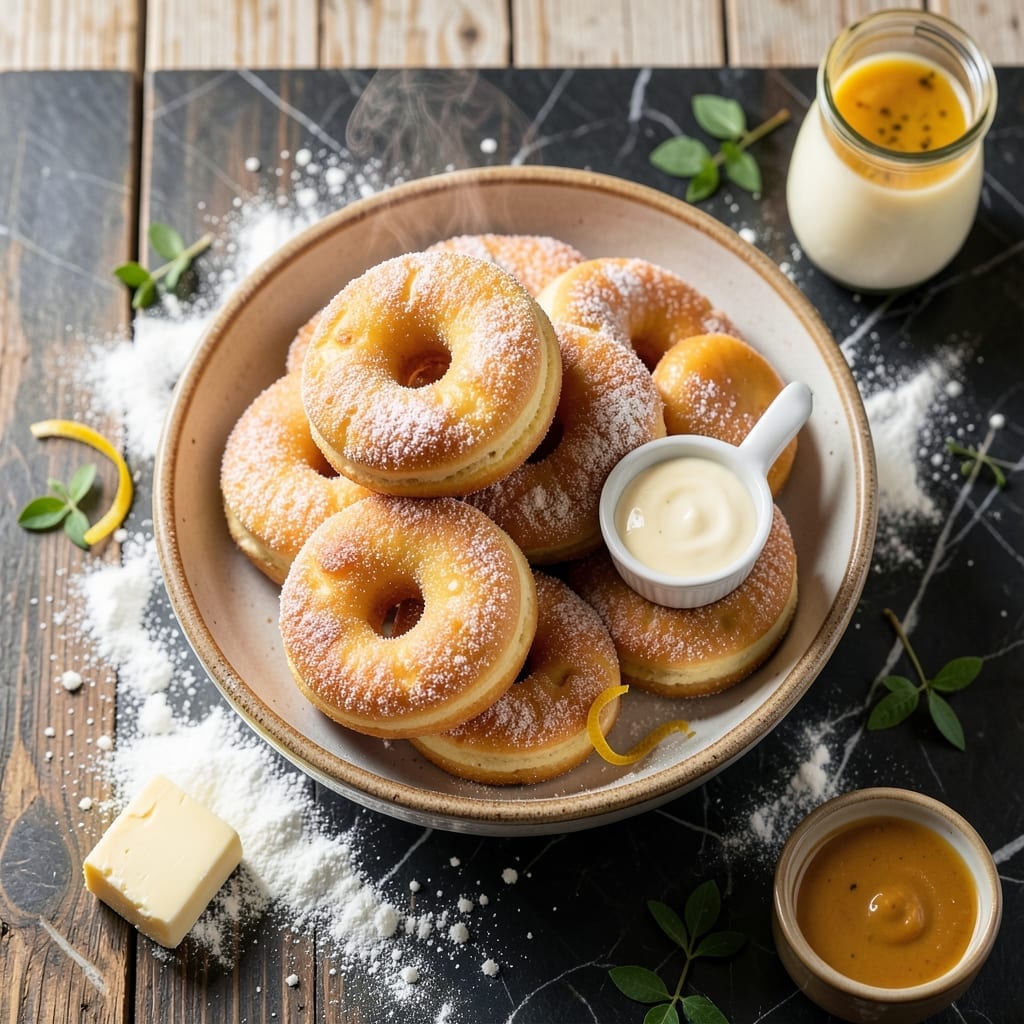
Achieving bakery-quality donuts at home is simpler than you think. This method delivers the same tender crumb and golden exterior found in professional kitchens.
The key lies in precise mixing and proper proofing time. A well-balanced dough and controlled frying temperature ensure consistent results every time.
You’ll create light, fluffy donuts with a delicate sweetness that rivals any specialty shop. The process rewards patience with professional-grade treats.
Master the technique, then customize with your favorite glazes or toppings. These donuts will surpass store-bought every time.
Ingredients for Babycakes Donut
A handful of pantry staples and a little patience create these bakery-style treats.
| Ingredient | Amount | Notes |
|---|---|---|
| All-Purpose Flour 🌾 | 4 cups | Plus extra for dusting |
| Granulated Sugar 🍚 | ½ cup | Fine grain preferred |
| Large Eggs 🥚 | 2 whole | Room temperature for best rise |
| Whole Milk 🥛 | ¾ cup | Warm to 110°F |
| Unsalted Butter 🧈 | 4 tbsp | Melted and cooled |
| Active Dry Yeast 🍞 | 2 ¼ tsp | One packet, proofed first |
| Salt 🧂 | 1 tsp | Fine sea salt |
| Ground Nutmeg 🌰 | ½ tsp | Freshly grated preferred |
| Vanilla Extract 🌿 | 1 tsp | Pure extract for best flavor |
| Vegetable Oil 🫒 | 4 cups | For frying, neutral flavor |
| Powdered Sugar ✨ | 2 cups | For dusting or glaze |
The flour is your foundation—King Arthur is my go-to for consistent texture. Yeast freshness matters more than brand; check the expiration date (yes, even if it’s unopened). Whole milk gives richer dough than skim, but any milk works in a pinch. Butter should be unsalted so you control the salt content. Warm the milk to 110°F—too hot kills the yeast, too cold slows the rise.
No whole milk? Oat or soy milk works here. Out of nutmeg? Cinnamon or allspice adds warmth. Vegetable oil can be swapped for canola or peanut oil (avoid olive oil—its flavor is too strong). If you’re skipping the glaze, dust with powdered sugar fresh from the freezer (it dissolves less). Yeast can be instant too—just skip the proofing step.
Dough rises best in a warm, draft-free spot (inside the turned-off oven with the light on works). Fried donuts keep 1-2 days at room temperature, but they’re best eaten same-day. Freeze unglazed donuts for up to 1 month—reheat in the oven to revive.
Why You’ll Love This Recipe
- Minimal Effort: I mix, pour, and bake—no deep fryer or fancy tools needed, just my trusty donut pan.
- Buttery Sweetness: That rich butter and sugar combo gives them a melt-in-your-mouth quality that store-bought can’t touch.
- Breakfast to Dessert: Honestly, I’ve served these for weekend brunch and midnight snacks—equally perfect both times.
- Pantry Staples: All-purpose flour, milk, eggs—stuff I always have on hand, so I can whip these up on a whim.
Step-by-Step Instructions for Babycakes Donuts
Here’s the method I use for light, fluffy donuts that taste just like the bakery.
Step 1: Proof the Yeast and Mix the Dough
Start by proofing the 2.25 tsp Active Dry Yeast in the 0.75 cup Whole Milk warmed to 110°F. I let it sit for 5 minutes until it becomes foamy—that’s how you know it’s alive. In a large bowl, whisk together the 4 cups All-Purpose Flour, 0.5 cup Granulated Sugar, 1 tsp Salt, and 0.5 tsp Ground Nutmeg.
Make a well in the center and add the yeast mixture, 2 whole Large Eggs, melted 4 tbsp Unsalted Butter, and 1 tsp Vanilla Extract. Mix until a shaggy dough forms. The dough will be sticky—that’s normal.
Step 2: Knead and Let the Dough Rise
Turn the dough out onto a lightly floured surface and knead for 5-7 minutes until smooth and elastic. I dust my hands with a little extra flour to prevent sticking. The dough should spring back when you poke it with your finger.
Place the dough in a greased bowl, cover with a clean towel, and let rise in a warm place for 1-2 hours or until doubled in size. I like to turn on my oven to 200°F for 1 minute, then turn it off and place the bowl inside for a cozy rise.
Step 3: Roll, Cut, and Second Rise
Roll out the dough on a floured surface to about ½-inch thickness. Use a donut cutter or a 3-inch round cutter for the outer shape and a 1-inch cutter for the holes. Place the cut donuts on a floured baking sheet, cover, and let rise for another 30-45 minutes.
They’ll puff up noticeably—this second rise ensures they’re light and airy. Don’t skip it (I learned the hard way). Meanwhile, heat the 4 cups Vegetable Oil in a deep pot to 350-360°F.
Step 4: Fry to Golden Perfection
Carefully lower 2-3 donuts at a time into the hot oil. Fry for 1-2 minutes per side until golden brown. Use a slotted spoon to transfer them to a paper towel-lined plate to drain. The oil should sizzle gently when you add the donuts—if it’s too hot, they’ll brown too quickly outside while staying raw inside.
Work in batches to avoid crowding the pot, which would lower the oil temperature. Keep an eye on the thermometer—maintaining that 350-360°F range is key for even cooking.
Step 5: Coat with Powdered Sugar
While the donuts are still warm but not piping hot, roll them in the 2 cups Powdered Sugar to coat completely. I like to do this in batches, adding more sugar as needed. The sugar will melt slightly from the residual heat, creating a light glaze.
Let them cool on a wire rack for 5-10 minutes before serving. The sugar coating should be even and slightly sticky—just like the ones from your favorite bakery. These are best enjoyed fresh, but they’ll keep for a day in an airtight container.
Pro Tips For Making Babycakes Donut
- Chill the Dough: After mixing, refrigerate the dough for at least 30 minutes—this prevents the butter from melting too quickly when frying, giving you a fluffier texture.
- Use Room-Temp Eggs: I learned this the hard way—cold eggs can cause the butter to clump, so pull them out of the fridge 30 minutes before mixing for a smoother batter.
- Avoid Overmixing: Stir just until the flour disappears; overworking the gluten makes the donuts tough instead of tender.
- Test Oil Temperature: Drop a pinch of dough into the oil—if it sizzles and rises immediately, it’s ready; if it sinks, wait another minute or two.
Make-Ahead Tips for This babycakes donut
Overnight Dough Prep
Mix and knead your dough as usual, then place it in a greased bowl. Cover tightly with plastic wrap and refrigerate overnight. This slow rise develops deeper flavor and makes morning frying a breeze. I pull it out 1 hour before shaping to take the chill off. 💡
Shape and Freeze
After the second rise, cut your donuts and place them on a floured baking sheet. Freeze for 1 hour until solid, then transfer to a zip-top bag. They’ll keep for up to 1 month—fry from frozen, adding 30 seconds to each side.
Pre-Fry Prep
If making glazed donuts, prep your glaze the night before. Store in an airtight container at room temperature. Warm it slightly in the microwave for 15-20 seconds before dipping to ensure smooth, even coverage.
Day-Of Efficiency
Set up your frying station before heating the oil. Place paper towels, wire racks, and powdered sugar in 2 cups within reach. I use a candy thermometer clipped to the pot for precise temperature control. This prevents frantic searching mid-fry. ⏰
Reviving Leftovers
For next-day donuts, warm them in a 350°F oven for 5-7 minutes. Skip the microwave—it makes them soggy. Dust with fresh powdered sugar after reheating to restore that bakery-fresh look.
Glaze Ahead
Make and color any decorative glazes up to 2 days ahead. Store in airtight containers at room temperature. Stir well before using and adjust consistency with 1-2 tsp milk if needed.
Nutrition Facts
Frequently Asked Questions
What if my dough doesn’t rise?
Check your yeast first—it may be expired. Ensure your milk is 110°F and your rising spot is warm (like an oven with the light on). If all else fails, try again with fresh yeast.
Can I bake instead of fry?
Yes, but texture differs. Bake at 375°F for 8-10 minutes for cake-like donuts. They won’t be as crispy but still delicious with a sugar coating.
Why are my donuts greasy?
Oil temperature is likely too low. Maintain 350-360°F to prevent oil absorption. Use a thermometer and fry in small batches to avoid crowding.
How do I make them gluten-free?
Swap all-purpose flour for a 1:1 gluten-free blend. Let dough rest 30 minutes before shaping to improve texture. Results may be denser but still tasty.

- BBQ Sausage Recipe Oven: Smoky Depth Without the Grill - September 28, 2026
- BBQ Chicken Bowl Recipe Rice: Smoky Sweetness Over Fluffy Grains - September 28, 2026
- Beef Cutlet Recipe Ideas: Crispy Breaded Patties With Bold Seasonings - September 28, 2026