
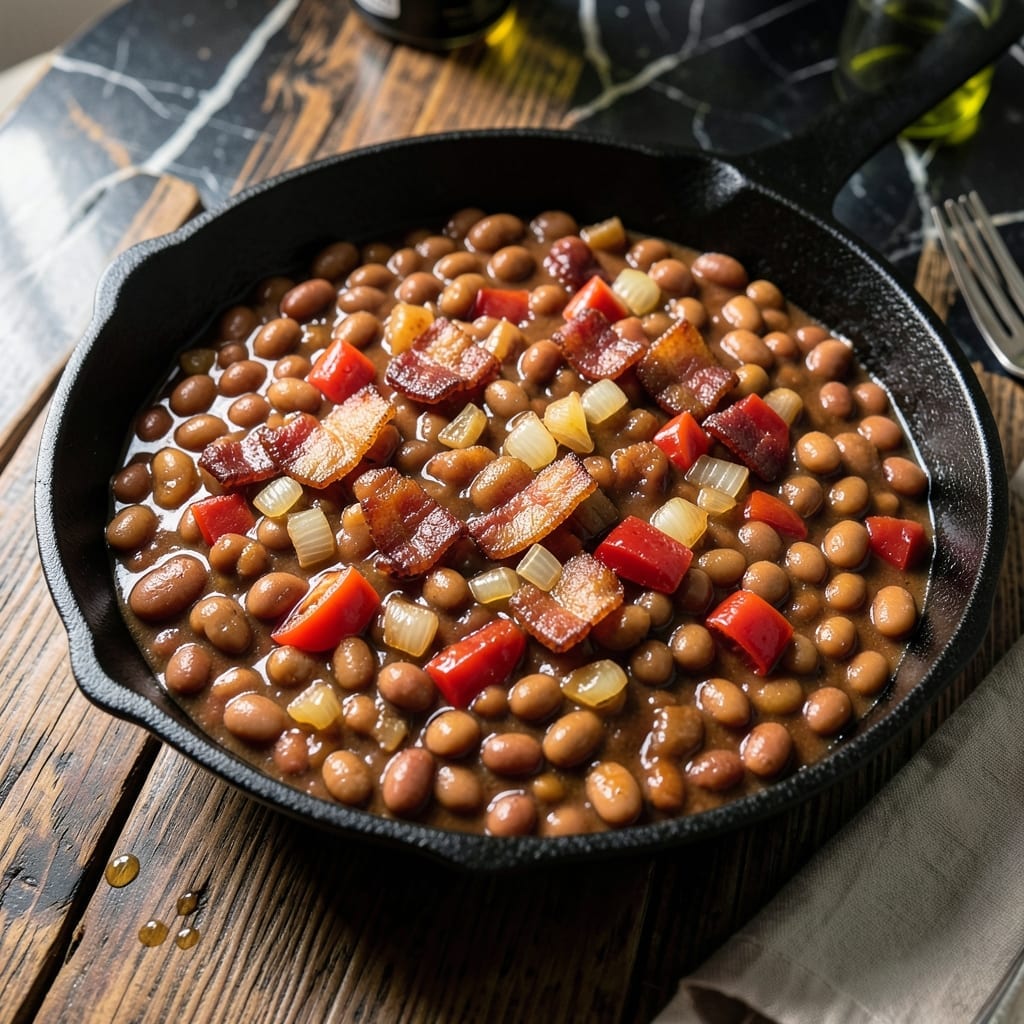
Transform canned pork and beans into a rich, smoky side dish in under an hour. This method enhances the flavor without complicating the process.
The secret lies in a few simple additions and a slow bake. You’ll end up with tender beans in a thick, savory sauce that tastes homemade.
Ingredients for Baked Beans Recipe Using Canned Pork and Beans
A handful of pantry staples turns canned beans into something special with minimal effort.
| Ingredient | Amount | Notes |
|---|---|---|
| Canned Pork and Beans 🫘 | 2 cans | 28 oz cans, drained |
| Bacon 🥓 | 6 slices | Chopped, cooked until crisp |
| Yellow Onion 🧅 | 1 whole | Medium, finely diced |
| Bell Pepper 🌶️ | 1 whole | Green or red, diced |
| Ketchup 🍅 | ¾ cup | Standard variety works |
| Brown Sugar 🍚 | ½ cup | Light or dark, packed |
| Yellow Mustard 🟡 | 2 tbsp | Prepared mustard |
| Apple Cider Vinegar 🍏 | 2 tbsp | Balances sweetness |
| Worcestershire Sauce 🫒 | 1 tbsp | Adds depth of flavor |
| Smoked Paprika 🌶️ | 1 tsp | For smoky flavor |
| Garlic Powder 🧄 | 1 tsp | Enhances savory notes |
| Salt 🧂 | ½ tsp | Adjust to taste |
| Black Pepper 🌶️ | ½ tsp | Freshly ground preferred |
The bacon is key here—thick-cut from the butcher counter gives the best texture and flavor. Wright or Oscar Mayer are solid grocery store options if you’re in a hurry. Canned pork and beans are standard, but Bush’s or Van Camp’s brands work well. The onion and bell pepper should be fresh (the good stuff, not pre-chopped) for the best texture in the final dish.
No bacon? Smoked sausage or ham can stand in (just dice it small). Out of brown sugar? Honey or maple syrup at half the amount adds sweetness. For a tangier twist, swap apple cider vinegar for white vinegar. If you’ve got leftover barbecue sauce, use it in place of ketchup and brown sugar—just cut back on the vinegar.
This keeps well—store leftovers in an airtight container for up to 5 days in the fridge. The flavors deepen overnight. Freeze portions for up to 3 months if you’ve made a big batch. Reheat on the stove or in the microwave (add a splash of water if it’s too thick).
Why You’ll Love This Recipe
- Dump and Bake: I just open cans, chop a few veggies, and let the oven do the work—no soaking beans or long simmering.
- Smoky Sweet Crunch: The bacon adds a crispy bite while the ketchup and bell pepper bring that sweet, tangy depth I crave.
- Crowd-Pleasing Side: Honestly, it’s my go-to for potlucks, BBQs, or even a lazy Sunday dinner with cornbread.
- Stretches Far: One batch feeds my family for two nights, and it’s so cheap I don’t mind making extra.
Step-by-Step Instructions for Baked Beans Using Canned Pork and Beans
Transform simple ingredients into rich, smoky-sweet beans with minimal effort and maximum flavor.
Step 1: Cook and Crisp the Bacon
Start by chopping the 6 slices bacon into small pieces. Place them in a large skillet over medium heat and cook for 8-10 minutes, stirring occasionally, until the bacon is crisp and the fat has fully rendered.
Use a slotted spoon to transfer the crispy bacon to a paper towel-lined plate, leaving the rendered fat in the skillet. This fat will add incredible depth of flavor to your beans. Set the bacon aside for later—you’ll use it as a topping.
Step 2: Sauté the Aromatics
In the same skillet with the bacon fat, add the finely diced 1 whole yellow onion and diced 1 whole bell pepper. Cook over medium heat for 5-6 minutes, stirring occasionally, until the vegetables soften and the onion becomes translucent.
This step builds the flavor foundation. The natural sweetness of the onion and bell pepper will caramelize slightly in the bacon fat, adding richness to the finished dish. Don’t rush this—you want the vegetables to lose their raw edge.
Step 3: Combine and Season the Beans
Transfer the cooked onion and bell pepper to a large mixing bowl. Add the 2 cans canned pork and beans (drained), 0.75 cup ketchup, 0.5 cup brown sugar, 2 tbsp yellow mustard, 2 tbsp apple cider vinegar, 1 tbsp Worcestershire sauce, 1 tsp smoked paprika, 1 tsp garlic powder, 0.5 tsp salt, and 0.5 tsp black pepper.
Stir everything together until the beans are evenly coated in the sauce. The mixture should look glossy and thick, with the beans fully saturated in the rich, tangy-sweet sauce. Taste and adjust seasoning if needed.
Step 4: Bake to Perfection
Preheat your oven to 350°F. Transfer the bean mixture to a greased 9×13-inch baking dish and spread it out evenly. Sprinkle the reserved crispy bacon over the top, pressing it lightly into the beans.
Bake uncovered for 45-50 minutes until the sauce is bubbling at the edges and has thickened slightly. The top should look caramelized with a deep, glossy sheen. The beans should be tender and the flavors fully melded.
Let the dish rest for 5 minutes before serving. This allows the sauce to set slightly, making it easier to serve and ensuring every bite is packed with flavor.
Pro Tips For Making Baked Beans Recipe Using Canned Pork And Beans
- Precook the Bacon: Render the bacon first until it’s just crispy—this gives you fat to sauté the onions and peppers in, and prevents chewy bits in the final dish.
- Drain the Beans: Rinse the canned pork and beans under cold water to remove excess starch and that tinny flavor; I learned this the hard way after my first batch tasted metallic.
- Simmer Low and Slow: Once everything’s combined, keep it at a gentle simmer for 20-25 minutes—boiling too hard makes the beans mushy and the sauce thin.
- Boost with Spices: Sounds weird, but a teaspoon each of mustard powder and brown sugar with your ketchup balances the sweetness and adds depth; I was skeptical until I tried it.
Storing and Reheating Leftovers
Refrigerator Storage
Let your beans cool for no more than 2 hours before transferring to an airtight container. They’ll keep in the fridge at 40°F or below for up to 5 days. I use glass containers for easy reheating and to watch the sauce thicken over time. ❄️
Freezer Storage
For longer storage, portion the beans into freezer-safe bags or containers. They’ll stay fresh for up to 3 months without losing flavor. I like using quart-sized freezer bags—they lay flat and save space. Leave 1 inch of headspace to prevent bursting.
Stovetop Reheating
My preferred method: transfer beans to a saucepan, add 2-3 tbsp water, and heat over medium-low heat for 8-10 minutes. Stir occasionally to prevent sticking. The sauce will loosen and the flavors will meld beautifully. 🔥
Microwave Reheating
For a quick meal, microwave individual portions in a microwave-safe dish covered with a damp paper towel. Heat on 70% power for 2-3 minutes, stir, then continue in 30-second intervals until reaching 165°F. Add a splash of water if needed.
Oven Reheating
Preheat oven to 350°F and place beans in an oven-safe dish covered with foil. Bake for 15-20 minutes, stirring halfway through. This method works best for larger portions and helps restore that fresh-baked texture.
Frequently Asked Questions
Can I use turkey bacon instead of regular?
Yes, turkey bacon works, but it has less fat. Add 1 tbsp oil to the skillet to compensate. The flavor will be milder, so consider adding 1/2 tsp liquid smoke for depth.
Why do I need to drain the canned beans?
Draining removes excess liquid, allowing the sauce to thicken properly during baking. Skipping this step can result in watery beans. The starch from the canned liquid can also make the sauce gummy.
Can I make this in a slow cooker?
Combine all ingredients except bacon in the slow cooker. Cook on low for 4-5 hours or high for 2-3 hours. Add crispy bacon just before serving.
How can I make it less sweet?
Reduce brown sugar to 1/4 cup and increase vinegar to 3 tbsp. For tangy depth, add 1 tbsp molasses instead of more sugar. Balance is key!
Nutrition Facts

- BBQ Sausage Recipe Oven: Smoky Depth Without the Grill - September 28, 2026
- BBQ Chicken Bowl Recipe Rice: Smoky Sweetness Over Fluffy Grains - September 28, 2026
- Beef Cutlet Recipe Ideas: Crispy Breaded Patties With Bold Seasonings - September 28, 2026