
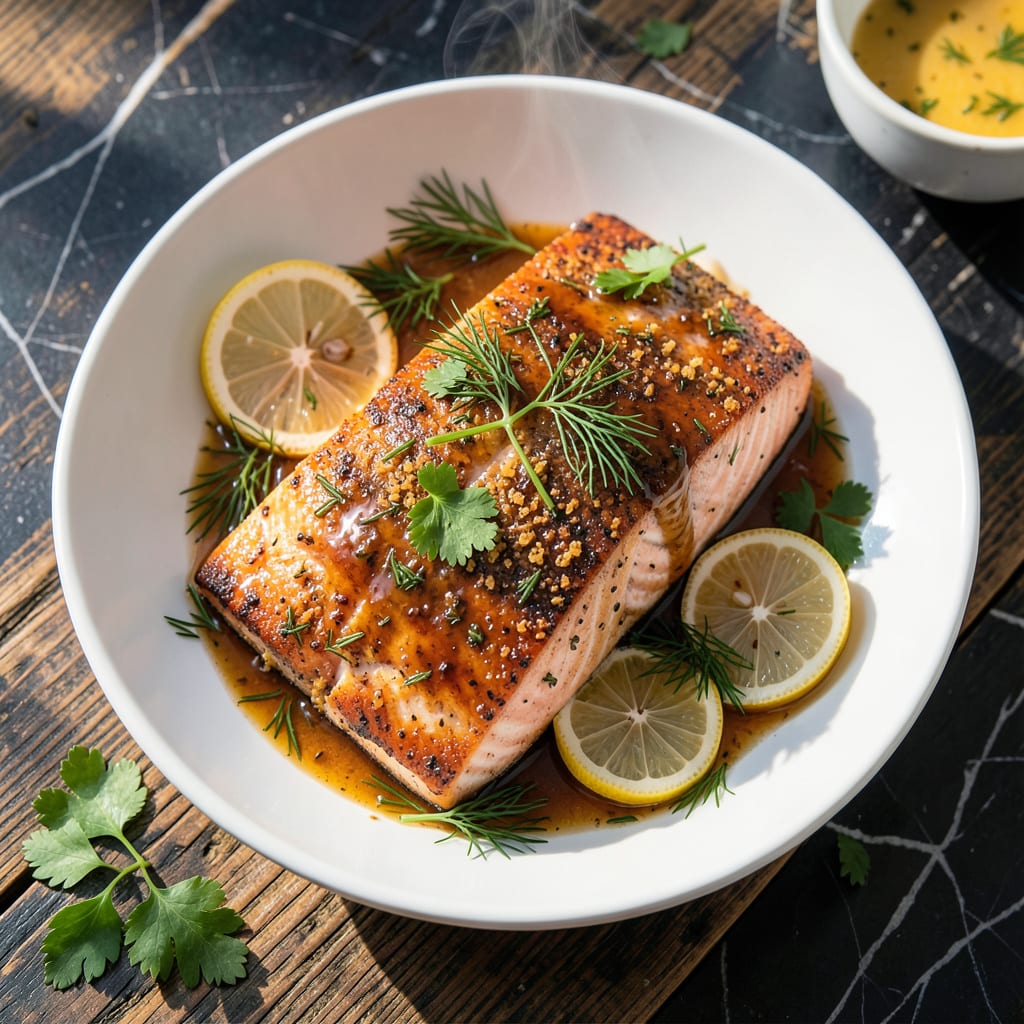
This baked coho salmon delivers flaky, tender results every time with minimal effort. The secret lies in precise oven temperature and a simple lemon-herb crust that locks in moisture.
With just 20 minutes in the oven, you’ll achieve restaurant-quality salmon with a golden crust and perfectly cooked flesh. The technique ensures even heat distribution for consistent texture throughout.
Ingredients for Baked Coho Salmon
Fresh salmon, vibrant herbs, and a bright lemon crust create this elegant dish.
| Ingredient | Amount | Notes |
|---|---|---|
| Coho Salmon Fillets 🐟 | 1 ½ lb | Skin-on, boneless, about 1-inch thick |
| Extra-Virgin Olive Oil 🫒 | 3 tbsp | Divided for brushing and crust |
| Lemon 🍋 | 1 whole | Zested and juiced |
| Fresh Dill 🌿 | ¼ cup | Chopped, stems removed |
| Fresh Parsley 🍃 | ¼ cup | Chopped, stems removed |
| Garlic Cloves 🧄 | 3 cloves | Minced finely |
| Dijon Mustard 🟡 | 1 tbsp | For binding crust |
| Panko Breadcrumbs 🍞 | ½ cup | For crispy texture |
| Salt 🧂 | 1 tsp | Diamond Crystal kosher preferred |
| Black Pepper 🌶️ | ½ tsp | Freshly ground |
| Dry White Wine 🍷 | ¼ cup | Optional for deglazing |
| Unsalted Butter 🧈 | 2 tbsp | Melted for crust |
[recipeingredientscaler]
The salmon quality is paramount here. Wild-caught coho from Whole Foods or a trusted fishmonger ensures the best texture and flavor. Look for fillets with vibrant color and no fishy odor—this indicates freshness. The panko breadcrumbs should be coarse for maximum crunch. I prefer Kikkoman brand for consistency, but any high-quality panko will work.
Out of fresh dill? Dried dill at one-third the amount works in a pinch, though fresh is ideal. No white wine? Substitute chicken or vegetable broth for deglazing. The Dijon mustard can be swapped for whole-grain mustard for a rustic twist. If you’re avoiding dairy, olive oil can replace the butter in the crust—just reduce the total oil slightly to avoid sogginess.
Store fresh salmon in the coldest part of your fridge and use within 1-2 days. The crust mixture can be prepped a day ahead—keep it refrigerated in a sealed container. Leftovers reheat gently in a 300°F oven for 10-12 minutes to preserve texture.
Why You’ll Love This Recipe
- One Pan Wonder: I just toss the salmon with olive oil, lemon, and herbs, then let the oven do the work.
- Bright and Zesty: The fresh dill and lemon make every bite taste like a coastal breeze.
- Feeds the Crew: Honestly, it’s my go-to for weeknight dinners or when friends drop by unannounced.
- Leftovers Rock: The flavors actually deepen overnight, so lunch the next day is even better.
Step-by-Step Instructions for Baked Coho Salmon
Master the technique for perfectly flaky salmon with a crisp, aromatic crust every time.
Step 1: Prepare the Lemon-Herb Crust Mixture
In a medium bowl, combine the 0.5 cup Panko breadcrumbs, 0.25 cup chopped fresh dill, 0.25 cup chopped fresh parsley, 1 tbsp Dijon mustard, 1 tsp salt, and 0.5 tsp black pepper. Stir in the 3 minced garlic cloves and the zest from the 1 whole lemon.
Drizzle in 2 tbsp melted unsalted butter and mix until the crumbs are evenly moistened and the mixture clumps together when pressed. The texture should resemble wet sand. This aromatic blend will form a golden, fragrant crust that seals in moisture while adding bright, herbal notes to the dish.
Step 2: Preheat and Prep the Salmon Fillets
Preheat your oven to 400°F and position the rack in the center. Pat the 1.5 lb coho salmon fillets completely dry with paper towels—this is critical for achieving a good sear and preventing the skin from sticking. The fillets should be skin-on, boneless, and about 1-inch thick for even cooking.
Place the salmon skin-side down on a parchment-lined baking sheet. Brush the flesh lightly with 1 tbsp extra-virgin olive oil from the 3 tbsp total, then squeeze 1 tbsp lemon juice evenly over the top. This base layer enhances flavor and helps the crust adhere properly.
Step 3: Apply the Crust and Bake to Perfection
Press the Panko mixture evenly over the top of each fillet, creating a ¼-inch thick layer. Use your fingers to gently compact it so it stays in place during baking. The crust should cover the entire surface without spilling over the edges.
Drizzle the remaining 2 tbsp extra-virgin olive oil over the crusted fillets. Bake for 12-15 minutes until the crust is golden brown and the salmon reaches an internal temperature of 145°F. The flesh should flake easily when tested with a fork, with the center just slightly translucent.
Step 4: Optional Deglazing and Resting
If using, carefully transfer the salmon to a serving platter. Place the baking sheet on the stovetop over medium heat and add the 0.25 cup dry white wine. Scrape up any browned bits with a wooden spoon and let the liquid reduce by half, about 2-3 minutes.
Pour the pan sauce over the salmon and let it rest for 5 minutes before serving. This brief rest allows the juices to redistribute, ensuring each bite delivers the promised flaky texture. The crust will crisp slightly as it cools, adding a satisfying contrast to the tender fish beneath.
Pro Tips For Making Baked Coho Salmon
- Pat Dry First: After burning one too many salmon fillets, I learned to always pat the coho dry with paper towels before oiling it—this guarantees a better sear and prevents steaming.
- Start Hot, Finish Low: Crank the oven to 425°F for the first 8 minutes, then drop it to 375°F to finish. This gives a crisp exterior while keeping the inside tender.
- Use Room-Temp Salmon: Pull the fillets out of the fridge 15-20 minutes before baking—cold salmon straight from the fridge cooks unevenly and tastes less vibrant.
- Zest the Lemon: Skip just squeezing the lemon and zest it first over the fillets before baking. The oils in the rind add a brightness that juice alone can’t.
Essential Equipment for Perfect Results
Baking Sheet Essentials
Use a heavy-duty half-sheet pan (about 13×18 inches) for even heat distribution. I swear by Nordic Ware for durability—I’ve had mine for 10+ years. Line it with parchment paper or a Silicone baking mat to prevent sticking. 💪
Temperature Accuracy Tools
An oven thermometer is non-negotiable—most built-in thermometers are off by 25°F or more. I use a Taylor Classic for $10. A digital instant-read thermometer ensures your salmon hits 145°F perfectly. ThermoWorks makes my favorite models.
Mixing and Prep Gear
For the crust, a medium mixing bowl (I prefer Pyrex glass) gives you room to combine ingredients evenly. A microplane makes lemon zesting effortless—OXO’s version has a comfortable grip. Don’t forget a pastry brush for oil application.
Serving and Resting
A wire cooling rack set over a baking sheet helps air circulate under the salmon during resting. For serving, a fish spatula (like Mercer’s thin, flexible model) lifts delicate fillets without breaking them. These tools make a surprising difference.
Nutrition Facts
Frequently Asked Questions
What oven temperature works best?
Use 400°F for perfect results. This high heat creates a crisp crust while cooking the salmon through evenly in 12-15 minutes.
Can I use frozen salmon?
Yes, but thaw it completely first in the fridge overnight. Pat it very dry before baking to prevent a soggy crust. Never bake from frozen.
How do I know when it’s done?
The salmon is ready at 145°F internal temp. The flesh should flake easily and appear slightly translucent in the center.
Can I make the crust ahead?
Yes! Mix and refrigerate the crust up to 24 hours ahead. Press it onto the salmon just before baking for best texture.

- BBQ Sausage Recipe Oven: Smoky Depth Without the Grill - September 28, 2026
- BBQ Chicken Bowl Recipe Rice: Smoky Sweetness Over Fluffy Grains - September 28, 2026
- Beef Cutlet Recipe Ideas: Crispy Breaded Patties With Bold Seasonings - September 28, 2026